







From first-time learners to workshop teams
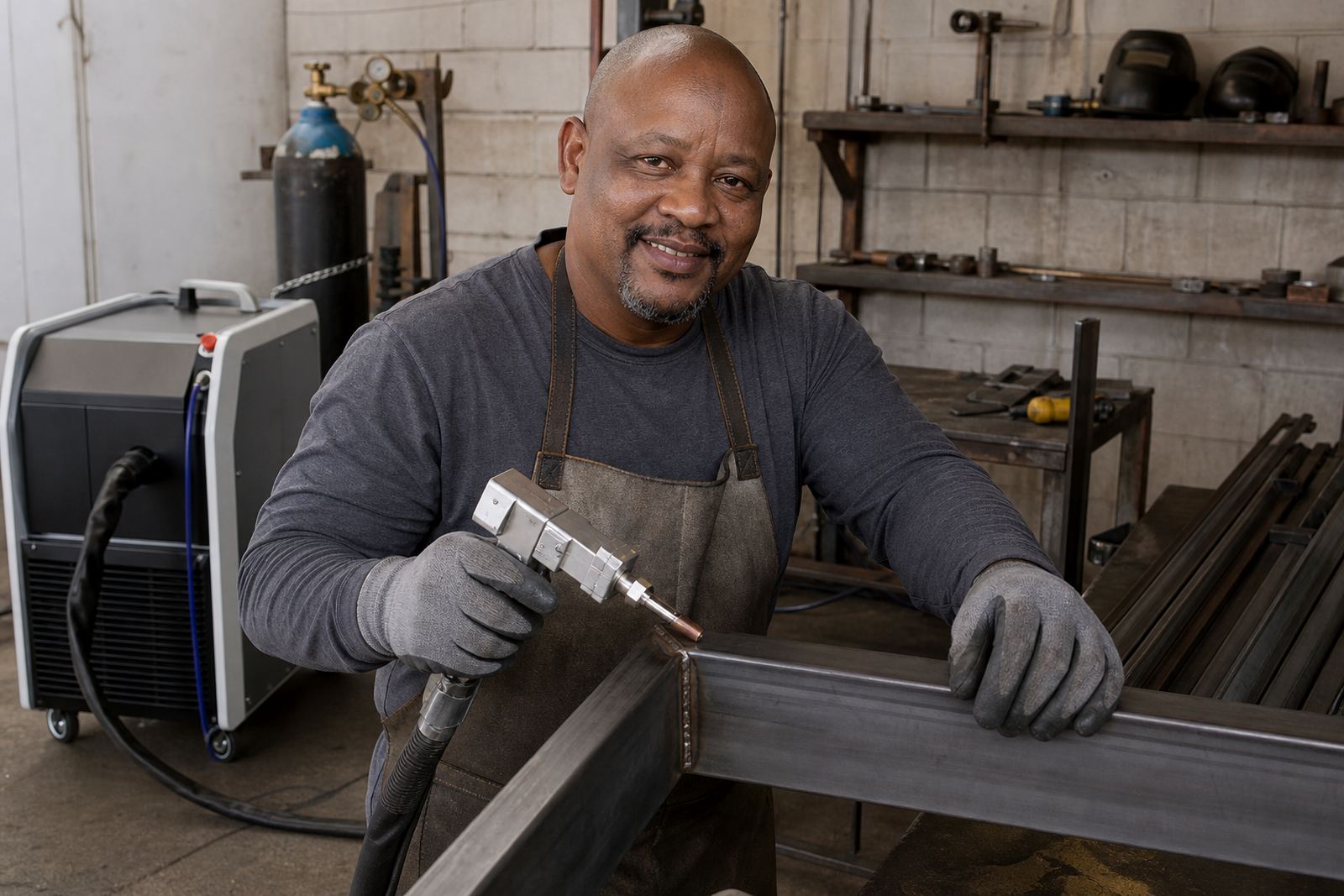
Some people arrive with no welding background at all, only a need to work cleaner, faster joins on thin steel, stainless steel or aluminium. Others already run a small fabrication shop in Boksburg, Johannesburg or Pretoria and want a practical method for finer repair work, less rework and better control on detailed jobs. The same course can suit both, because the pace is set around hands-on practice and clear guidance.
We often see a mix of learners in one group: a workshop owner, a junior operator, a maintenance technician and someone moving into a new role. That mix helps because everyone sees how handheld laser welding fits into real day-to-day work, not only textbook examples.
Workshop owners looking for cleaner repair work
Owners of small and mid-size workshops usually come in with a simple goal: reduce grinding, improve finish quality and manage thin material without distortion. In places like Durban and Cape Town, where coastal humidity can affect stored equipment and consumables, learners also want to know how to keep the kit protected between jobs.
These learners tend to ask about sheet thickness, joint fit-up and how to set up a safe work area when load-shedding interrupts the day. They usually benefit from starter kits that include the practical items needed to get started, then a training session that shows how to use them properly.
- Cleaner cosmetic repairs on thin material
- Less heat spread on sensitive parts
- Better control for small batches and repeat work
- Simple setup advice for workshop conditions
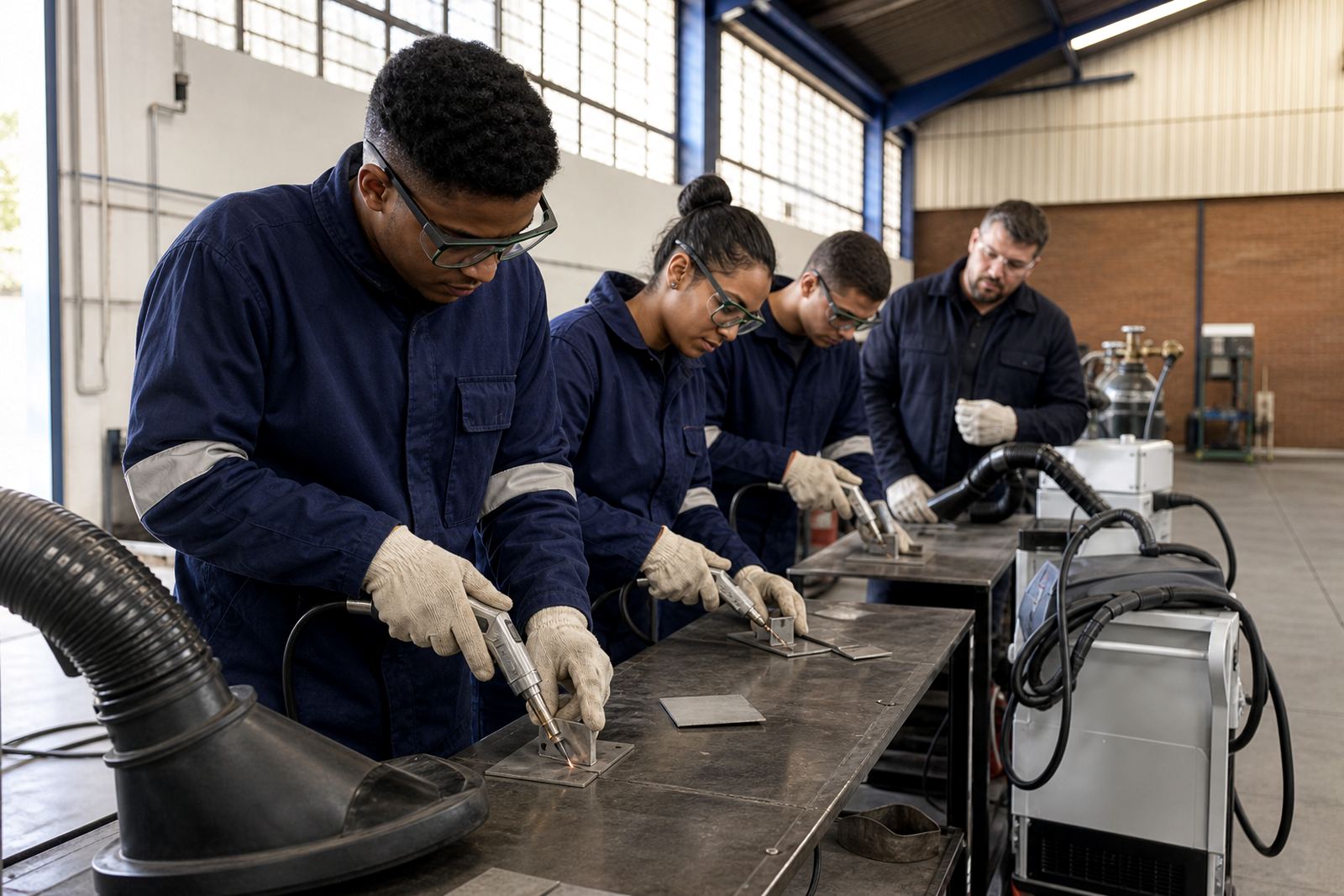
New operators building confidence step by step
Beginners often worry about making a mistake on day one. That is normal. The learning path is built around safe handling, steady movement, correct torch positioning and understanding what the weld pool is doing under the beam. Learners are shown how to work with the machine at a sensible pace and how to check results before moving on.
Anele Dlamini and Pieter van der Merwe spend time on safe operating habits, including laser class awareness, eye protection and fume extraction. Good protection and good airflow are part of the work, not extras. Learners also leave with a certificate of completion from LaserWelder Training once they finish the course.
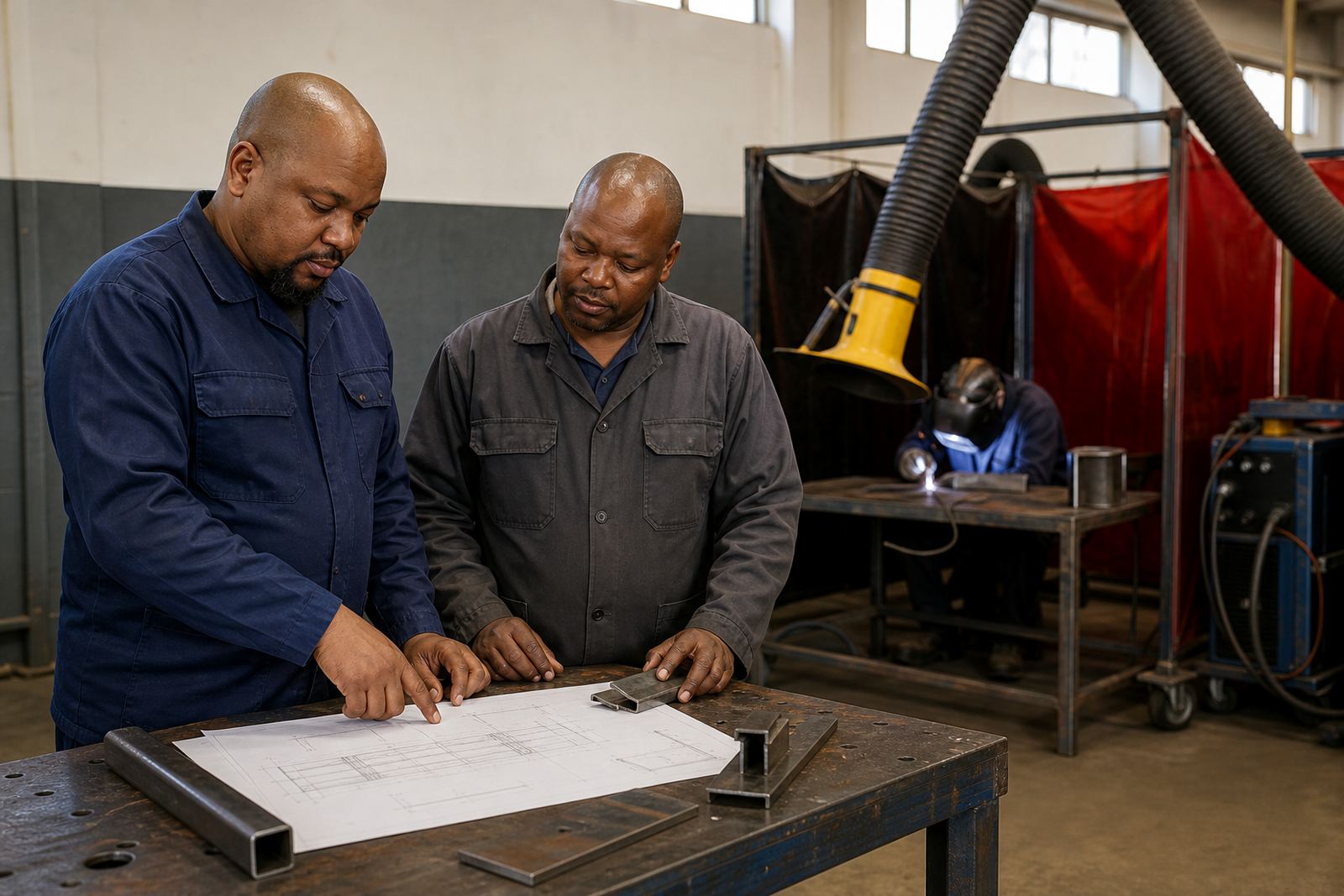
Maintenance teams and site supervisors
Many learners are not full-time welders. They may be maintenance staff, supervisors or technical teams who need a reliable process for repairs, small fabrication changes or on-site support. For these groups, the focus is on readiness, workflow and repeatable steps that fit a busy shift.
We often cover how to brief operators, check the work area, manage cables and hoses, and keep a tidy station around the machine. In industrial settings around Gauteng, that can matter just as much as the weld itself because a rushed setup leads to avoidable faults.
- Operator inductions for new staff
- Safety briefings before live use
- Workflow advice for shared workshop spaces
- Supervisor coaching for consistent standards
Learners who want a starter kit and practice plan
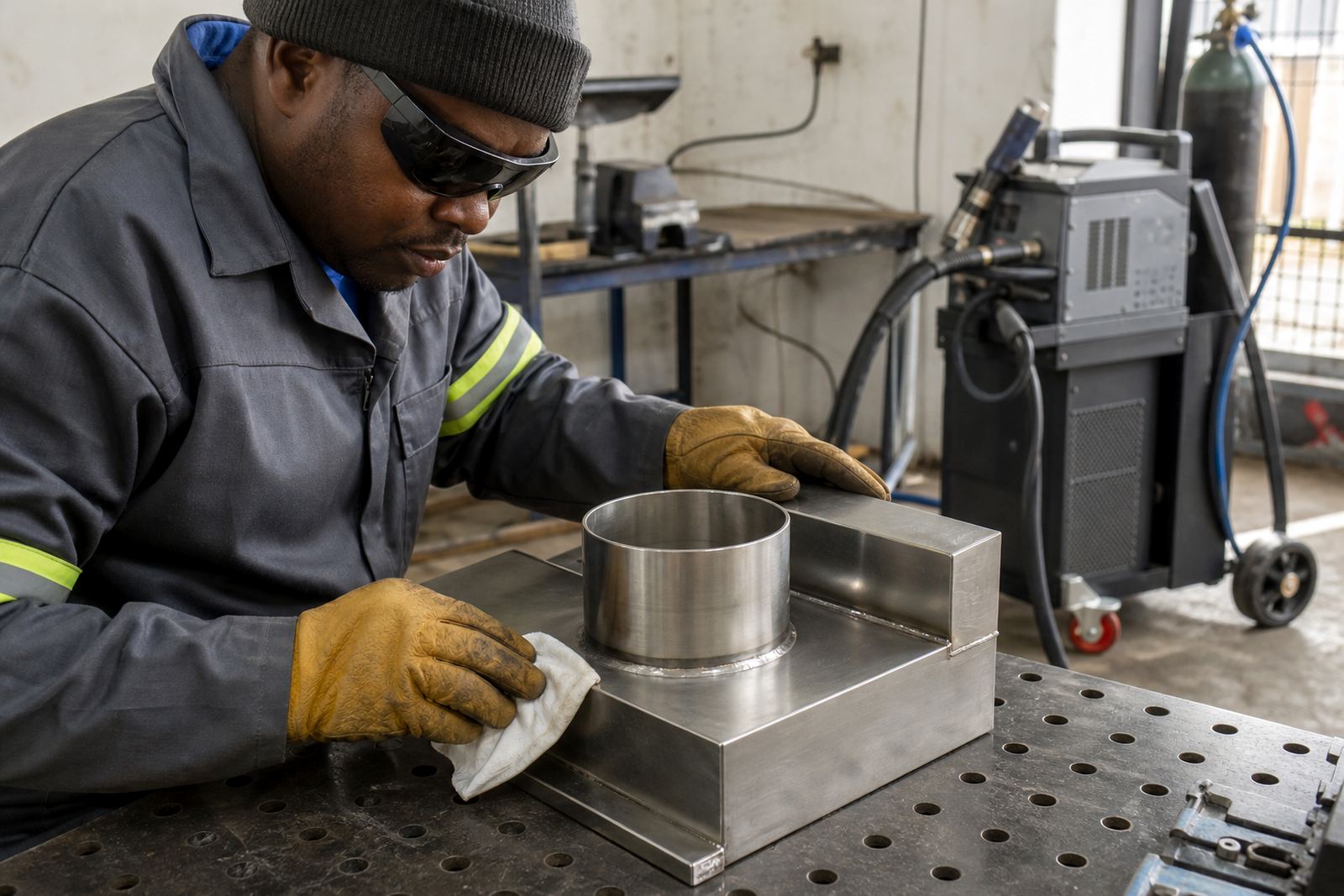
Some people are not ready to buy a full welding setup yet, but they do want the right tools to practise and learn properly. A starter kit can suit that stage well, especially when paired with a practice plan and technical support. It gives the learner a way to work through the basics at a steady pace instead of guessing what to buy one item at a time.
Starter kit buyers often want help with setup, consumables planning and the small details that affect results, such as surface preparation and where to place the extraction unit. Brandon Naidoo and Lerato Mokoena usually help with those practical questions, especially when the kit is going into a busy workshop or a shared space.
Town-based stories from across South Africa
The learners who come through the door are not all the same, but they usually share one thing: they need a practical skill that fits real work. A workshop in Polokwane may need a straightforward setup that can be maintained by a small team. A Cape Town learner may want better control for finer jobs in a coastal environment. A Durban business may want a process that helps with quick turnaround and neat finishing.
That is why the stories on this hub are grouped by town and client type, rather than by company name. It helps you compare your own situation to people doing similar work and decide whether a course, a starter kit or a refresher visit makes more sense.