Supervisor Briefing for a Team Rollout
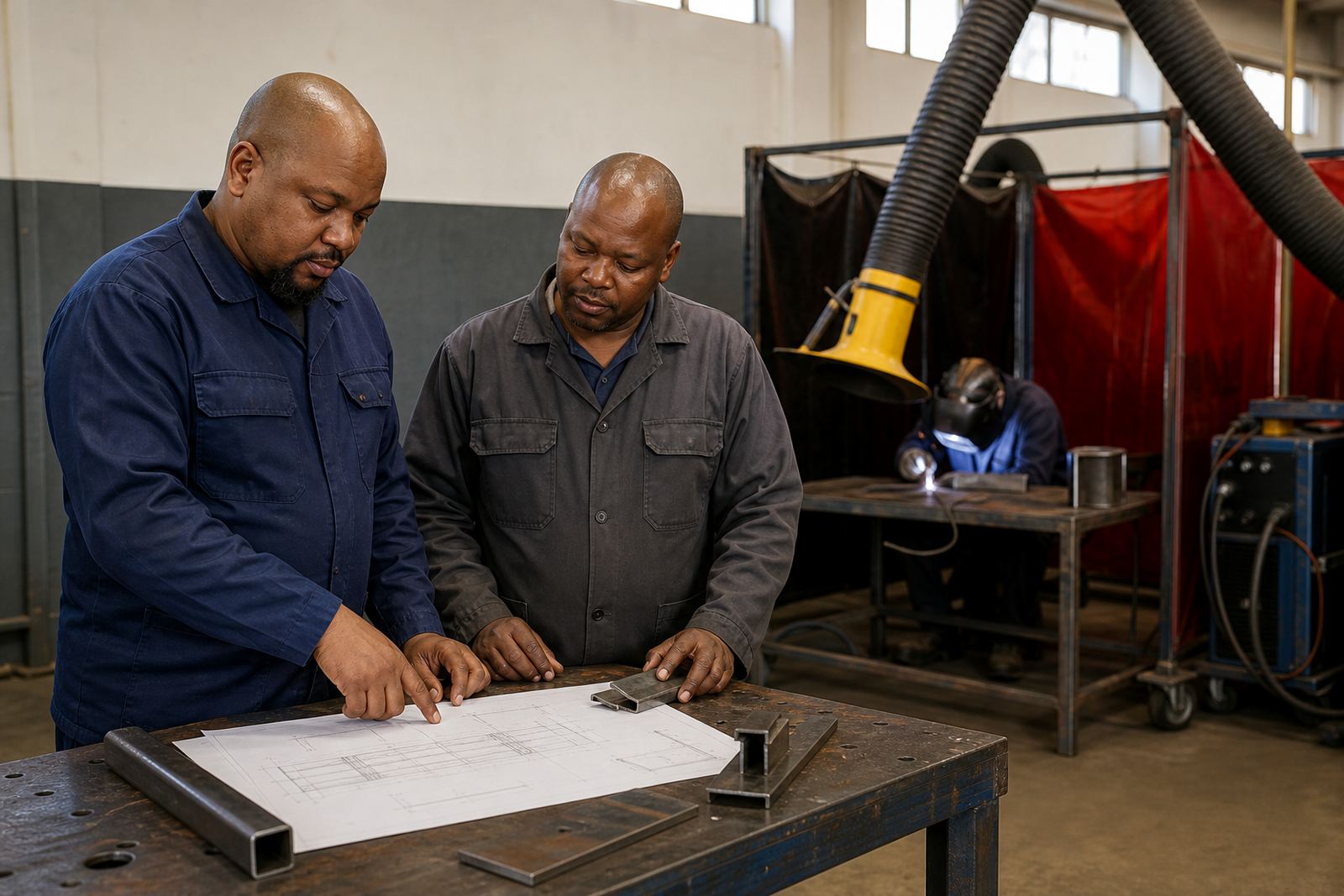
This project came from a workshop supervisor in Kempton Park who needed practical training before introducing handheld laser welding to a small team. The job was not about theory only. It had to give the supervisor enough confidence to manage setup, keep the team safe and judge whether the work area was ready for regular use.
We started with a short briefing on the machine type, the job flow and the limits of handheld laser welding on mild steel, stainless steel and other common workshop materials. The supervisor needed a clear view of what the process can do, what it cannot do, and where extra preparation is needed. That included clean joint faces, correct fit-up and control of reflections in a busy shop with mixed equipment.
The workplace was a typical Gauteng metalworking environment, with normal dust, vehicle movement and load-shedding interruptions to plan around. We kept the approach practical and direct, with simple checks that the team could repeat later without guesswork.
Safety Controls Before the Torch Came On
Handheld laser welding needs proper control from the start. We covered the laser class used for the equipment, why access control matters, and why eye protection matched to the process is not optional. The supervisor also needed a simple rule set for the team, especially where people may walk past the work area or look in without warning.
Fume extraction was another important part of the brief. Even when the weld looks clean, fumes can build up around the arc point and in corners, especially indoors. We explained how to place extraction close enough to catch smoke at source, and how to keep the work area open so the operator is not breathing back into the plume. In a closed workshop, this matters even more when doors are shut because of weather or security concerns.
We also covered reflective surfaces, cable routing, and how to keep the bay tidy so no one trips while the operator is moving around the job. The supervisor wanted a process that could be handed to the team without confusion, so we kept the safety briefing plain and practical, with rules that can be followed shift after shift.
- Laser class awareness and controlled access to the work zone
- Correct eye protection for the operator and nearby staff
- Fume extraction positioned close to the weld point
- Clear walking paths, cable control and tidy bench layout
Hands-On Practice on Common Workshop Jobs
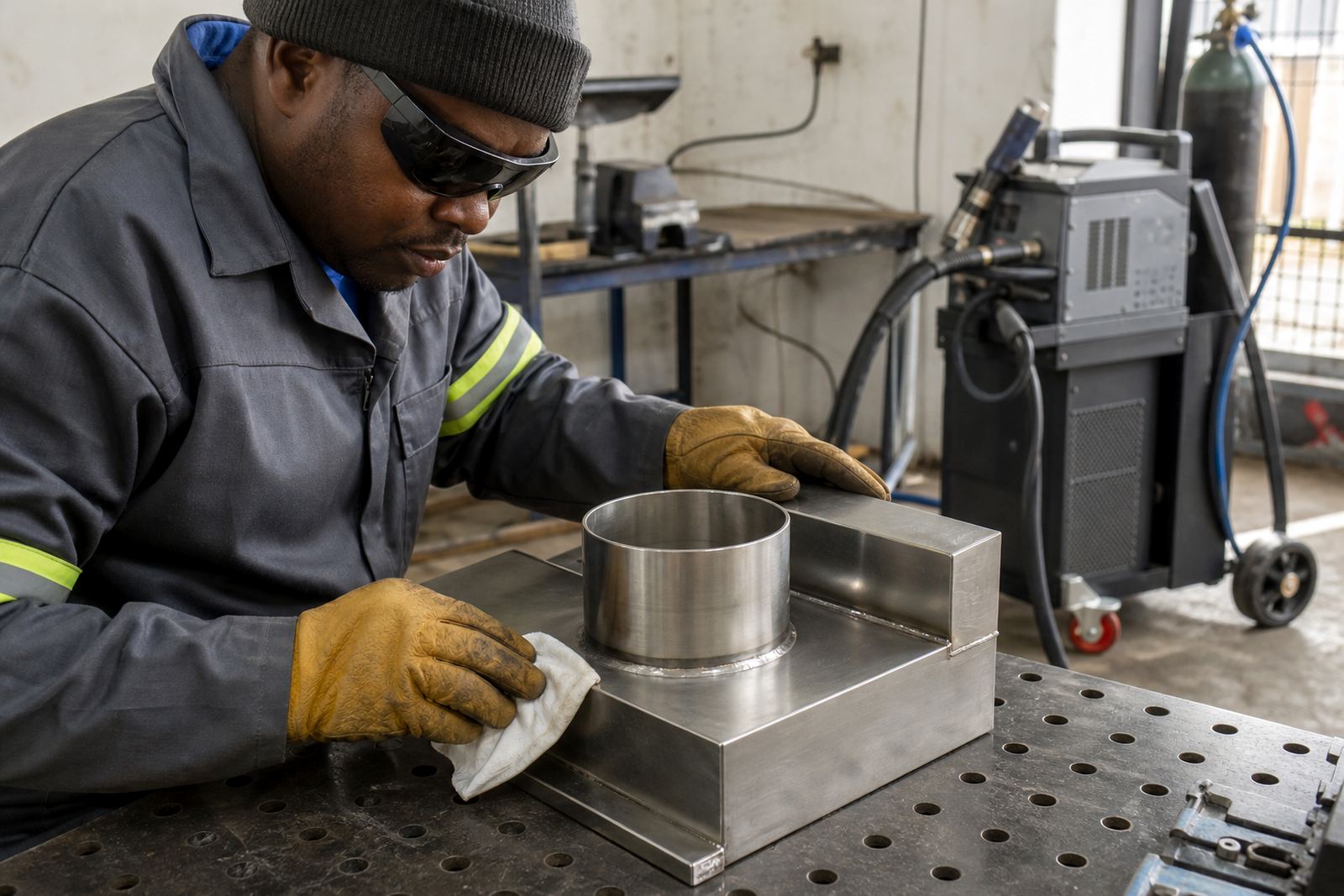
The practical session covered the sort of work that shows up in real workshops: straight seams, short repair runs, corners, small brackets and thin material where heat input needs to stay controlled. We worked through torch angle, travel speed, focus setting and cleaning between passes. The supervisor spent time at the controls as well, so the team rollout would not depend on one person standing over everyone else.
We also looked at the signs that tell an operator to stop and reset rather than push through. That included poor fit-up, contamination, inconsistent wire feed and heat build-up on light sections. A good part of the value here was learning to spot issues before they turn into rework. In a busy shop, that saves time and keeps the job moving.
Because many teams in Gauteng work with mixed materials and a stop-start schedule, we included a few short practice plans for use during slower shifts. These plans help a supervisor rotate staff through basic tasks without wasting consumables or losing control of quality. It is a simple method, but it works well when people are new to the process.
Starter Kit Setup for Workshop Use
Alongside the training, we supplied guidance on starter kit setup for a small workshop rollout. The supervisor wanted to know what should be on hand before the first production-style runs, and what can be added later as the team grows. We kept the advice practical, with attention to fit, storage and daily use rather than overbuying items that would sit on a shelf.
The starter kit conversation covered the handpiece, protective accessories, spare consumables, cleaning items, basic marking tools and the storage checks needed to keep equipment ready between shifts. In a workshop near Kempton Park, dust and busy movement can affect tools fast, so proper storage and daily cleaning were part of the discussion. We also talked about what should stay with the machine and what should be kept in a separate safe area.
For teams working around power interruptions, we advised on startup checks after a shutdown and the best order for restarting work once supply is stable again. That way the operator does not waste time resetting things twice or missing a safety step.
- Starter kit guidance for a small team rollout
- Storage and daily cleaning advice for workshop conditions
- Restart checks after load-shedding or an interrupted shift
- Consumables planning for controlled, repeatable use
Two-Week Rollout Plan and Supervisor Support
The work was completed over two weeks. In week one we handled the briefing, safety walk-through and initial practical training. In week two we returned to review the workflow, answer questions from the supervisor and tighten the setup for the team rollout. That second visit was useful because people usually spot small issues only after they have tried the process on real jobs.
We also provided a training document pack that the supervisor could keep at hand for inductions and refresher talks. It included the key safety points, setup notes, basic checks and a simple workflow outline. The document pack is useful when shifts change or when a new operator joins later on. It gives the supervisor a paper trail without making the process heavy.
After the session, the supervisor had a clearer method for planning the rollout, checking the work area and assigning tasks. The main result was better control. The team could see how handheld laser welding fits into the workshop without disrupting every other job around it.
What We Would Repeat on the Next Similar Job
If we were doing this again for another supervisor in Gauteng, we would keep the same structure. Start with a site readiness check, then a safety briefing, then practical time on real offcuts before anyone starts production work. That sequence gives the supervisor time to see where the bottlenecks are, and it gives the team a chance to ask questions before pressure builds.
We would also repeat the short supervisor coaching session because it helps the person in charge manage the process without second-guessing every move. A steady supervisor makes a big difference in the first few weeks. Once the team understands the setup, the process becomes easier to repeat and the quality becomes more consistent.
For workshops in Boksburg, Johannesburg, Pretoria, Durban, Cape Town or Polokwane, this kind of rollout works best when the safety rules are clear and the starter kit is matched to the actual work. That keeps the training grounded in the day-to-day needs of the shop, not a generic classroom exercise.
Key facts
| Project type | Supervisor briefing and practical training rollout |
|---|---|
| Town | Kempton Park |
| Base used | Boksburg, Gauteng |
| Duration | 2 weeks |
| Training focus | Handheld laser welding, safety and workflow control |
| Output | Certificate of completion from LaserWelder Training |