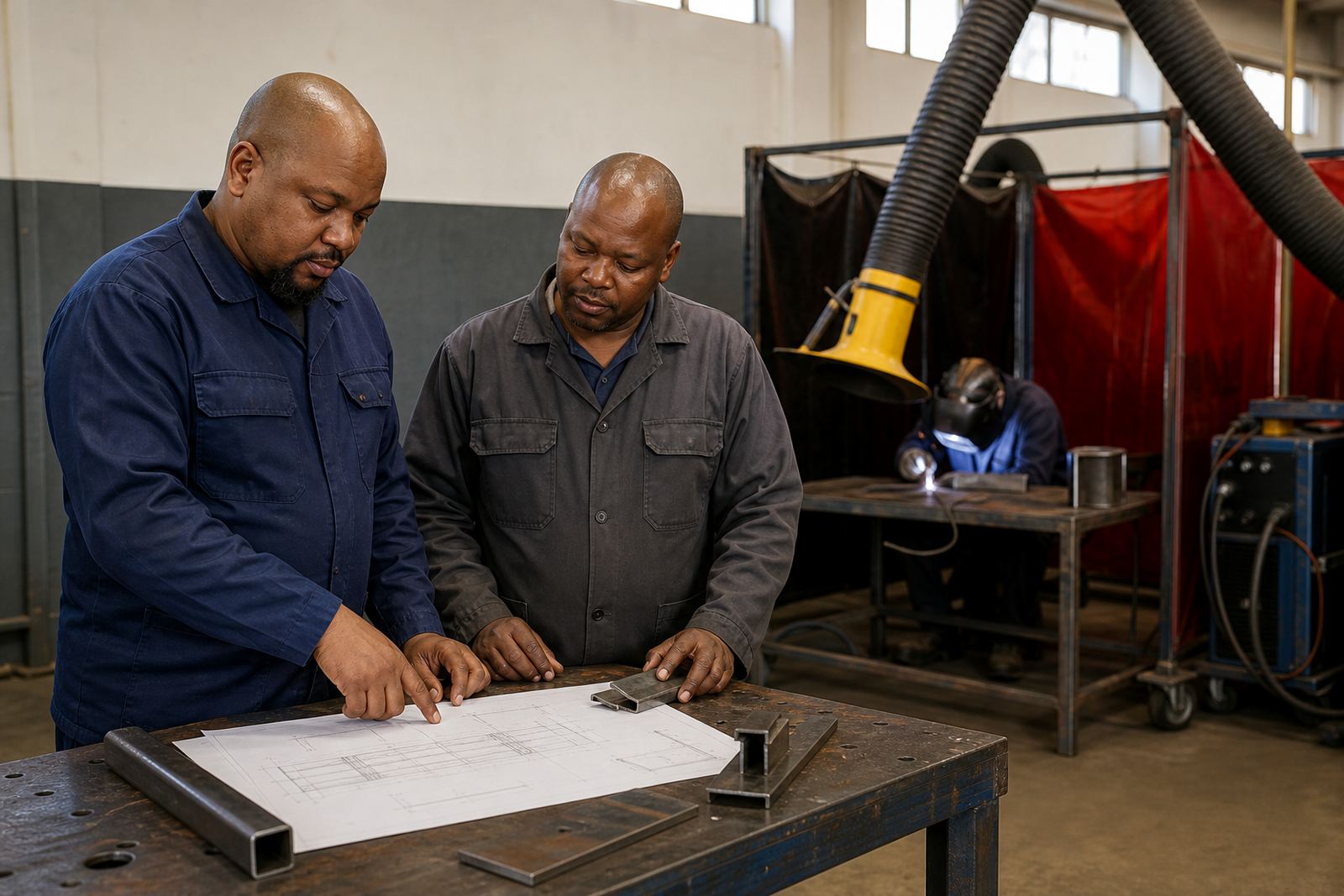
Starting Point: A First Proper Introduction To Handheld Laser Welding
The learner was based in Soweto and came through the enquiry form looking for beginner training that was practical, steady, and easy to follow. The brief was simple enough, but important: build confidence with handheld laser welding, understand the safety rules from day one, and practise on joints that appear in real workshop work. The learner had basic metalworking interest but no formal laser welding background, so we set the course at entry level and kept the pace hands-on.
We explained how handheld laser welding is used for light fabrication, repairs, brackets, frames, small components and clean finishing work. The learner needed more than theory, so the focus was on torch handling, bead placement, travel speed, heat control, and how to read the weld pool on different materials. We also covered what makes this process different from conventional welding, especially the narrower heat affected zone and the need for neat edge preparation.
- Client type: individual learner
- Town: Soweto, Gauteng
- Course level: beginner
- Training format: hands-on with guided practice
- Outcome required: certificate of completion from LaserWelder Training
The Brief, Constraints And Safety Rules We Worked To
The main constraint was that the learner wanted practical skill without skipping safety. That meant working within a proper controlled training setup, using class 4 laser equipment with full eye protection and clear access control around the work area. We also made sure the learner understood reflective surfaces, beam direction, and why the work zone must be kept tidy and well marked. A handheld laser can look compact, but the safety discipline must still be strict.
Another part of the brief was fumes. Even on small jobs, there can be vapour, smoke and fine particles depending on the material and surface condition. We set up fume extraction and explained why ventilation matters, especially in enclosed spaces or small workshops where windows are limited. That is useful in Soweto and anywhere else where learners may later work in a garage, small yard, or shared workshop with limited airflow. We also discussed load-shedding planning, because a learner who wants to practise at home needs to think about power interruptions and how to keep work areas ready before the power goes off.
- Eye protection suitable for the laser class in use
- Fume extraction for smoke and fine particulates
- Clear work area with no reflective clutter nearby
- Safe cable routing and dry flooring
- Pre-start checks before each practice run
Practical Training Across Several Joint Types
We structured the practical work around several common joint types so the learner could see how the same process behaves differently on each one. The practice started with flat beads and edge control, then moved into butt joints, lap joints, T-joints, corner joints and fillet style work. Each joint was chosen because it teaches a different part of the process, from alignment to penetration and finish. The learner repeated each exercise until torch angle and movement became steadier.
Material preparation was part of the lesson too. We covered cleaning, clamp placement, fit-up, and how small gaps change the result. On thinner pieces, the learner needed to keep travel speed consistent and avoid overheating the edges. On slightly heavier offcuts, we explained how to manage energy input without leaving a rough finish. The aim was not just to make a weld, but to understand why the weld behaved that way.
- Flat practice runs for torch control
- Butt joints for alignment and seam control
- Lap joints for overlap and heat management
- T-joints for corner positioning and consistency
- Fillet work for repeatable bead placement
Starter Kit Setup And Workshop Readiness
Once the learner was comfortable with the basics, we supplied guidance on a starter kit suited to beginner laser welding work. The kit was kept practical rather than overcomplicated, with the right consumables, protective gear, cleaning items, and setup pieces needed to practise properly. We also gave advice on what should be in place before any future home or workshop sessions, so the learner would not waste time chasing missing bits on the day.
The setup advice covered bench arrangement, storage, safety signage where needed, and how to prepare a small practice station that can be used again and again. We also included support on starter kit setup, workflow advice, and consumables planning, because a learner often needs help deciding what to buy first and what can wait. That is especially useful for small operations in Johannesburg, Pretoria, Durban, Cape Town or Polokwane where learners may be building up their own kit slowly.
- Starter kit guidance for beginner use
- Safety gear and eye protection planning
- Cleaning and prep items for consistent results
- Basic storage and workstation layout advice
- Consumables planning for repeat practice
Timeline And What Changed Over The Course
The project ran over a few weeks, starting with the first briefing, then moving into guided practice, correction, and a final review. In week one, we covered safety, machine familiarisation, and basic torch movement. In week two, the learner worked through joint types and began to recognise how fit-up and speed affect the finish. By the final stage, the learner was able to complete simple practice pieces more consistently and with better control.
By the end of the training, there was a clear improvement in confidence and hand steadiness. The learner could set up the work area properly, check PPE before starting, and carry out practice runs with less supervision than at the beginning. The certificate of completion issued by LaserWelder Training marked the end of the beginner course, but the real value was the working knowledge that can be built on from here. There was a small slip early on with torch angle and a bit too much heat on one edge, but that was corrected quickly through repetition and review.
- Week 1: safety, equipment familiarisation and basic control
- Week 2: joint type practice and fit-up correction
- Final stage: repeat runs and final review
- Outcome: better consistency, safer setup and more confidence
What We Would Do Again For A Similar Learner
If we were setting up the same type of project again, we would use the same approach: keep the training practical, work through joint types one by one, and never rush the safety side. For a young learner, the best results come from clear instruction, steady repetition, and a space where questions are welcome. That mix works well whether the learner is in Soweto or commuting from another part of Gauteng.
We would also keep the starter kit lean at the beginning, then expand it only after the learner has more control and a clearer idea of what they will use most. That avoids unnecessary spending and helps the learner build good habits around preparation, cleanup, and storage. For workshop owners, the same method can be adapted into operator inductions, supervisor coaching, refresher visits and technical help, especially where a new machine is being introduced to a small team.
- Keep the first stage simple and practical
- Use repeat exercises across different joints
- Match the starter kit to real use, not guesswork
- Build in safety checks from the start
- Follow up with refresher support where needed
Key facts
| Project type | Beginner handheld laser welding training and starter kit guidance |
|---|---|
| Client location | Soweto, Gauteng |
| Course outcome | Certificate of completion from LaserWelder Training |
| Joint types covered | Butt, lap, T-joint, corner and fillet practice |
| Safety focus | Class 4 laser controls, eye protection and fume extraction |
| Timeline | A few weeks from first briefing to final review |