
Brief From A George Stainless Learner
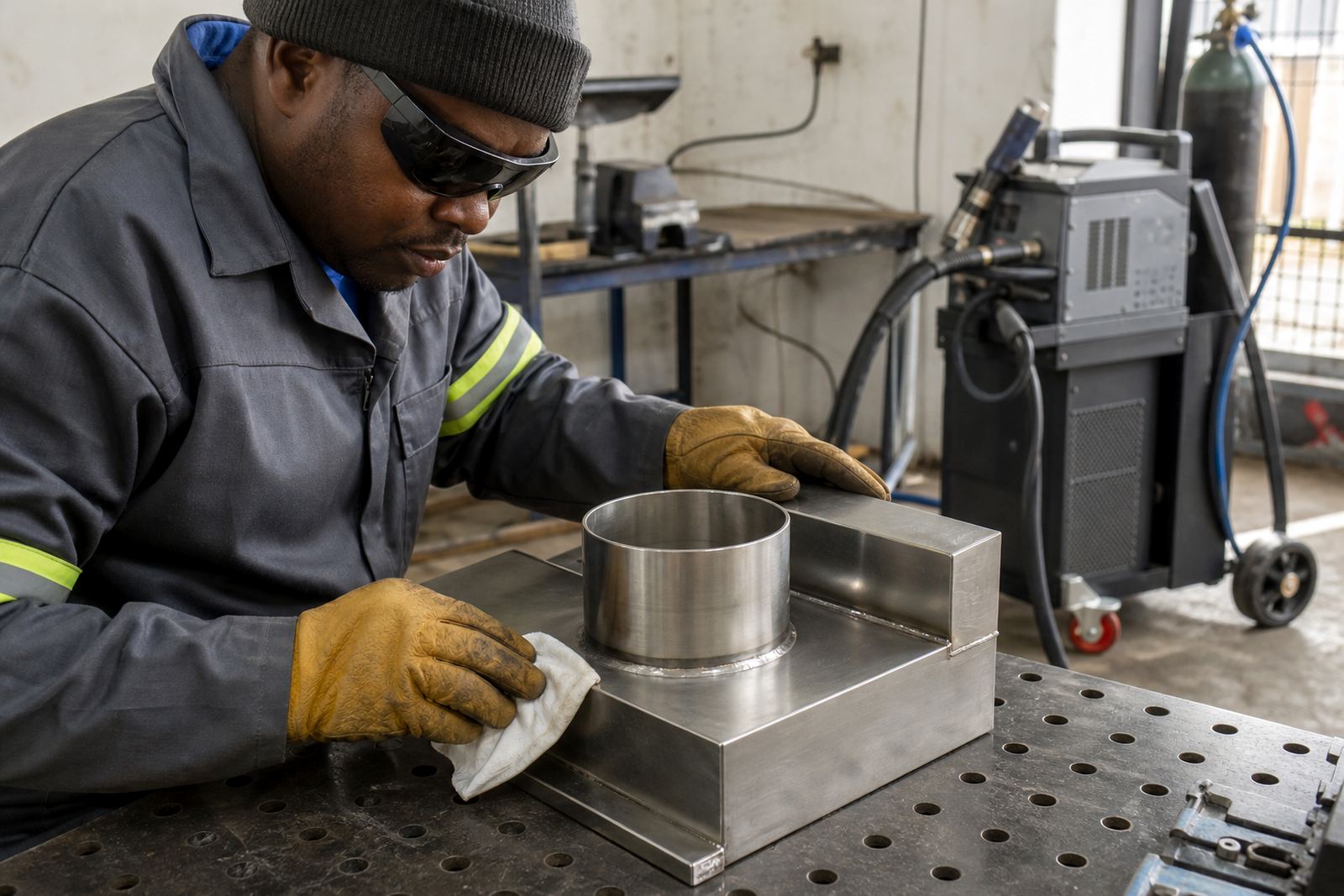
The learner was working on stainless jobs where the finish is on display, so the standard was not just strength but tidy seam appearance and consistent bead placement. The workshop needed a practical path into handheld laser welding, with enough structure for a beginner but enough detail for day to day production work.
The client type was a small stainless workshop in George, serving local fabrication and repair work where neat visible seams matter. The focus was on hand control, joint preparation, heat control and keeping the process repeatable. We also had to work around a busy schedule and limited downtime, so the training plan had to be direct and useful from the first session.
- Location focus: George, Western Cape
- Work type: stainless fabrication and visible finish work
- Primary goal: cleaner seams and better handling discipline
- Support needed: training, safety guidance and starter kit setup
What We Covered In The Training Plan
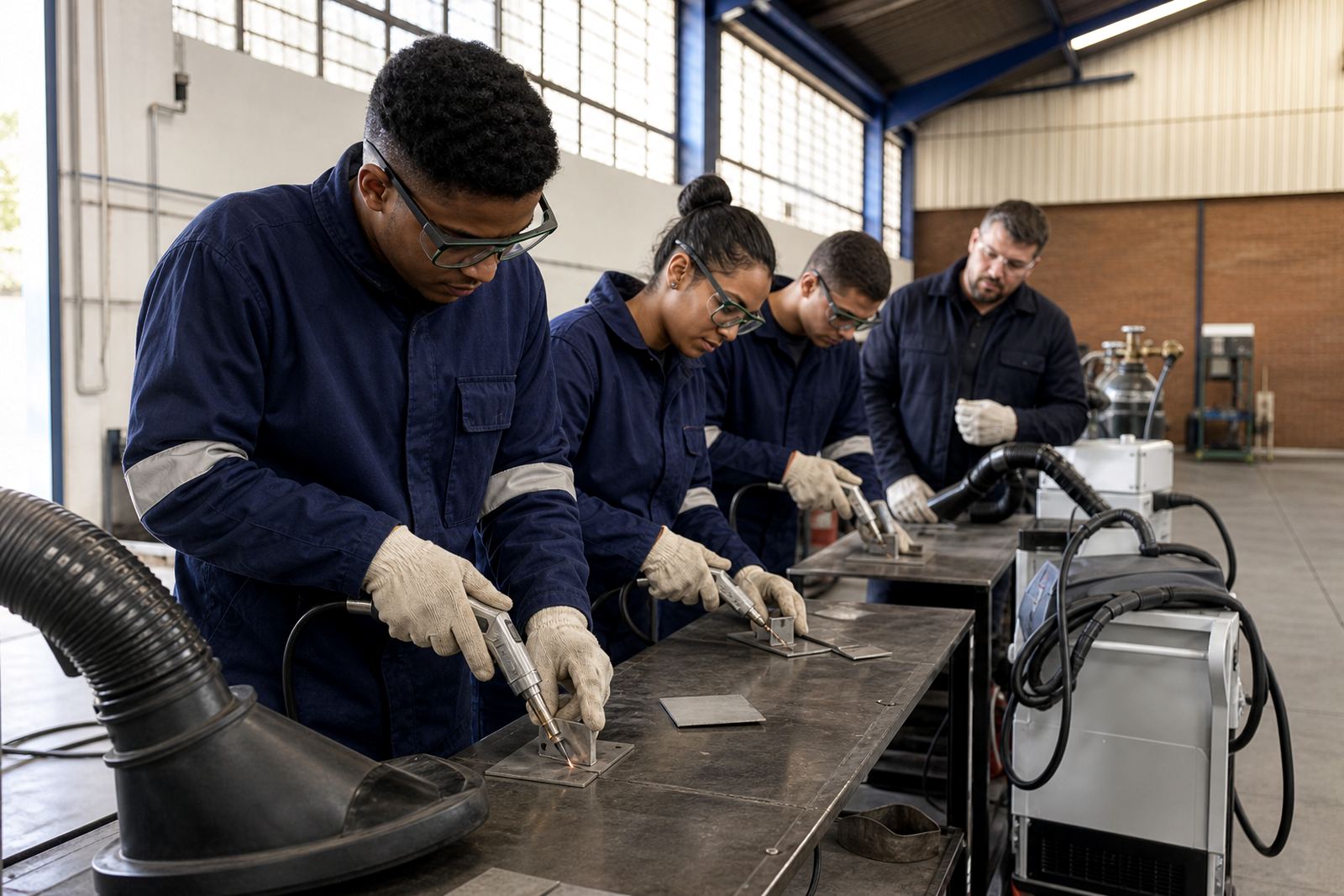
We built the course around handheld laser welding basics for stainless steel, with attention to torch angle, travel speed, joint fit-up and spot control. The learner needed to understand how small changes in movement affect the seam, especially on thin sheet and smaller assemblies where heat input must be kept under control. That part is often underestimated and it shows up quickly in the finish if the operator rushes.
Because the workshop wanted practical use, we included a full safety section. Handheld laser welding equipment is typically in a higher laser class and must be treated with the right controls, eye protection and work area discipline. We went through protective eyewear, screened work zones, reflective surface awareness, fume extraction and housekeeping around the bench. Stainless work can create nuisance fumes and fine particulate, so extraction and airflow matter, even in a smaller shop.
- Laser class awareness and controlled access to the work area
- Appropriate eye protection for laser work
- Fume extraction setup and positioning
- Surface cleaning before welding
- Joint preparation for consistent seam quality
Starter Kit Setup For Workshop Use
We supplied and configured a starter kit suited to a learner stepping into regular practice. The kit was set up around handheld laser welding use rather than general workshop guessing, so the learner could start on the right footing. We checked the basic consumables, cleaning items, wire handling where needed and the practical support items that help keep the work area organised.
Starter kit setup also included safe storage guidance and a simple routine for pre use checks. In a coastal climate like George, metal storage and clean surfaces need more attention than some inland workshops, and even stainless can show contamination if the area is not kept tidy. We covered where to keep the kit, how to protect accessories from dust and moisture, and what to inspect before each practice run.
- Starter kit setup and use briefing
- Consumables planning for practice and small jobs
- Storage advice for a coastal workshop environment
- Pre use checks for cable, torch and work area condition
Timeline And Delivery Over Three Weeks
The project ran over three weeks, which gave enough time for instruction, supervised practice and a follow-up review. Week one covered orientation, safety and basic hand control. Week two moved into seam work on stainless samples, with attention to straight runs, corners and short repair sections. Week three focused on consistency, cleaning up visible finish issues and checking how the learner handled repeat jobs under normal workshop pressure.
We also gave the workshop a short document pack with key reminders, simple setup notes and a practice plan that could be used after the sessions. That helped the learner keep the routine going once the direct training was done. The pace was steady not rushed, which suited someone who wanted real control rather than just a quick demo.
- Week 1: safety, equipment familiarisation and hand control
- Week 2: stainless seam practice and visible finish work
- Week 3: repeatability, review and refresher notes
Results On Stainless Seams And Handling
By the end of the training block, the learner was more confident with torch movement and could keep a steadier seam line on stainless samples. The handling was calmer, which made a clear difference to finish quality. The workshop also had a better grip on safe operation, especially around eye protection and extraction, which is important when more than one person is working in the same space.
The main gain was discipline. The learner stopped treating each joint as a one-off and started using the same preparation, check and welding routine each time. That matters in a small shop because it cuts down on rework and helps the operator notice problems earlier. The visible seams improved, and the process became more manageable for everyday workshop use.
- Cleaner seam appearance on practice pieces
- Better consistency in torch angle and travel speed
- Improved workshop safety habits
- More repeatable prep and setup routine
What We Would Do Again For A Similar Workshop
If we were doing the same sort of job again for a stainless workshop in George, we would keep the same structure: short safety block, hands-on seam practice, then a follow-up to check habits after the learner has had time on the kit. That approach works well because handheld laser welding is not only about the machine, it is about operator control, clean prep and steady repetition.
We would also keep the starter kit matched to the actual workload instead of overloading the learner with extras that sit unused. For small workshops, the best setup is practical and easy to maintain. A tidy bench, proper extraction, clear eye protection rules and a simple document pack go a long way. That is especially true where the team must keep working while training happens around them.
- Keep the course practical and workshop based
- Match the kit to real job types
- Use a follow-up visit to check habits
- Keep safety rules visible near the work area
Key facts
| Project | George Stainless Shop |
|---|---|
| Town | George, Western Cape |
| Client type | Stainless workshop learner |
| Focus | Neat visible seams and handling discipline |
| Timeline | 3 weeks |
| Outcome | Certificate of completion from LaserWelder Training |