Why the Alberton team booked training
The team handled mixed sheet metal jobs and needed a common method for setting up, welding and checking parts before release. Their main concern was variation from one operator to the next, especially on thin gauge material where heat control matters and small mistakes can show up quickly after bending or fitting. They also wanted a better process for working safely in a busy shop, where grinding, cutting and welding all happen in the same space.
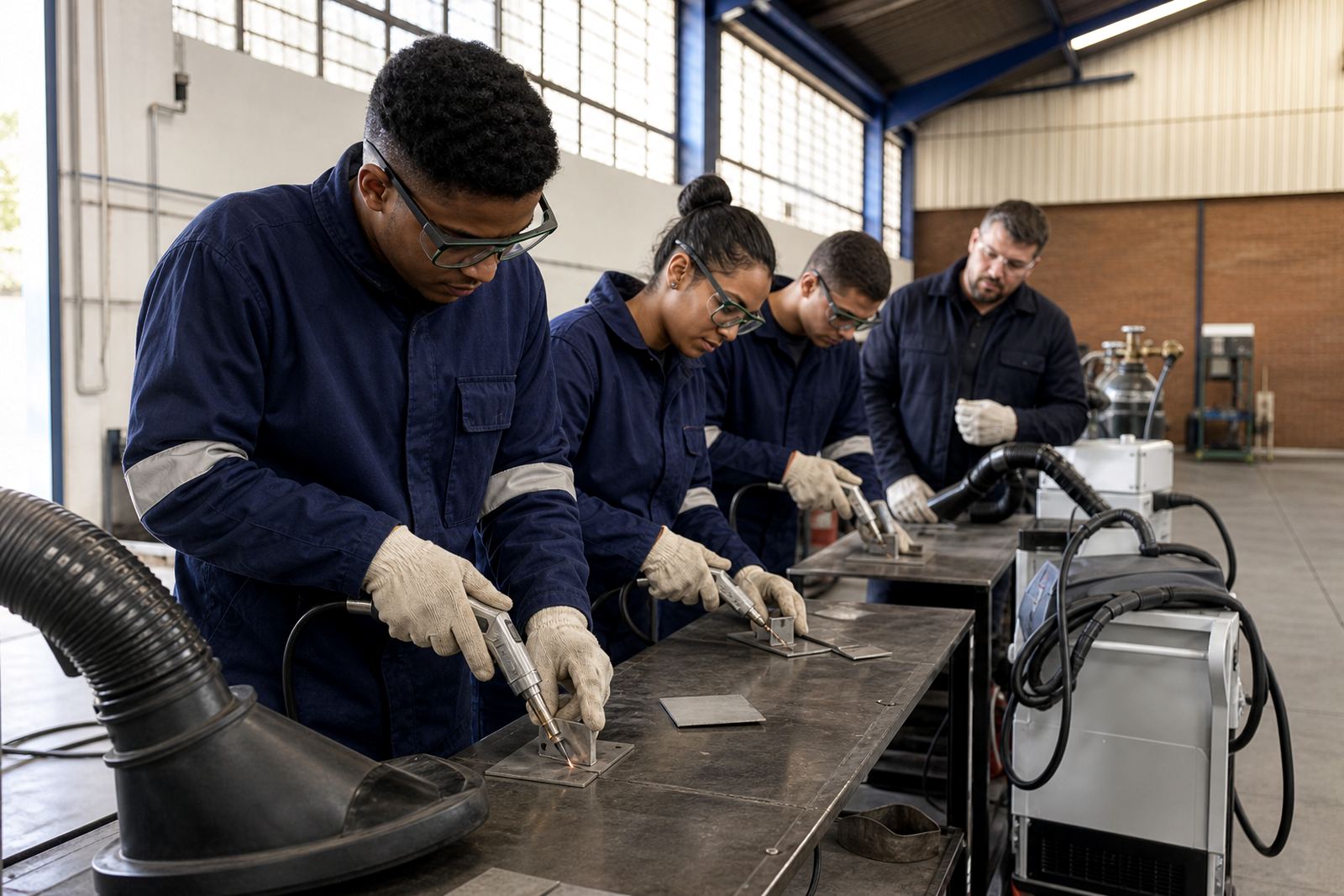
We started with a simple brief: standardise the way the crew uses handheld laser welding equipment, reduce rework, and give supervisors a repeatable way to check results. The group wanted practical instruction, not classroom theory alone, so we built the course around actual workshop tasks. The team travelled from Alberton to our Boksburg training base, which made it easy to cover setup, hands on welding and review in one day block.
- Town: Alberton, Gauteng
- Team type: sheet metal workshop crew
- Main goal: consistent handling and quality checks
- Training format: practical group course
What we covered on the floor
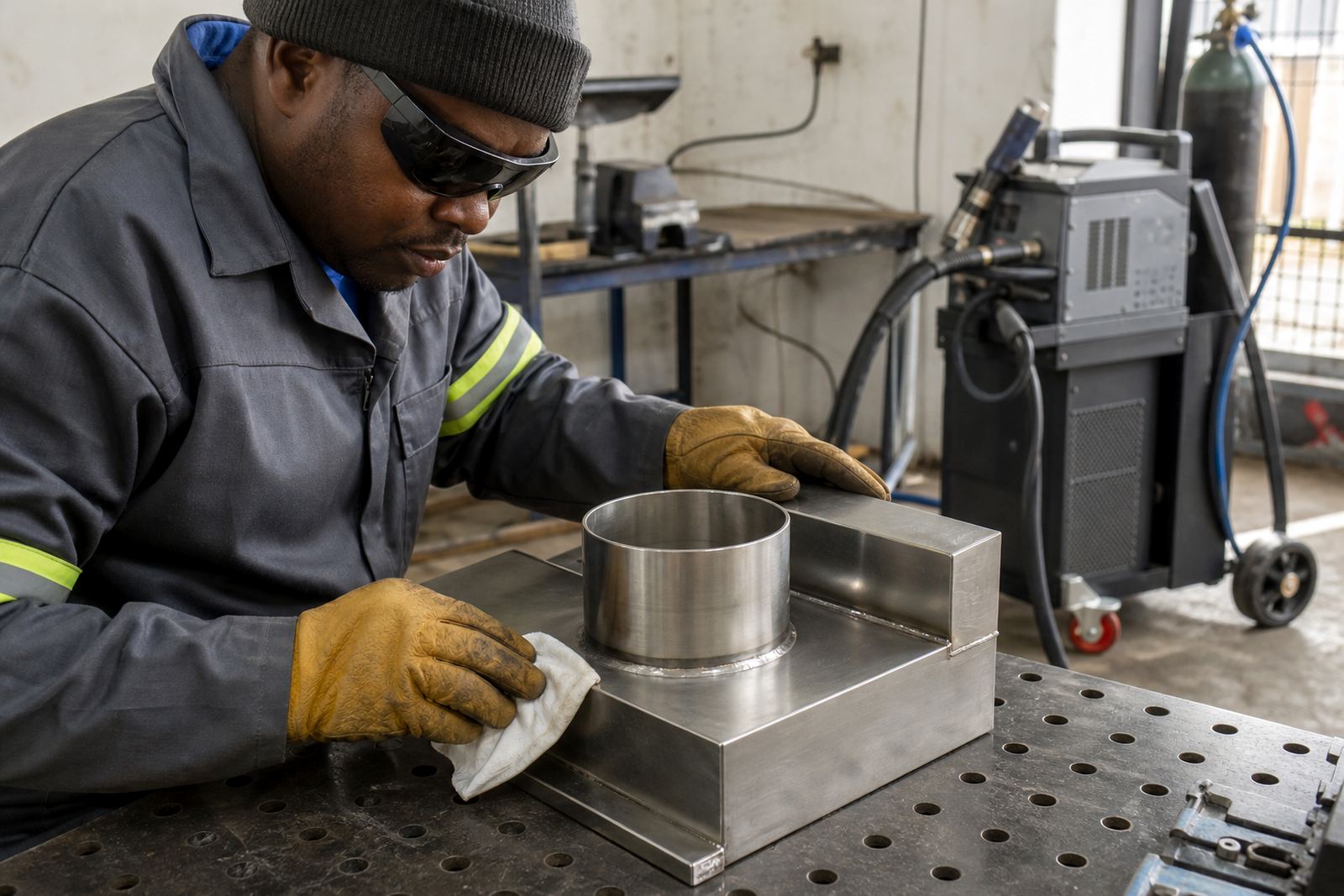
The course focused on handheld laser welding for sheet metal applications, with attention to joint prep, travel speed, torch angle, beam control and finish quality. We worked through common workshop conditions such as dissimilar thicknesses, short runs, tight corners and parts that need neat cosmetic appearance after welding. The team also learned how to spot where laser welding is suitable and where a different repair method may still be the better choice.
Because the crew wanted a proper routine they could repeat in their own shop, we included setup checks before each run, sample welds, visual inspection, and a simple sign-off method for completed work. We also discussed how load shedding can interrupt workflow and why a clean restart procedure matters when power returns. In a coastal or humid workshop this same discipline helps with storage, cable care and keeping consumables dry.
- Handheld laser welding setup and controls
- Joint preparation and fit-up checks
- Visual inspection for bead consistency and distortion
- Safe restart steps after interruptions
- Workshop habits for humid or dusty conditions
Safety, fume control and eye protection
Safety was a major part of the brief. We explained the laser class in practical terms, why the work area must be controlled, and why the operator and nearby workers need the right eye protection for the equipment being used. The team also looked at reflective surfaces, warning signs, and how to keep non-essential staff outside the active welding zone. For a mixed production shop, that control is just as important as the weld itself.
Fume extraction formed part of the training plan as well. Even though handheld laser welding can be cleaner than some older methods, the operator still needs proper extraction and good airflow where materials or coatings may release fumes. We covered hose position, extraction start-up, and housekeeping around the bench so dust, offcuts and packaging do not build up near the work area. Anele led the safety segment and made sure the group understood that PPE, eye protection and routine checks are not optional.
- Laser class awareness and controlled access
- Correct eye protection for the task
- Fume extraction placement and start-up checks
- Clear bench space and safe cable routing
- Simple signage for workshop control
Starter kit setup for a working shop
As part of the job, we supplied starter kit guidance for the crew and showed them how to set up the basic items needed for day-to-day use. That included the machine position, work table layout, hand tools, cleaning items, inspection tools and storage for accessories. The aim was not to overcomplicate the bench. It was to make sure the team could start, work, inspect and pack away with the same routine every time.
Kagiso worked with the group on kit selection and practical setup, while Lerato handled technical support questions during the session. We also discussed consumables planning so the shop can keep the right spares on hand without overbuying. The crew asked for advice on where to place the unit in relation to cutting and folding stations, and we looked at traffic flow, cable length and safe access for operators. This kind of planning helps in larger Gauteng workshops where space is tight and people move between bays often.
- Starter kit layout for a small to medium workshop
- Tool placement for quick access and tidy storage
- Consumables planning for normal workshop use
- Bench layout to reduce clutter and movement
- Practical support for first-time operators
Timeline and how the training was run
The project ran over two weeks from first enquiry to completion of the training and follow-up support. Week one covered the training plan, readiness questions and the topics needed for the Alberton team. Week two was the hands-on session at our Boksburg base, followed by review notes and a certificate of completion for each learner who attended the course. The timing worked well for a workshop that could not afford to lose too many people from the floor at once.
Our team made the course practical from the start. Naledi coordinated the booking and learner list, Pieter led the welding instruction, Anele handled safety and compliance, and Brandon supported the workshop side of the session. After the course, we sent a training document pack and a simple set of refresher points so the supervisors could repeat the key steps back at work. The client wanted something they could use immediately, not a thick file that sits on a shelf.
- Week 1: course planning and readiness checks
- Week 2: practical training and review
- Completion: certificate of completion from LaserWelder Training
- Aftercare: training pack and refresher notes
Results they wanted to see in the workshop
By the end of the course, the team had a shared process for setup, welding and final inspection. That made it easier for supervisors to compare work across different operators and spot issues sooner. The workshop also had clearer safety habits around eye protection, extraction and controlled access, which matters when several jobs are running at the same time. The biggest gain was consistency, because once a team uses the same method it becomes easier to train new staff and keep quality steady.
We would do the same thing again for a sheet metal team in Alberton or any other South African workshop. Start with the actual job mix, confirm the space and power setup, then build the course around the parts they weld most often. For a workshop working through load shedding, humid conditions or a busy production schedule, that practical approach saves time later. Founded in 2012, LaserWelder Training has found that the best results come when the training fits the floor, not the other way around.
- Shared method for operators and supervisors
- Better consistency on thin sheet work
- Clearer safety control in the work area
- Useful for future refresher visits and operator inductions
Key facts
| Project | Alberton Sheet Shop training run |
|---|---|
| Town | Alberton, Gauteng |
| Training base | Boksburg, Gauteng |
| Course type | Hands on handheld laser welding training |
| Duration | 2 weeks from enquiry to completion |
| Outcome | Certificate of completion from LaserWelder Training |