
What the Cape Town team needed
The client was a small startup in Cape Town setting up light fabrication work and repair jobs that would rely on handheld laser welding. Their main need was not just training, but a way to choose the right starter kit, understand the daily workflow and avoid mistakes that can slow a new shop in its first few months. They also needed guidance that made sense for local operating conditions, including coastal humidity, power interruptions and workshop ventilation.
The brief was practical from the start. The team wanted business planning support linked to training, so they could buy only what they needed and avoid paying for kit that would sit unused. They also needed a clear path for staff to learn safe operation, basic maintenance and job setup before taking on paid work.
- Town: Cape Town
- Business type: startup workshop and jobbing service
- Main focus: handheld laser welding for light-duty production and repairs
- Support needed: training, kit selection and workflow planning
The brief and the site constraints
The biggest constraint was that the startup had limited space and only a modest power supply available at launch. That meant the training had to cover equipment placement, cable routing, ventilation and where to store consumables without cluttering the work area. We also had to factor in moisture control because coastal air can affect stored parts, lenses and other sensitive components if they are left exposed.
Another issue was staffing. The team had different skill levels, so we could not assume everyone would learn at the same pace. We split the support into manageable steps: safety first, then machine handling, then practice on scrap material before any job work. That kept the learning curve steady and gave the owner a clearer view of who could handle which task.
- Constraints: limited floor space, modest power availability and mixed experience levels
- Environmental concern: coastal humidity and storage care
- Operational concern: safe airflow, cable management and clear bench movement
- Training need: step-by-step learning rather than a single long session
How we structured the four-week rollout
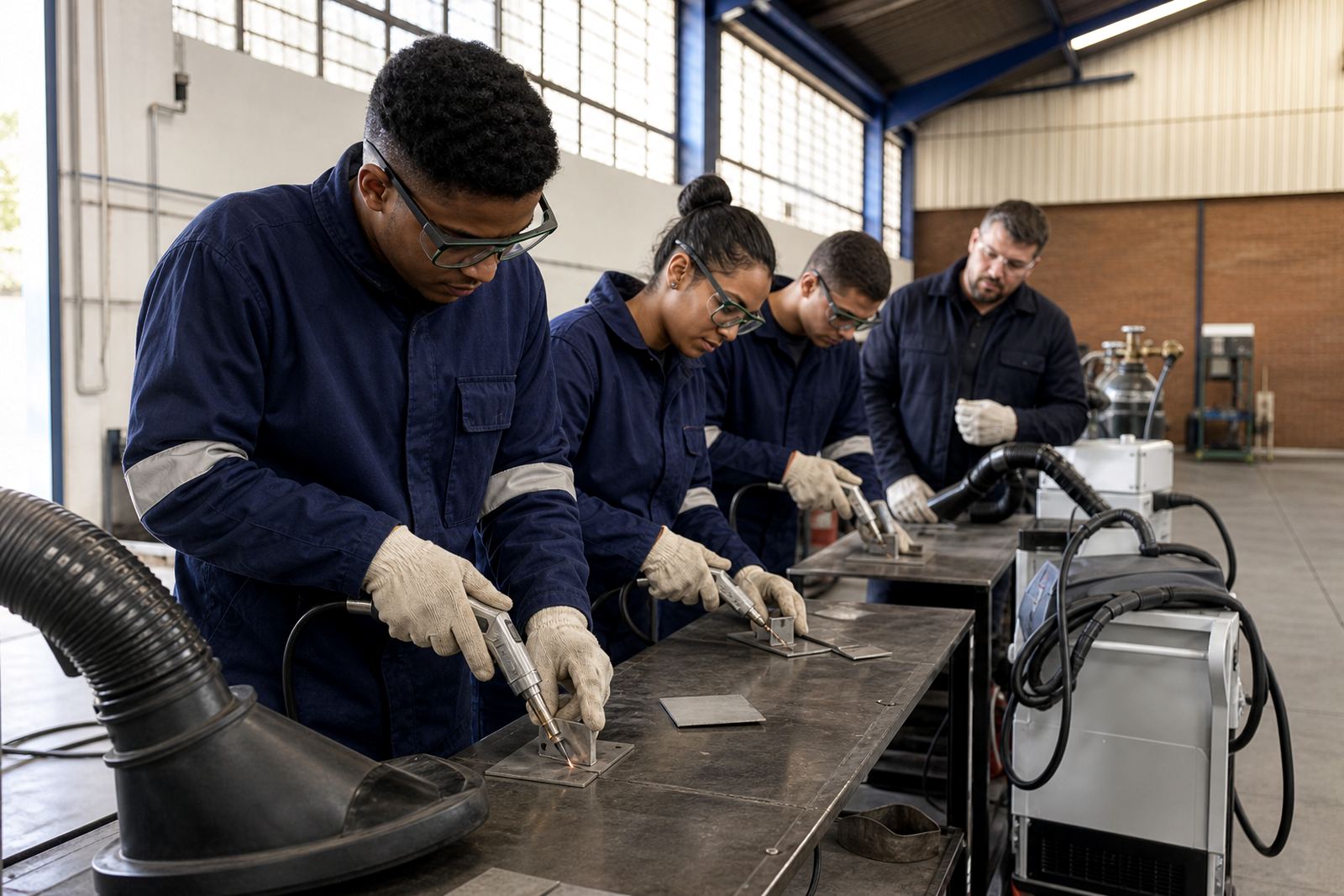
We delivered the project over four weeks. Week 1 covered a site readiness check, operator induction and a safety briefing. Week 2 focused on course attendance and the basics of handheld laser welding, including joint prep, torch control, travel speed and test pieces. Week 3 was used for starter kit selection and setup advice, so the workshop could choose consumables and accessories that suited the work they planned to take on.
By week 4, we moved into practice plans, supervisor coaching and a final quality walkthrough. That final session was useful because the team could compare early welds with later ones and see where consistency had improved. It also gave them a simple checklist to use when they were working without an instructor present, which was important for a startup trying to stay organised from day one.
- Week 1: site readiness check, operator induction and safety briefing
- Week 2: hands-on course attendance and weld practice
- Week 3: starter kit selection and setup guidance
- Week 4: practice plans, supervisor coaching and quality walkthrough
Safety, extraction and the kit choices
Safety was treated as a core part of the work, not an extra. We covered laser class awareness, eye protection requirements and why the operator should never rely on ordinary workshop sunglasses. Everyone was shown how to check that the correct eyewear was in place before firing up the unit, and how to keep bystanders out of the active area. Fume extraction was also discussed in plain terms, because metal vapour and smoke need to be pulled away from the breathing zone during welding.
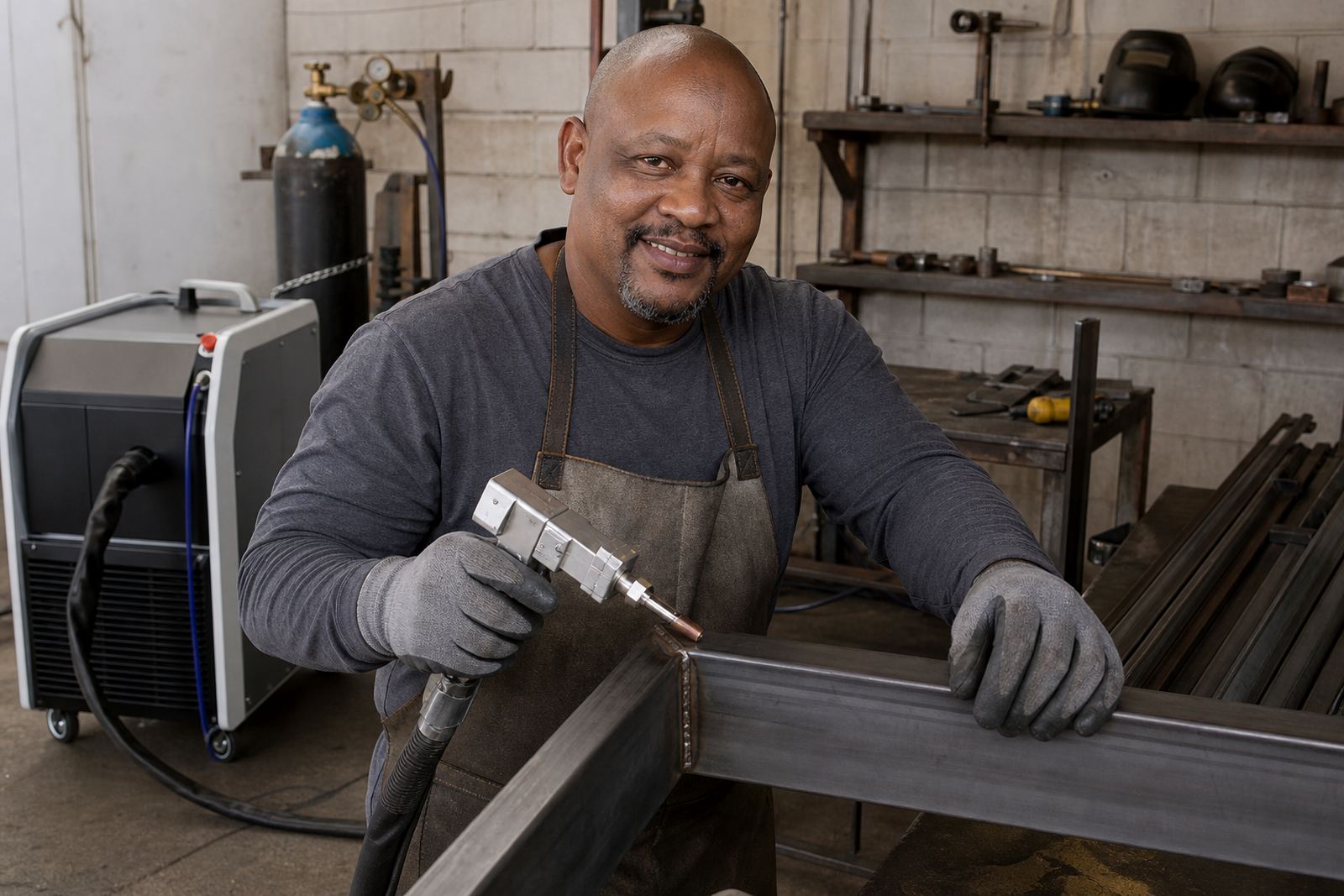
For the starter kit, we kept the recommendation practical. The focus was on the machine, torch, protective eyewear, basic cleaning tools, nozzle care items, spare consumables and storage that would hold up in a working shop. We also gave guidance on what should be bought later and what could wait. That helped the startup control spend and build up stock in a sensible order, not all at once.
- Safety topics: laser class, eye protection and bystander control
- Workshop control: fume extraction and clear work zones
- Starter kit focus: essential tools, consumables and safe storage
- Buying approach: phased setup instead of overbuying on day one
Training content that matched the business plan
The client did not want training in isolation. They wanted a link between the technical side and the business side, so we built the support around what the workshop intended to sell. That included workflow advice, consumables planning and a simple way to estimate how long common jobs might take. We also covered refresher visits and technical help, because new operators often need a second look after they have handled a few real jobs.
We supplied a training document pack that the owner could keep with the workshop records. It gave them a written reference for safety notes, setup steps and the order of checks before work begins. The team said this was helpfull because it cut down on repeated questions and kept everyone on the same page.
- Workflow advice linked to the types of jobs they planned to offer
- Consumables planning for early-stage stock control
- Training document pack for workshop reference
- Support options for follow-up help after the initial rollout
Results and what we would repeat
By the end of the project, the startup had a clearer setup, better operator confidence and a more controlled way to begin using handheld laser welding in day-to-day work. They could explain the safety steps, manage the basic kit, and make more informed decisions about which jobs to accept first. The owner also had a better sense of how to supervise the team and spot quality issues early, before work left the shop.
If we were to do this one again, we would keep the same order: readiness check first, then training, then kit selection, then follow-up support. That sequence suits a new workshop because it avoids rushed purchases and gives the team time to learn before pressure builds. For a Cape Town startup working with coastal conditions and limited space, that order makes the launch easier to manage and less messy.
- Outcome: clearer setup and better operator confidence
- Outcome: safer daily practice and more controlled workflow
- Repeat approach: assess, train, kit up, then support
- Best fit: startup workshops that need structure before scaling
Key facts
| Project town | Cape Town |
|---|---|
| Client type | Startup workshop |
| Training format | Hands-on handheld laser welding course |
| Project duration | 4 weeks |
| Support scope | Site readiness checks, inductions, safety briefings and kit setup |
| Outcome | Certificate of completion from LaserWelder Training |
| Operating context | Coastal humidity, limited space and local power interruptions |