What the learner needed in Boksburg
The brief came from a local gate-making learner in Boksburg who wanted to move beyond basic cutting and grinding and start doing neat welds on lighter fabrication work. The aim was simple, build confidence with handheld laser welding, understand the safe way to use the equipment, and leave with a clear starter kit plan for a small workshop or home setup.
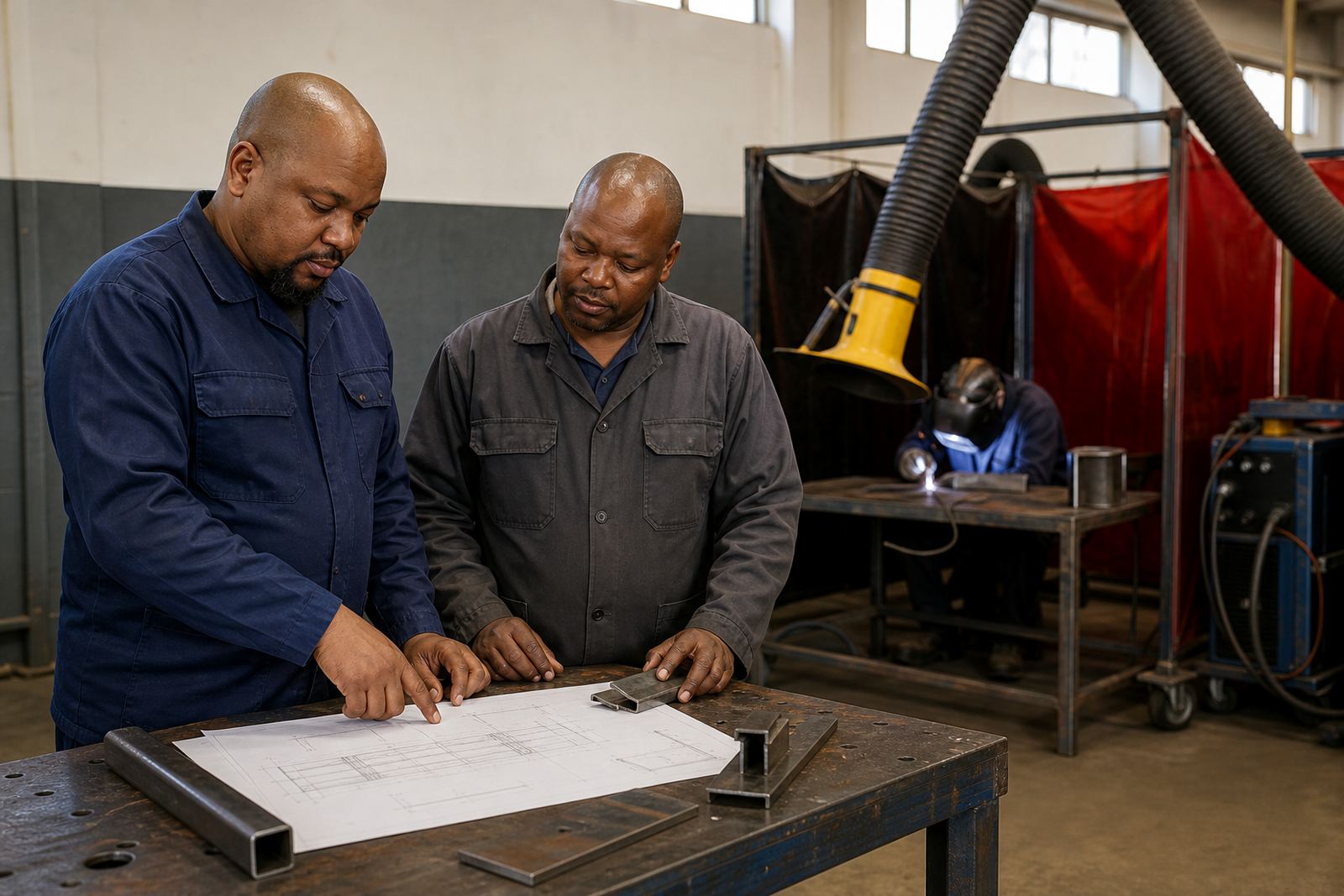
The learner was not looking for theory only. He needed practical steps for making gates, frames and brackets where clean seams matter, and where rework costs time and material. We kept the focus on beginner control, fit-up, joint prep, travel speed and basic fault spotting, all in plain language.
- Client type: individual learner moving into gate making and light fabrication
- Town: Boksburg, Gauteng
- Goal: beginner skill building plus a starter kit plan
- Work focus: handheld laser welding for steel work and small repairs
Training plan and safety setup
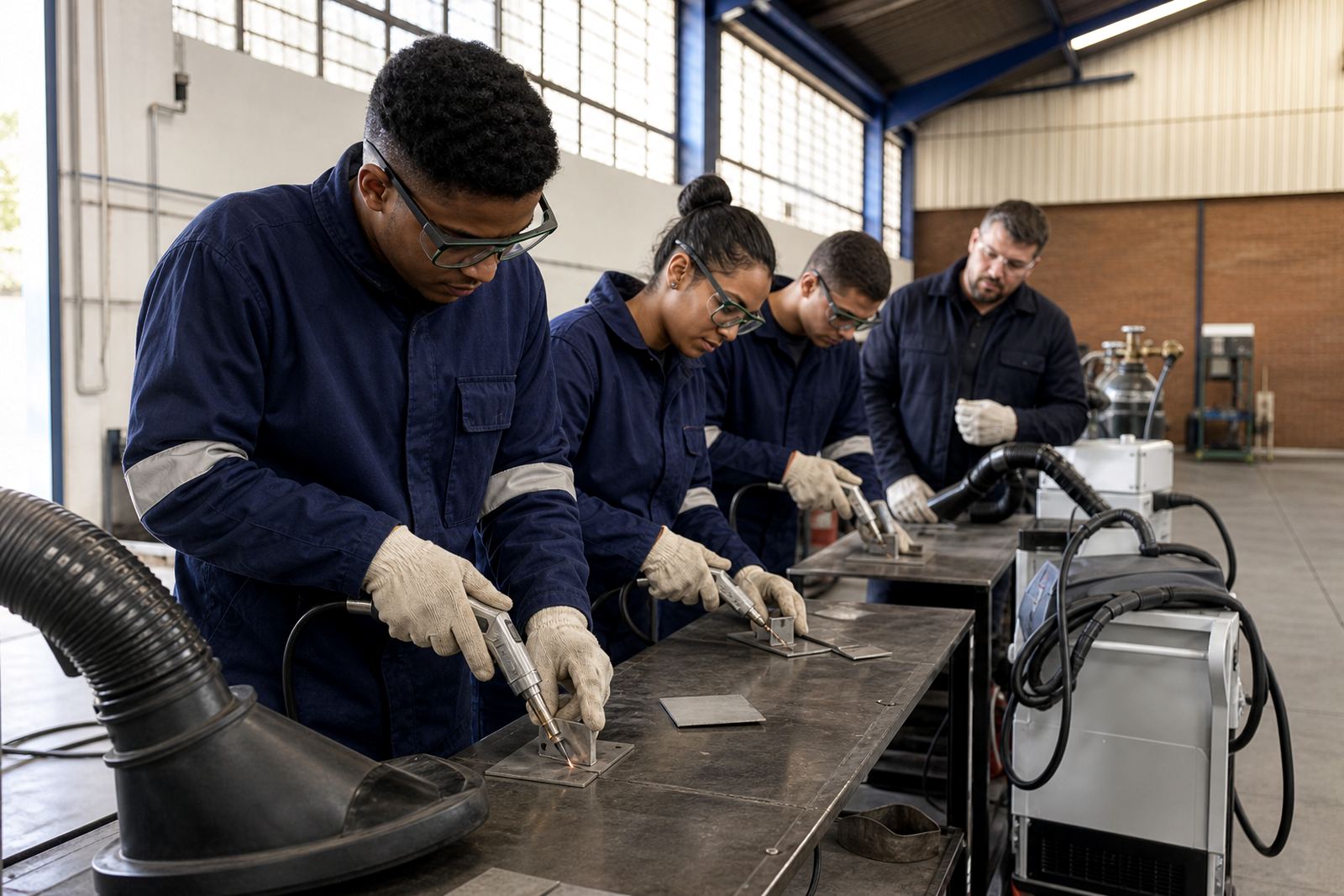
We started with a safety briefing before any welding. Laser welding needs the right controls in place, because the beam and reflections must be treated with care. The learner was shown the class of laser equipment being used, why controlled access matters, and how to work with suitable eye protection for the task at hand. We also covered fume extraction and why it matters even on short practice runs, especially in a closed workshop or during load shedding when fans and airflow can be less reliable.
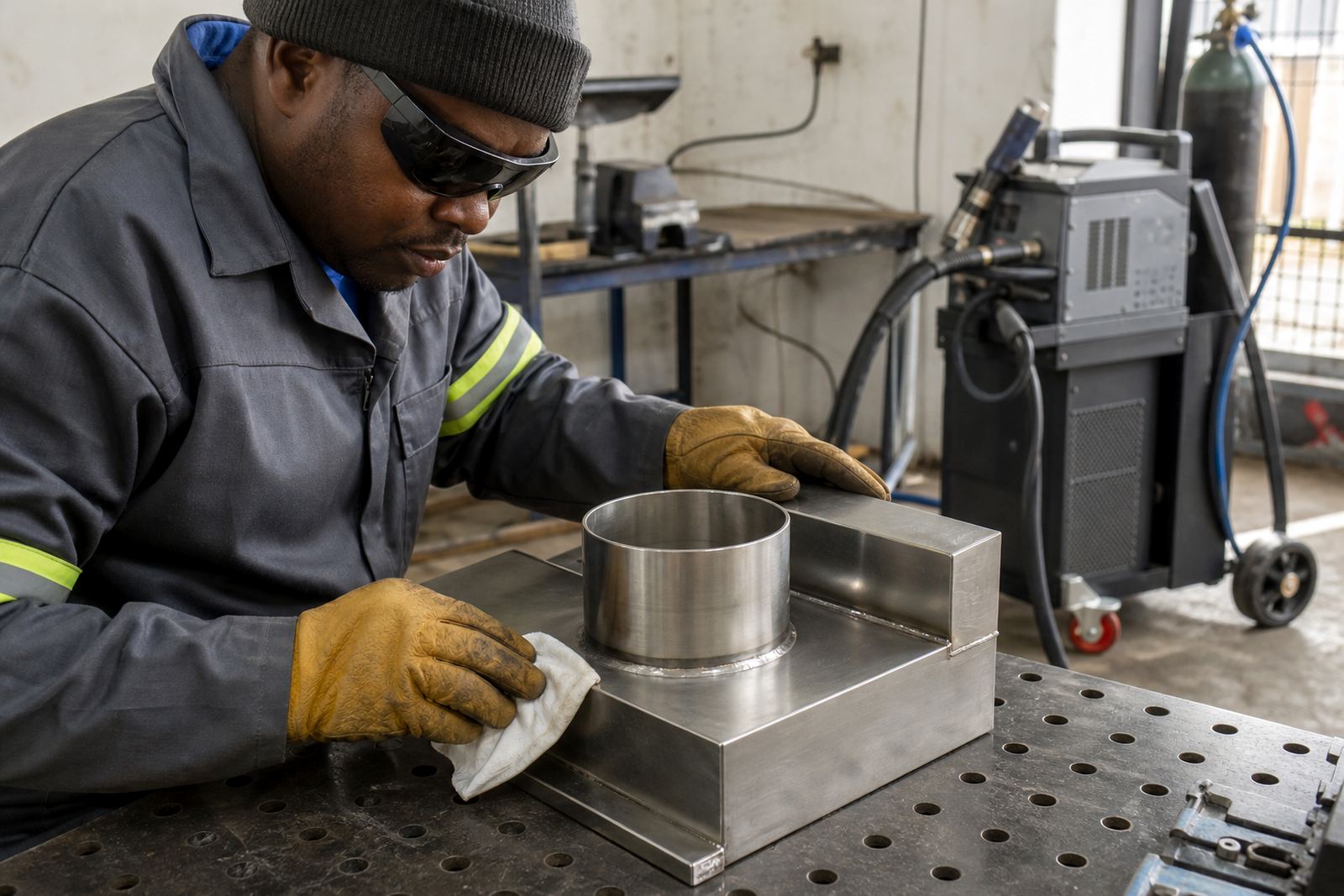
The practical sequence ran from simple beads on offcuts to short joints on gate-style sections. We covered trigger control, torch angle, cleaning the joint, and how to avoid heat issues on thin material. One small point that came up often was surface prep, because a clean edge makes a big diffrence to the finish and the amount of rework needed.
- Safety topics covered: laser class awareness, eye protection, extraction, work area control
- Workshop topics covered: material prep, joint alignment, travel control and finish checks
- Learning style: short demo, repeat practice, then correction on the next pass
What we supplied and set out
Because the learner wanted a practical start, we prepared a starter kit plan that suited a small gate-making workflow rather than a large production shop. The kit was set out around essentials only, so the learner could begin with equipment that supports clean, repeatable work without buying items that would sit unused.
We discussed the key items needed for first use, what could be added later, and what should be checked before any site or workshop session. We also gave guidance on consumables planning so the learner would not run short halfway through a job. In a Gauteng workshop, that matters when you are trying to keep work moving between power cuts and supplier delays.
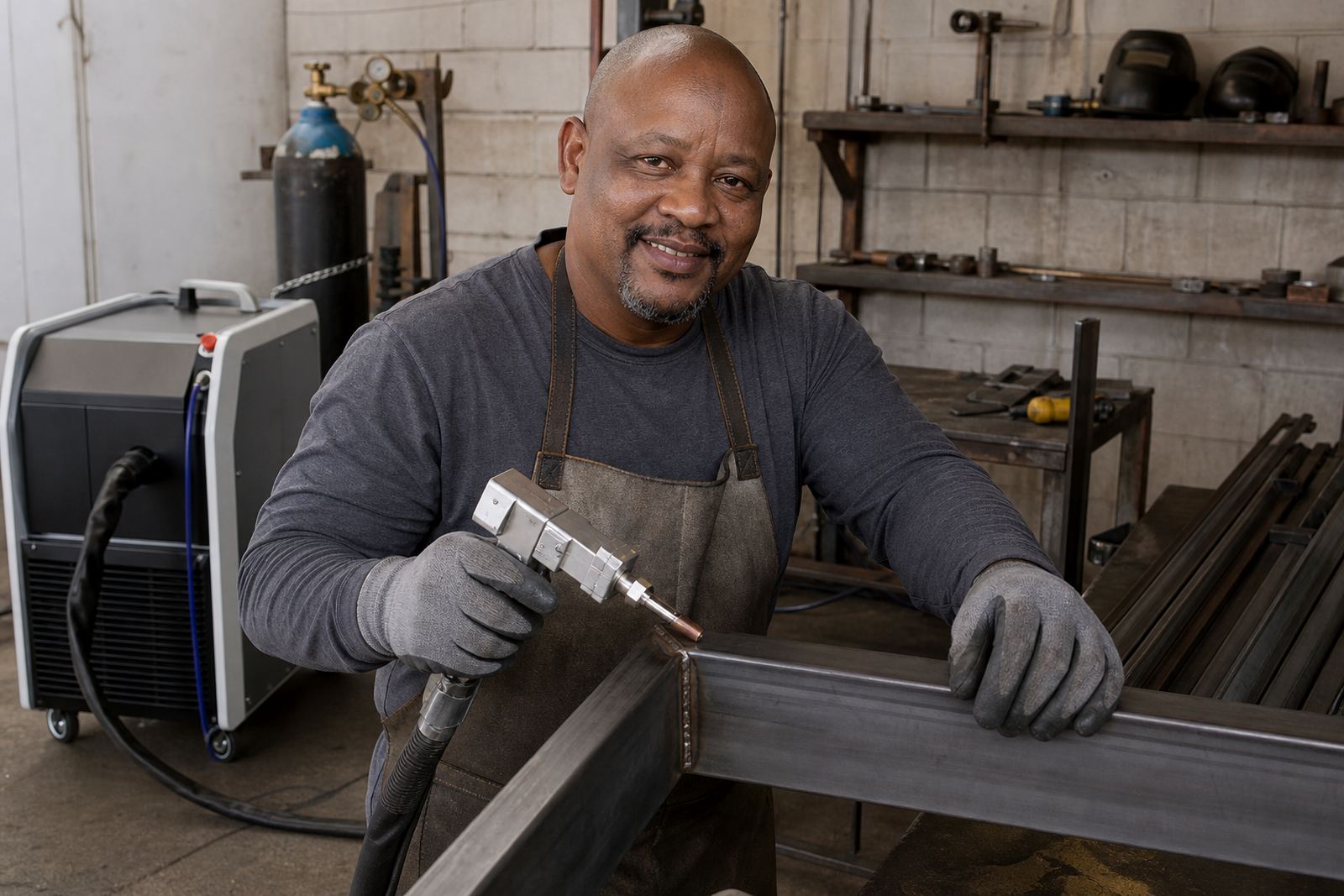
- Starter kit focus: handheld laser welding unit, eye protection, extraction support and basic cleaning tools
- Setup guidance: workbench layout, cable routing, safe storage and first-use checks
- Planning support: consumables list, spares list and a simple maintenance routine
How the weeks were structured
The project ran over 3 weeks. Week 1 covered induction, safety and machine familiarisation. Week 2 moved into hands-on practice on test pieces, with repeated passes on straight joints and corner joints. Week 3 focused on gate-style sections, finish checks, and a starter kit walk-through so the learner knew how to set up at home or in a workshop.
That pace worked well because a beginner needs enough repetition to build steadiness, but not so much information that the main points get lost. We kept each session practical and tied it back to gate making, since that was the learner’s immediate use case. By the end, the learner was able to explain the setup steps back to us and make a basic quality check before handing work over.
- Week 1: induction, safety briefing and equipment orientation
- Week 2: practice on offcuts and controlled joints
- Week 3: gate-style application, checks and starter kit planning
Results for the learner and the workshop path
By the end of the training, the learner completed the beginner course and received a certificate of completion from LaserWelder Training. More importantly, he left with a working understanding of the process and a clear idea of what his first setup should include. The result was not just a certificate on paper, but a practical route into gate work with fewer mistakes and better control over finish quality.
For a learner in Boksburg, that kind of outcome is useful because local gate and fabrication jobs often need neat, tidy work rather than heavy industrial welding. The learner also had a better sense of when handheld laser welding is suitable and when a different process would still be the better choice. That keeps a small workshop honest and helps avoid wasted material.
- Outcome: beginner skill gained and certificate of completion issued
- Workshop benefit: better control on light fabrication and gate components
- Business benefit: a clearer first-buy list instead of guesswork
What we would repeat on the next job
If we were doing this again for another gate maker, we would keep the same structure: safety first, then short practice runs, then a starter kit plan matched to the learner’s actual workload. That approach keeps the training grounded and avoids sending someone away with equipment they cannot use properly yet.
We would also repeat the site readiness check and the operator induction before the first proper workshop use. For a small operation in Gauteng, that step saves time later and helps keep the work area tidy and safe. It also gives the learner a better starting point for supervisor coaching or refresher visits if the workshop grows.
- Repeat approach: induction, hands-on practice, then kit planning
- Best next step: short refresher after first few jobs
- Support options: technical help, workflow advice and training document pack
Key facts
| Project location | Boksburg, Gauteng |
|---|---|
| Client type | Individual gate-making learner |
| Training level | Beginner |
| Course outcome | Certificate of completion from LaserWelder Training |
| Timeline | 3 weeks |
| Main focus | Handheld laser welding, safety and starter kit planning |