
What the Germiston workshop needed
The client was a fabricator based in Germiston working mainly on stainless steel parts for local manufacturing and repair jobs. The team had already started using handheld laser welding for light fabrication, but the welds were not yet consistent across different thicknesses and joint types. Some sections looked sound at first glance, but later finishing showed pinholes, poor tie-in, and variation from one operator to the next.
The brief was simple: improve consistency on stainless work, reduce rework, and give the operators a clearer process they could follow on every shift. They also wanted better control for smaller parts, because a few jobs needed neat edges and low heat input without distortion. We agreed to run intermediate training, then follow up with a practical walk-through on their own workflow. The workshop had to keep running, so the plan had to fit around production hours and stock already on hand.
- Client type: general fabrication workshop
- Town: Germiston, Gauteng
- Main material focus: stainless steel
- Skill level: intermediate
- Goal: improve repeatability and finish quality
Training setup and the key constraints
The main challenge was not the machine alone, it was the day-to-day setup around it. The workshop had mixed job sizes, limited space at some benches, and load-shedding risk that can interrupt timing and process flow. Stainless work also needs cleaner handling than mild steel, so we spent time on surface prep, storage, and keeping contamination away from the weld area. In a busy shop, small things like dirty gloves or poor part fit-up can spoil a good weld pretty quickly.
Safety was treated as part of the process, not an add-on. We covered handheld laser welding as a Class 4 laser process, which means correct eye protection, controlled access, clear marking, and proper operator habits every time. We also checked their fume extraction arrangement and reminded the team that even when the weld looks clean, fumes still need to be captured and moved away from the breathing zone. On stainless, that matters even more because the smoke can be harder on the lungs if extraction is weak or positioned badly.
- Laser class: Class 4 handheld welding process
- Protective gear: laser-rated eye protection, gloves and closed footwear
- Workshop controls: marked welding area and operator-only access
- Air quality: local fume extraction at the work point
- Power planning: fallback routine for load-shedding interruptions
What we supplied on the floor
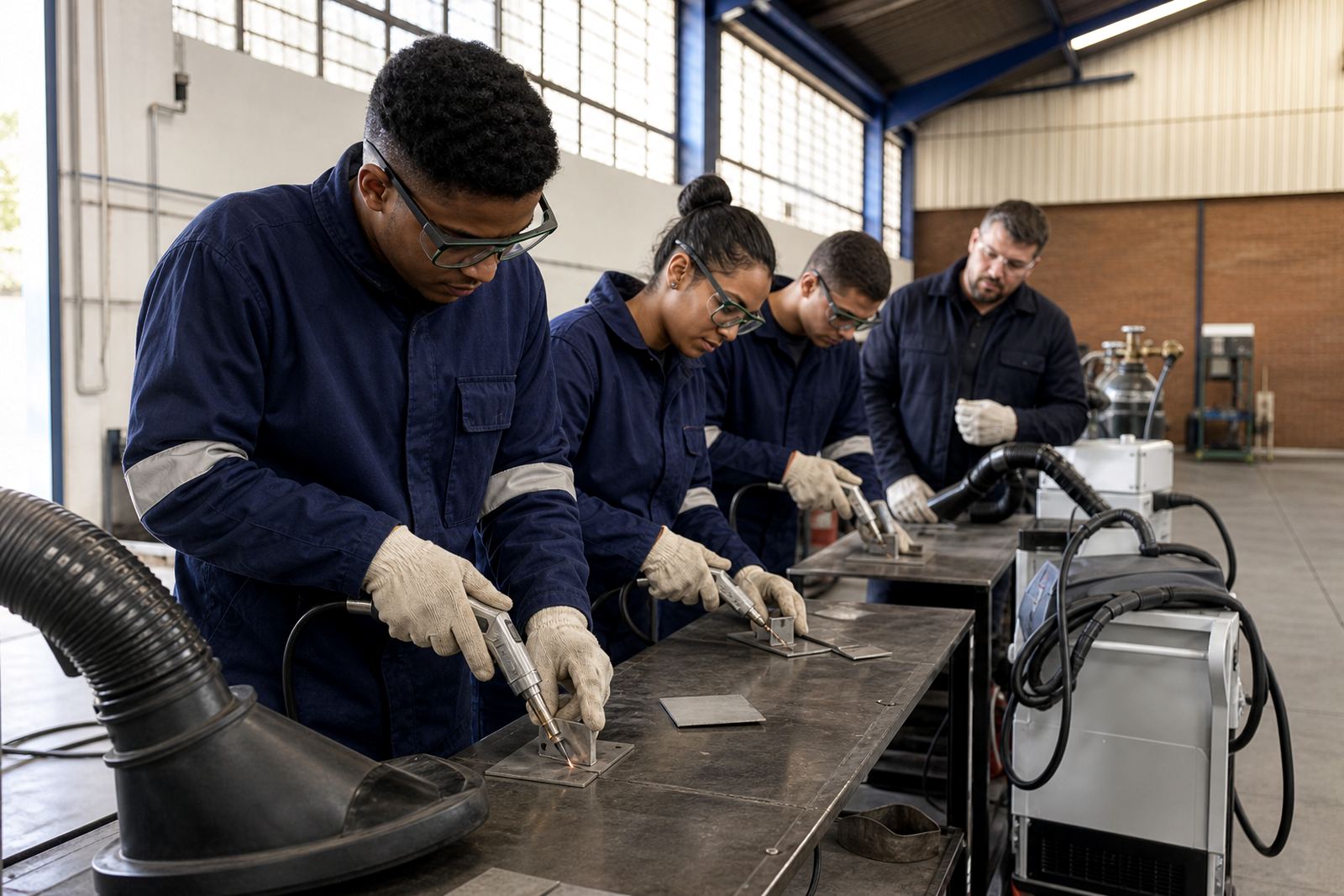
We supplied hands-on instruction, a practical set of starter kit guidance, and a training document pack that the team could keep at the workshop. The course covered machine handling, torch position, travel speed, angle control, focus distance, and how to spot the signs that a joint is going out of spec before the finish suffers. Pieter led the welding practicals, while Anele handled safety and process checks so the operators had both the technical and the control side covered.
Because the team wanted to work more independently after training, we also walked through starter kit setup in plain terms. That included the core items needed for learner use and workshop practice, plus how to store and issue consumables so the kit does not disappear into general stock. The starter kit discussion was generic and practical, not tied to a single supplier. It covered the kind of equipment a shop needs to begin controlled practice, rather than buying extra items that sit unused on a shelf.
- Handheld laser welding technique coaching
- Starter kit setup guidance for learner use
- Practice plans for stainless steel joints
- Quality walkthroughs on finished samples
- Training document pack for in-house reference
How the two-week programme ran
The project ran over 2 weeks. Week one covered the basics and the workshop reset: safety briefing, equipment checks, joint preparation, and practice on test coupons. The operators started with simple beads and straight seams, then moved into lap joints and short stitch runs. We watched for heat control, undercut, and how well the weld tied into the parent metal. A few early passes needed adjustment, which is normal when a team is moving from general welding habits to handheld laser work.
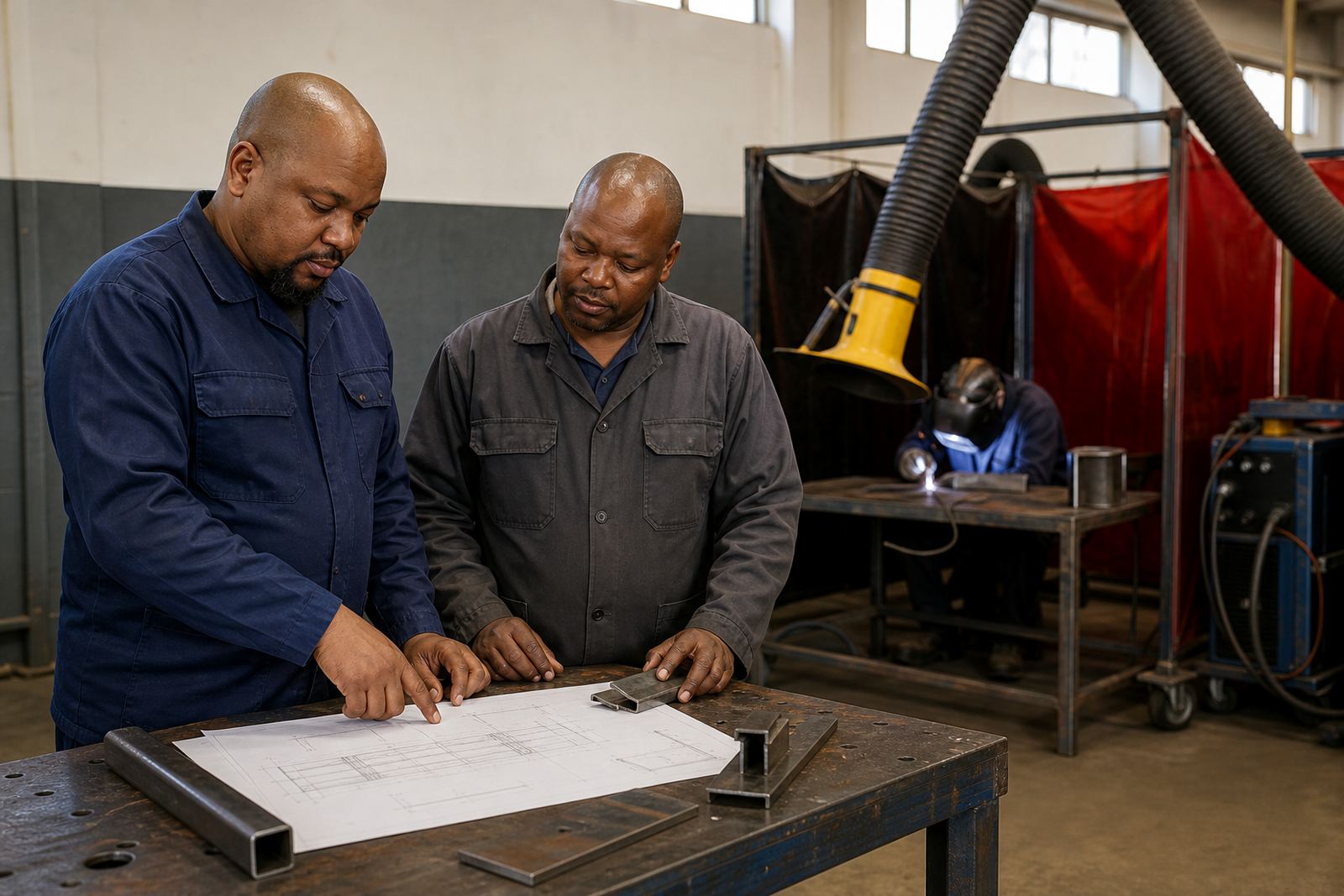
Week two focused on the real jobs they wanted to improve. We set out a routine for repeatable setup, adjusted the practice plan for the thicknesses they use most often, and added supervisor coaching so the lead hand could keep the standard after training day. The team also went through a refresher on maintenance checks and cleaning, because dirty optics and poor housekeeping can ruin a good day fast. By the end of the second week, the crew had a clearer process and fewer stop-start moments during the weld sequence.
- Duration: 2 weeks
- Format: hands-on workshop based training
- Progression: test coupons first, then live job practice
- Support: supervisor coaching and technical follow-up
Results on stainless work
The most useful result was consistency. The workshop moved from mixed results and a lot of finishing work to a more even weld appearance and better control on repeated parts. Operators gained a better feel for travel speed and torch angle, which helped reduce rework on stainless sections and cut down on avoidable touch-ups. The team also became more careful about part prep and clamping, which made the welds more predictable.
The client was also able to use the certificate of completion issued by LaserWelder Training for the people who finished the course. That gave them a clean internal record of who had completed the practical training and who still needed more time on the floor. In a production workshop, that sort of record helps with supervision, especially when different people rotate through the same machine. It also gave management a clearer basis for assigning higher value jobs to the right operator.
- Better weld consistency on stainless
- Less rework and less finishing time
- Improved operator confidence
- Clearer internal sign-off after training
- Certificate of completion issued by LaserWelder Training only
What we would do again for a similar workshop
If we were called back to a similar Germiston workshop, we would repeat the same practical structure and keep the focus on the jobs they actually run. That means starting with joint prep and safety, then moving into short production style runs rather than only isolated test pieces. We would also spend time on consumables planning, because a workshop that runs out of the right items halfway through a shift loses time and consistency. A small typo in planning sheets can cause big headaches later, so keeping records tidy matters more than people think.
We would also keep the follow-up visit in the plan. Once the first pressure of training has passed, small habits can drift. A short refresher visit helps reinforce the same settings, the same cleaning routine, and the same eye protection and extraction habits. For this kind of work, the best result comes from repetition and clean process control, not from trying to rush the learning. That is where the workshop gets the real value.
- Repeat the same practical structure
- Train on live workshop jobs, not only samples
- Include consumables planning from the start
- Book a refresher visit after the first production run
Key facts
| Project | Intermediate handheld laser welding training |
|---|---|
| Client location | Germiston, Gauteng |
| Material focus | Stainless steel |
| Programme length | 2 weeks |
| Training outcome | Certificate of completion from LaserWelder Training |
| Support included | Safety briefing, starter kit guidance, supervisor coaching, technical follow-up |