The brief from Edenvale
The client was a small business owner based in Edenvale, Gauteng, looking at service expansion for a busy repair and fabrication shop. The brief was practical from day one: learn whether handheld laser welding could handle common light fabrication and repair work, train a small team over one weekend, and leave with a clear safety procedure that could be applied back at the workshop. They also wanted a starter kit that would suit a controlled learning environment rather than a full production line.
We kept the scope tight. The work had to fit into two days, stay relevant to local workshop conditions, and avoid any disruption to normal operations. That meant focusing on material preparation, joint access, heat control, and the set-up basics that matter when you are working in a real shop with dust, traffic, and load-shedding to plan around. We also factored in the need for simple written guidance that the owner could use with staff after the weekend.
What we planned for the weekend
The training plan was built around a Saturday and Sunday bootcamp, with a short safety module at the start of each day. The first block covered how handheld laser welding works, how to set up the work area, and how to use the torch on mild steel and selected stainless offcuts in a controlled way. The second block moved into safety, including laser class awareness, eye protection, reflective surfaces, PPE, and why extraction matters when you are working on coated or dirty metal.
- Weekend format: 2 days
- Group size: small enough for hands-on supervision
- Focus materials: mild steel and stainless steel offcuts
- Safety topics: laser class, eye protection, fume extraction, housekeeping
- Deliverable: certificate of completion from LaserWelder Training
The client also asked for practical advice on how to stage the machine in the workshop. We covered bench layout, cable routing, storage of consumables, and how to separate the welding area from general foot traffic. In an Edenvale shop where space can be tight, that planning makes a difference. One small mistake with layout can slow the whole day down.
Hands-on training and starter kit setup
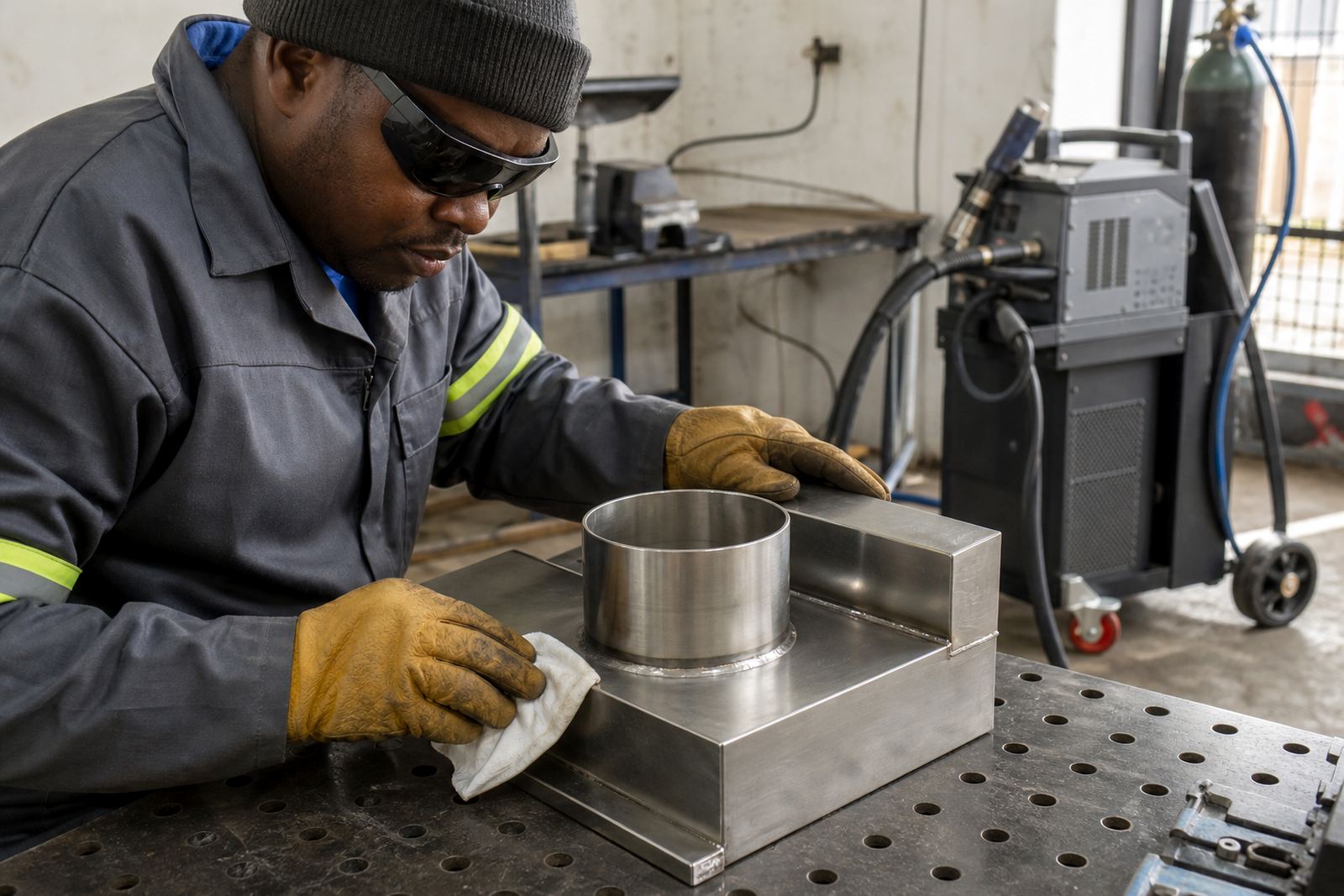
Once the safety discussion was done, we moved into live practice. Pieter van der Merwe led the welding instruction while the rest of the team supported the learners with set-up checks, torch handling, and technique correction. The learners practised bead control, travel speed, joint alignment and cleaning between runs. They also learned how to spot signs of poor fit-up before starting the weld, which saves time and reduces rework.
Kagiso Molefe handled the starter kit side, showing what is typically needed for a lean first setup and what should be kept as spares. Lerato Mokoena then took over the technical support walk-through, which covered basic fault finding, routine checks and how to prepare a machine for the next session after power interruptions. With load-shedding a normal part of planning in Gauteng, that conversation was important.
- Starter kit orientation for new operators
- Basic consumables planning for first jobs
- Machine care before and after use
- What to check after a power interruption
- How to keep the work area ready for the next shift
We also included a short walkthrough on fume extraction and why it should run before any weld starts, not after. The learner group responded well to the practical side of the work. They wanted to see what the machine could actually do on real metal, not just hear theory. That approach suited the brief and kept the weekend focused.
Safety module for a working shop
A big part of the brief was making sure the owner could introduce laser welding without creating new risk. Anele Dlamini covered the safety and compliance points in plain language, starting with the basics of laser class and the need to treat the equipment with care even when it looks compact. We looked at eye protection, shielding, reflections from polished surfaces, and the importance of restricting access while the machine is in use.
We also discussed fume extraction for the types of materials likely to be processed in a workshop environment. Even with clean-looking sheet metal, smoke and fine particles can build up fast, so extraction should be planned as part of the job, not added later. The team also received a simple safety brief they could reuse with staff before each shift. That document pack made the process easier to repeat back in Edenvale.
Key safety takeaways included:
- Use the correct eye protection at all times
- Keep reflective items away from the work zone
- Run extraction before welding starts
- Keep bystanders out of the immediate area
- Check cables, torch condition and guards before use
Timeline and outcome
The project ran over 2 weeks from first enquiry to handover. The first week was used to confirm the scope, agree the weekend structure, and map out what the learner group needed from the training. The second week covered the actual bootcamp, the safety briefing, and the final document handover. After that, we stayed available for follow-up technical help and refresher guidance through the contact form.
By the end of the weekend, the entrepreneur had a clearer view of how handheld laser welding could fit into the workshop. The team left with a certificate of completion from LaserWelder Training, a better understanding of safe operation, and a practical sense of what jobs would suit the process. They could also see where the method would save time on certain repair tasks while still requiring good prep and disciplined workflow.
- Delivered over 2 weeks
- Weekend training completed on site-ready terms
- Safety briefing and training document pack issued
- Certificate of completion awarded to attendees
- Follow-up support available for workflow questions
What we would repeat for the next Edenvale job
If we were doing the same project again, we would keep the weekend format and the split between technique and safety. That balance worked well for a business owner who needed usable skills quickly, not just classroom notes. We would also keep the starter kit discussion early in the process, because once learners see the machine in use, they understand much better which items are essential and which are extras.
For a workshop in Edenvale, or any Gauteng town with irregular power supply and limited floor space, we would again prioritise extraction, clear work zones, and simple written procedures. The strongest result from this project was not only the welding practice itself but the confidence the team gained in managing the process properly. That is what makes the next job easier to quote, easier to run, and easier to control.
Key facts
| Project type | Weekend bootcamp and safety module |
|---|---|
| Client location | Edenvale, Gauteng |
| Training format | 2 day hands-on session |
| Core focus | Handheld laser welding, safety, starter kit setup |
| Safety covered | Laser class, eye protection, fume extraction |
| Outcome | Certificate of completion from LaserWelder Training |