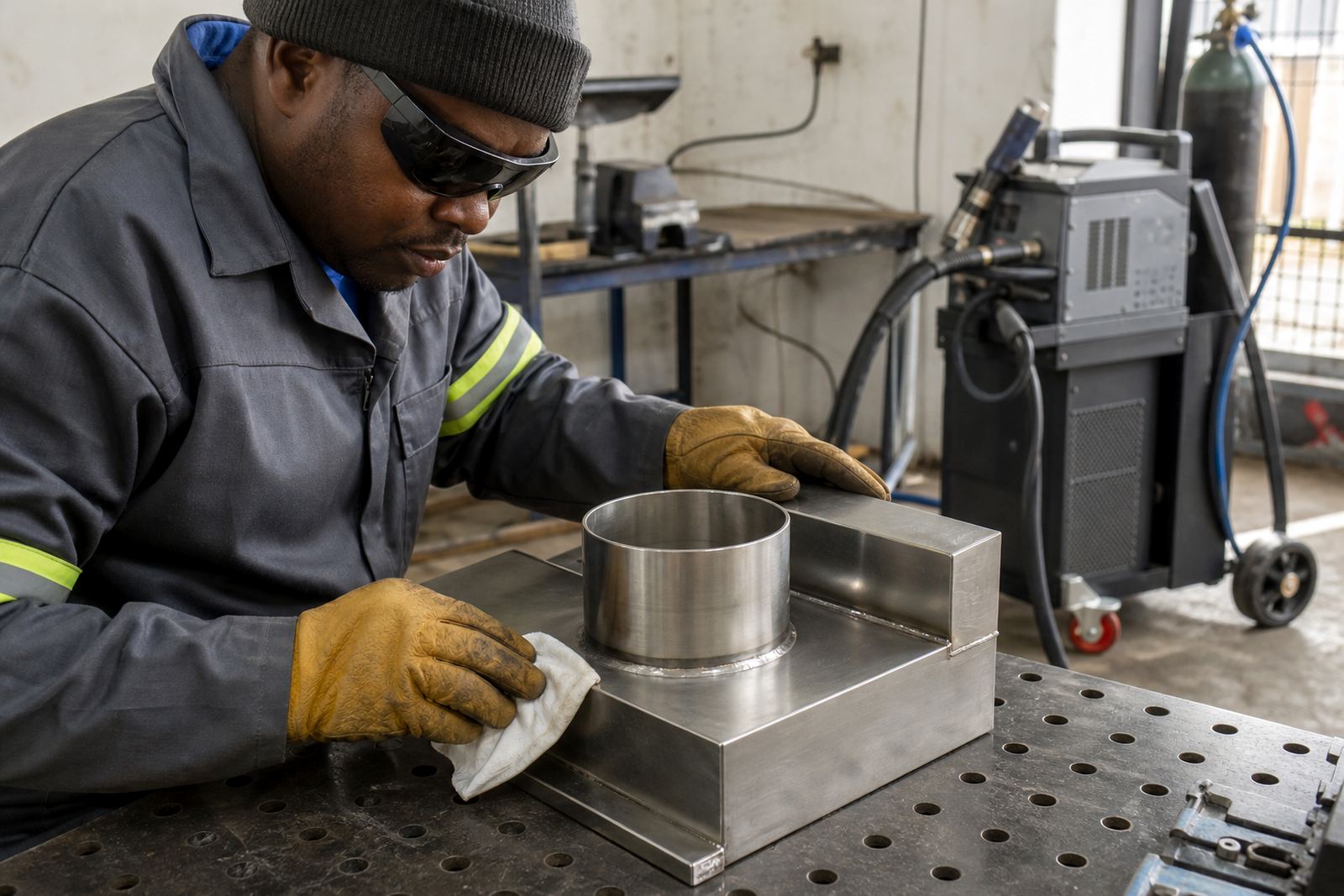
Benoni brief: practical skill for job hunting
The brief came from a job seeker in Benoni who wanted to add real workshop ability to a CV and feel ready for entry-level work in fabrication and repair. The learner was not looking for a long classroom course, but a focused programme with actual torch time, clear safety instruction and enough practice to work neatly on common sheet and light section jobs.
The main constraint was time. The learner needed training that could fit around active job hunting, so we planned a short run with steady progress each week. We also had to keep the training practical for local conditions, including load-shedding planning, basic workshop ventilation and the kind of material handling most small shops use in Gauteng. The learner wanted hands-on guidance and a result that could be shown to employers, not just notes on paper.
- Client type: individual job seeker
- Town: Benoni, East Rand
- Training format: small-group hands-on course
- Main aim: confidence, safe handling and job-ready basics
What we covered in the course
We built the course around handheld laser welding, because that is where the learner could gain useful experience quickly. The sessions covered machine set-up, workpiece preparation, joint positioning, travel speed, bead control and the type of finish expected on mild steel and stainless steel. We also worked through where handheld laser welding fits in a workshop, and where it does not, so the learner could judge the right job for the process.
Safety formed a big part of the training. We explained laser class awareness, why correct eye protection matters, and how to control reflections when working on shiny material. We also covered fume extraction, keeping the bench clear, and checking that the work area is suitable before striking up. That part matters in small shops where space is tight and air flow is not always ideal. The learner picked up the habits quickly, and learned to stop and reset rather than force a poor setup.
- Handheld laser welding basics
- Laser class awareness and eye protection
- Fume extraction and work area checks
- Joint prep, cleaning and alignment
- Common faults: underfill, burn-through and poor tack placement
How the four-week plan was paced
The training ran over four weeks, with each week focused on one stage of skill building. Week one covered safety, machine controls and dry runs. Week two moved into straight seams and simple lap joints. Week three added corner joints, thickness changes and repeatable hand movement. In week four, the learner completed practical exercises under time pressure, then reviewed quality and workflow. It was not rushed, but it kept the learner moving forward.
Because the learner came from Benoni and was travelling within the East Rand, we kept the schedule tight and the learning notes clear. We also included guidance on what to practise between sessions, how to set up a small practice plan, and how to spot when the work area is not ready. There were a few mistakes at the start, normal enough for new welders, but by the end the learner was working with steadier hands and better judgement.
- Week 1: safety and machine familiarisation
- Week 2: straight runs and lap joints
- Week 3: corners, control and heat management
- Week 4: repeat work, review and assessment
Starter kit support and workshop readiness
Alongside the course, we guided the learner on a starter kit that suits early practice and simple workshop tasks. The kit discussion covered the handheld welding unit, protective eyewear matched to the laser class, basic cleaning tools, clamps, marking tools and a practical way to manage consumables. We do not push extras that do not help the work. The point was to keep the setup usable, safe and affordable for someone entering the trade.
We also looked at workshop readiness, because a good kit on its own does not make a safe setup. The learner was shown how to plan a clear bench, place extraction properly and check the area before use. For a small workshop or home practice space, that kind of prep is often overlooked. It is also where avoidable faults and eye safety problems usually start. We made sure the learner could explain those basics in plain language, which helps in interviews and on site.
- Starter kit selection advice
- Eye protection matched to the process
- Simple clamp and cleaning set-up
- Consumables planning for practice work
- Safe bench layout and extraction placement
Results: confidence, control and a certificate
By the end of the course, the Benoni learner had a clear improvement in control, consistency and confidence. The final practical work showed better bead alignment, cleaner starts and stops, and a more sensible approach to inspection before and after welding. The learner also understood when to pause, re-clean a joint and reset the machine rather than chase a poor result. That mindset matters in real work.
The learner received a certificate of completion from LaserWelder Training only, which gives a simple record of the training completed. We kept the result practical: the learner left with a stronger grasp of safe handheld laser welding, a basic plan for further practice, and a clearer idea of how to speak about the process in interviews. For a job seeker, that is often the difference between saying
Key facts
| Location | Benoni, East Rand, Gauteng |
|---|---|
| Course length | 4 weeks |
| Process | Handheld laser welding |
| Outcome | Certificate of completion from LaserWelder Training |
| Safety topics | Laser class awareness, eye protection, fume extraction |
| Support supplied | Starter kit guidance, practice plan, workflow advice |