What training centres usually need before opening a laser bay
Most private training centres are not starting with a clean sheet of paper. They may already have MIG, TIG or fabrication bays, then want to add handheld laser welding for short courses, demo days or client upskilling. The first step is to check if the room can handle the machine, the learner flow and the safety controls without disrupting the rest of the workshop.
We look at the full setup, from floor space and bench height to power supply, ventilation and storage for filler wire, nozzles and cleaning items. In Gauteng, load-shedding planning matters too, so centres often need to think about backup power, controlled class sizes and which exercises can be done before a restart. Coastal centres in Durban and Cape Town also need to consider humidity and storage conditions for optics and consumables.
For a training provider, the aim is simple. Keep the setup practical, keep the learning sequence clear, and avoid buying accessories that sit on the shelf because the room layout was not thought through first.
Handheld laser welding equipment for learner familiarisation
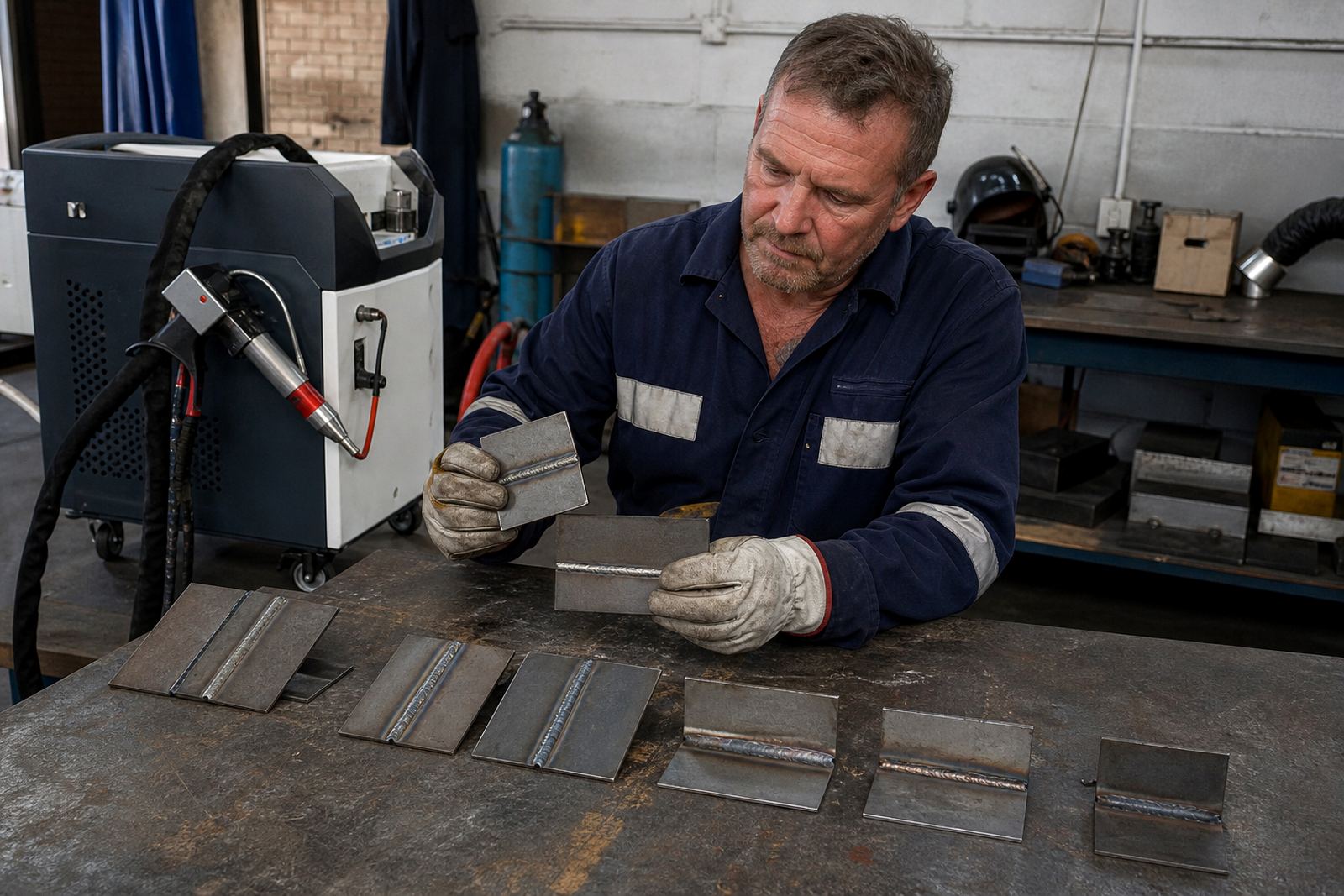
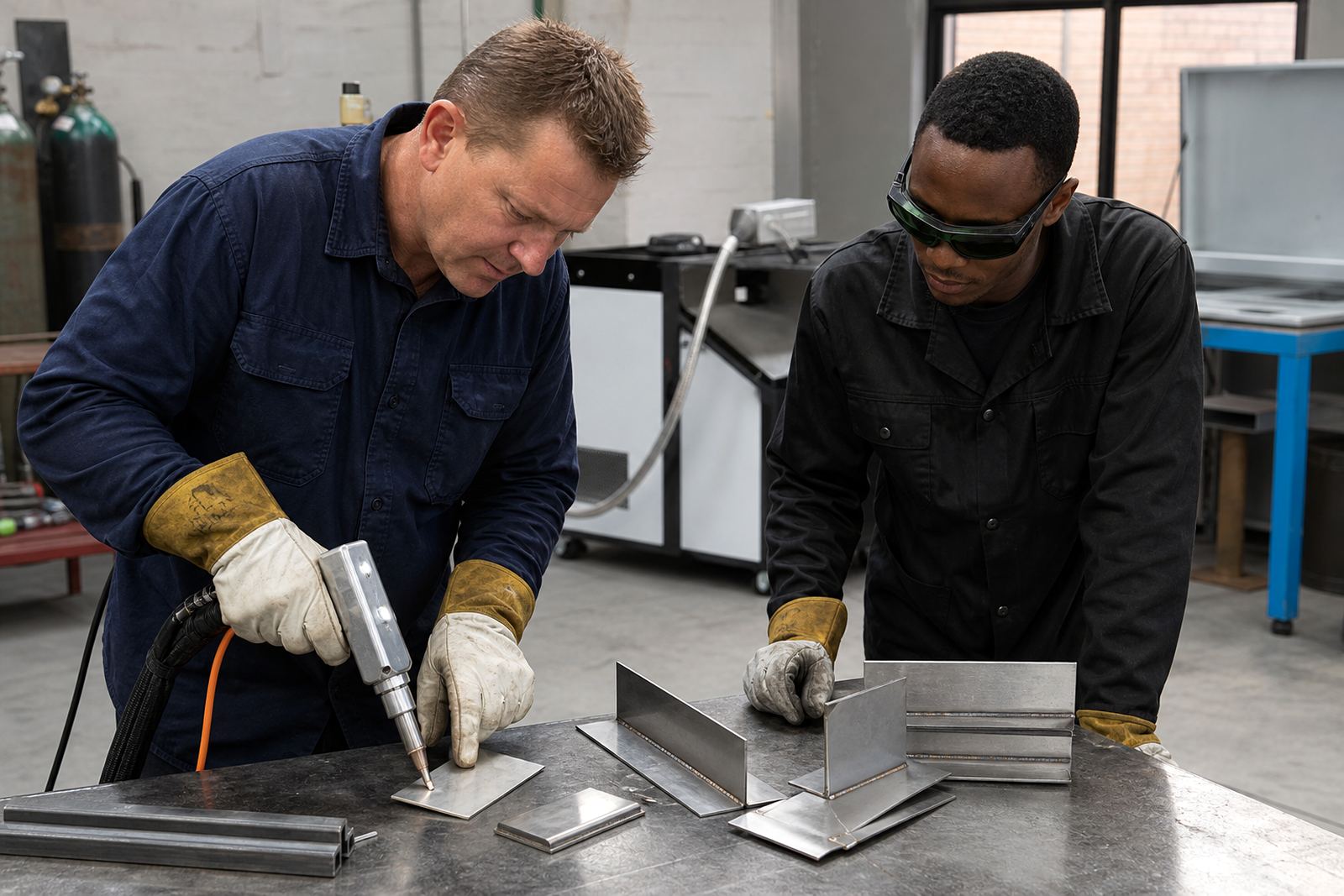
Handheld laser welding systems used in training are usually built around a compact source unit, a hand torch, a cable set, a cooling arrangement and a work area that can be kept clean. The operator needs enough room to move around the joint, position the torch comfortably and inspect the bead without crowding the bench. A clear table, marked zones and a stable clamping method make a big difference for beginners.
Typical starter kit planning for a training centre may include the following:
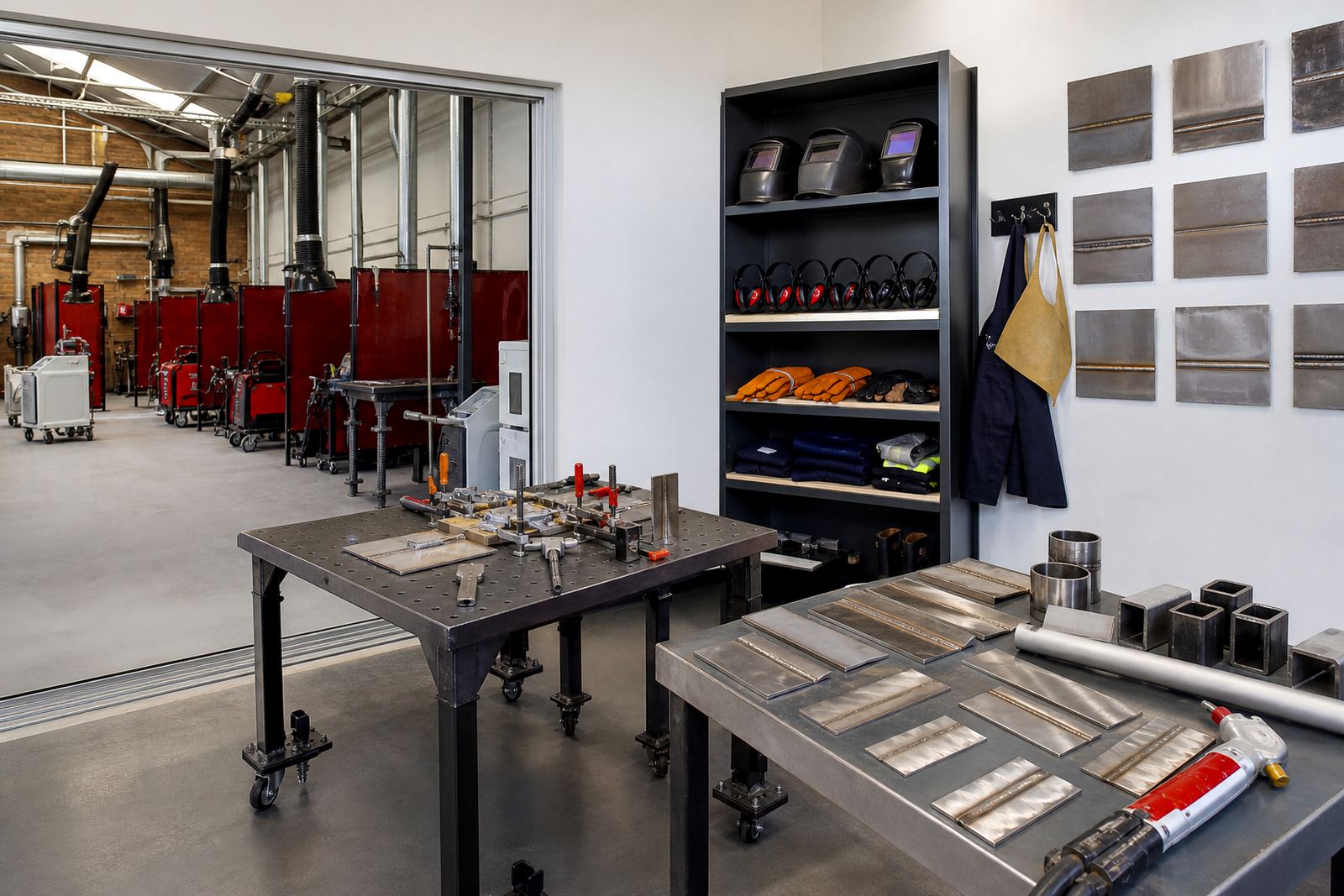
- Handheld laser welding unit with torch and control interface
- Protective eyewear rated for the laser class in use
- Fume extraction suitable for metal vapours and surface contamination
- Clamps, fixture blocks and a small selection of test coupons
- Cleaning tools, tip care items and basic consumables
- Storage for wire, lenses and spare protective parts
We also help centres decide which material thicknesses to teach first. Thin mild steel and stainless steel are common starting points, then learners can move to more demanding joints once they can keep travel speed, angle and focus consistent.
Safety setup, briefings and compliance habits that stop problems
Laser training must start with safety, not after the first few welds. A proper induction should cover laser class, restricted access, eye protection, reflection risk and what to do if someone enters the bay unexpectedly. Learners need to understand that shiny surfaces can reflect light and that the work area must be controlled before the machine is energised.
Fume extraction is not optional. Even on clean material, welding creates vapour and fine particles that should be removed from the breathing zone. Where centres train different groups through the week, we often advise a simple safety routine that can be repeated by every instructor so no steps are missed when the room is busy.
- Check eyewear before each session
- Confirm extraction is on and correctly positioned
- Keep reflective items away from the work zone
- Use clear entry signs and a short pre start briefing
- Assign one person to supervise learners during live practice
Our Safety and Compliance Officer works with the training team to make these habits part of the lesson flow, not an afterthought. That helps centres keep standards consistent across branches and visiting groups.
Layout and workflow advice for private training rooms
A good training room should let an instructor move from demonstration to supervised practice without constantly shifting gear. We usually suggest a layout with a clear teaching position, one or two learner stations and a separate storage point for kits and documentation. If the space is narrow, the best answer may be fewer learners per session rather than cramming in extra benches.
For centres running classes in Johannesburg, Pretoria or Boksburg, workshop power points, cable routing and trip hazards often need attention before the first intake. In Durban and Cape Town, salt air and damp conditions can affect storage, so sealed cupboards and dry handling practices are worth the effort. Polokwane centres may have different ventilation needs depending on the building and the season.
We also give workflow advice on how to move learners through the process: theory, safety check, torch handling, short practice welds, inspection and cleanup. That sequence keeps the room organised and helps instructors see who is ready for the next step.
Common mistakes we see in new laser training centres
Many centres make the same errors when they first add laser welding. They buy the machine before planning the bench space. They underestimate the need for extraction. They assume one pair of goggles will cover every user. They also often set up the room so that learners are standing too far from the work or blocking the instructor’s view.
Another common issue is overbuying consumables and accessories before course numbers are known. That ties up cash and leaves duplicate items sitting in storage. A better approach is to start with a sensible starter kit, then add to it after the first few groups have gone through the room and the actual wear pattern is clear. We help centres plan for that in stages, which is usually easier on the budget.
Budget wise, a training room can range widely depending on the machine size, safety controls and kit count. Smaller familiarisation setups may start in the tens of thousands of Rand, while fuller multi station training rooms can move much higher once extraction, fixtures, storage and backup power are included. We help centres plan the spend in practical blocks so they can scale without waste.
How our support fits private training providers
LaserWelder Training works with private providers who want practical familiarisation, supervisor coaching and starter kit planning that matches real teaching conditions. We are based in Boksburg, Gauteng, and support centres across South Africa, including Johannesburg, Pretoria, Durban, Cape Town and Polokwane. Our team includes instructors, safety support and starter kit guidance, so centres can deal with one practical source instead of chasing separate answers for every question.
Support can include site readiness checks, operator inductions, safety briefings, workflow advice, starter kit setup, practice plans, quality walkthroughs, consumables planning, refresher visits, technical help and a training document pack. Course participants receive a certificate of completion from LaserWelder Training only, which suits centres that want a clear training record for their own internal files.
If you are setting up a new laser welding room or adding it to an existing training centre, the best time to plan is before the first intake. That gives you a cleaner layout, safer sessions and a kit list that fits the way you actually teach.