What a small workshop needs from laser welding
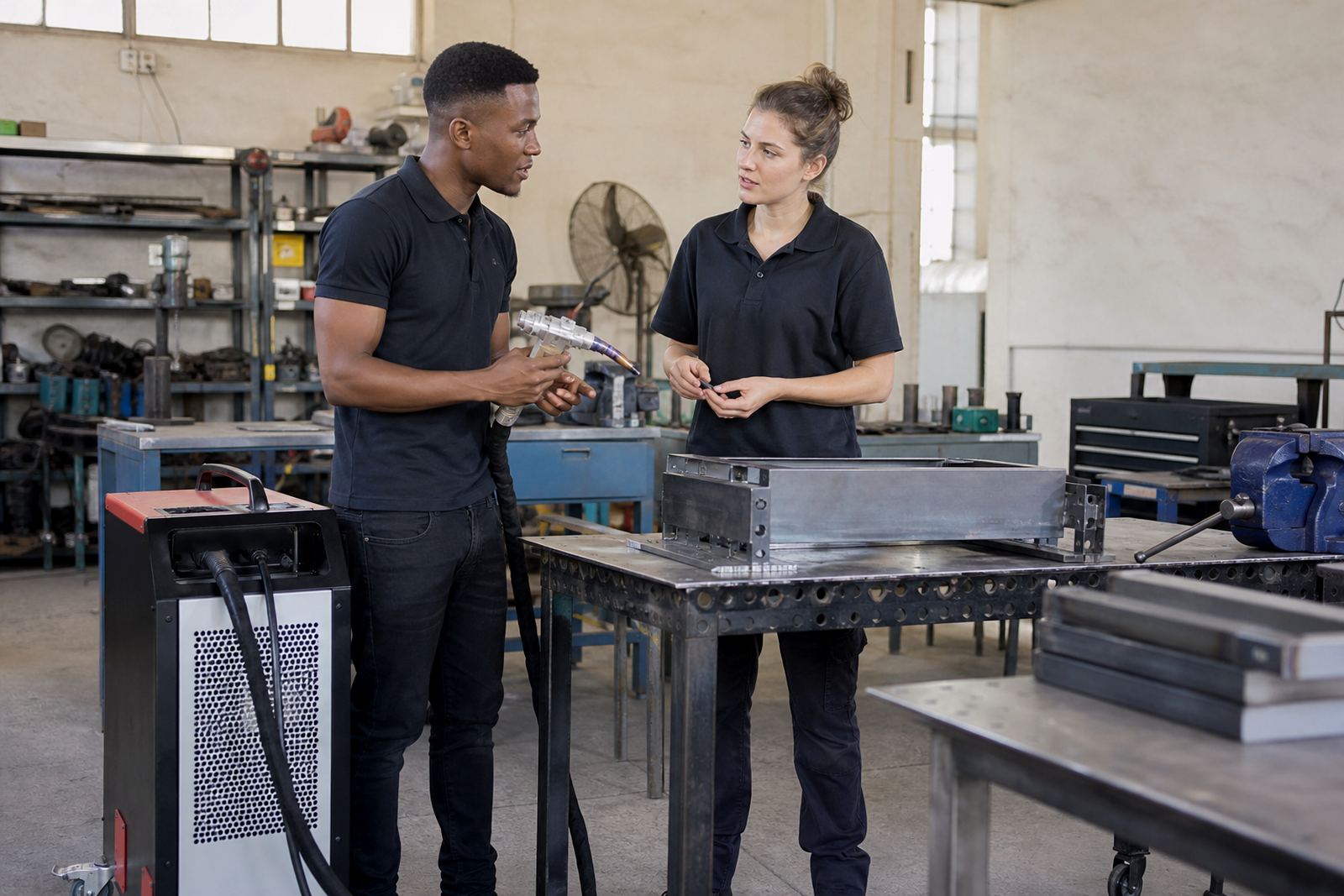
Most small workshops are not trying to run a high volume production line. They need a handheld laser welding setup that can handle repairs, brackets, thin sheet work, frames, gates, light fabrication and tidy finishing without taking up half the floor. For owners in Boksburg, Johannesburg, Pretoria, Durban, Cape Town and Polokwane, the main requirement is simple: a machine that is practical to use, easy to keep safe and suited to the jobs already coming through the gate.
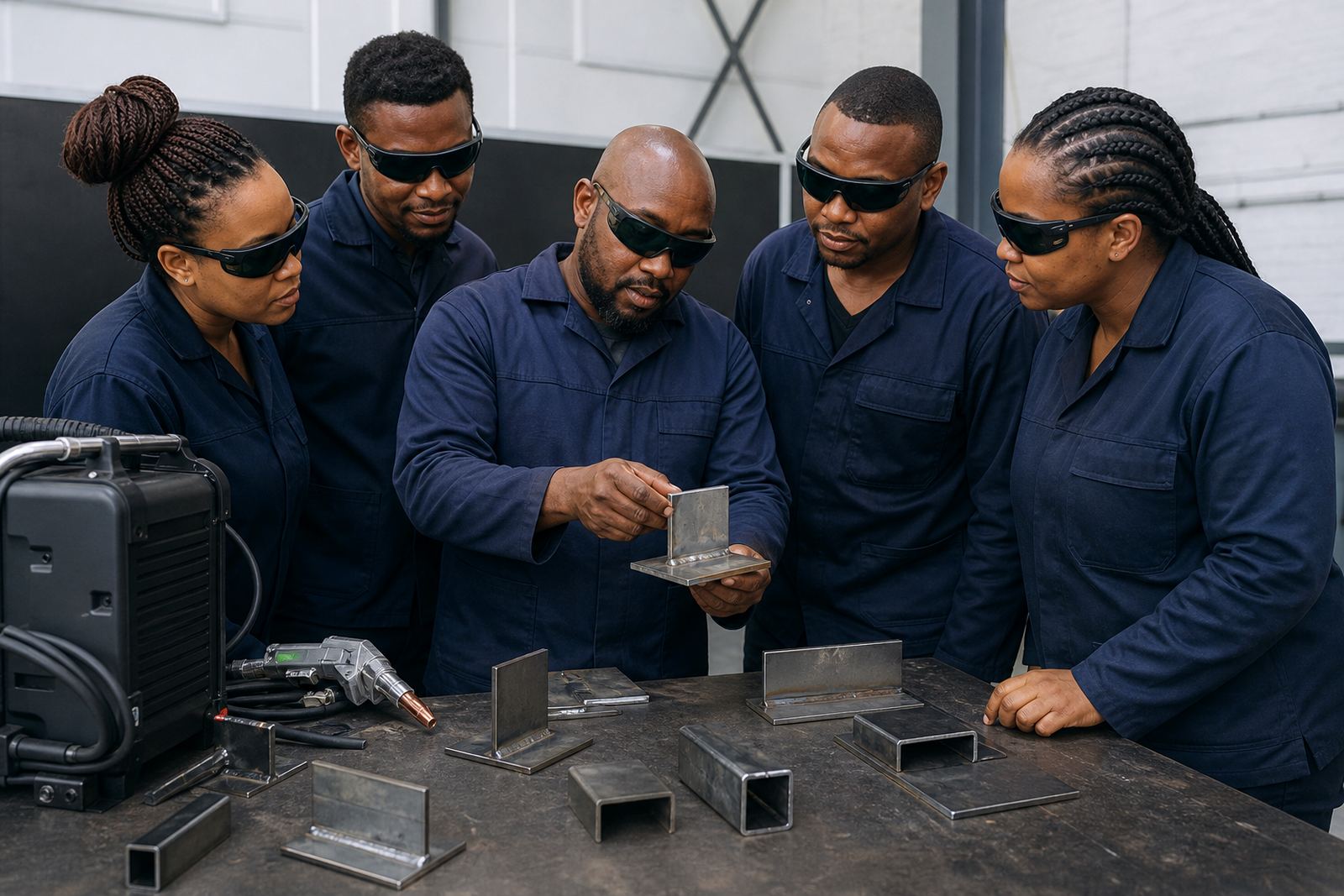
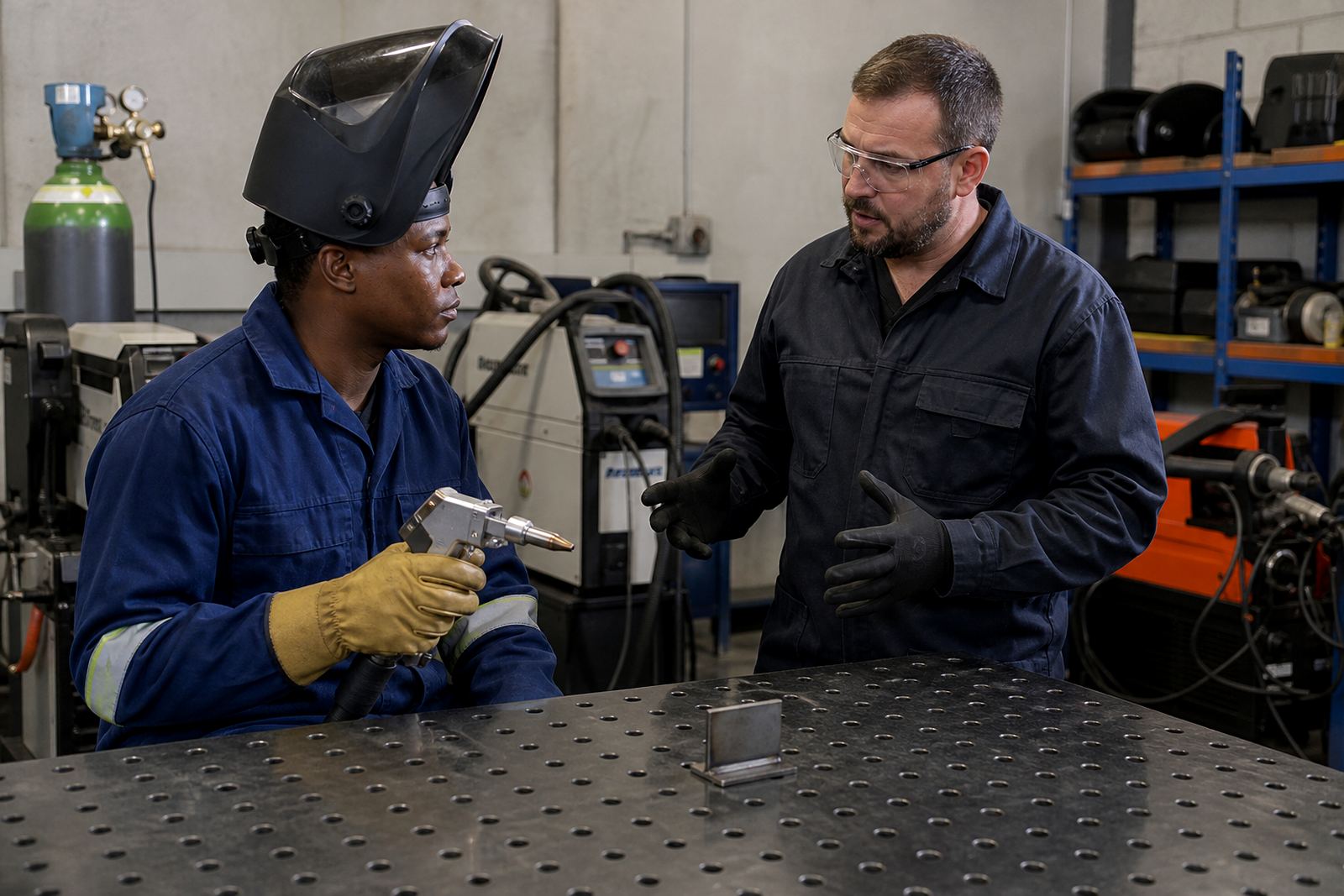
Our training is built around that reality. We show owners and operators how to set up a sensible work area, how to choose settings for common materials, and how to avoid mistakes that waste time and consumables. The aim is not to make laser welding sound complicated. It is to show what works in a busy workshop where the phone rings, the gate is open and somebody still has to finish the job before knock-off.
- Suitable for repair work and light fabrication
- Useful for thin stainless, mild steel and selected aluminium jobs
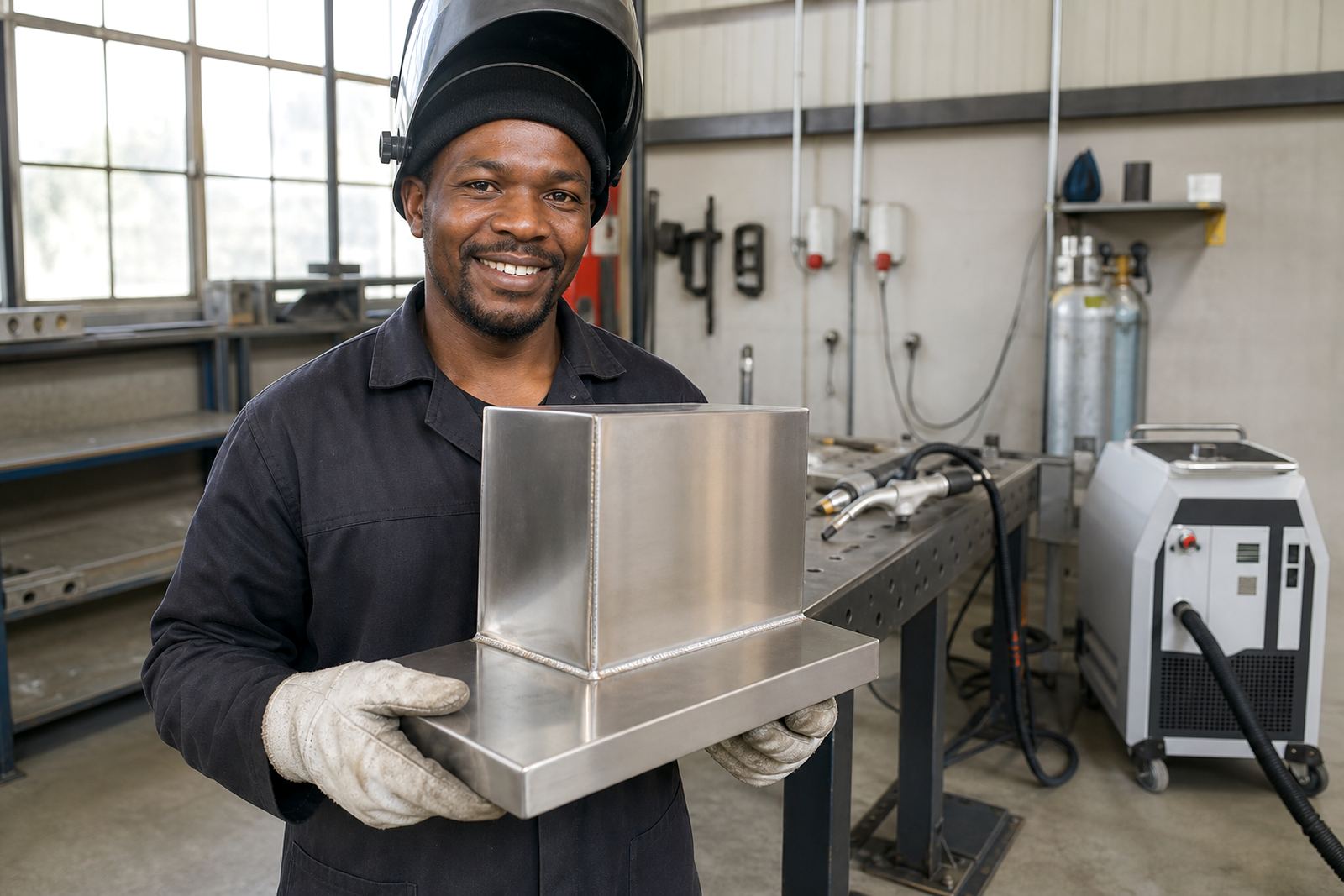
- Better control on fine joins than many older repair methods
- Compact enough for small bays and mixed-use workshops
Starter kit contents that match everyday jobs
A starter kit should help a workshop begin work properly, not just arrive in a box with no plan. We guide learners and owners on generic starter kit contents that suit everyday work, including the handheld laser welding unit, protective eyewear rated for the correct laser class, basic consumables, cleaning tools, nozzles, wire where needed, sample material, and simple housekeeping items for the bay. Depending on the job mix, a workshop may also need a small bench, clamps, a stable trolley and proper fume extraction.
We also cover starter kit setup so the first week is not a guessing game. That includes checking power supply needs, making sure the space is dry enough for equipment and planning where the machine will stand when not in use. In coastal areas like Durban or Cape Town, humidity can affect storage and corrosion control, so we talk through dry storage, cable care and routine checks. In Gauteng, load-shedding planning matters too, so owners need to think about backup power arrangements and safe shut-down steps.
- Handheld laser welding unit and basic accessories
- Eye protection matched to the laser class
- Fume extraction for smoke and fine particles
- Cleaning and maintenance items for daily use
- Storage and setup advice for the workshop floor
Layout planning for a busy but small floor space
A small workshop needs a layout that keeps people out of each other’s way. We give practical site readiness checks and workflow advice so the welding bay, prep area and finishing area all make sense in the space available. There should be clear walkways, a safe place for material storage and enough room for the operator to move around the job without bumping into stock, tools or bystanders.
We also help owners think about ventilation, extraction and noise control. Laser welding creates less spatter than many traditional methods, but it still produces fumes that must be removed properly. That matters in enclosed premises, in back rooms and in workshops that share a building with other tenants. If a municipality requires specific fire precautions or ventilation controls for the premises, it is better to sort that out early than after an inspection. A tidy layout also helps with supervision and keeps untrained staff from wandering into the active work area.
For owner-run shops, the best layout is often the one that reduces steps. Put the most-used tools within arm’s reach, keep the cable run short and leave a clear path to the exit. It sounds simple, but many hours are lost because the machine is always being moved back and forth. A little planning saves a lot of time and the place looks more controlled.
Safety habits every owner should insist on
Handheld laser welding is not something to run casually. We spend time on laser class awareness, operator induction, eye protection, fume extraction and general workshop discipline. The operator must know which protection is required, how to keep others out of the direct work zone and how to stop the job if something is not right. Safety is not just for the learner, it protects the owner’s equipment, staff and reputation too.
Common issues in smaller workshops include using the wrong visor, skipping extraction because the job is short, and letting assistants stand too close. Another problem is mixing laser work with grinding, cutting and painting in the same area without cleaning the floor and removing flammable waste. We also explain why training documents and refresher visits help when more than one person uses the same setup.
- Use correct eye protection for the laser class in use
- Keep extraction running during welding, not after
- Mark the work area and limit bystander access
- Store consumables and cables away from heat and moisture
- Keep a simple checklist for shutdown and daily inspection
Common mistakes that cost time and money
Small workshops often buy equipment before they have a clear job list. That leads to the wrong size starter kit, poor cable routing and no plan for extraction. Another mistake is expecting one operator to handle every material in the same way. Stainless, mild steel and aluminium all behave differently and the settings need to be adjusted with care. If the operator rushes, the weld may look acceptable at a glance but fail during finishing or later use.
We also see workshop owners underestimating supervision. If the lead person has not had a proper handover, the machine may be used with poor technique, the lens area may be neglected and consumables can disappear quickly. In a small team, one bad habit spreads fast. That is why our practice plans, supervisor coaching and refresher visits are useful for owner-run shops that want consistency, not guesswork. A small typo in the notes is one thing, a bad weld on a customer job is another.
- Buying equipment before planning the workflow
- Skipping operator induction for new staff
- Ignoring extraction and storage conditions
- Using the same settings for every material
- Leaving no budget for consumables and maintenance
Budget ranges for a sensible start
Small workshops want clear numbers, even if the final choice depends on the work mix. A practical starter budget can vary widely based on the type of machine, extraction needs, accessories and how much setup support is included. For a modest operation, it is smart to think in stages. First comes the core welding equipment and safety items. Then comes extraction, storage, training time and a small allowance for consumables and practice material. For many owner-run shops, that is a better approach than trying to stretch one payment across everything and ending up short on the basics.
We do not promise one fixed figure because no two workshops are exactly the same. A simple repair bay and a small fabrication shop will not need the same kit. What matters is choosing a setup that can handle daily work without constant interruptions. If you are in Boksburg or anywhere else in South Africa, the real value is in getting equipment that suits your floor space, power supply and job type. That way the machine pays for itself through use, not through hope.
LaserWelder Training offers training, starter kit setup, technical help, consumables planning and training document packs for small workshops that want a straight answer and proper guidance. You can reach us through the enquiry form on our contact page to discuss your site, your team and the kind of jobs you do most often.