Why Manufacturing Teams Ask for Shared Training
In a production environment, the problem is often not the machine, it is the gap between operators. One person sets up slowly, another rushes the alignment, and the next shift inherits a partly finished workflow. That leads to wasted consumables, uneven weld quality and avoidable rework. For teams in Boksburg, Johannesburg, Pretoria, Durban, Cape Town and Polokwane, the aim is simple: everyone follows the same process, understands the same safety steps and knows when to call for help.
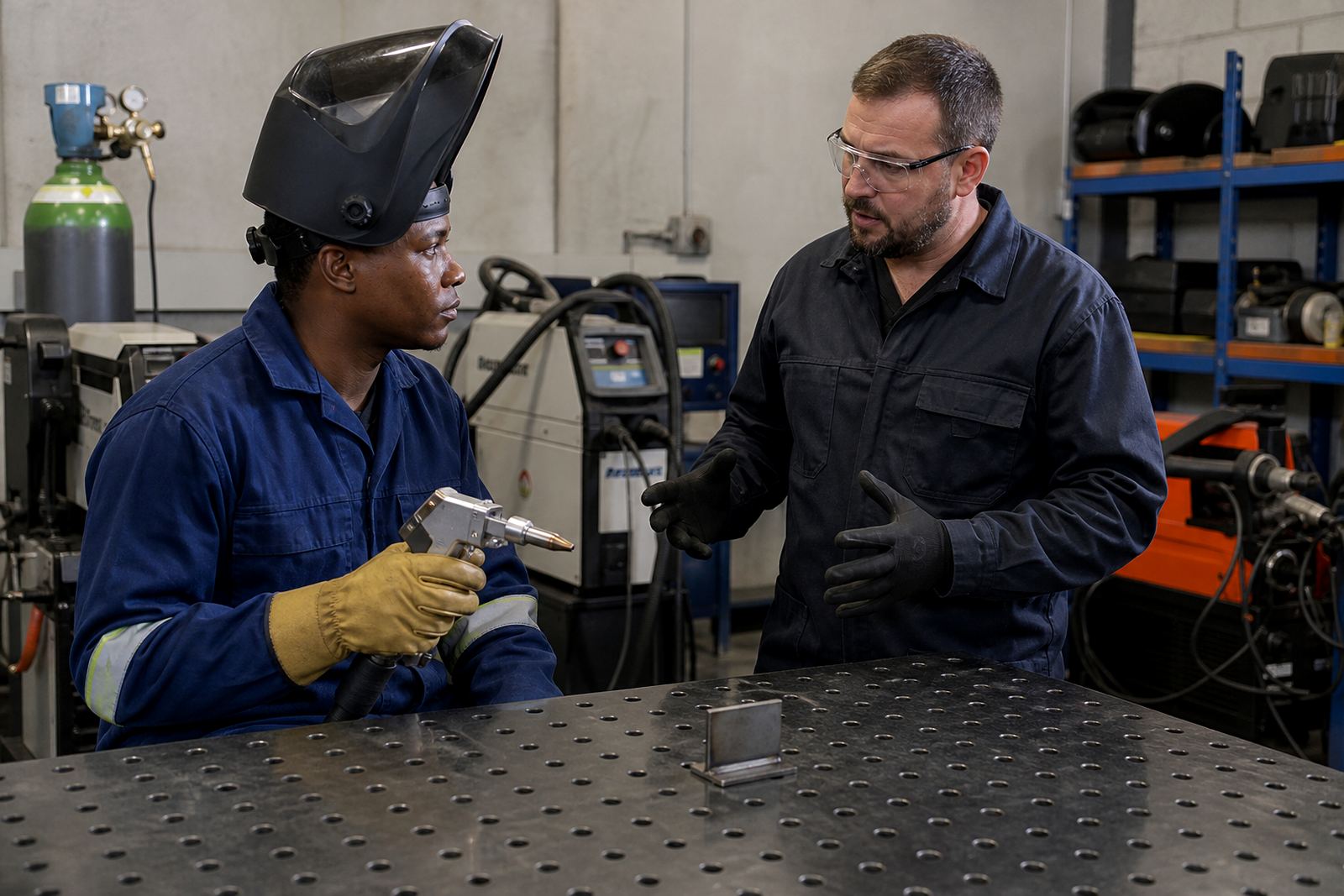
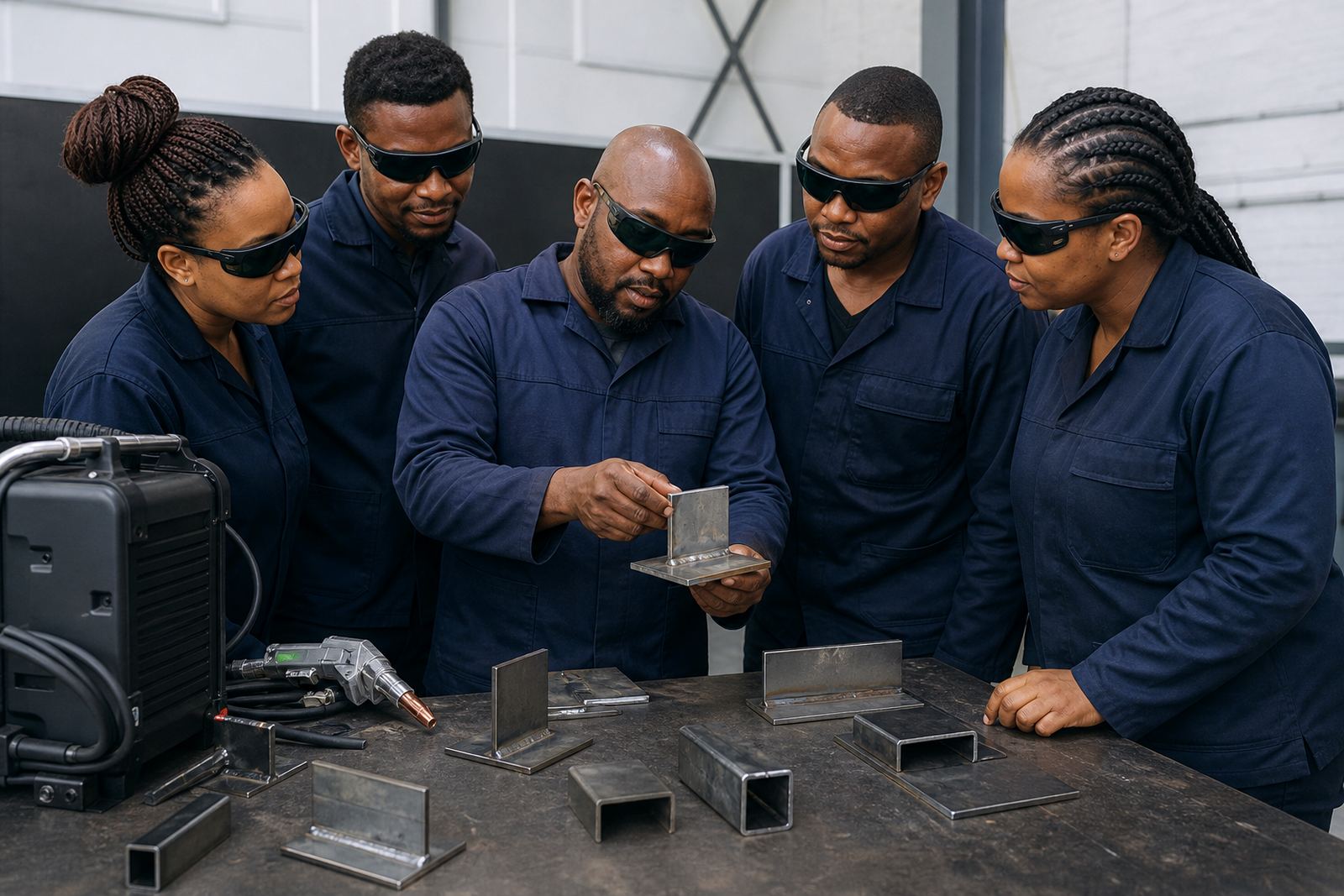
Our manufacturing team training is suited to workshops that use handheld laser welding for stainless steel, mild steel and selected repair work. We focus on practical handling, torch control, joint preparation, workpiece fit-up and the daily checks that keep output steady. Learners leave with a certificate of completion from LaserWelder Training, plus a clearer way of working across shifts and departments.
- Shared operator habits for day and night shifts
- Cleaner handover between production staff and supervisors
- Less trial-and-error during setup and rework
- Better awareness of safety, fumes and eye protection
Typical Equipment Used on the Shop Floor
Most manufacturing teams want a compact setup that can move between bays or fit into an existing fabrication area. A typical handheld laser welding set-up includes a laser source, handheld welding head, cooled power unit, protective eyewear rated for the laser class in use, and local fume extraction. Depending on the application, teams may also use wire feed accessories, nozzles, cleaning tools, clamps, gauges and a simple trolley for storage and movement.
We also cover starter kits for teams that are building a new workflow or adding a second station. These kits are discussed in plain terms so buyers know what each item does, how it supports daily use, and what should be kept as spares. For coastal sites in Durban or Cape Town, we talk about corrosion control and dry storage. For Gauteng workshops, we often focus on dust management, power stability and practical backup planning during load-shedding.
- Handheld laser welding unit and cooling system
- Appropriate eye protection for the laser class
- Fume extraction suited to the size of the bay
- Clamps, wire, nozzles and basic cleaning tools
Layout and Planning Advice for Busier Workshops
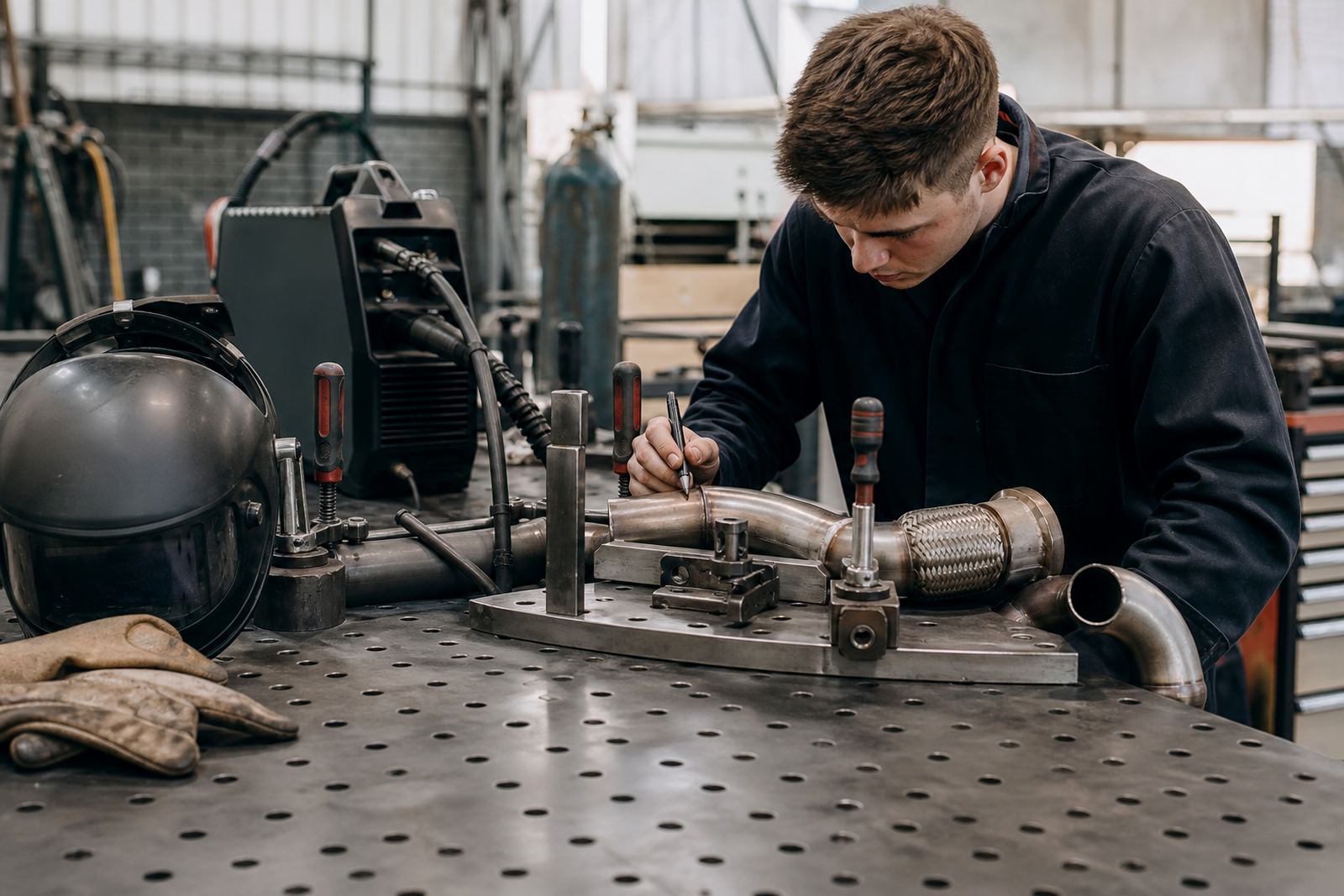
A workshop layout should make safe movement easy. The welding point needs enough space for the operator, the workpiece, the extraction hose and a clear walkway that does not cross high traffic areas. We help teams think through storage, cable runs, screening, signage and where to place the safety briefing board. If the area also handles grinding or cutting, those activities should be separated as far as possible so sparks, dust and fumes are not moving through the laser bay.
For larger manufacturing teams, we also look at supervisor oversight. A good layout allows a supervisor to check alignment, cleaning and finish without standing in the operator’s path. If the team runs multiple shifts, the station should be set up so the next shift can confirm settings, PPE and consumable levels before starting. That small discipline saves time and cuts down on mistakes.
- Keep the welding zone marked and uncluttered
- Place extraction where fumes are captured at source
- Store eyewear and consumables in one known point
- Allow space for safe loading and unloading of parts
Common Mistakes That Slow Production
Many teams start with good intentions but skip the basic checks. The most common issue is poor joint preparation. If parts are oily, painted or badly aligned, the operator spends longer compensating at the torch and the weld finish suffers. Another frequent problem is inconsistent PPE. If one shift uses the wrong eye protection or bypasses extraction because the job seems small, risk builds up quickly. It only takes one bad habit to spread through the team.
We also see teams underestimate training time for new operators. Handheld laser welding is precise work, and rushing the first few sessions usually creates more scrap. A proper induction, followed by supervised practice, is better than expecting a first-time user to keep up with a full production rate. There is also the matter of consumables planning. If wire, lenses, nozzles or cleaning items are not stocked in advance, production stops while someone tries to source parts at the last minute.
- Skipping surface cleaning and fit-up checks
- Using the wrong PPE for the laser class
- Running without proper fume extraction
- Leaving consumables to the last minute
Budget Ranges and What Teams Usually Need
Budget planning depends on how many operators need training, whether the team wants on-site setup help, and whether starter kits are being purchased at the same time. For a small team, planning should cover the training day, basic safety briefings and a practical setup review. Larger sites often need a longer programme that includes supervisor coaching, workflow advice and refresher visits after the first few weeks of use. Some teams only need a document pack and a readiness check, while others want full hands-on support across several shifts.
As a working guide, many manufacturing teams set aside a budget from a few thousand Rand for focused induction and setup support, to a higher project budget when multiple operators, starter kits and follow-up visits are included. We keep the discussion practical, so the team understands where the money goes and what can be postponed without risking the workflow. The goal is not to spend more, it is to spend in the right order.
- Operator inductions and safety briefings
- Starter kit setup and consumables planning
- Supervisor coaching and refresher visits
- Technical help and training document pack
What the Training Covers for Each Shift
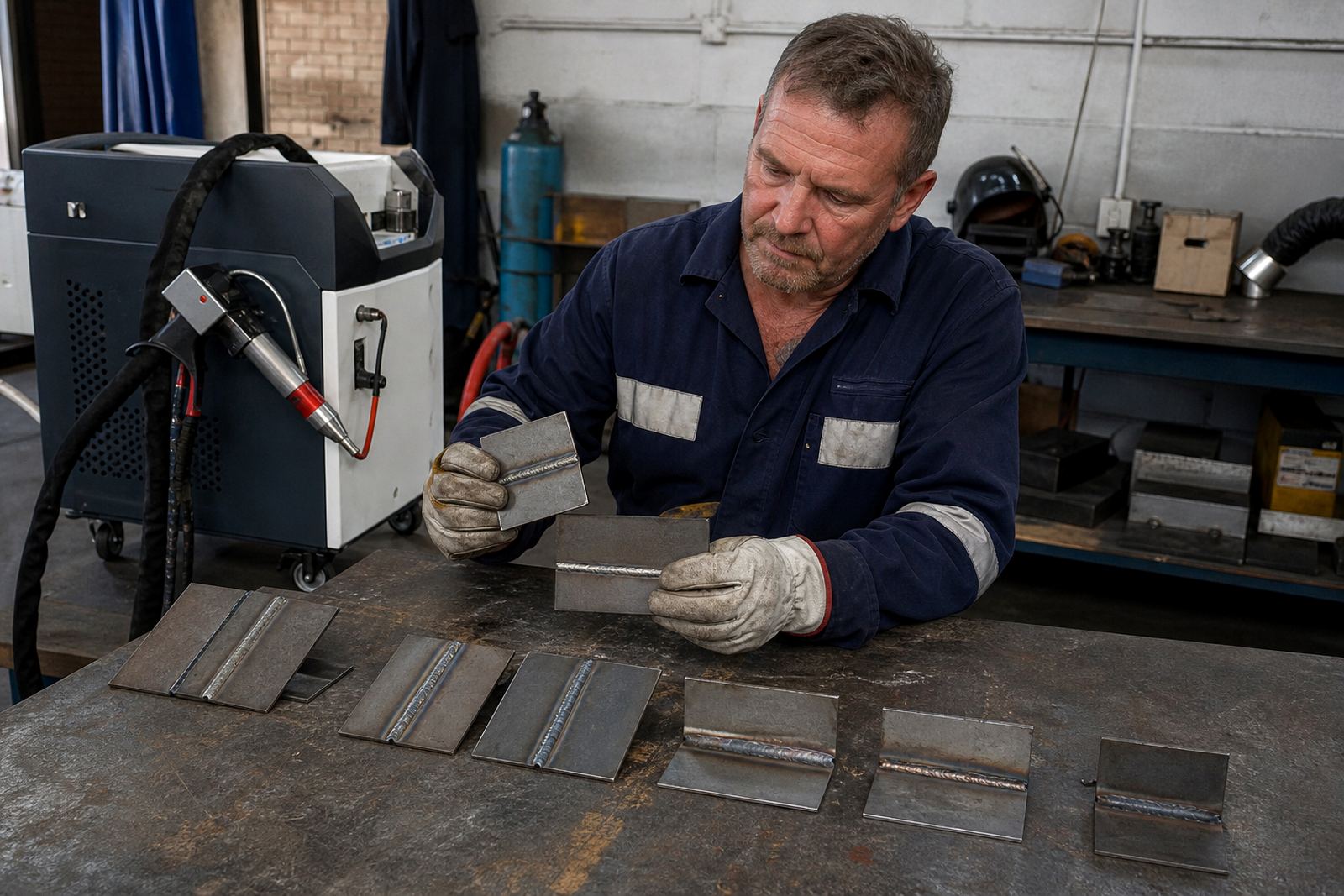
Our course structure is built for real workshop routines, not classroom theory alone. Learners get hands-on time with the equipment, then work through safe start-up, correct handling, bead control, common fault finding and shutdown procedures. We also cover how to explain the process to the next operator so the handover is clean. For teams with mixed experience, this helps newer staff keep up without slowing the stronger operators too much.
When needed, we can include site readiness checks, practice plans, workflow advice and refresher visits after the team has settled into normal production. The result is a clearer, safer routine across the whole workshop. If your team needs support in Boksburg, East Rand or anywhere else in South Africa, enquiries come through the contact page form and we plan from there.
- Hands-on practice with guided correction
- Safety briefings for operators and supervisors
- Starter kit setup and technical help
- Refresher support once production begins