Why exhaust work suits handheld laser welding
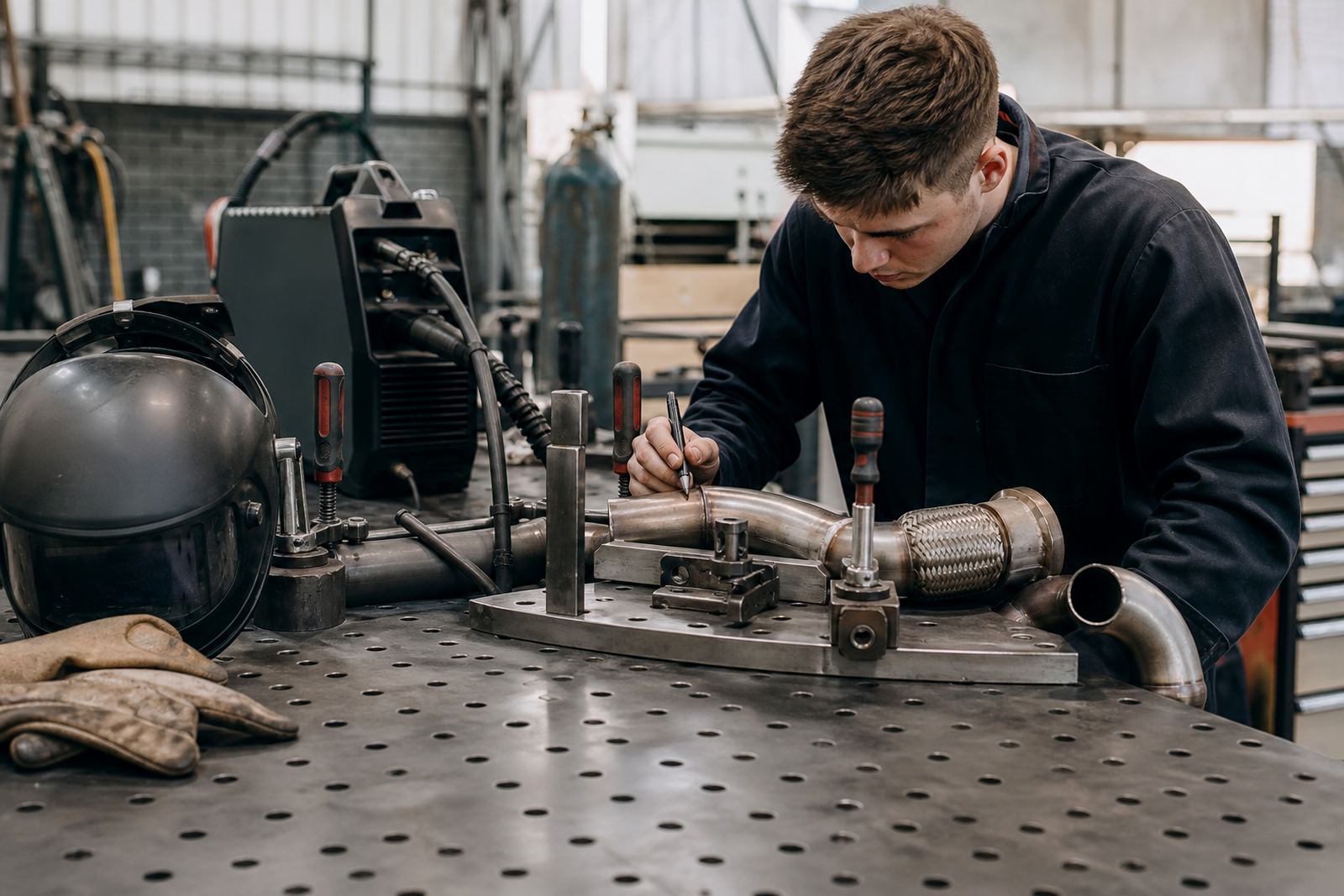
For exhaust fabricators working with thinner stainless steel and mild steel sections, handheld laser welding can suit neat seam work where heat control matters. It is often used on slip joints, small brackets, hangers, repairs and formed parts where distortion must be kept down and the finish needs to look tidy before the system goes back on the vehicle or jig. The process can help reduce finishing time, but it still needs proper fit-up, clean surfaces and a steady hand.
Our exhaust fabricator use-case training is aimed at people who already understand workshop basics and want better joining control on lighter-gauge tubing and shaped parts. We cover practical torch handling, joint preparation, tack strategy and how to work in a way that supports repeatable results instead of chasing one off fixes. The focus is on real workshop conditions, not theory for its own sake.
- Thin-wall tubing and formed sections
- Small brackets, tabs and hanger points
- Repair work where access is tight
- Neat joins with less post-weld clean-up
Typical equipment set for a small exhaust bay
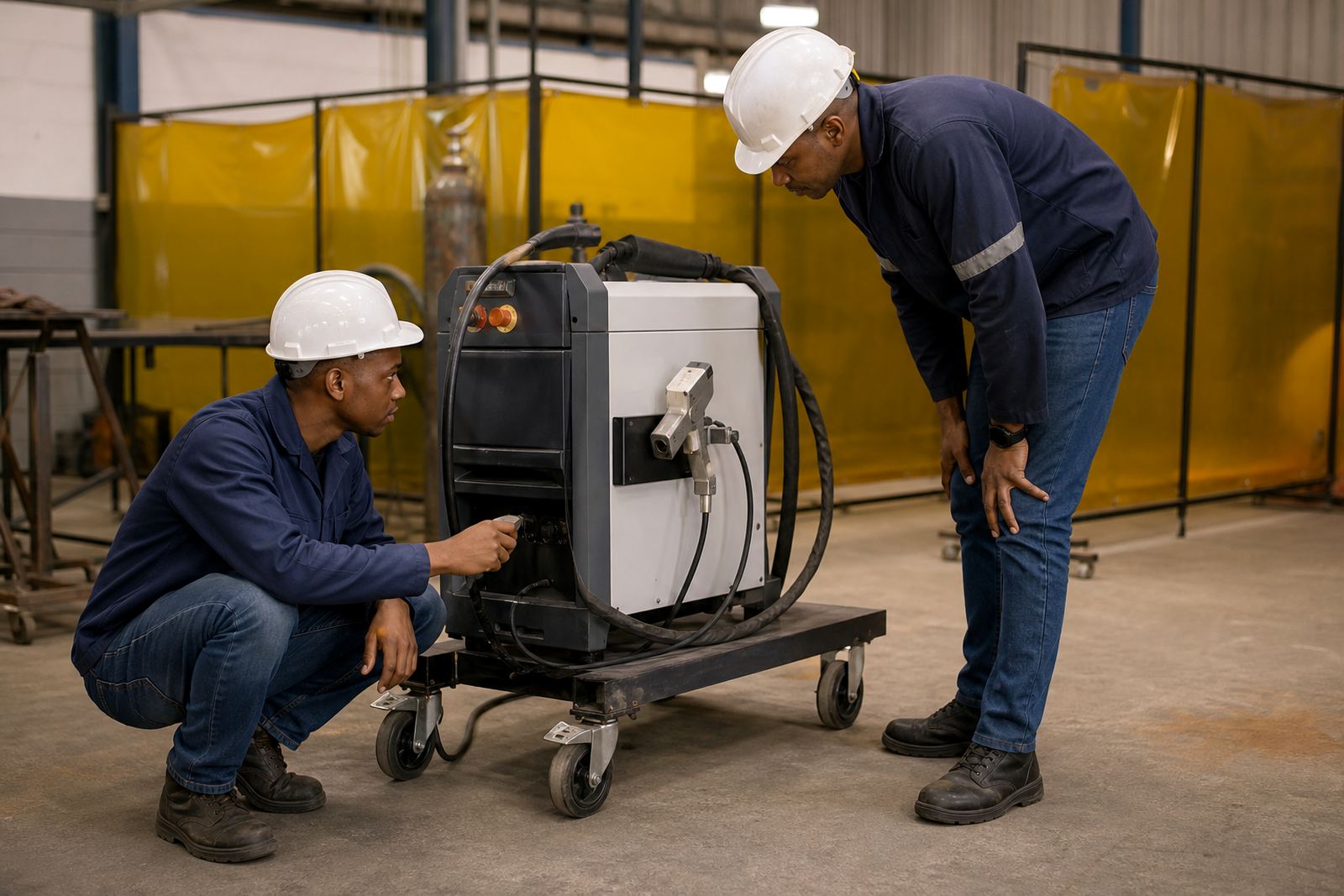
A basic handheld laser welding setup for exhaust work is usually more compact than a large fixed line, which helps in smaller workshops in Boksburg, Johannesburg or Pretoria where floor space is already spoken for. You still need room for the machine, a stable bench, part support, cleaning tools and a safe path for the operator. In coastal areas like Durban and Cape Town, storage also needs to account for humidity, because clean tube ends and dry consumables matter more than people think.
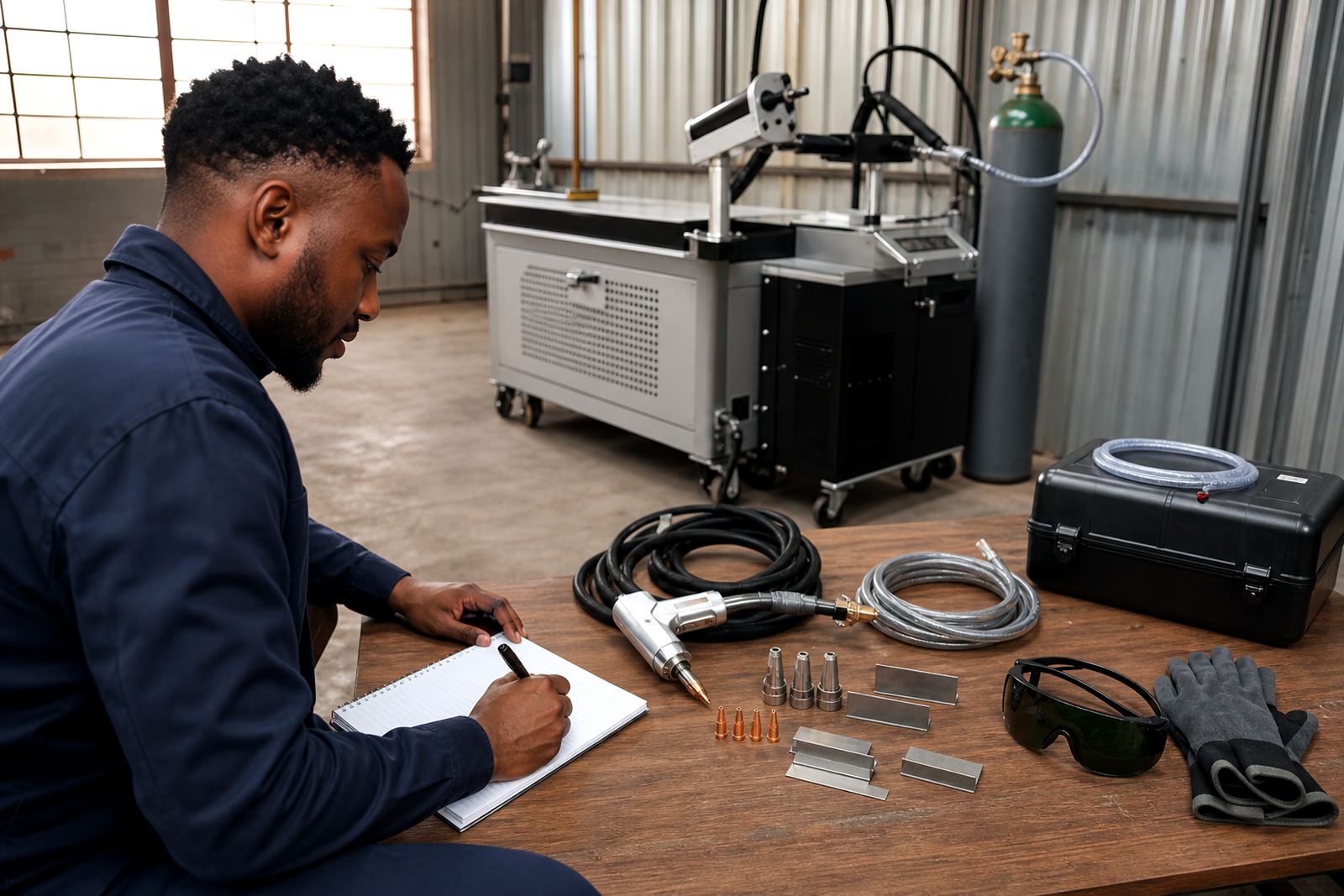
Our starter kits are set up generically for learner use and workshop testing, with the idea that you can practise joining without building an oversized station. A sensible kit normally includes the welding unit, torch, basic cable set, protective eyewear matched to the laser class, and a fume extraction arrangement suited to the material being welded. For exhaust work, extraction is not optional because thin metal can still produce fumes and fine particles, especially when coating or contamination is present.
- Handheld laser welding unit with suitable torch
- Eye protection matched to the laser class used
- Fume extraction or local extraction arm
- Tube supports, clamps and cleaning tools
- Starter consumables and setup guidance
A learner kit can be kept within a lower budget for practising on off-cuts, while a workshop-ready package climbs once you add extraction, proper workholding and extra consumables. For planning purposes, many small teams start looking in the broad range of about R45,000 to R120,000 depending on the unit type, extraction and accessories selected. If you need a fuller station with more support gear, the spend can move well above that. One thing to remember, cheap kit that cuts corners on safety is false economy.
Layout and planning advice before you weld
Good exhaust welding starts before the torch is switched on. Tube ends need to be cut square or formed consistently, gaps should be controlled and the workpiece must sit in a stable position so the weld pool stays even. If you are handling bends, reducers or formed shells, plan the sequence so you are not fighting the part on every pass. A bit of forethought saves time and avoids scrap.
Our Site Readiness Checks and Workflow Advice are useful when a workshop wants to add laser welding without turning the bay upside down. We look at bench height, operator movement, extraction placement, storage for clean parts and the path from prep to weld to inspection. In Johannesburg and East Rand workshops, where space is often tight, this planning helps keep traffic clear. In Pretoria or Polokwane, where teams may have mixed fabrication jobs on the same floor, it helps to separate laser work from grinding and cutting.
A practical layout usually has one clean prep side and one weld side. Keep abrasives, cutting dust and oily parts away from the weld area. If your team is still using the same surface for cutting and welding, contamination can show up in the join, and the fault often gets blamed on the machine instead of the process.
Common mistakes we see in exhaust fabrication
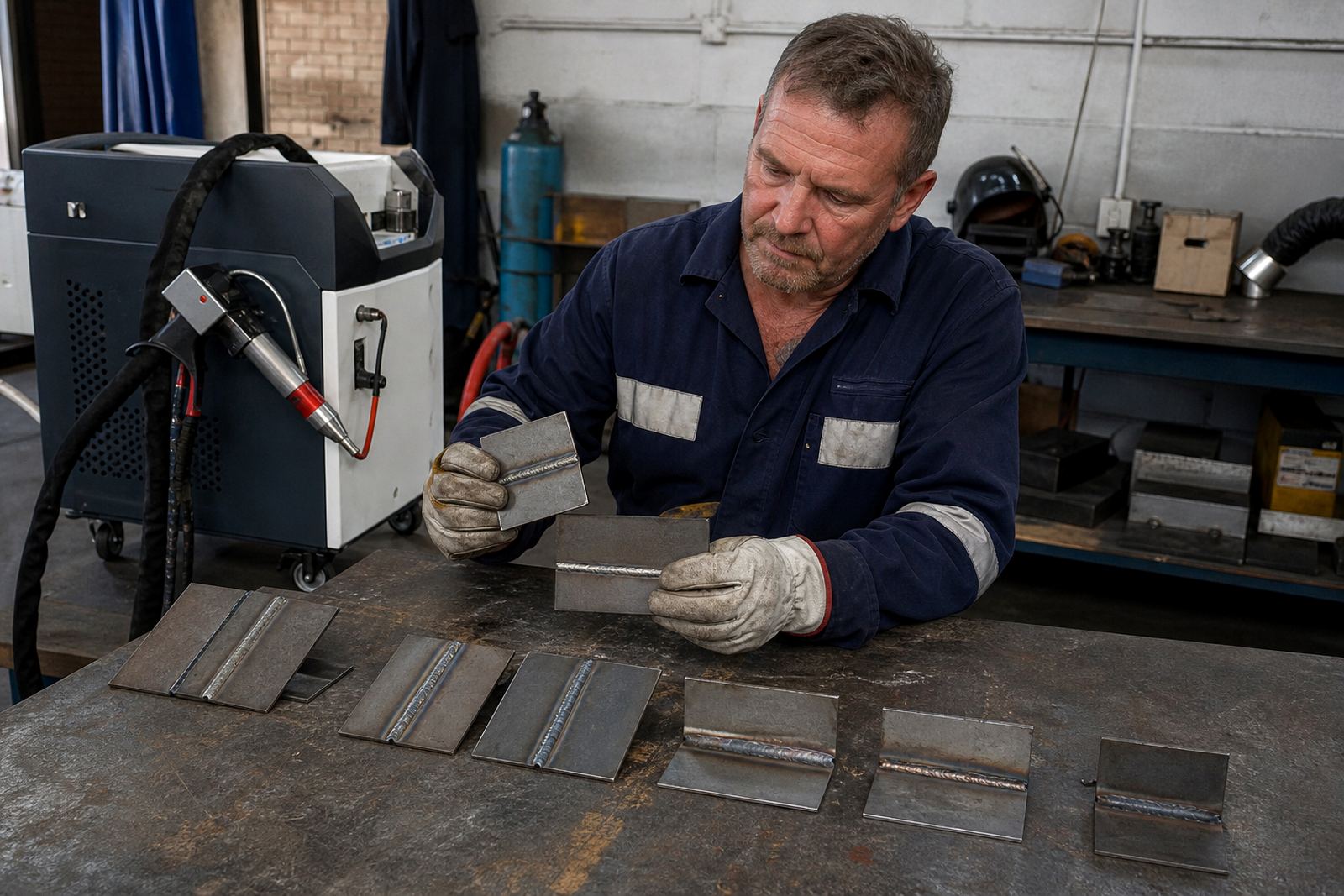
Exhaust fabricators often run into the same problems when they first move to handheld laser welding. The most common is poor joint preparation. If the tube ends are ragged or the fit-up is loose, the weld has to bridge too much and the result can look uneven. Another issue is moving too fast on thin-wall material, which can leave a weak join or a surface that needs extra touch-up.
Safety is another area where people get casual too quickly. Even on smaller jobs, the operator needs correct eye protection, a clear understanding of the laser class in use, and a clean area free from reflective clutter. Fume extraction should be running before work starts, not after the first smell in the air. We also see learners ignore heat build-up on longer runs, which can distort a formed section and throw the fit out on the next part of the system.
- Skipping cleaning on oily or coated tube
- Trying to weld poor fit-up without correction
- Using the wrong speed on thin material
- Not checking extraction and eye protection first
- Overheating small formed components
Training for workshops and teams
LaserWelder Training runs hands-on courses in Boksburg for individuals and teams, with support for learners coming from Johannesburg, Pretoria, Durban, Cape Town and Polokwane. Our courses are practical and suited to people who need a certificate of completion from LaserWelder Training only. We do not teach from a distance and hope for the best. Learners are shown the basics, then guided through real exercises on sample material that reflects the kind of work they will face in a fabrication bay.
For supervisors and workshop owners, we also offer Operator Inductions, Safety Briefings, Supervisor Coaching and Refresher Visits. That helps when a new staff member joins, when a workshop adds a second shift, or when a business wants a quick check on safe handling before production starts. The Training Document Pack is useful for keeping notes on procedures, storage and checks, especially where different people share the same equipment.
Our team includes Mpho Johannes Maseko, Naledi Khumalo, Pieter van der Merwe, Anele Dlamini, Kagiso Molefe, Lerato Mokoena and Brandon Naidoo, all working from our Boksburg base. Clients reach us through the enquiry form on our contact page, and we use that channel to match the right course, starter kit or support service to the workshop need.
Budget ranges and what to expect
For exhaust fabricators, the budget is usually shaped by three things: the machine, the safety gear and the support items that keep the job clean. A learner setup can be built around a modest starter kit for training and sample work, while a small workshop package may include extraction, extra nozzles or heads, and more workholding. If your work includes more than one bay or mixed material jobs, expect the budget to rise as you add control and safety equipment.
As a practical guide, learners usually begin by budgeting for entry-level training and a starter kit if they want to practise at home or in a small bay. Workshops that need regular use should plan for a higher spend that covers extraction, proper PPE and maintenance items. Avoid buying only on headline price. In exhaust work, a cheap package that is hard to maintain or awkward to set up can become expensive fast.
If you are unsure where to begin, start with a site check and a short workflow review. That gives you a clear picture of what is needed now and what can wait. It also helps prevent mismatched purchases, which is a common problem when teams buy equipment before they know how the bay will actually run.