Why Maintenance Crews Use Handheld Laser Welding
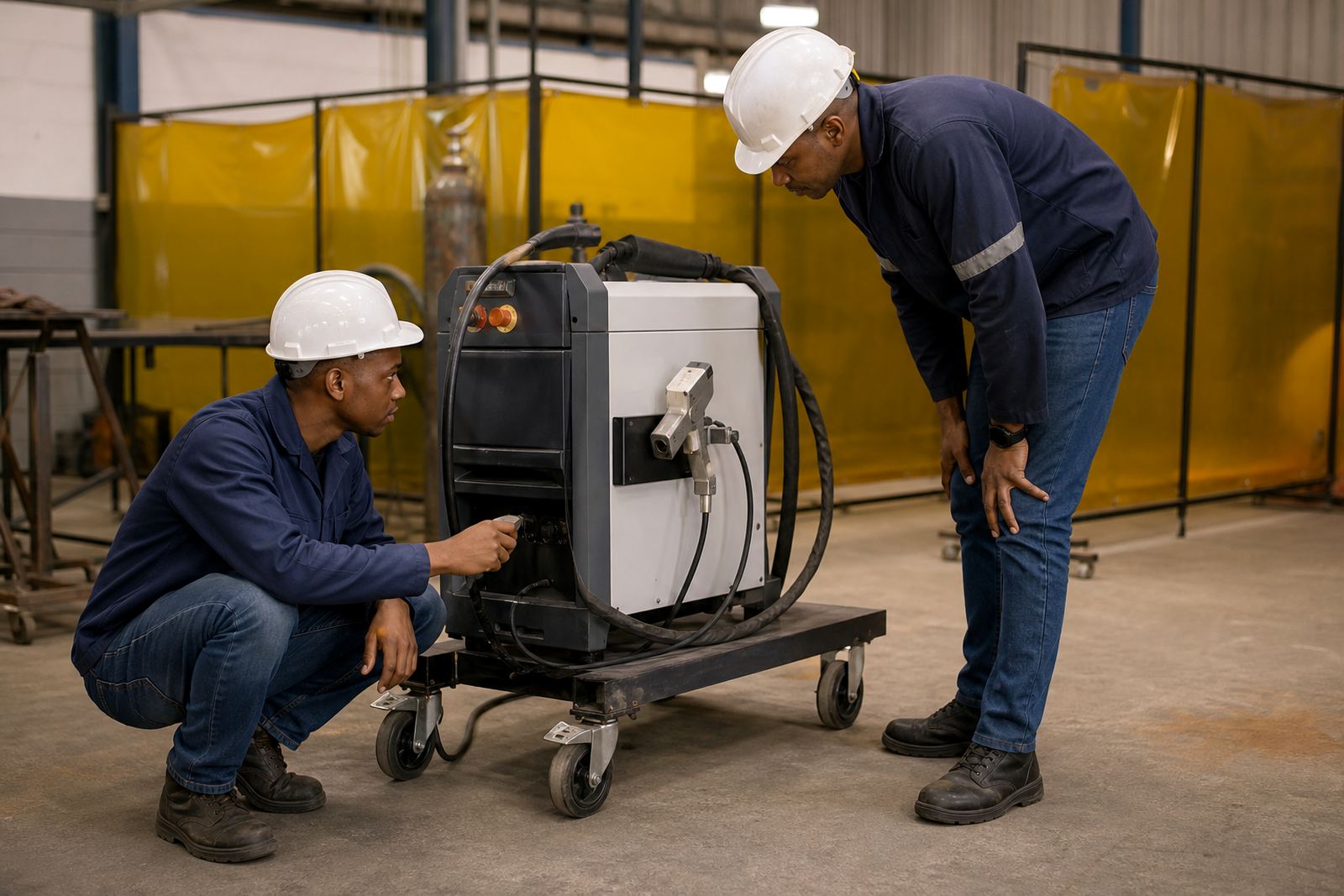
For maintenance teams, the job is usually about getting equipment back into service without pulling half the plant apart. Handheld laser welding is useful where access is tight, distortion must be kept low, or nearby components, seals and finishes need to stay intact. It suits repair work on brackets, guards, frames, light fabrication and selected stainless or mild steel tasks, provided the operator understands the machine settings and the joint condition.
In workshops around Boksburg, Johannesburg and Pretoria, we see crews using laser welding as a controlled repair method for day-to-day maintenance rather than heavy production. It helps when you need neat repair beads, less post-work grinding, and a process that can be taught step by step to fitters, artisans and supervisors. The key is not speed alone, but control, repeatability and safe handling.
What Maintenance Teams Usually Bring To Training
Most maintenance crews arrive with a mixed set of tools and a practical list of repair problems. We work with the equipment they already handle on site and show how to plan the job before the torch is switched on. That includes checking material type, surface condition, fit-up and whether the part can be removed or must be repaired in place.
- Handheld laser welding unit and compatible torch setup
- Cleaning tools for rust, oil and paint removal
- Clamps, vices and simple positioning aids
- Eye protection suited to laser work
- Fume extraction or local extraction hose
- Starter consumables for practice and basic repairs
For teams in Durban and Cape Town, we also talk about corrosion risk from coastal humidity, because poor storage and dirty base metal can undo a good repair very quickly. In Gauteng, dust and workshop traffic often create different problems, so the setup needs to suit the actual site, not a textbook layout.
Safety Rules That Keep The Job Under Control
Laser welding needs discipline. The machine is not something to trial and error on a live maintenance shift. Depending on the unit and setup, handheld laser welding equipment may fall into a higher laser class, which means controlled access, correct signage and proper operator behaviour. We train crews to treat the beam path, reflections and work area with respect at all times.
Eye protection must match the process and the machine specification, and it must be worn correctly every time. A clear screen or curtain can help with bystander control, but it is not a substitute for proper eyewear. Fume extraction is also part of the work, especially when coating, galvanising or surface contamination is present. Even small repairs can produce fumes that should not be breathed in, so extraction should be planned before work starts.
- Keep non-essential staff out of the repair zone
- Check reflective surfaces and remove loose shiny offcuts
- Use clean, dry workpieces wherever possible
- Set up extraction close to the weld point
- Keep a written site rule for who may operate the machine
How We Set Up A Practical Maintenance Workflow
Maintenance crews do better when the process is simple. We guide teams through a workflow that starts with inspection, then surface preparation, trial settings, tack positioning, welding, cooling and final check. A good workflow also includes who signs off the job, where the machine is stored, and how consumables are tracked so the crew is not left short on a Friday afternoon.
Our site readiness checks and workflow advice help managers decide where the machine will live, how power will be managed during load-shedding, and whether a backup plan is needed for a generator or battery-supported supply. We also look at benches, lighting, extraction placement and how much clear space is needed around the repair point. In smaller workshops, that planning makes the difference between a neat repair and a rushed one.
For crews working across East Rand sites or moving between branches, we can help with supervisor coaching and refresher visits so the same standard is kept from one workshop to the next. The aim is practical consistency, not paperwork for its own sake.
Common Mistakes We See On Repair Jobs
Most problems come from rushing the prep or treating the machine like a general fix-all. Laser welding still needs the joint to be clean and correctly fitted. If the surface has oil, paint, scale or heavy corrosion, the repair quality suffers and the operator ends up chasing spatter, poor fusion or an uneven finish. Another mistake is trying to work too far from the joint, which reduces control and makes the bead inconsistent.
Crews also sometimes skip the fume extraction because the job looks small. That is not a good habit. Even one short repair can put fumes into the breathing zone. Another issue is poor storage of starter kits and consumables, especially in humid coastal areas where moisture can affect accessories and cleaning materials. A locked, dry storage point helps protect the kit and keeps the machine ready for use.
- Skipping cleaning and surface prep
- Using the wrong eye protection for the machine
- Leaving the extraction system too far from the weld zone
- Working without a clear sign-off process
- Buying a kit before checking power supply and workspace limits
Starter Kits And Budget Planning In Rand
Starter kits are useful when a maintenance team wants to move from theory into regular practice. A sensible kit may include cleaning tools, basic holding aids, practice material, protective gear, a storage case and small consumables for routine training. The right package depends on the workshop size, the type of repairs, and how many operators will use the machine.
For budgeting, many maintenance crews plan in stages rather than buying everything at once. A basic training and starter setup can sit in the lower Rand range for accessories and practice items, while a more complete workshop arrangement with extraction, storage, holding gear and extra consumables will be higher. The exact figure depends on how the site is set up, whether more than one team will use the kit, and what level of support is needed after delivery.
We help clients in Polokwane, Pretoria, Durban, Cape Town and Johannesburg choose a setup that matches the real job list. If a workshop only needs controlled repair work and short training sessions, the spend can stay focused. If the site wants supervisor coaching, setup help and a document pack for ongoing use, the budget should allow for that from the start.
Training For Teams That Need A Certificate Of Completion
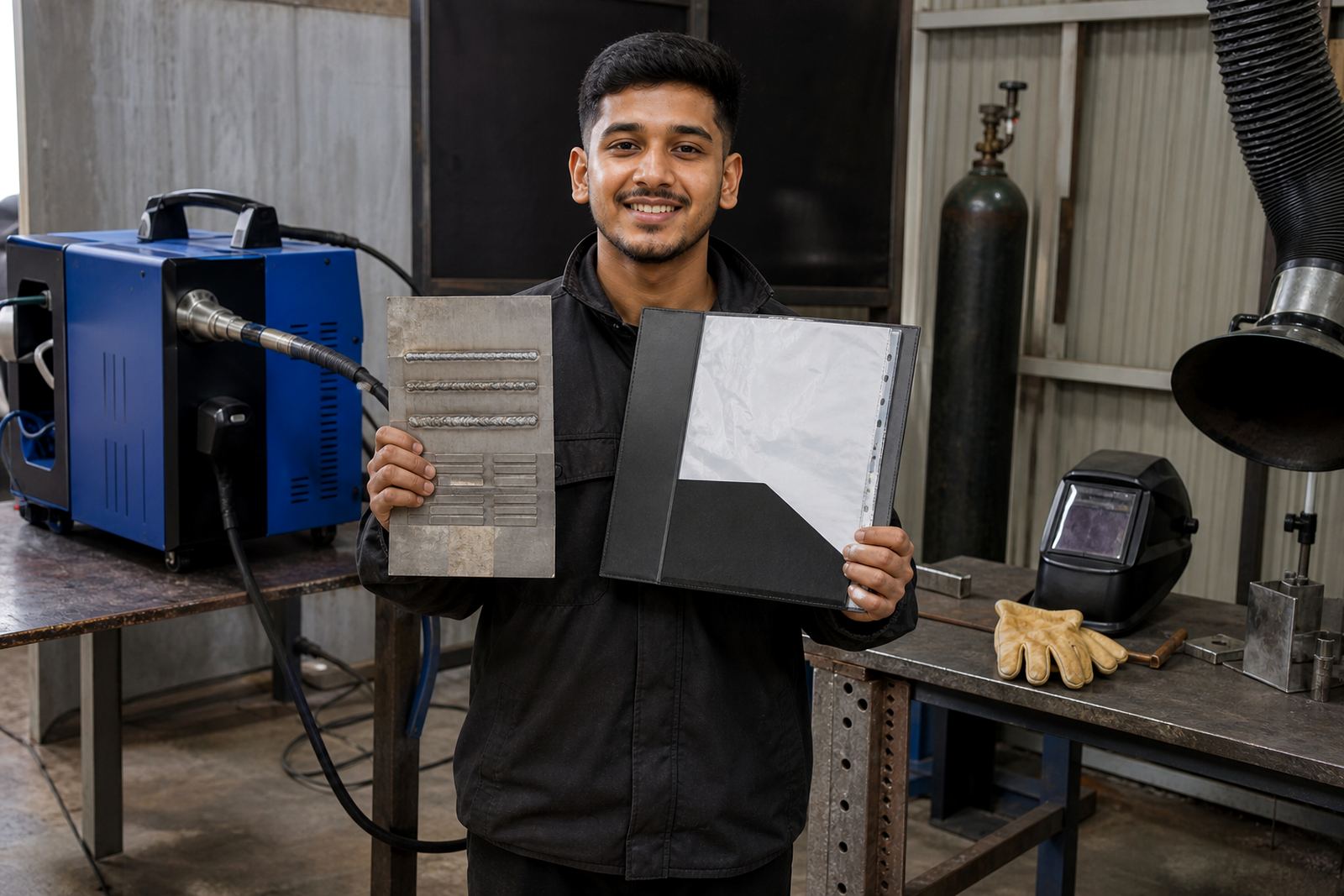
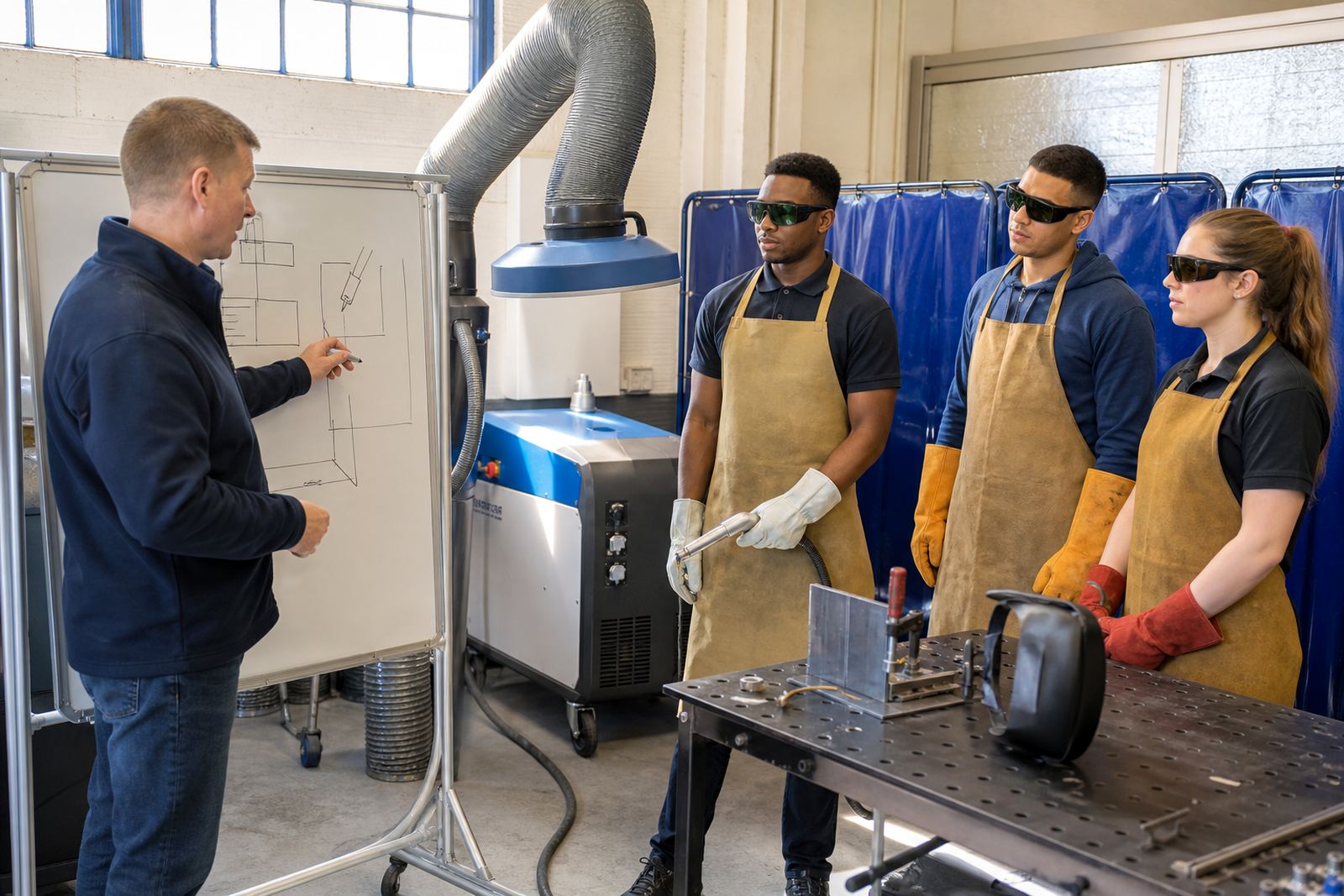
Our maintenance crew training is built around real workshop tasks, not classroom theory alone. Learners get guided practice, safety briefings, operator inductions and practical machine handling, followed by a certificate of completion from LaserWelder Training. That certificate shows the learner completed our course, which is useful for internal records and workshop sign-off.
We train from Boksburg, Gauteng and support learners and businesses across South Africa through the enquiry form on our contact page. The team includes Mpho Johannes Maseko, Naledi Khumalo, Pieter van der Merwe, Anele Dlamini, Kagiso Molefe, Lerato Mokoena and Brandon Naidoo, each focused on a different part of the process from safety to technical help. Whether the need is a first-time learner or a supervisor who wants a refresher, the training is kept practical and site-aware.