What Job Seekers Need from a Practical Laser Welding Course
Many learners come to us after doing general welding work, engineering studies, or workshop assistant work and they want one clear next step. They need time on equipment, proper supervision, and a training setup that matches the kind of work seen in small fabrication shops, repair bays and production workshops across Boksburg, Johannesburg and Pretoria.
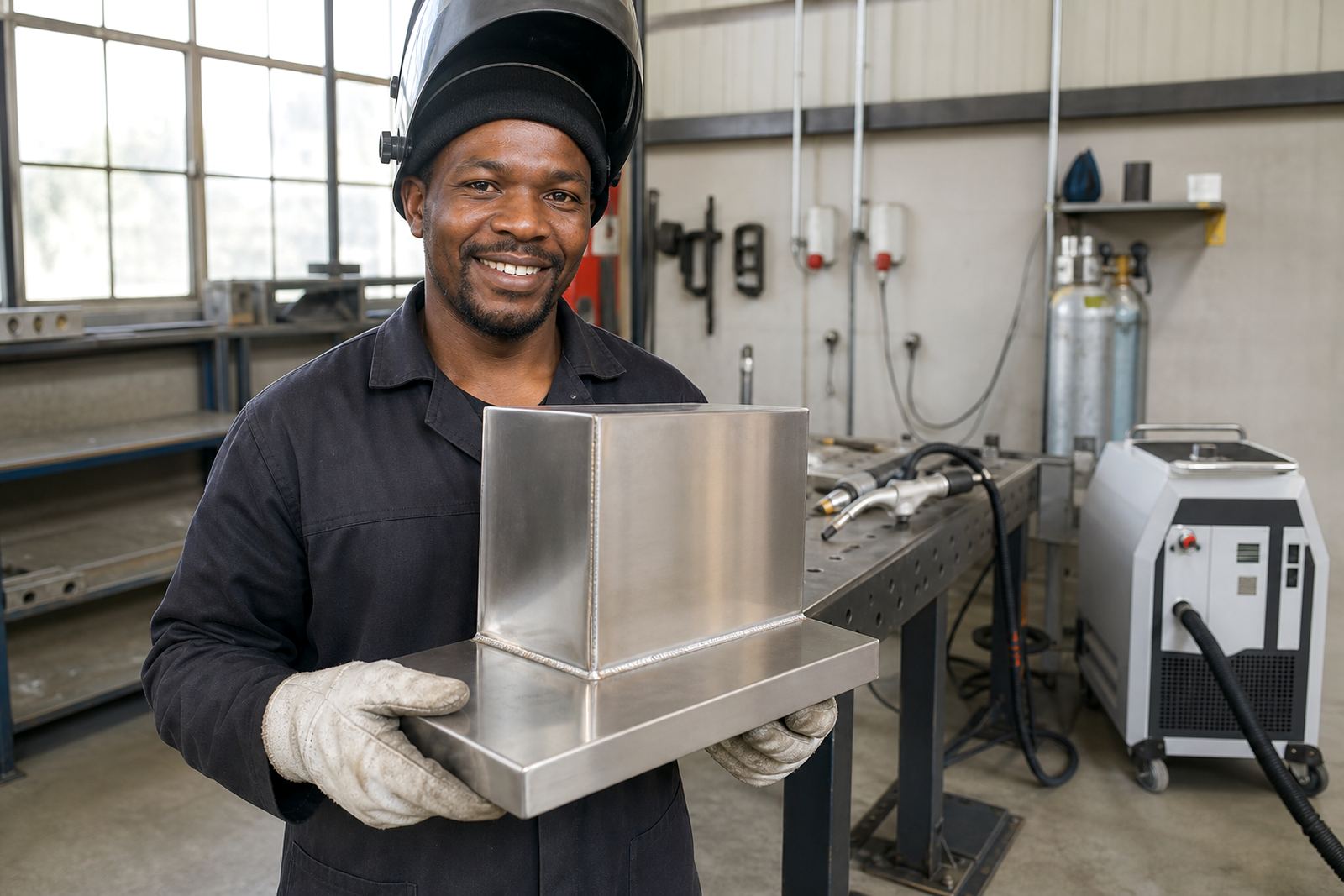
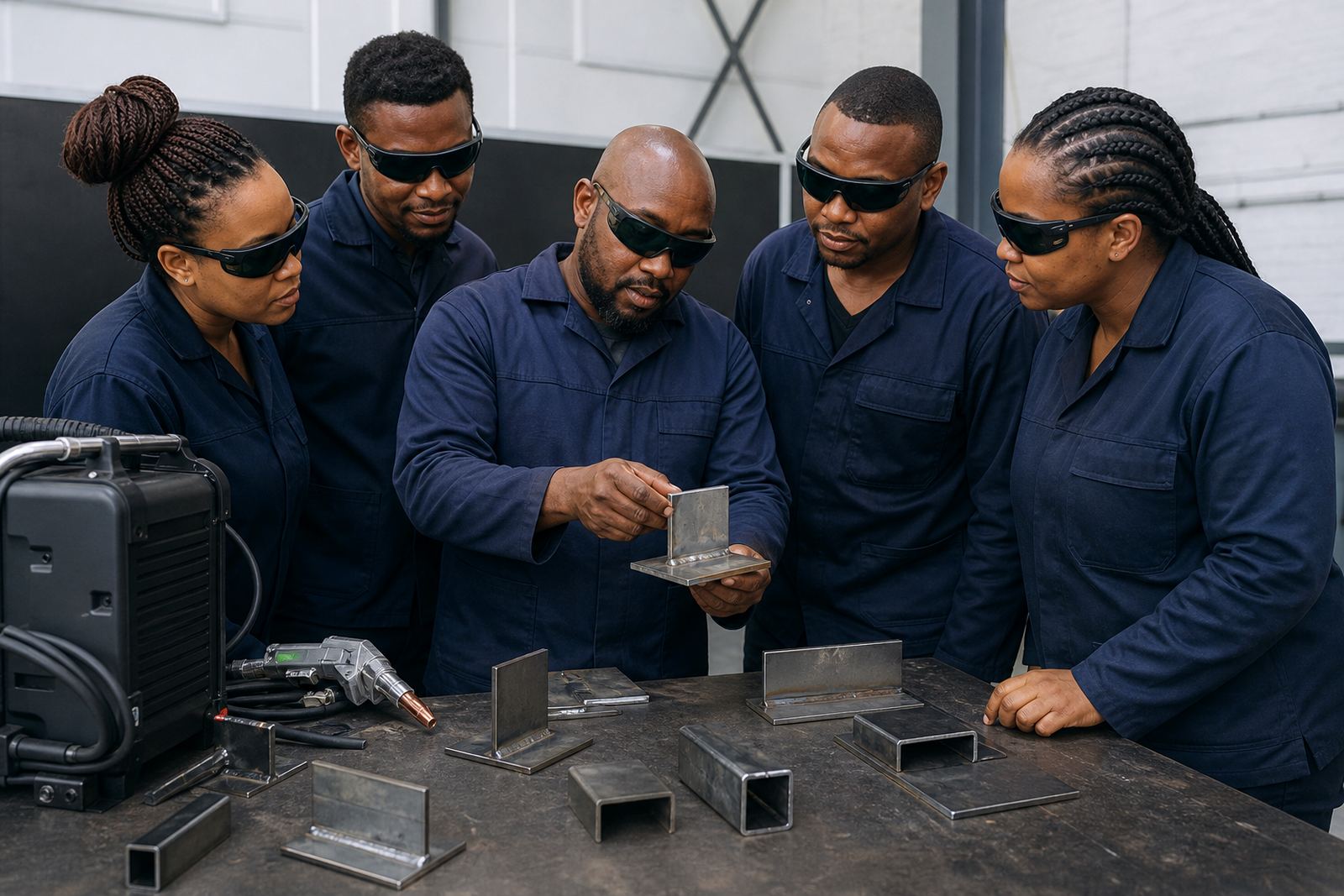
Our job seekers training is built for hands-on exposure. You work with handheld laser welding equipment on suitable test pieces, learn how to prepare joints, and understand what good bead placement, heat control and cleaning look like in real use. We also cover the day-to-day expectations that employers look for, such as safe handling, tidy work habits and basic fault checking. There is no shortcut here, and no one leaves without spending enough time on the practical side.
For learners, the goal is not just to watch a demo. It is to build confidence, ask questions, and leave with a certificate of completion from LaserWelder Training that shows you completed the course content and practical sessions.
Typical Equipment Set You Will See in Training
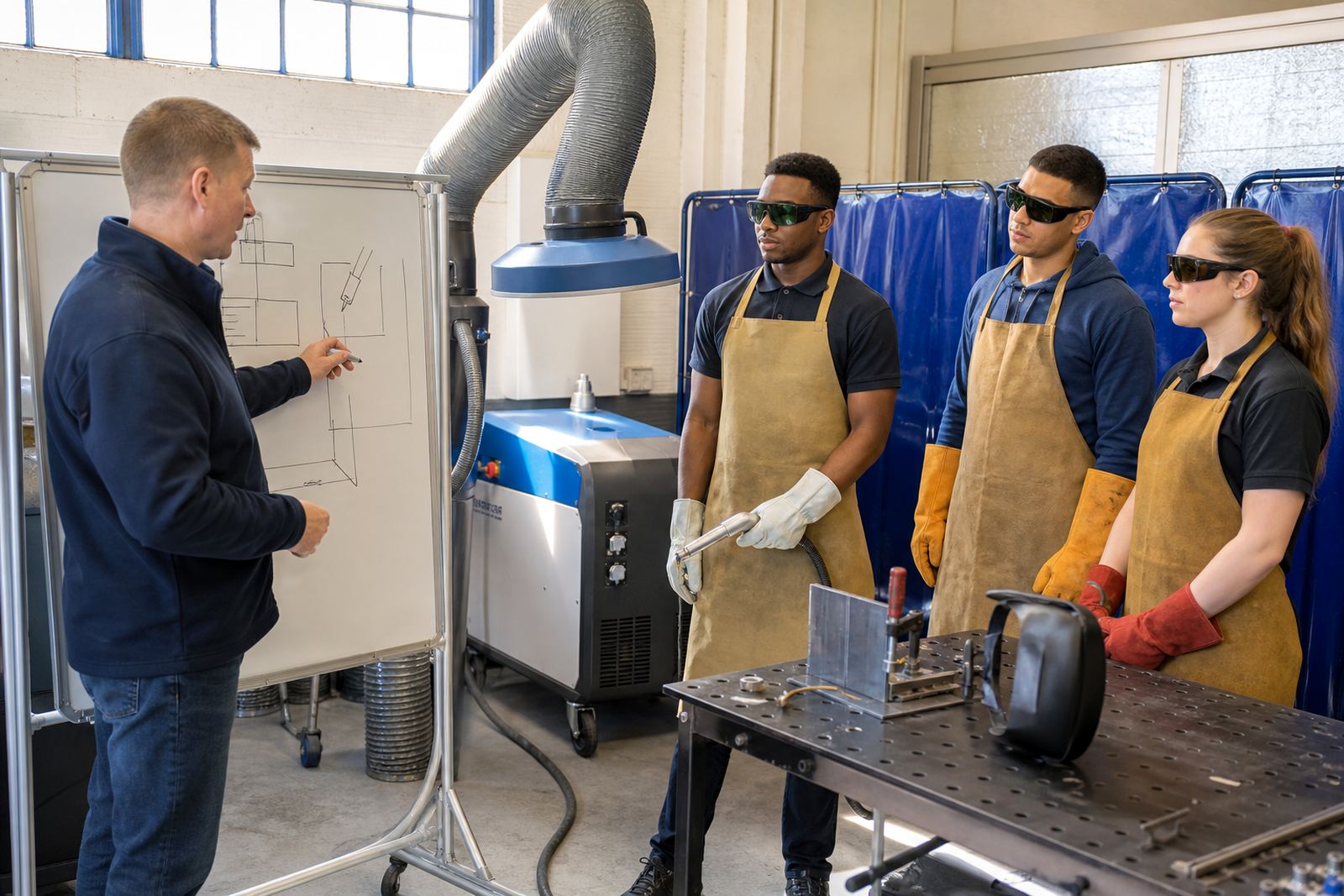
Our training covers a practical starter setup that suits learners and small workshops. The exact configuration depends on the job, but most setups include a handheld laser welding unit, a suitable work surface, shielding or partitioning, eye protection, extraction for fumes, and basic tools for cleaning and finishing. For some exercises we also use clamps, jigs, sample offcuts and marking tools so learners can practise positioning properly.
We explain how the equipment fits together, what each part does, and where problems usually start. For example, poor earth setup, dirty workpieces, weak clamping or the wrong feed approach can all affect the finish. In coastal areas like Durban and Cape Town, learners also need to understand moisture, storage and corrosion issues because humidity can affect consumables and stored material if the workshop is not managed well.
We keep the focus on practical use, not just theory. That means knowing how to set up a small learning station in a way that is easy to maintain, especially if power cuts or load-shedding interrupt your day and you need a clean restart without wasting time.
Safety Rules Every Learner Must Understand
Laser welding is precise, but it still demands strict safety habits. We cover laser class awareness, the correct eye protection for the equipment in use, and why you should never assume ordinary workshop glasses are enough. Learners also get a clear explanation of why fume extraction matters, especially when working on coated material, rusted parts or pieces that have been cleaned with chemicals.
We also deal with practical workshop safety that employers expect. That includes keeping the area clear, protecting nearby workers from exposure, checking cables and connections, and confirming that the work zone is marked properly. In many small South African workshops, space is tight so safety signs, screens and a tidy layout are not optional.
Municipal and workplace rules also matter. Some sites have specific requirements for ventilation, fire safety, waste handling and operating hours, especially where the workshop is shared with other activities. We help learners understand how to work within those limits so they are not caught out later on a real job.
How to Set Up a Small Training Station or Workshop Corner
If you are a job seeker planning your own practice space, layout matters as much as the machine. A small corner can work if it is organised properly. You need enough room for safe movement, a clean bench or stand, a place for material storage, and a setup that keeps non-trained people away from the beam area. Even a modest space can be used well if the flow is planned correctly.
We give layout and planning advice for learners who may later work in Boksburg, East Rand, Johannesburg or out of town in places like Polokwane, where workshops may have different power and ventilation arrangements. Good planning also helps with load-shedding because you know what needs to be switched off, stored safely or restarted after an interruption. That saves time and reduces mistakes.
A proper setup also makes supervision easier. If a supervisor can see the workpiece, the control area and the extraction path, it is easier to guide a learner and spot unsafe habits early. That is especially useful for refresher visits, operator inductions and workshop support where the same area is used by several people.
Common Mistakes New Learners Make
Most first-time learners do not struggle because they are careless. They struggle because they rush, skip checks or underestimate how exact the process is. One common mistake is trying to weld dirty material and expecting a clean result. Another is holding the torch awkwardly, which affects movement and consistency. Some learners also forget that a bright arc area still needs the right protection even if the process feels controlled.
Another problem is poor setup discipline. If clamps are loose, the work shifts. If the extraction is off, fumes build up. If the surface is oily or rusty, the finish changes and the learner blames the machine instead of the prep. We spend time correcting these habits because they matter when you are trying to become useful in a workshop.
We also see learners spending money in the wrong order. They buy tools before they understand the process, or they choose a starter kit without thinking about the type of material they will work on. It is better to start with the right training, then choose equipment that fits the workshop and the work you actually expect to do.
Starter Kit Budgets and What to Allow For
Job seekers often want a realistic budget before they commit. The cost depends on the equipment level, accessories, protective items and the kind of support needed for setup. For a basic learner-focused starter arrangement, allow for a few key items rather than chasing a full workshop list at once. A sensible entry budget can start in the lower tens of thousands of Rand, while a more complete setup for regular practice or small job work will be higher depending on the configuration.
When planning your budget, do not forget the less obvious costs. You may need extra protective eyewear, extraction support, sample material, cleaning tools, storage, and replacement consumables. If you are setting up in a coastal area, you may also need better storage protection against moisture. If your site runs in an area with frequent power interruptions, budget for safe shutdown planning and workflow adjustments too.
We help learners think through these items before they buy. That way, you can avoid spending on equipment that looks useful but does not help you complete the kind of work employers actually need. Our starter kit setup support and consumables planning are there for that exact reason.
What Happens After the Course
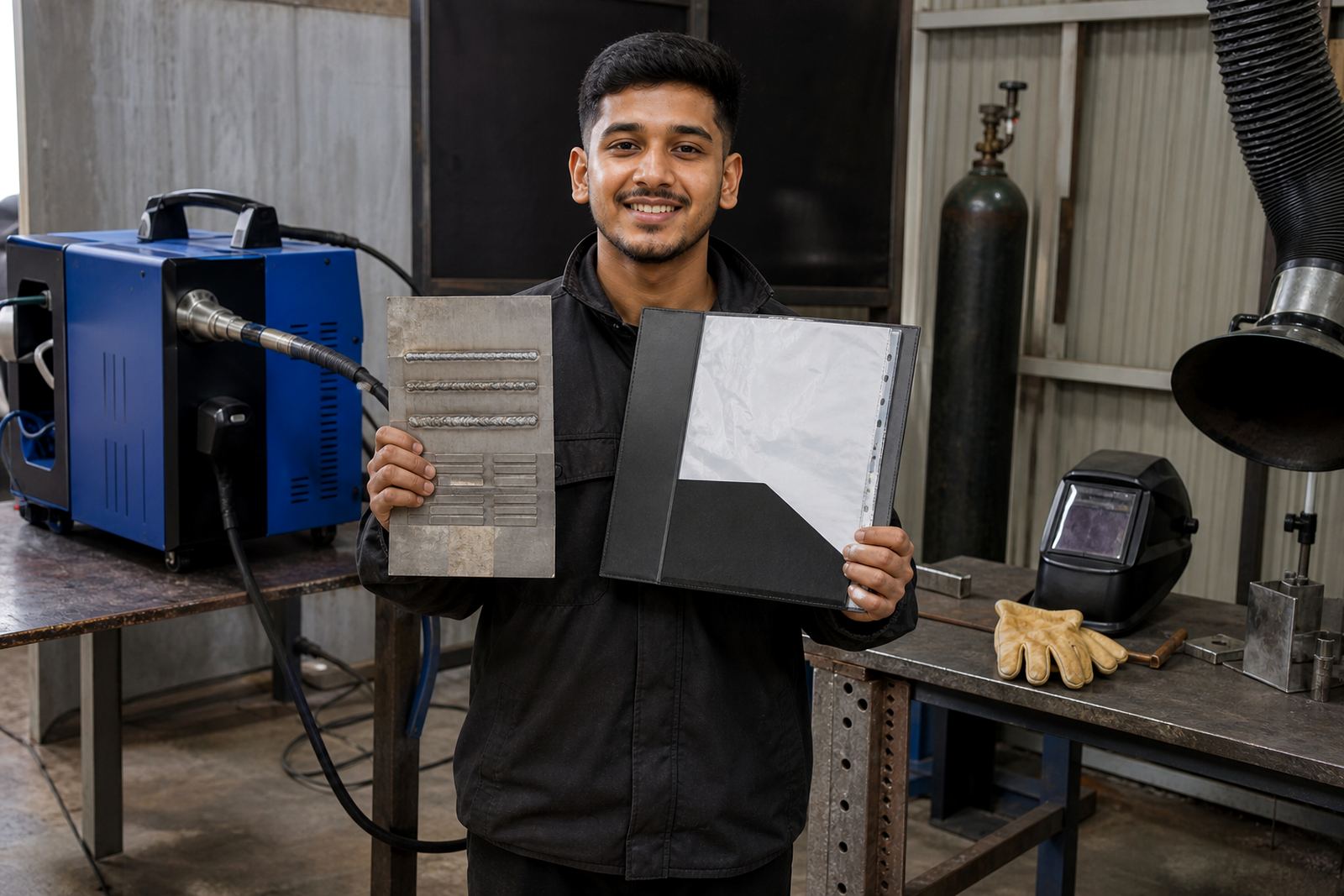
Once the practical sessions are complete, learners leave with a certificate of completion from LaserWelder Training and a clearer understanding of how to work safely and accurately. Some go on to apply for junior workshop roles, others use the training to improve their current duties, and some return later for refresher visits or technical help once they are placed in a new environment.
We also support businesses that want to bring in new staff with a more structured start. That can include supervisor coaching, operator inductions, training document packs and workflow advice. If a learner already has a place in a workshop, we can also help with site readiness checks so the space is ready for practical work and the learning process is not slowed down by avoidable issues.
Whether you are in Boksburg, Johannesburg, Pretoria, Durban, Cape Town or Polokwane, the main aim stays the same: give the learner proper exposure, a safer working habit, and a clear next step in the trade.