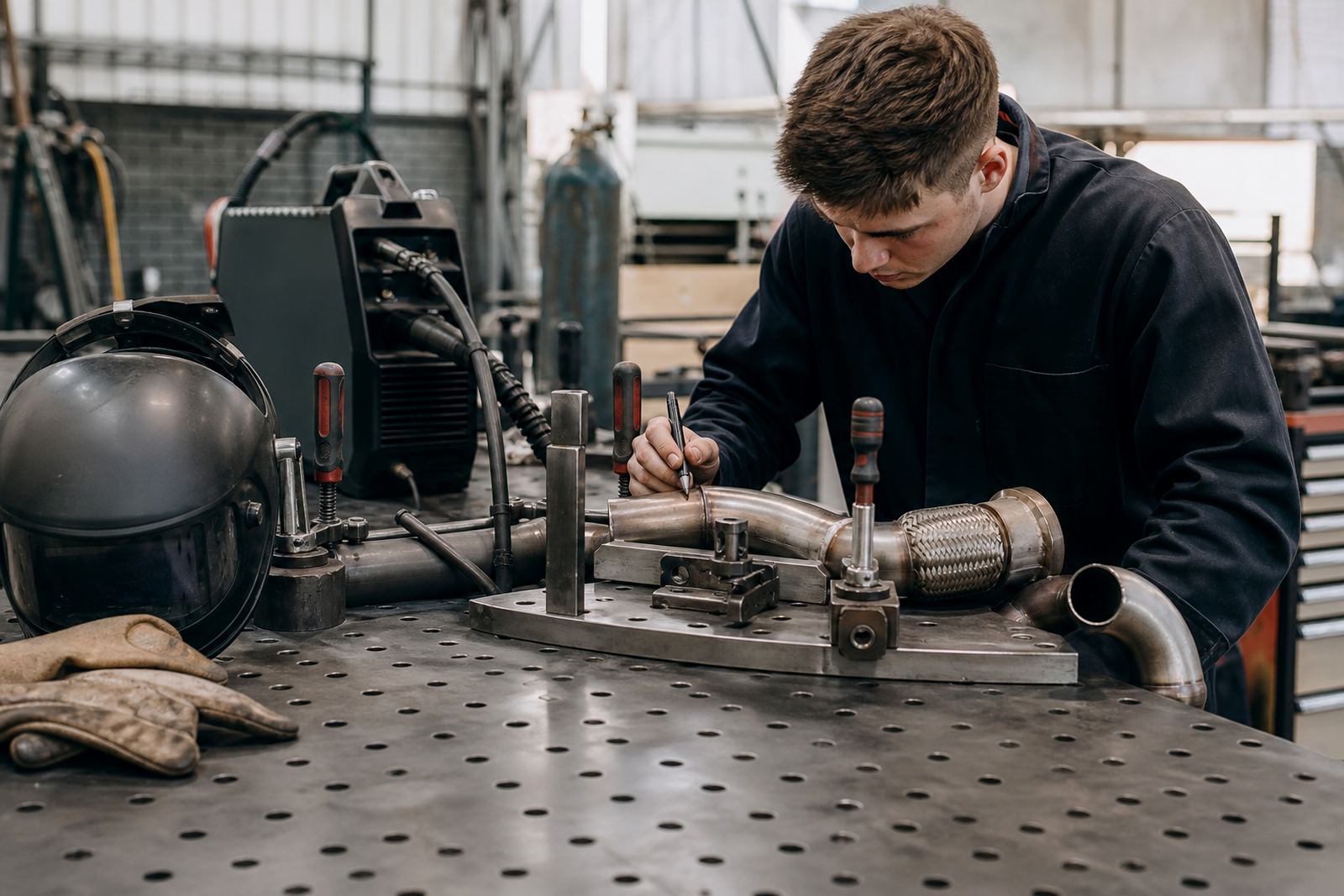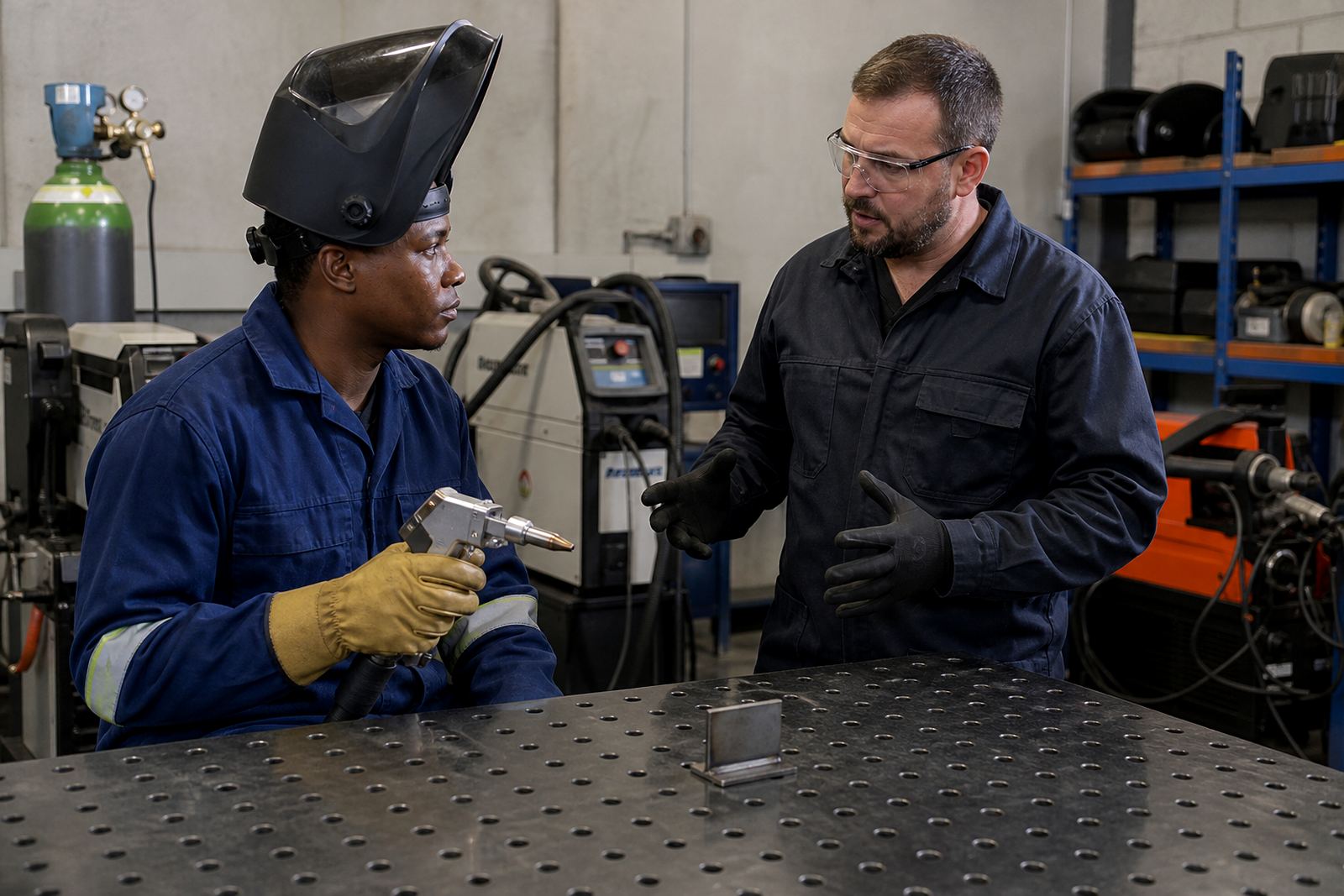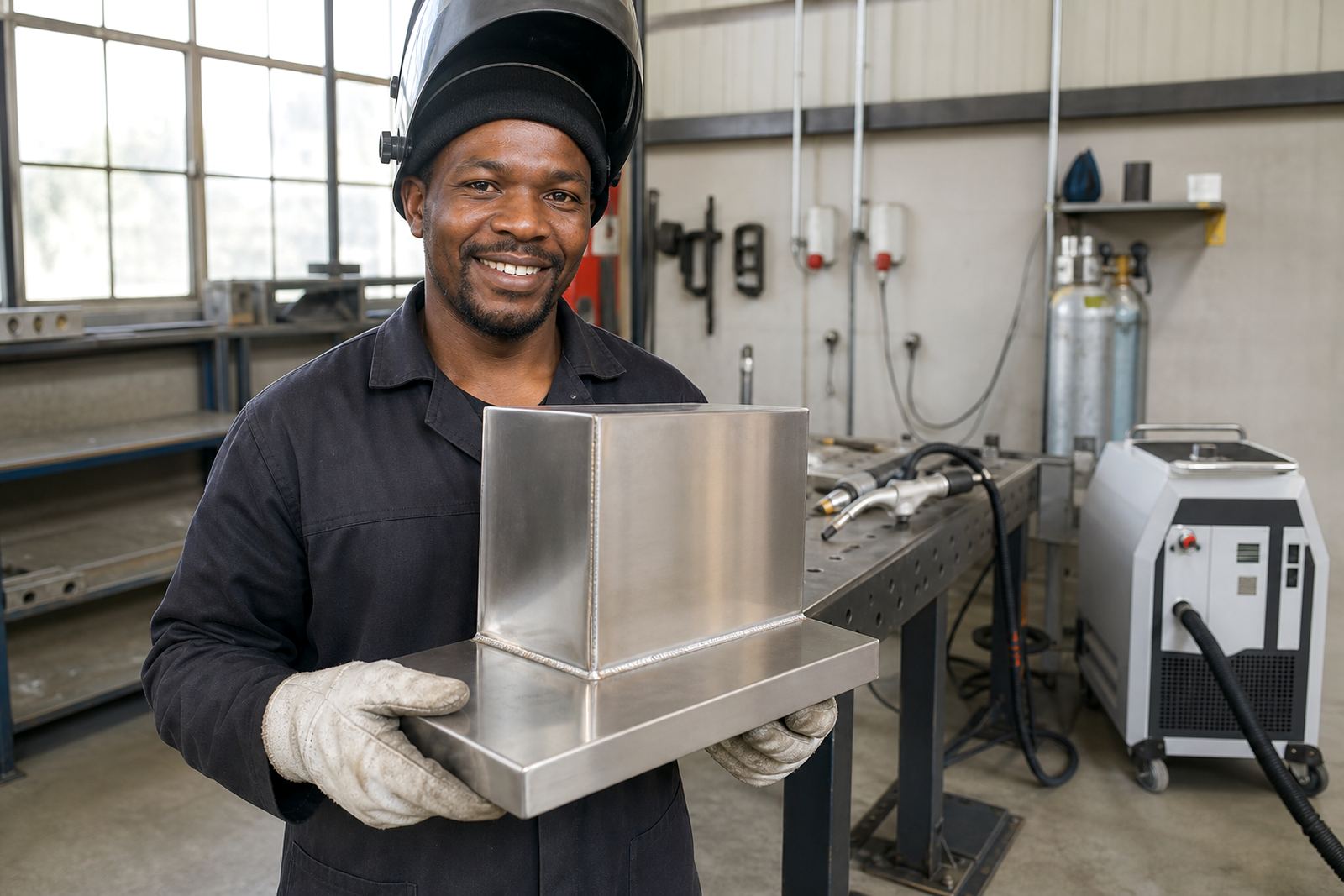
Typical Equipment Set For A Stainless Workshop
A basic stainless laser welding setup is usually a handheld laser welding unit, a fibre source, a welding head, a chiller where required, shielding gas equipment if the job calls for it, and proper fume extraction. You also need clean benches, clamps, jigs, hand tools, consumables and a marked area for safe operation. If your workshop already handles TIG or fabrication, the layout can often be adapted rather than rebuilt from scratch.
For many learners, the starter kit is where the practical side begins. A sensible kit should support day-to-day learning without overcomplicating the setup. We guide learners on what to include first, and what can wait until the workflow is proven. In coastal towns like Durban and Cape Town, it is also worth planning for stainless storage, humidity and corrosion control, because even good material can mark quickly if the shop is untidy.
- Handheld laser welding machine and head
- Eye protection matched to the laser class in use
- Fume extraction and filtered ventilation
- Jigs, clamps, nozzles and basic cleaning tools
- Consumables for practice and small production runs
Safety Rules That Cannot Be Skipped
Laser welding safety is not a side note. These systems are normally Class 4 lasers, which means the beam and reflected light must be treated with care at all times. Stainless can reflect light differently depending on finish and angle, so the work area should be controlled, clearly marked and free of unnecessary movement while welding is in progress. Everyone in the room needs the right eye protection for the equipment in use.
Fume extraction is just as important. Stainless work can release fumes that should not be left hanging in the breathing zone, especially in enclosed shops and during long runs. A proper extraction point near the weld area helps keep the work space cleaner and supports better housekeeping. We also cover entry control, fire precautions, cable management, and what to do when load-shedding disrupts workshop routines and people are rushing to finish jobs. That is when mistakes happen.
- Use laser-rated eye protection for all operators and observers
- Keep reflective surfaces and loose scrap away from the beam path
- Run extraction during welding and during clean-up after the job
- Brief new operators before they touch the equipment
How We Set Up Training For Fabricators
Our stainless-focused training is hands-on and practical from the first session. We start with the way your team measures, cuts, clamps and aligns parts, then move into bead control, heat management, cleaning and inspection. Learners see how small changes affect the finish on stainless tube, sheet and box section, which makes the process easier to repeat back at the workshop.
Courses lead to a certificate of completion from LaserWelder Training only. That matters because many fabricators just want proof that the person running the machine has completed structured training with us. The training can suit beginners and also experienced welders who want to improve their understanding of laser process settings and better handling of stainless. Pieter van der Merwe leads the welding side, while Anele Dlamini focuses on safety and compliance, so the course keeps a practical and careful balance.
Planning The Workshop Layout Before You Buy
Before buying equipment, it helps to think through the flow of work. A laser station should not sit in the middle of a busy grind and fit-up area if that can be avoided. You need a controlled bay, clear walkways, a safe place for material staging and enough room to move parts without bumping the head or disturbing the beam line. In tight workshops around the East Rand, good layout can matter as much as the machine itself.
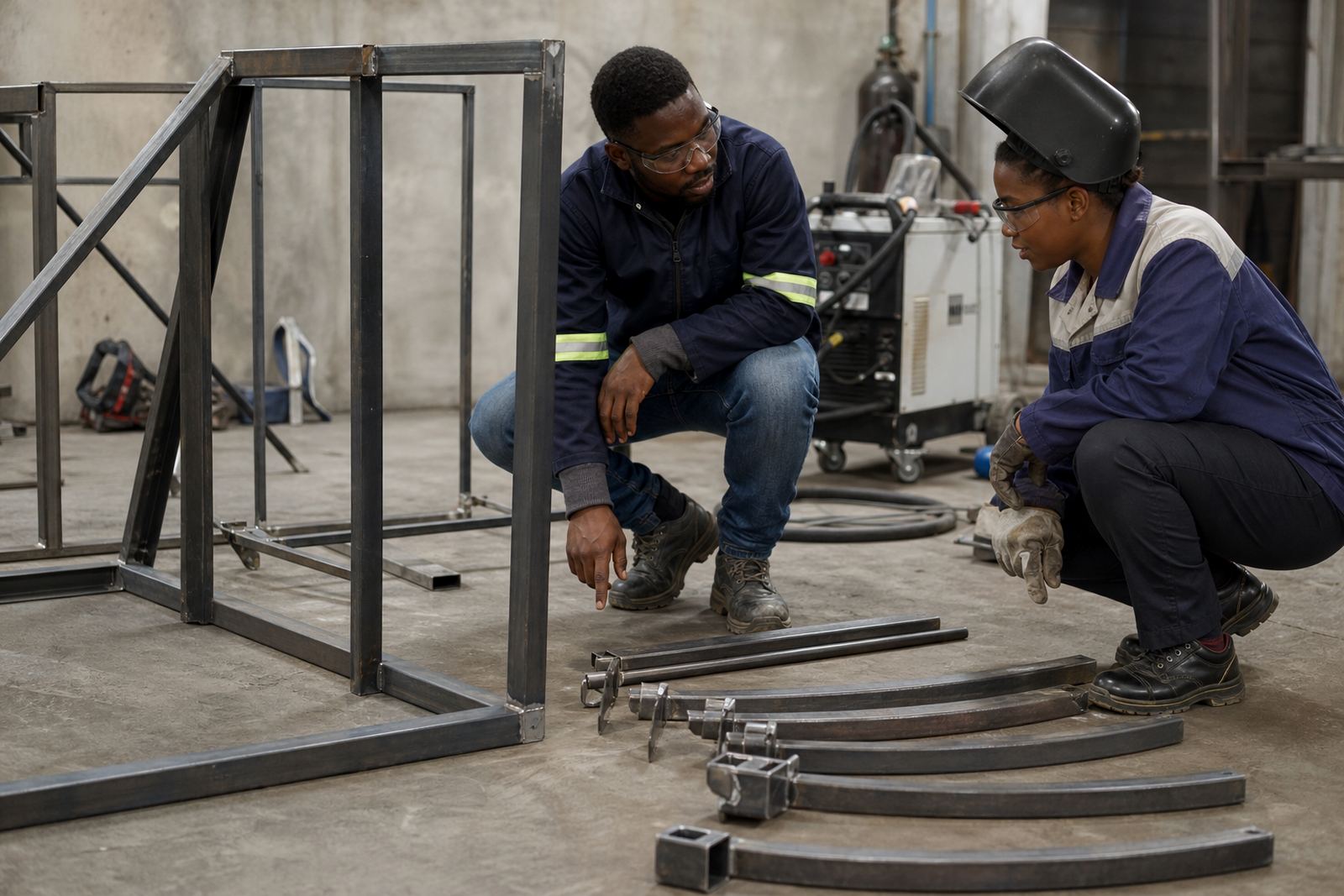
We often advise owners to map the route from cutting to prep to welding to finishing, then decide where the laser station fits. If the team is working on stainless guards, balustrade parts or equipment frames, the bench height, clamp position and part access must suit those shapes. Supervisor coaching and workflow advice can save a lot of trial and error, and it helps the job move faster once the unit is in use.
- Keep the welding bay separate from heavy grinding dust
- Allow space for extraction, gas and cable management
- Place jigs at a height that reduces strain on operators
- Store clean stainless away from carbon steel contamination
Common Mistakes We See On Stainless Jobs
The most common mistake is treating handheld laser welding like a quick fix for poor prep. If the joint gap is too wide, the edges are oily, or the clamp work is weak, the result will show it. Another issue is rushing the first few jobs without checking settings on offcuts. Stainless can look forgiving at first, then show heat marks or underfill once the part is cleaned up. A careful test piece saves time later.
We also see workshops underestimating consumables and support. A machine on its own is not enough. You need spare tips, cleaning gear, extraction maintenance, clear operator notes and a simple way to keep the team trained when a new person joins. Kagiso Molefe supports starter kit planning, while Lerato Mokoena and Brandon Naidoo help with technical support and workshop setup. That support is useful when a team is juggling several jobs at once, especially if power interruptions have thrown the day off.
- Poor fit-up and uneven clamping
- Skipping test pieces before production
- Weak extraction or poor operator protection
- Buying too little consumable stock for regular use
Budget Ranges For Starter Kits And Training Support
Budget depends on the size of the workshop and the type of stainless work being done. A small learner kit for practice and familiarisation will be far lower than a production-ready setup for regular fabrication. In Rand terms, workshops should budget for the machine, safety gear, extraction, setup items, spare consumables and training support together rather than shopping one item at a time. That usually gives a more honest picture of the full outlay.
For planning purposes, many fabricators think in tiers. A starter learning package may sit in a lower range, while a full workshop setup with proper extraction, controlled layout and added support equipment sits higher. Site Readiness Checks, Starter Kit Setup, Supervisor Coaching and Refresher Visits help buyers avoid costly gaps. Mpho Johannes Maseko oversees the business side from the Boksburg base, and the team supports learners in Gauteng and beyond through the enquiry form on our contact page.
- Entry learner setup: lower budget for practice and basic familiarity
- Workshop starter setup: mid range for repeatable small jobs
- Production support setup: higher range for regular fabrication use