A Clear Start for First-Time Learners
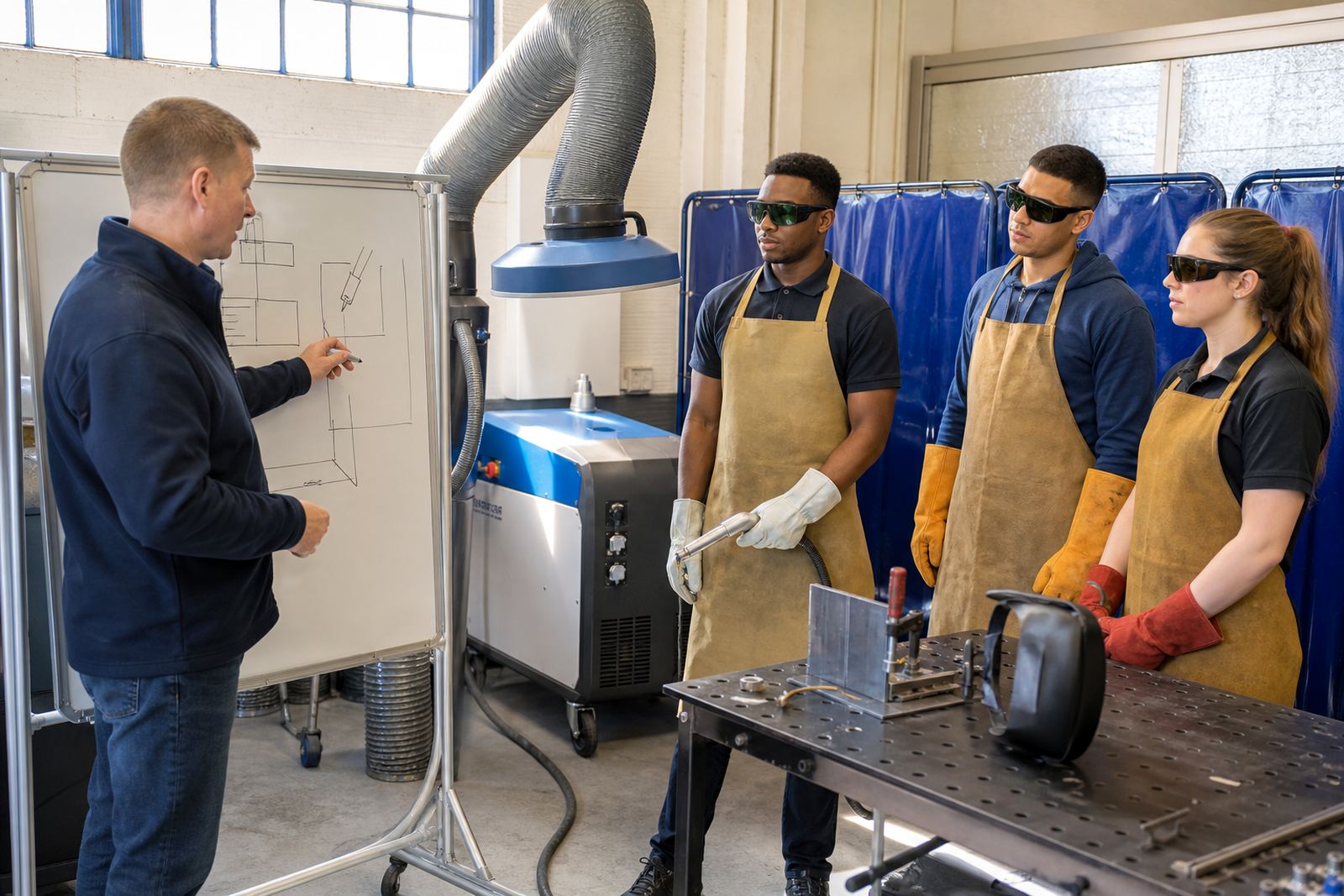
Complete beginners usually need three things before they can weld well: a safe setup, simple instruction, and enough supervised practice to build hand control. That is the focus here. We work with people who have never used a handheld laser welder before, as well as small workshops that want a cleaner process for thin metal repairs and light fabrication.
The first few hours are usually about how the torch sits in the hand, how to keep a steady travel speed, and how to read the melt pool without rushing. For many learners, the biggest change is not the machine itself but the discipline around setup and repetition. A beginner can pick up the basics quickly when the material is prepared properly and the power settings are introduced in a sensible order.
Training is hands-on and practical, with a certificate of completion issued by LaserWelder Training after the course. It is suitable for individuals, supervisors and workshop staff who need a structured start rather than guesswork.
What a Beginner Course Covers in Practice
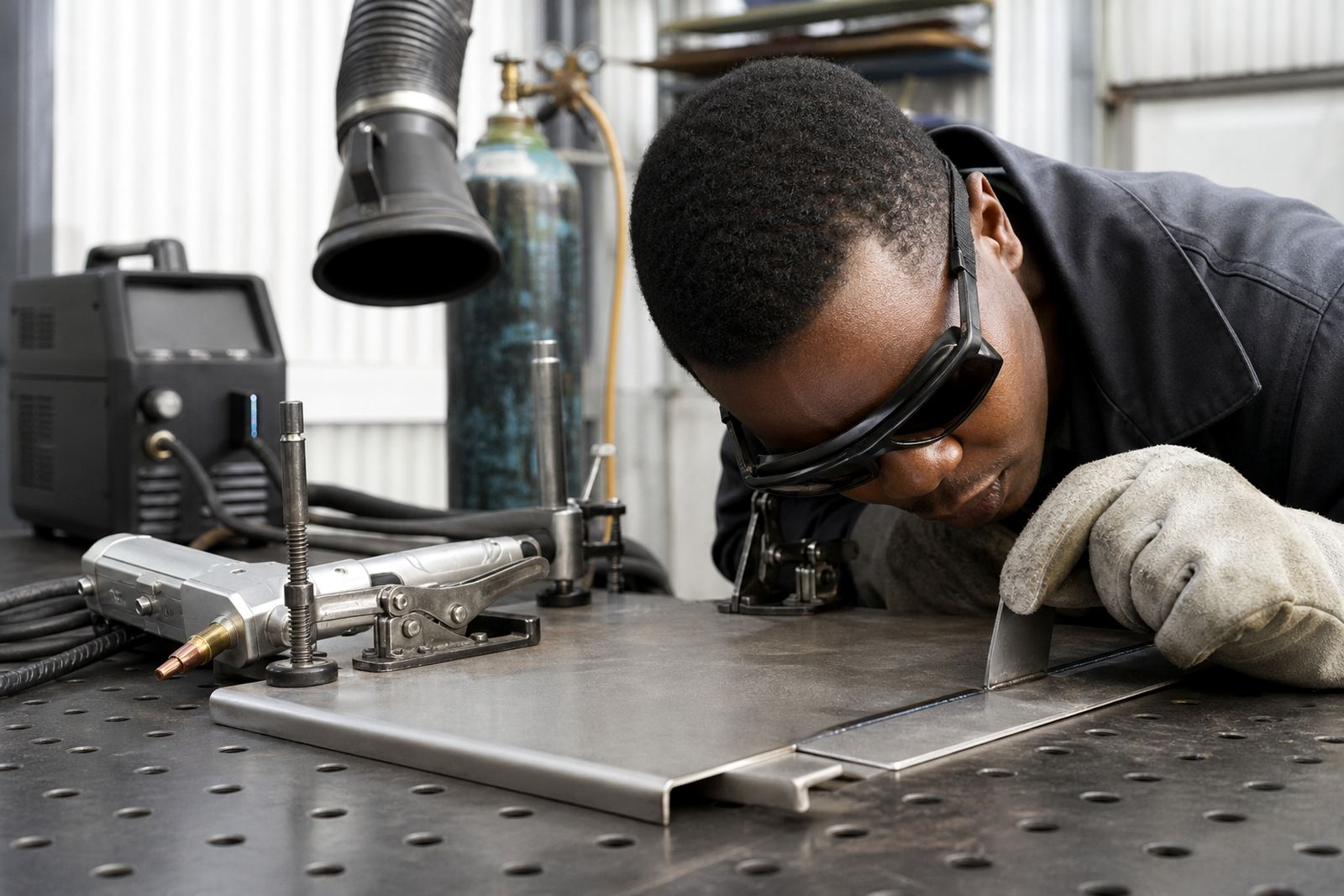
The course is designed around basic operation, safe working habits and repeatable weld technique. Learners are shown how to inspect the handheld unit, check cable routing, confirm gas flow where applicable, and prepare the work area before striking a weld. There is also time spent on cleaning metal surfaces, since dirt, rust and oil can spoil a weld very quickly.
We cover common beginner topics that matter on the shop floor, including lap joints, corner joints, edge work and simple bead placement. The aim is not to overload people with theory. It is to help them understand what the machine is doing while they learn to hold a clean line and avoid overheating the part.
- Safe start-up and shut-down procedure
- Basic torch handling and hand positioning
- Test runs on offcuts before live work
- Cleaning and surface prep before welding
- Simple quality checks after each bead
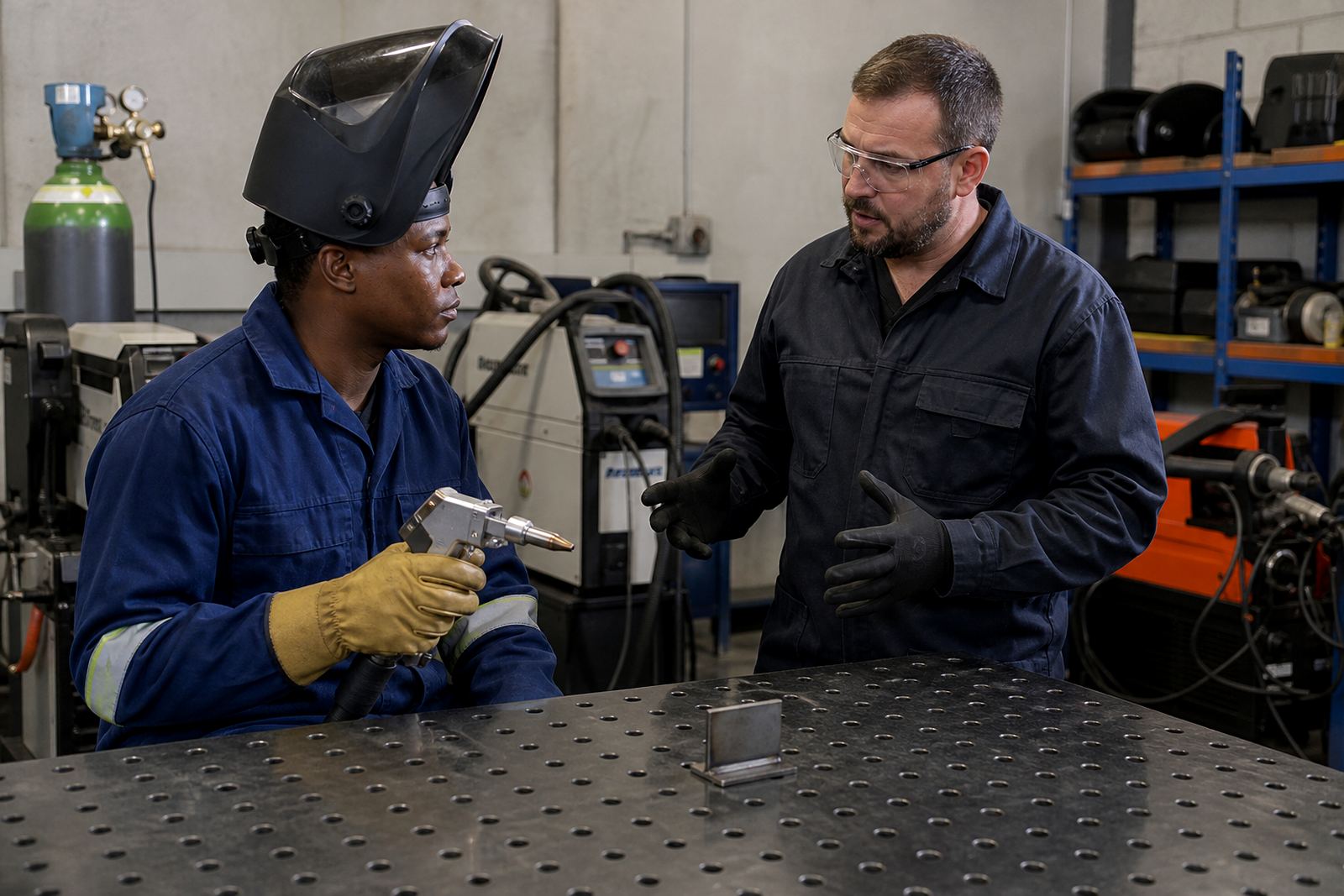
Beginners often worry that laser welding is too technical, but the training is paced so the learner can build confidence step by step. The instructor explains what to look for, then the learner repeats the movement under supervision until it starts to feel natural.
Safety Rules That Must Come First
Laser welding is not something to approach casually. The machine class, the protective eyewear and the extraction arrangement all need proper attention from day one. Eye protection must match the working setup, and no one should rely on sunglasses or general workshop glasses. Suitable shielding is part of the basic setup, not an optional extra.
Fume extraction is also important, especially in enclosed rooms, small workshops or sites with poor airflow. Metal fumes, coating residue and surface contamination can build up faster than people expect. In some areas, especially where the power supply is uneven or load-shedding affects the day, it helps to plan the session so the unit is protected and the workspace remains orderly when power returns.
We also talk through practical safety habits that beginners often overlook. Keep reflective surfaces controlled, keep bystanders out of the line of work, and make sure the operator knows exactly where the emergency stop and isolation points are. A tidy bench is not just neat, it cuts down on mistakes.
- Use the correct laser class controls for the unit in use
- Wear approved eye protection at all times during operation
- Fit fume extraction or local extraction close to the weld point
- Keep combustible material away from the work zone
- Mark the area clearly so visitors do not walk in by accident
Typical Starter Kit and Work Area Layout
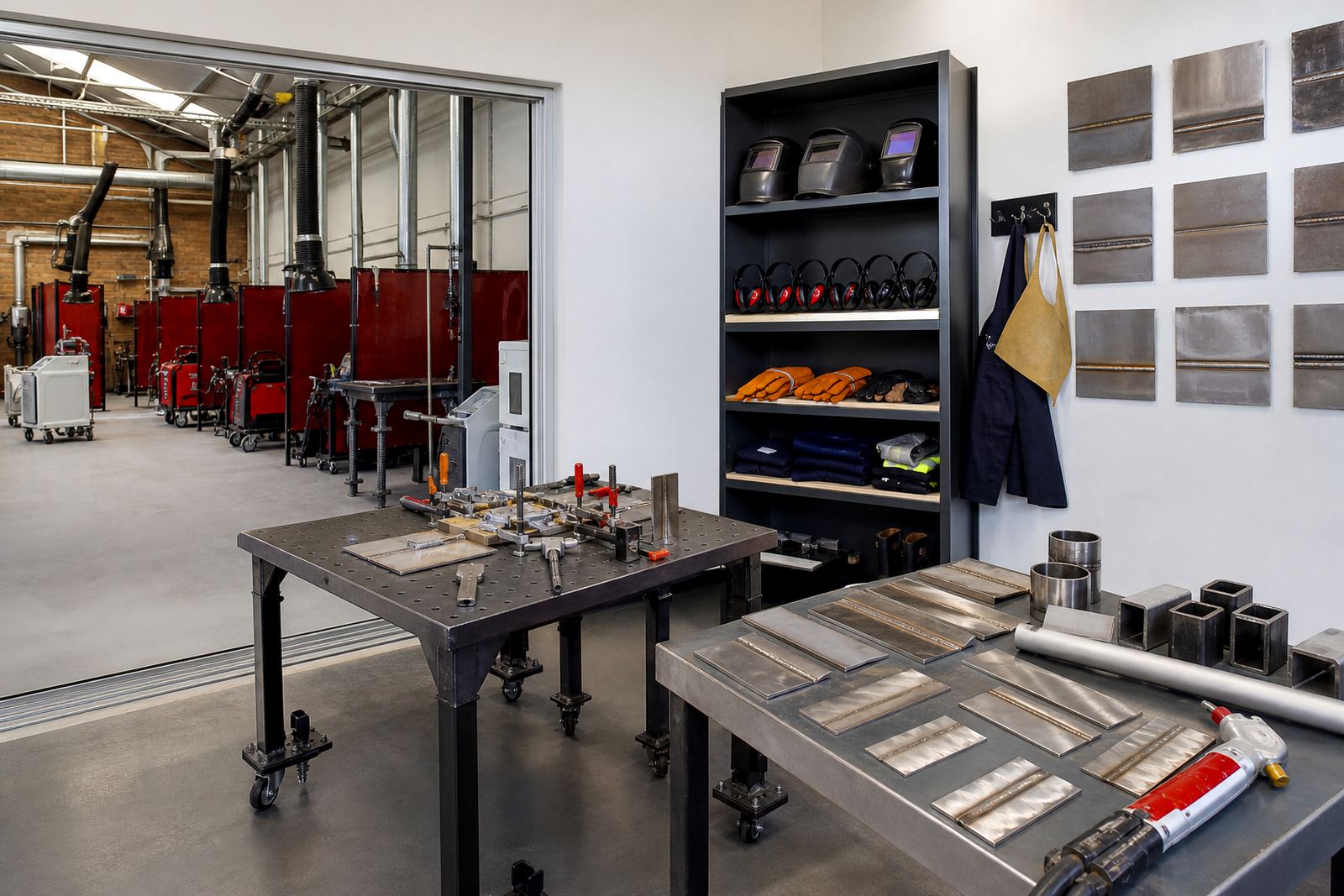
For a complete beginner, the starter kit should be simple enough to manage but complete enough to support proper practice. A typical setup includes the handheld welding unit, protective eyewear, a suitable work table, clamps, cleaning tools, sample metal offcuts and consumables needed for basic training. Where needed, we also help with setup for the gas supply and extraction arrangement.
The work area should allow the learner to move freely without reaching across cables or leaning over the weld line. Good lighting matters, but so does keeping the bench free of clutter. In a small workshop in Boksburg, Johannesburg or Pretoria, that may mean using a dedicated corner rather than trying to fit the welder into a busy repair bay. On coastal sites in Durban or Cape Town, moisture control and storage matter too, because tools and fittings can corrode faster in humid air.
Starter kits are best planned around the jobs the learner expects to do. Thin sheet metal, light brackets, repair work and controlled practice pieces each have different needs. If the kit is too large, it can sit unused. If it is too small, the learner is forced to improvise before the basics are learned.
- Handheld laser welding unit and torch assembly
- Correct eye protection for the setup
- Clamps, offcuts and cleaning tools
- Extraction and ventilation support where required
- Basic consumables and storage for spare items
Common Beginner Mistakes We Help Fix
Most beginner problems are not caused by the machine alone. They usually come from rushed setup, poor material prep or trying to weld too fast. A learner may move the torch unevenly, pause too long in one spot, or forget to test on offcuts first. These small errors can leave a weak bead, excess heat input or a finish that needs rework.
Another common issue is poor planning around the job itself. If the material is not cleaned, if clamps are missing, or if the operator is working in a cramped corner, the weld quality drops quickly. Some learners also underestimate the importance of checking the workpiece before and after welding. A quick visual inspection can catch problems before they turn into scrap.
Our approach is practical: show the mistake, explain why it happened, then correct it with a second attempt. That method works well for first-time learners because it builds judgement, not just muscle memory.
We also offer refresher visits, workflow advice and supervisor coaching for workshops that want the training carried back into daily production. That matters where a senior staff member needs to keep the standards steady after the course is complete.
Budget Ranges for a Small Start
Beginners often ask what to budget before they commit. The answer depends on whether the learner only needs training, or also needs a starter kit, extraction support and setup help. A course-only budget is one figure, while a full workshop starter setup is another. For many small operations, it is wiser to phase the spend rather than buy everything at once.
As a practical guide, entry-level training and a basic setup conversation may sit at a lower budget range, while a more complete starter package with accessories, safety items and support will sit higher. Shipping to Johannesburg, Pretoria, Durban, Cape Town or Polokwane can also affect the final figure. If the site is in a remote area or the building has limited power stability, extra planning may be needed.
We help learners and owners plan around realistic needs, not unnecessary extras. That includes consumables planning, document packs, operator inductions and site readiness checks where the workshop wants a proper foundation before the first jobs begin. A bit of planning now saves money later, and avoids rework after the first few weeks.
For learners who want to start properly, the best move is to get the right course, the right safety setup and the right starter kit shape for the work they actually do.