When a Supervisor Needs More Than Basic Operator Know-How
If you are responsible for output, quality and safety, you need more than a quick demo. Production supervisors often have to decide where handheld laser welding fits, which jobs are suitable, and how to keep the team working in a controlled way without slowing the floor down.
That usually means understanding the welding process, the limits of the equipment, and what good prep looks like before the first seam is run. On site we often see supervisors dealing with mixed skill levels, short lead times, and equipment that has to fit into an existing bay with cutting, grinding and assembly already happening around it.
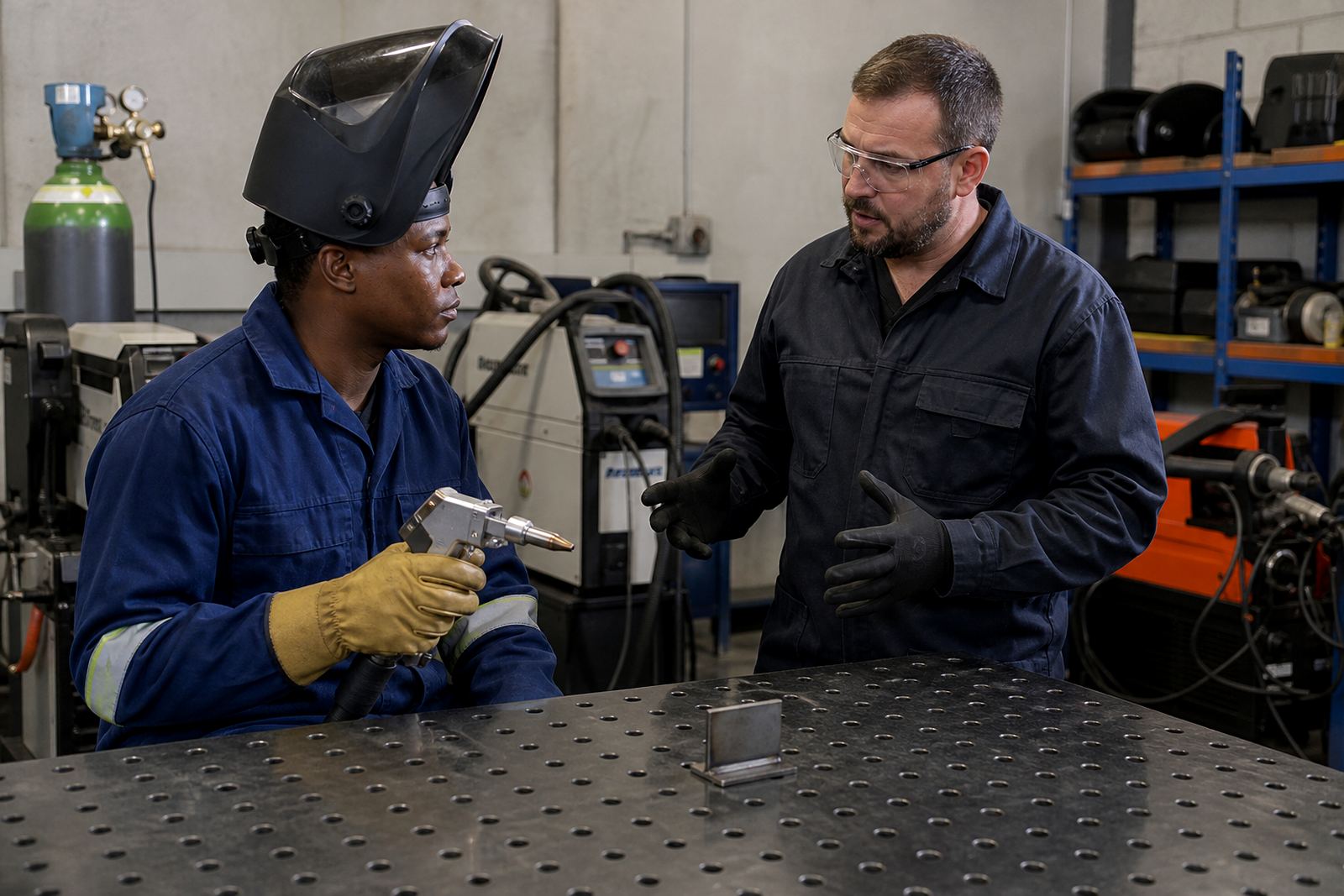
Our course support is aimed at that reality. You get process knowledge you can use when assigning work, checking outputs, and speaking to operators, maintenance teams and workshop staff with confidence. It is practical, not classroom theory for the sake of it.
Typical Handheld Laser Welding Setups We Work With
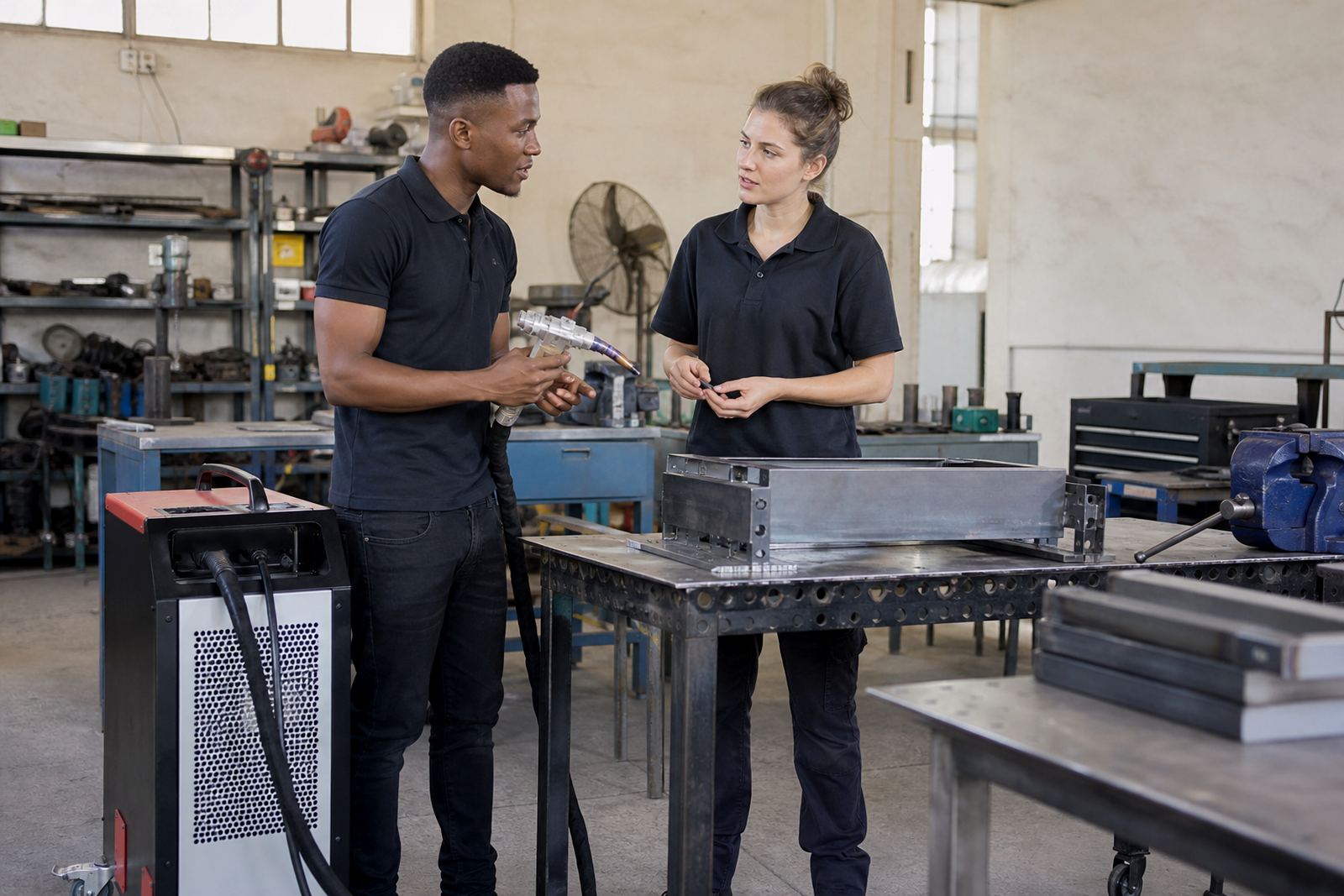
Handheld laser welding is commonly used with a compact welding head, a control unit, a power supply, shielding gas, cooling arrangement and basic extraction. Some workshops add a cleaning function and a simple fixture table, while others work from existing benches and jigs.
For supervisors, the question is not only what the machine can do but whether the full setup fits the job flow. A good layout should give the operator enough room to load parts, set alignment, move safely, and keep cables, hoses and foot traffic out of the way.
- Welding head and control unit positioned for quick access
- Dedicated safe zone with clear floor marking
- Fume extraction placed close to the weld point
- Eye protection stored where the operator can reach it easily
- Dry, stable power supply with protection for load-shedding recovery
In Gauteng especially, power interruptions can upset a shift if the team has no restart plan. A supervisor should know how to pause the job, secure the area, and bring the unit back into service without guessing.
Safety Standards Supervisors Should Insist On
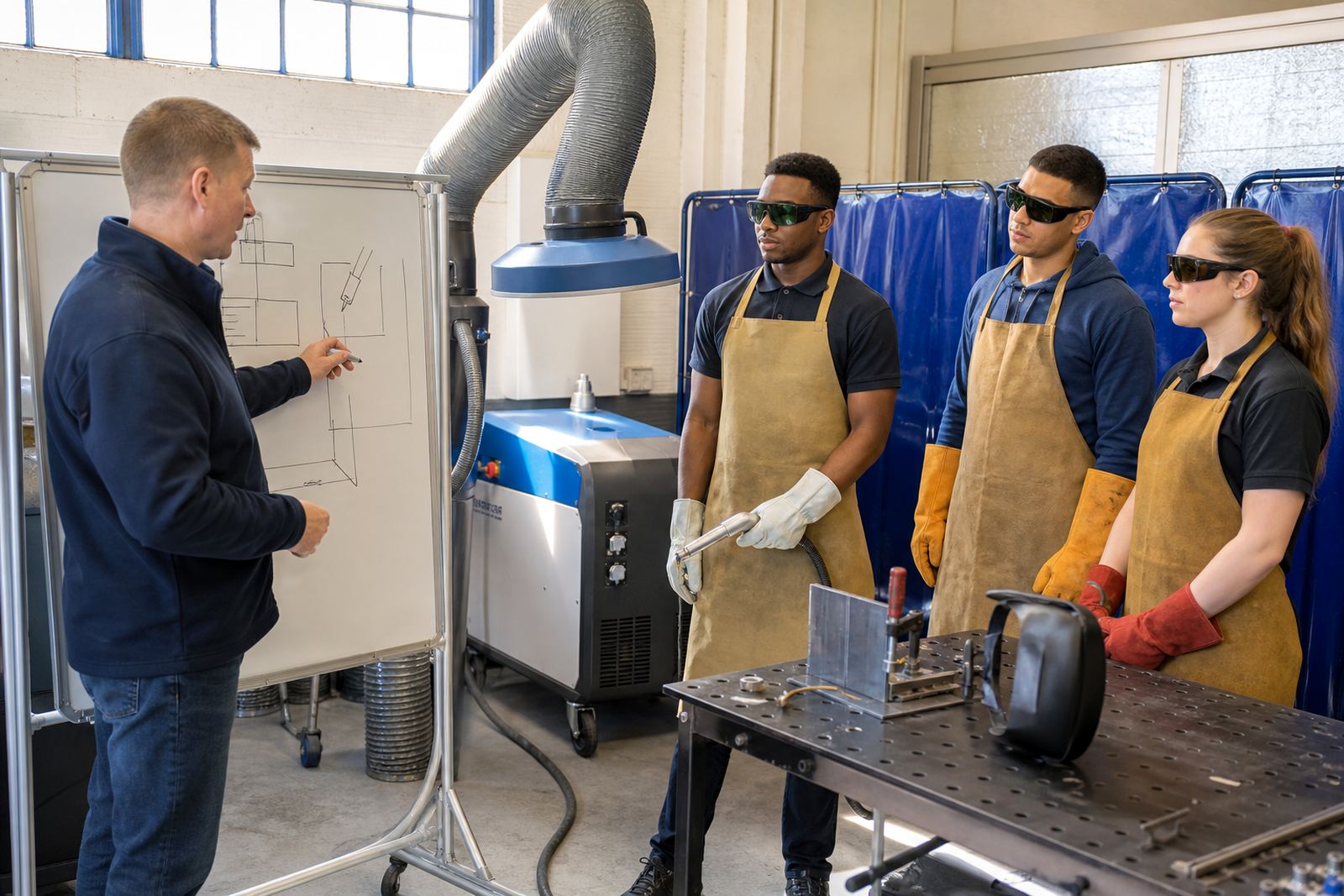
Laser welding safety is not optional. Most handheld units used in workshops fall into higher laser classes that require strict control measures, controlled access and proper training before use. Supervisors should know who is authorised to operate the equipment and who may only observe from a safe distance.
Eye protection must match the laser used, and it must be worn every time the unit is active. Fume extraction is equally important because welding smoke, vapours and fine particles can build up quickly in enclosed areas, especially where ventilation is poor or doors stay shut because of weather, noise or dust.
- Keep the work area signed and restricted during operation
- Use correct eye protection for all people in the zone
- Check extraction position before each shift
- Remove reflective surfaces that can bounce the beam
- Keep combustible items away from the welding bay
We also cover practical supervisor duties such as briefing the team, checking that PPE is used correctly, and making sure the workshop knows what to do if a fault, exposure risk or process drift is noticed.
Common Mistakes That Slow Down Output
Supervisors often call for training after the same faults keep showing up. The issue is usually not the machine alone, but poor setup, weak supervision or a job that was never suited to handheld laser welding in the first place.
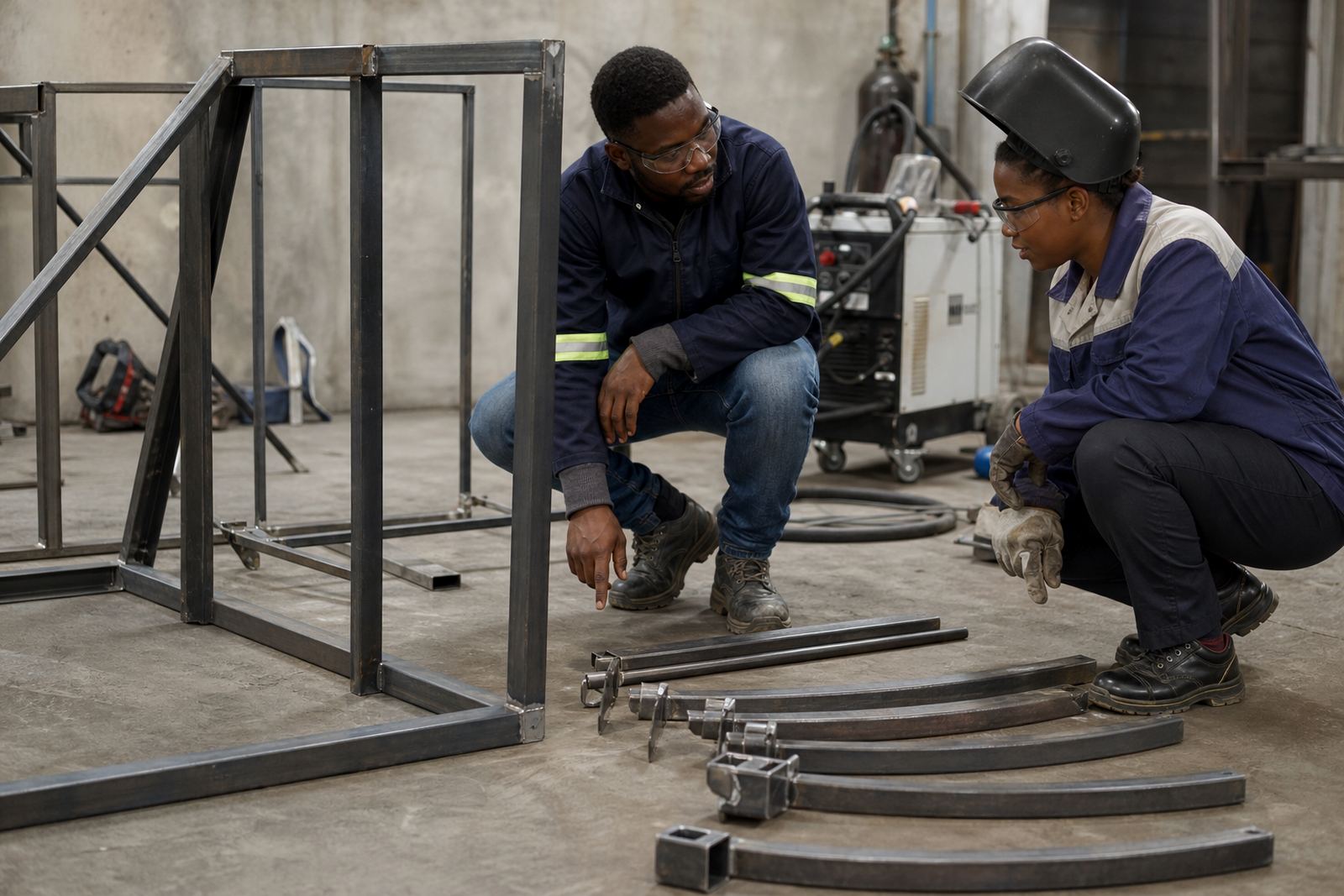
Common mistakes include rushing surface prep, ignoring fit-up tolerances, using the wrong speed for the joint, skipping test pieces, and allowing operators to work without a proper starting routine. Another common problem is expecting the same result on every material without checking thickness, finish or joint condition first.
We also find teams underestimating the effect of poor storage. If starter kits, lenses, nozzles, cleaning items and consumables are not kept dry and organised, the day starts badly and the weld quality follows. On coastal routes and humid areas, that can become a real issue pretty fast.
How We Structure Supervisor-Focused Training
Production supervisors need a balance of technical understanding and floor control. Our training is designed to show how the process works, how to set team expectations, and how to check whether the job is ready before the operator starts.
The practical side covers safe use, common defects, workflow planning, setup checks and what to look for during a quality walkthrough. For teams that need more support, we can also help with operator inductions, supervisor coaching, practice plans and refresher visits.
- Site Readiness Checks before equipment is introduced
- Safety Briefings for supervisors and operators
- Workflow Advice for bay layout and job movement
- Starter Kit Setup and consumables planning
- Training Document Pack and certificate of completion
Each learner who completes the course receives a certificate of completion from LaserWelder Training only. That gives your records a clear training trail without overcomplicating the admin.
Budget Ranges for a Small Workshop or Full Team Rollout
Budget depends on how many people need training, whether you need site checks, and whether you are buying starter kits for one bay or several. For a small workshop, it is sensible to plan for training fees, consumables, extraction adjustments and basic PPE before the first production job starts.
A supervisor-led rollout can also include workshop planning items such as fixtures, storage, spare lenses, nozzles and cleaning supplies. Starter kits are usually budgeted separately from training because different teams need different contents, from a lean entry setup to a fuller kit for regular use.
As a working guide, many businesses set aside a few thousand Rand for basic preparation in a single bay, while a wider rollout across multiple operators can run to a larger project budget once training, setup, consumables and support visits are included. We can help you plan the order of spend so you do not buy extras before the process is ready.
If your team is in Boksburg, Johannesburg, Pretoria, Durban, Cape Town or Polokwane, you can use the enquiry form on our contact page to start the discussion. We work with supervisors who need practical steps, not guesswork, and that saves time when the workshop is already under pressure.