When panel work needs clean lines and less heat
Panel workshops often deal with jobs where the final look matters as much as the joint itself. That can include light sheet metal, covers, brackets, guards, cabinets, vehicle panels, doors, enclosures and small fabrication parts where a tidy seam is expected. Traditional welding methods can still be used, but they may leave more heat distortion, more grinding and more time spent correcting warpage. Handheld laser welding is often considered for these jobs because it focuses heat into a smaller area, which helps on thin materials when setup is right.
For workshop owners in Boksburg, Johannesburg, Pretoria, Durban, Cape Town and Polokwane, the main question is usually not whether the machine can weld. It is whether the team can prepare the joint properly, control the heat, and work safely in a busy shop with cutting, grinding and assembly happening nearby. That is where practical training matters.
What the typical panel workshop setup looks like
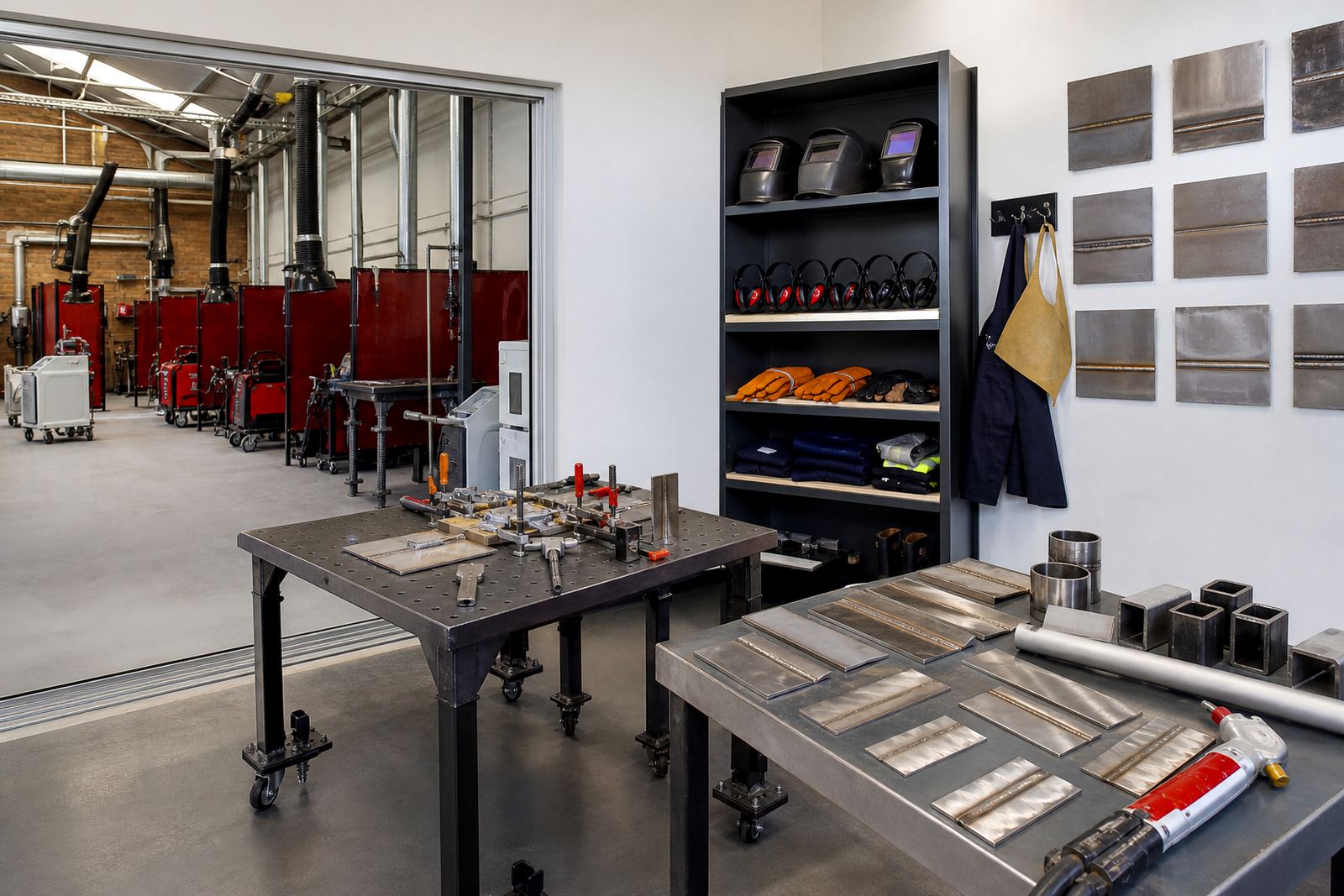
A practical panel welding station does not need a complicated layout, but it does need order. Clear access around the bay, a stable workbench or fixture table, clean power supply, dry compressed air if the equipment requires it, and a controlled area for hand movement all help. If the workshop is affected by load-shedding, plan for the machine input, extraction and lighting separately so changeovers do not interrupt the whole floor. Some workshops also need surge protection and a backup plan for inspection lights and extractors.
The usual equipment set for starter work includes the handheld laser welder itself, the correct torch head, power and control cables, filler wire where needed, clamps, cleaning tools, basic joint prep tools, a shielding arrangement if required, and fume extraction. In many panel jobs the extractor is not optional. Even where fumes seem light, surface coatings, paint residue and oily contamination can produce harmful smoke and fine particles. Eye protection rated for the laser wavelength, proper enclosure controls and staff awareness are part of the setup, not extras.
- Dedicated welding bay with clear floor space and marked access paths
- Non-reflective screens or partitions where nearby staff move through the area
- Good lighting for fit-up checks, edge prep and final inspection
- Fume extraction close to the weld zone
- Laser-rated eye protection for the operator and nearby staff if exposure is possible
- Fire extinguisher, clean metal work surfaces and a housekeeping routine
Training focus for thin panels and visible finish work
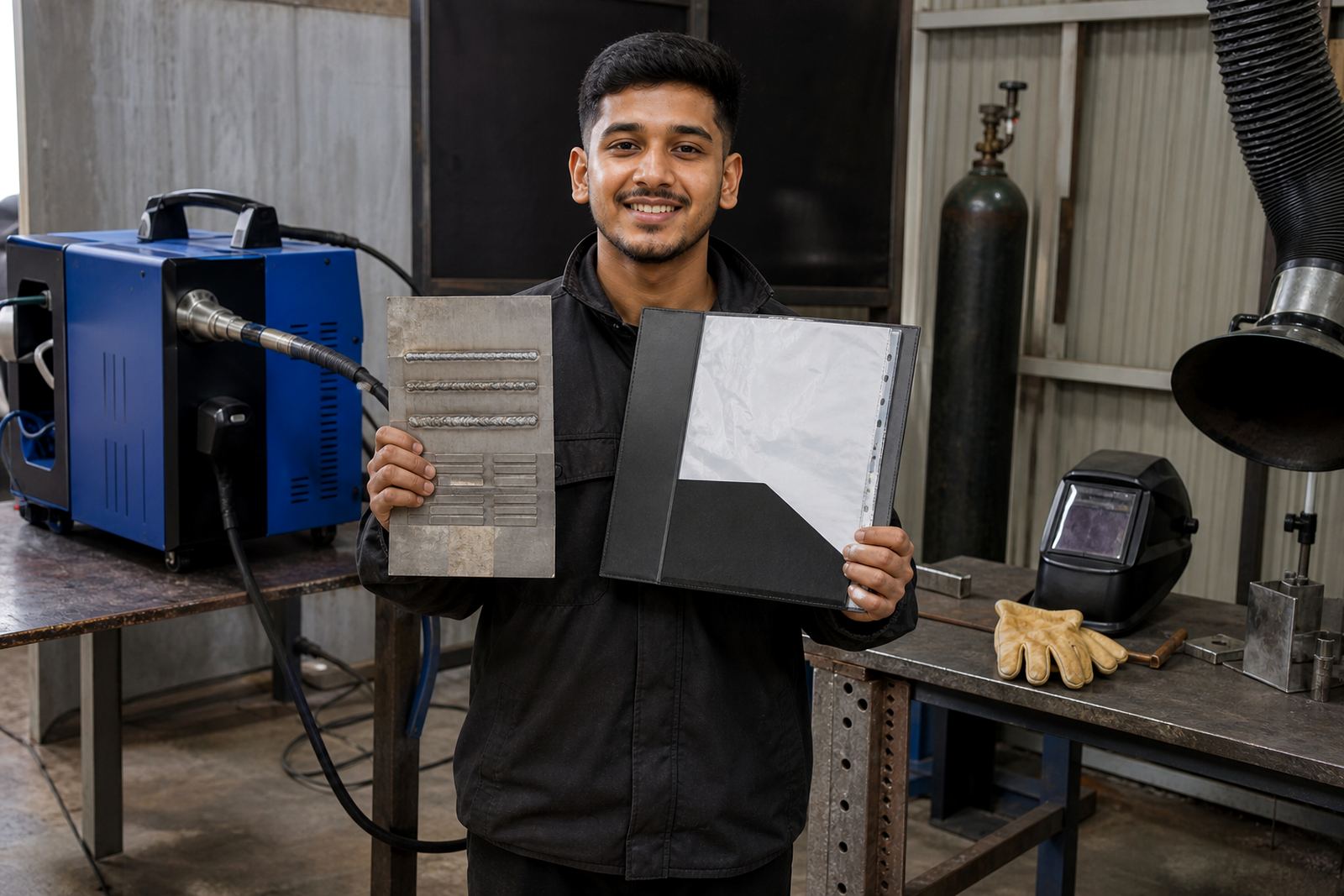
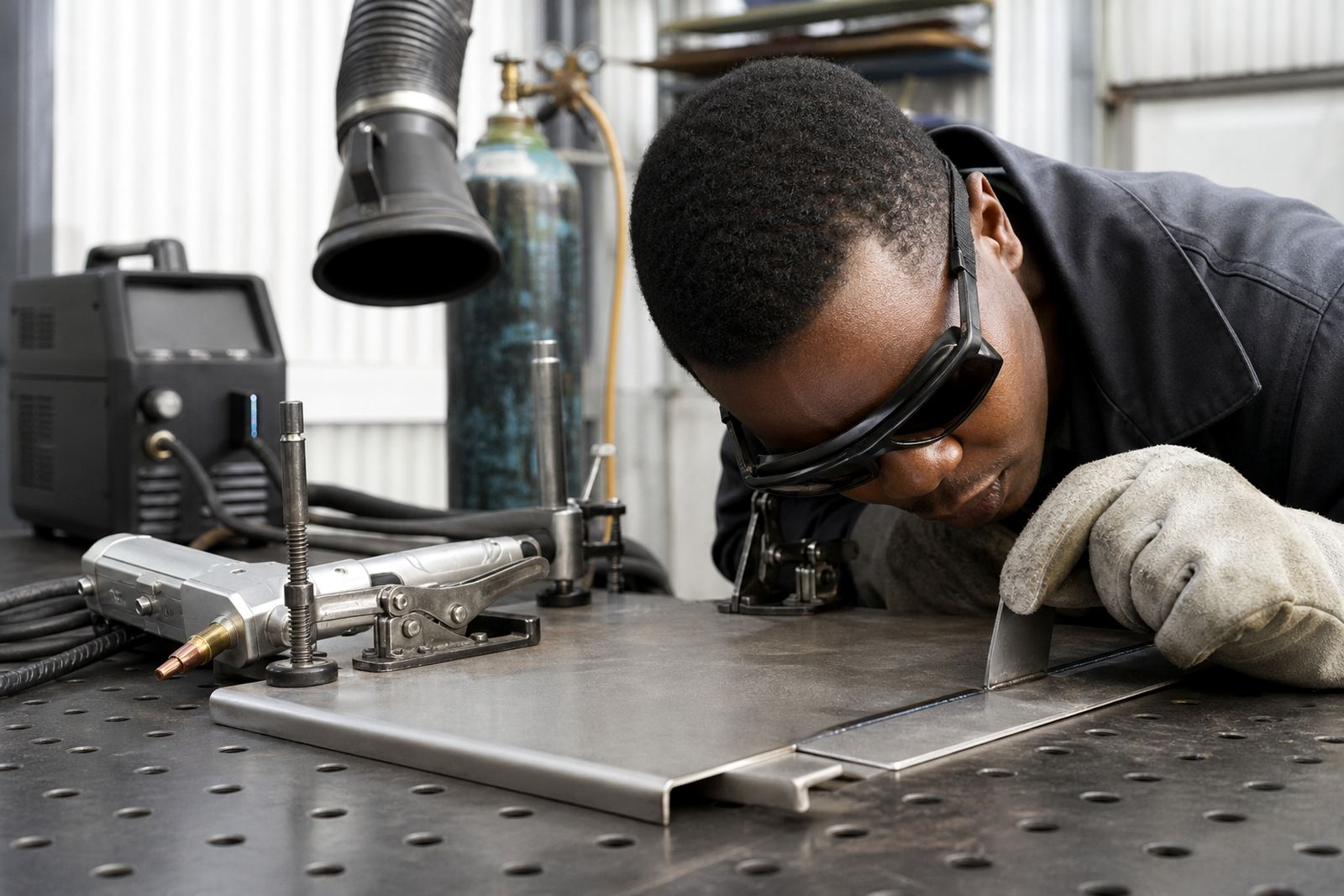
Panel welding is not only about pressing a trigger and moving along a seam. Learners need to understand fit-up, material thickness, edge condition, clamping, travel speed and how small changes affect the bead. On thin sheet, a slight gap can lead to burn-through or a weak joint. Too much power can create distortion. Too little can leave poor fusion. The training therefore starts with joint preparation and ends with inspection, because the visual result matters on exposed work.
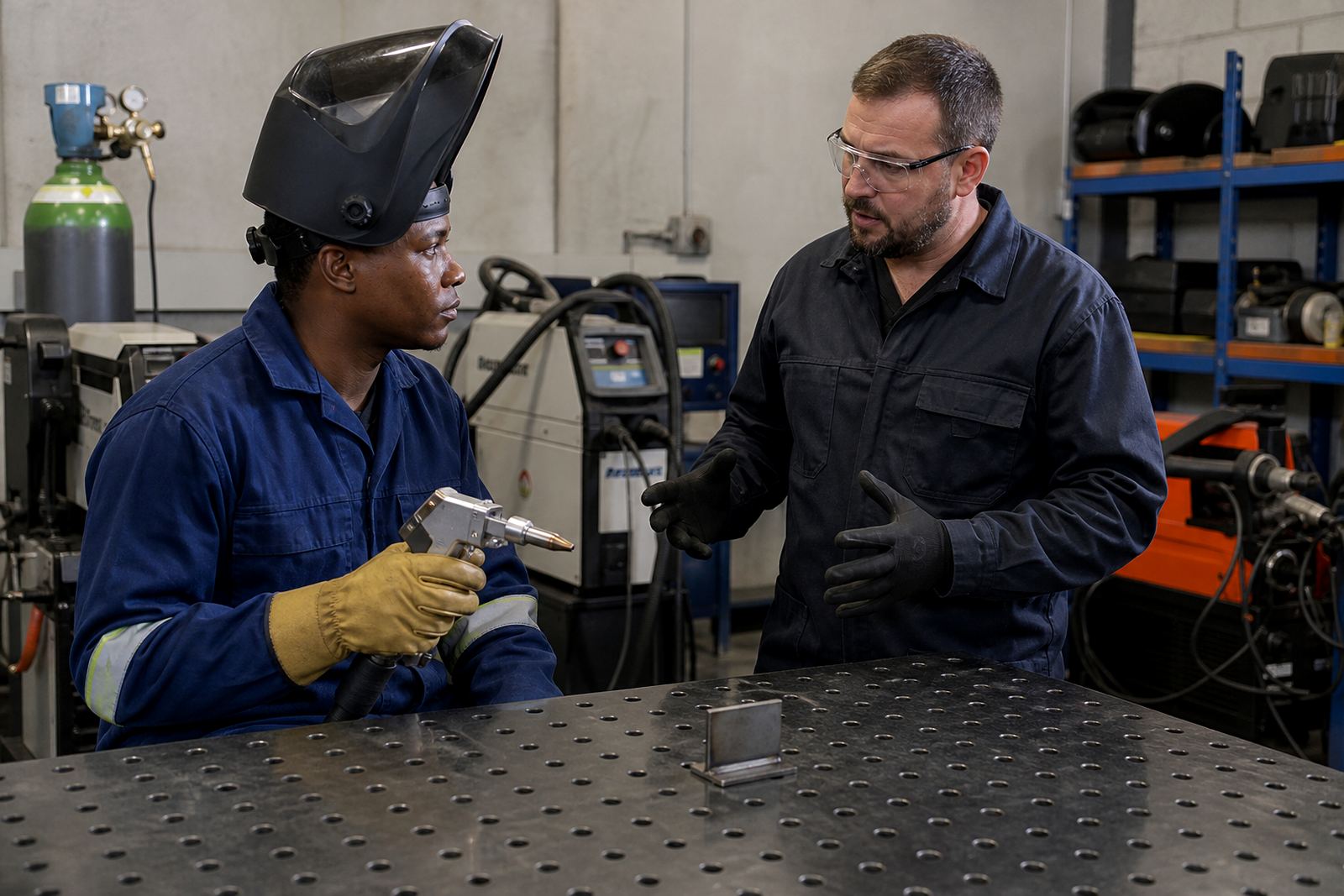
LaserWelder Training runs hands-on courses in Boksburg and supports teams across Gauteng and beyond. The certificate of completion is issued by LaserWelder Training only, and it reflects that the learner completed the course work and practical assessment. For workshops, that can be useful when bringing new operators into the floor or when a supervisor wants a common standard for panel jobs. Naledi Khumalo coordinates bookings and course flow, while Pieter van der Merwe leads the welding instruction and Anele Dlamini handles safety and compliance guidance.
- Joint fit-up checks before welding starts
- Material cleaning and contamination control
- Heat input control for thin sheet and light sections
- Distortion awareness on visible finish surfaces
- Post-weld inspection and basic corrective action
Common mistakes that cause rework on panel jobs
The most common error is treating handheld laser welding like a normal all-purpose fix for every joint. It still needs accurate preparation. Poor edge alignment, oily surfaces, paint overspray, rust and inconsistent clamping all create trouble. Another frequent mistake is working too fast without checking the joint after a few practice runs. That can leave weak spots, underfill or a seam that looks acceptable until later inspection. In busy workshops, this is where supervisor coaching and a short refresher visit can save time.
Safety mistakes are just as important. Some teams underestimate the laser class and assume safety glasses meant for grinding are enough. They are not. Laser-rated eye protection must match the unit and the operating setup. A second mistake is poor fume extraction, especially when welding coated sheet or small enclosed parts. A third is letting untrained staff stand too close during practice. Practical inductions, clear warning signs and a tidy bay reduce risk and keep the work moving without confusion.
Starter kits and planning for a workshop budget
Workshops looking to start with panel work usually need more than the machine itself. A sensible starter kit plan covers the torch setup, spare consumables, cleaning items, basic fixtures, eye protection, extraction planning and a training pack for the operator. Depending on the size of the workshop and the type of panel work, the setup can start at a lower entry range for basic learning and move higher when a team needs extra accessories, better extraction or multiple work points. As a practical guide, budget planning often begins from the low hundreds of thousands of Rand for a capable entry setup and can move well above that for a fuller workshop solution.
Starter kit setup is useful when the equipment is being moved between branches or when a business wants one controlled station before rolling out to other areas. Kagiso Molefe assists with starter kit sales and Lerato Mokoena supports technical follow-up after setup. Brandon Naidoo handles workshop support when a bay needs help with positioning, cable routing or day-to-day use. For businesses across Durban, Cape Town, Polokwane and the East Rand, the main value is getting the first station set correctly, so the team builds safe habits from the start.
- Entry setup for training and light workshop use
- Mid-range setup with better extraction and more accessories
- Larger workshop setup with spare consumables, fixtures and support items
- Refresher visits and technical help for teams already operating the unit
How workshops book site readiness and support
Before a new panel welding station goes live, a site readiness check helps confirm the space, power, ventilation, storage and operator flow. That is important in workshops where cutting, grinding and assembly happen close together. If the bay is too cramped, the operator may struggle with cable movement or safe stance. If the extractor is poorly placed, smoke and fine particles can drift into other work areas. A short planning visit helps avoid these issues before money is spent on the wrong layout.
For teams with more than one operator, workflow advice and supervisor coaching can help standardise how jobs move through the bay. That may include job release checks, cleaning steps, clamp position, inspection points and sign-off at the end of each panel run. Clients get in touch through the enquiry form on our contact page, and support is arranged from the Boksburg base for Johannesburg Training, Pretoria Training, Durban Training, Cape Town Training, Polokwane Training, East Rand Training and Gauteng Training.