Choosing Laser Welding as a New Workshop Service
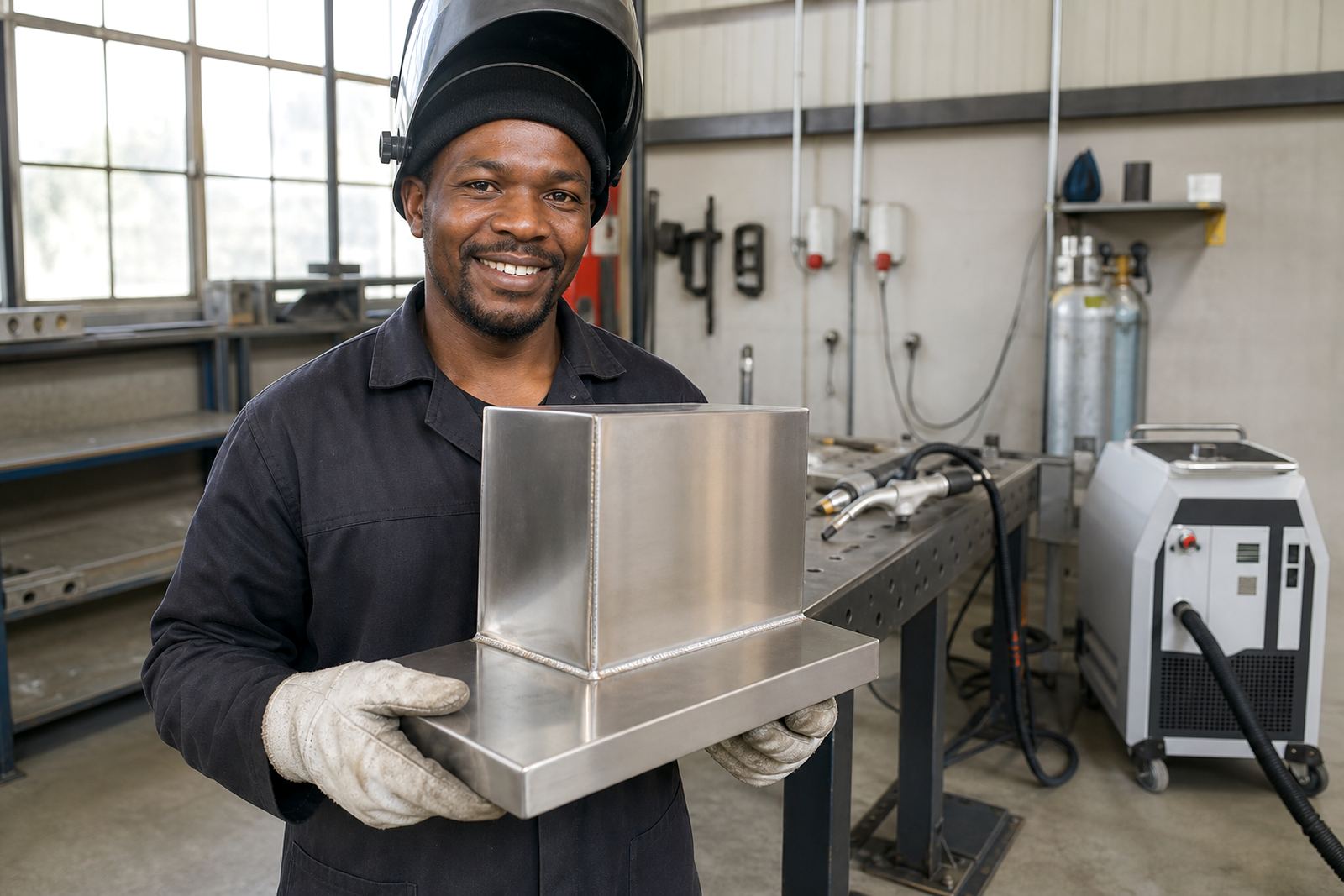
Many new entrepreneurs look at handheld laser welding because it can fit neatly into a small workshop and it works well for fine repairs, light fabrication, stainless steel work, mild steel, and selected aluminium jobs. It is often considered when the aim is to take on neat, repeatable work with less grinding and less rework than some older joining methods. That said, it still needs skill, discipline, and the right setup.
If you are starting out, the main question is not only whether the machine can weld, but whether your business can support the process properly. You need space, stable power, safe working habits, and a plan for the type of work you want to accept. For a learner in Gauteng or a workshop owner in Durban, the day-to-day reality matters more than the brochure. A good course gives you practical exposure to that reality, not just theory.
- Best suited to small repair work, custom parts, fixtures, brackets, and light workshop jobs
- Useful where finish quality matters and customers expect neat welds
- Needs proper training before you offer it to paying clients
- Works best when you match the machine size to the jobs you actually want
What a Starter Set Usually Includes
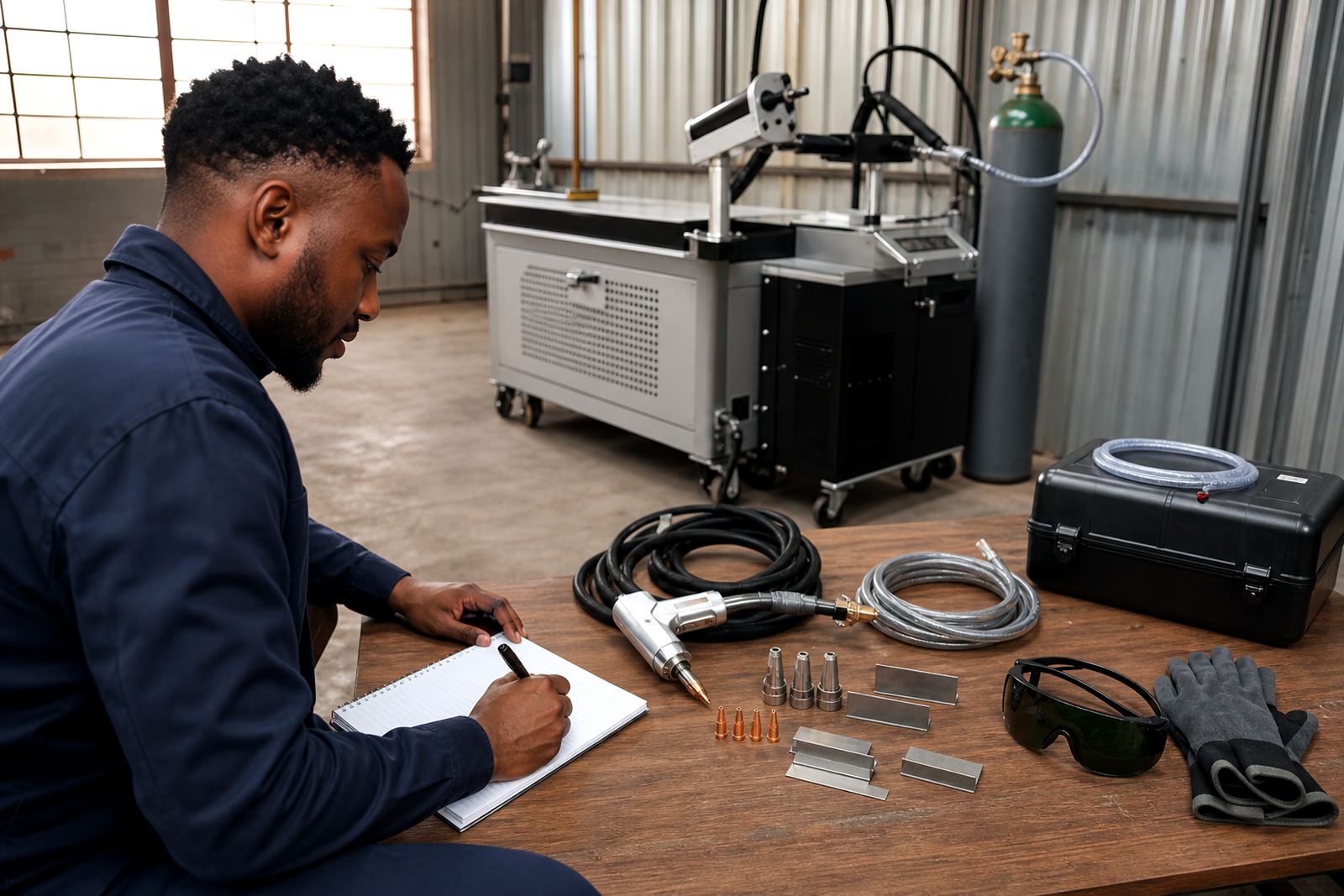
Starter kits for new learners and small workshops are usually built around the machine, the handpiece, cable management, a basic torch set-up, protective eyewear, and consumables for practice. Depending on the package, you may also need wire feed accessories, cleaning tools, clamps, nozzles, lens care items, and a trolley or storage arrangement. A proper starter kit should help you begin work in an orderly way, not leave you shopping for missing pieces every week.
In South Africa, it is worth checking that your kit suits your power supply and workshop conditions. A machine that looks fine on paper can be difficult to run if your site has voltage fluctuation, poor earthing, or load-shedding interruptions. Some workshops in Boksburg or Pretoria also have limited floor space, so compact layout matters. Coastal humidity in Durban or Cape Town can also affect storage, cleaning, and corrosion control if you are not careful.
- Handheld laser welding unit with suitable handpiece
- Protective eyewear matched to the laser class in use
- Fume extraction or local extraction for welding fumes and fine particles
- Practice materials, clamps, wire, nozzles, and cleaning tools
- Storage and safe placement for the machine and accessories
A starter kit should be chosen for the work you want to grow into. If your plan is repair work for gate fabricators, fitment shops, or maintenance teams, you will need a different setup than someone who wants small precision jobs and custom assemblies. That is where a practical review helps.
Workshop Layout and Power Planning Before You Buy
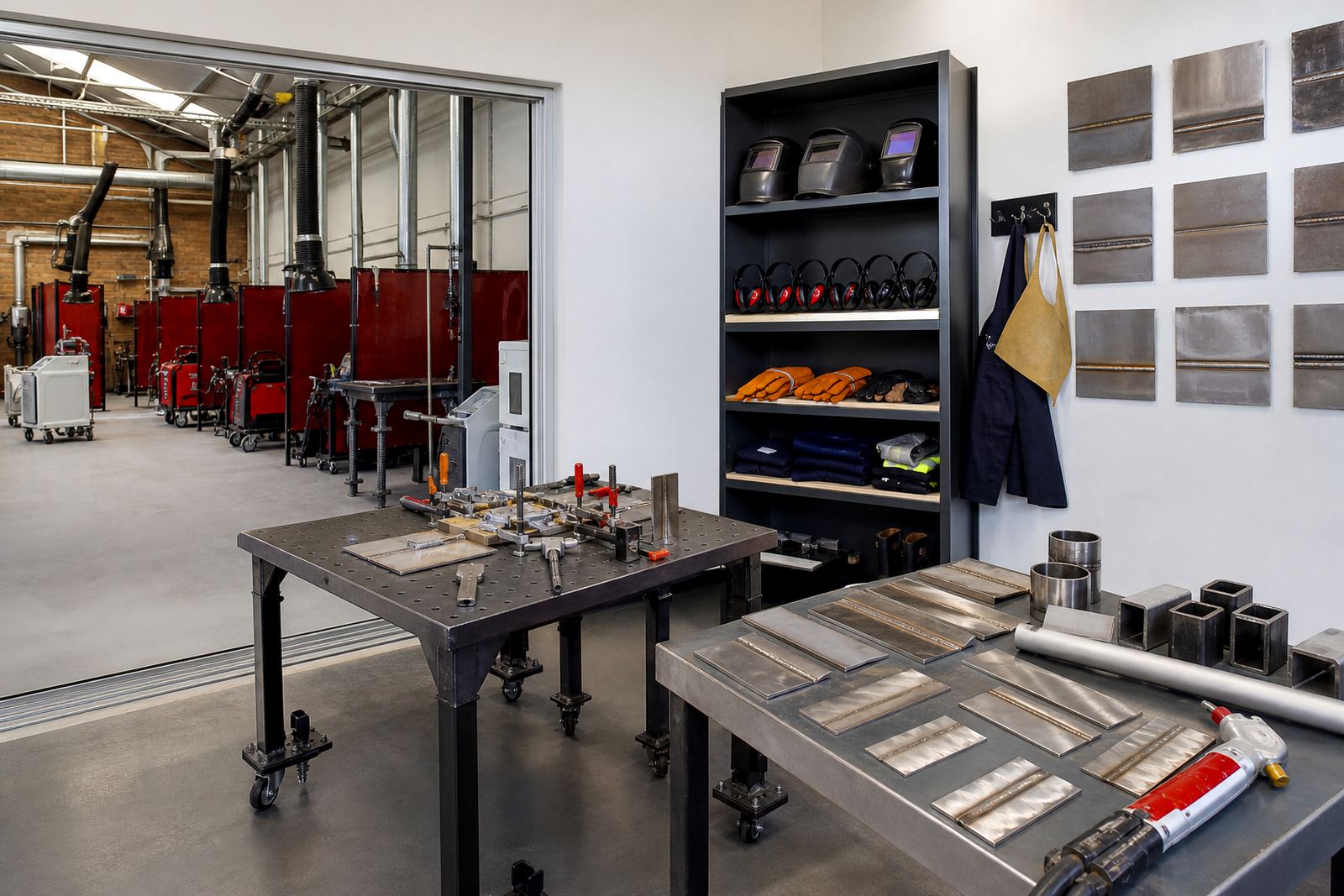
Before you commit, look at where the machine will sit, how the operator will move, and where the fumes will go. Handheld laser welding still needs a controlled area, even if the footprint is smaller than some other welding processes. You should plan a clear working zone, a place for consumables, and a safe route for cables so they are not dragged across a floor with offcuts, oil, or dust.
For new entrepreneurs, a simple layout can make a big difference. Keep the machine away from direct traffic, allow enough room for the operator to work without tripping, and place the extraction as close as practical to the weld point. If your site is in an industrial park in the East Rand, you may also need to think about municipal rules, neighbour noise, and waste handling. Good planning saves arguments later.
Power planning matters too. Ask what supply your premises can support, whether you need protection against surges, and how your work will continue during load-shedding. Some workshops use a generator or other backup arrangement, but that must be matched to the actual load. A rushed decision here can cost you time, money, and a lot of frustration.
- Measure the floor space before equipment arrives
- Plan for cable runs, clamps, and a clean path around the bench
- Place extraction near the weld point, not across the workshop
- Check power availability, backup options, and earthing
- Store consumables where dust and moisture will not damage them
Common Mistakes New Operators Make
One common mistake is treating laser welding like a plug-and-play tool. It is not. New operators sometimes think the machine will solve poor fit-up, dirty material, or bad joint preparation. In practice, the basics still matter. Clean edges, correct gaps, and the right travel speed all affect the result. If you skip preparation, you will likely spend longer fixing a job than welding it.
Another mistake is underestimating safety. Handheld laser welding must be handled with proper eye protection and controlled access in the work area. The laser class, shielding, and operator instructions all matter. Fume extraction is also essential, especially when working on coated material, stainless steel, or metals that create fine airborne particles. Good ventilation is not a luxury and it should not be an afterthought.
Many new owners also buy too much too soon. It is better to start with a focused machine setup, a sensible consumables list, and a clear service offering. If you are opening in Polokwane or doing work across Gauteng, start with jobs you can repeat well. Grow the range once you understand your output, your downtime, and your actual customer demand.
- Skipping joint prep and expecting the machine to fix poor fit-up
- Using the wrong eye protection for the laser class
- Ignoring fume extraction and workshop air movement
- Buying a large kit before testing real job demand
- Not training staff before they touch live equipment
Budget Ranges for a New Laser Welding Setup
Budget is where new entrepreneurs need to be honest. A starter setup can begin with a lower entry spend if you are working very small and learning first, but a proper business-ready setup usually costs more once you include the machine, safety gear, extraction, consumables, and setup support. In South African Rand, a lean training-first path may sit in the lower tens of thousands, while a more complete workshop package can move into a much higher bracket depending on power, capacity, and accessories.
It is wise to budget for more than the machine alone. Many first-time buyers forget extraction, backup power considerations, replacement nozzles, wire, lens care, and the cost of time spent learning. If you want to serve customers in Johannesburg, Cape Town, or Durban, you also need to think about transport, site visits, and how quickly you can return to a job if there is a setup issue. That affects your real operating cost.
A practical budget should include:
- Machine and handpiece
- Safety kit and eyewear
- Extraction and workshop controls
- Starter consumables and practice material
- Training, setup support, and a document pack for your records
If you are unsure where to begin, start with a course, then assess the kit against the work you want to sell. That approach usually saves money and helps you avoid buying the wrong spec the first time around.
What You Get From Hands-On Training and Support
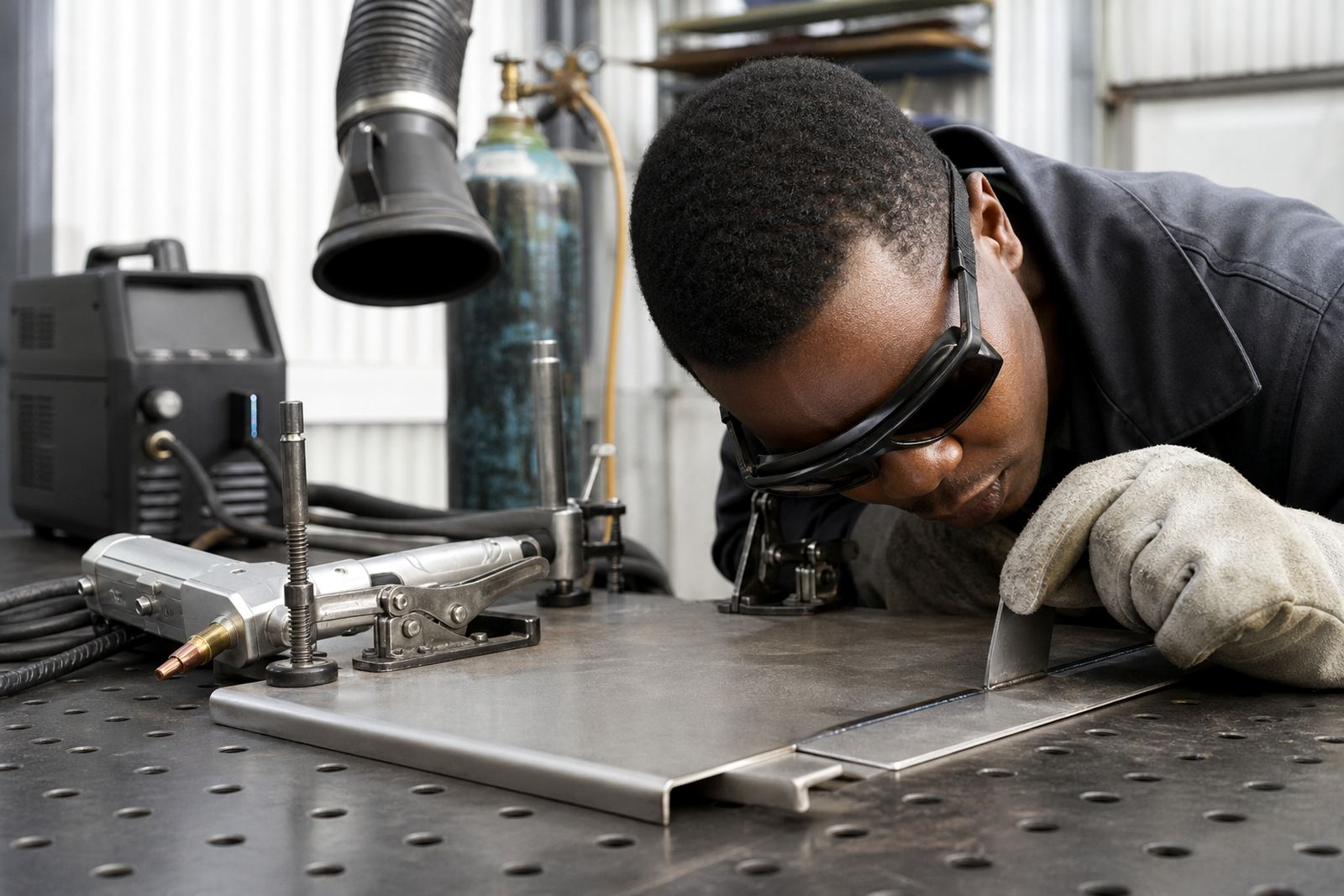
For new entrepreneurs, the value of training is in the repetition, the corrections, and the chance to work through real workshop situations before you take on paying clients. A proper hands-on course helps you understand machine control, safe operation, basic troubleshooting, joint preparation, and how to judge when a job is suitable. It also helps you build confidence without cutting corners.
LaserWelder Training provides practical courses, starter kit guidance, and a certificate of completion from LaserWelder Training only. The team supports learners and workshops from Boksburg and the broader Gauteng area, as well as Johannesburg, Pretoria, Durban, Cape Town, and Polokwane. Services can include site readiness checks, operator inductions, safety briefings, workflow advice, starter kit setup, practice plans, supervisor coaching, quality walkthroughs, consumables planning, refresher visits, technical help, and a training document pack.
If you are starting a new service line, that support can help you get your workshop organised before the first customer enquiry lands. And that is often the diference between a hopeful idea and a workable service.