Why Experienced Welders Add Handheld Laser Welding
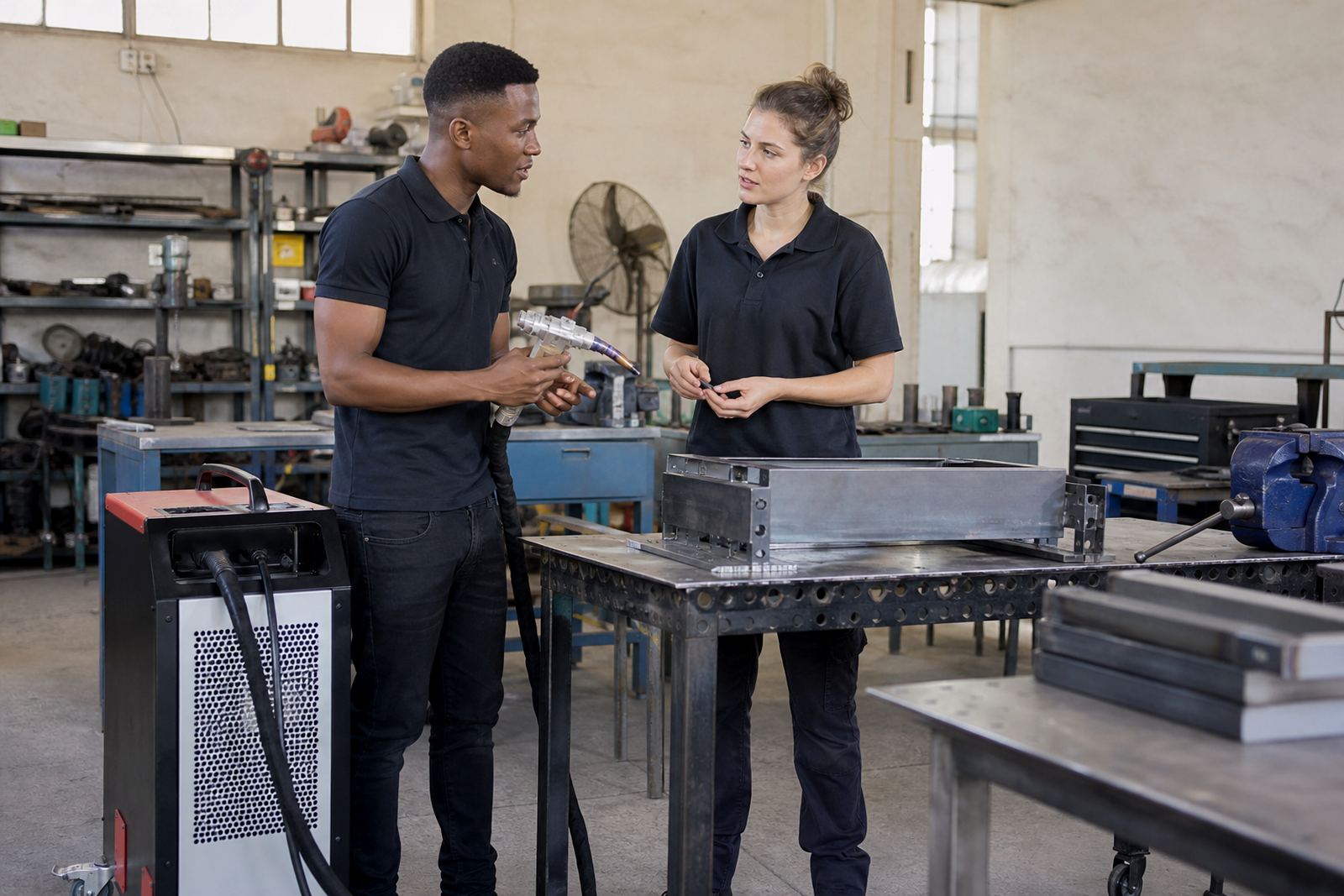
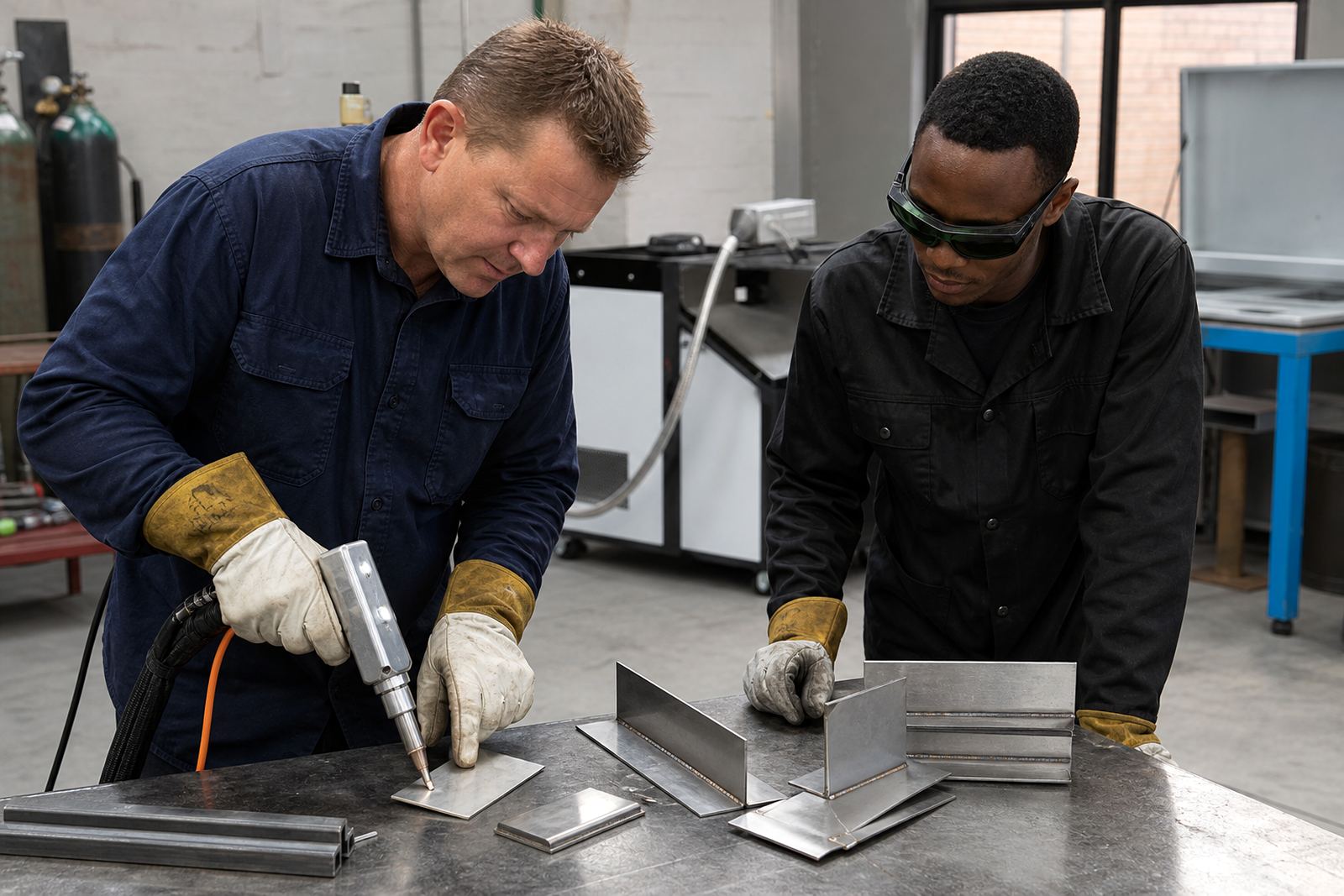
For an experienced welder, handheld laser welding is usually a practical add-on rather than a full replacement for current processes. It can suit light fabrication, repair work, brackets, guards, panels, frames and small batch jobs where clean, narrow welds and low distortion matter.
The method rewards steady hands, good fit-up and an understanding of material behaviour. If your team already knows joint prep, distortion control, clamp placement and post-weld finishing, the learning curve is more about equipment handling, beam focus and safe working habits. It is a good fit for workshops that want to reduce grinding time on suitable jobs and keep turnaround tighter.
In South African workshops, the real value often shows up on thin stainless, mild steel and aluminium work where the job must look clean and be repeatable. It also helps when labour is under pressure and the team needs a faster method for selected work without changing the whole fabrication line.
Typical Starter Equipment For A Working Shop
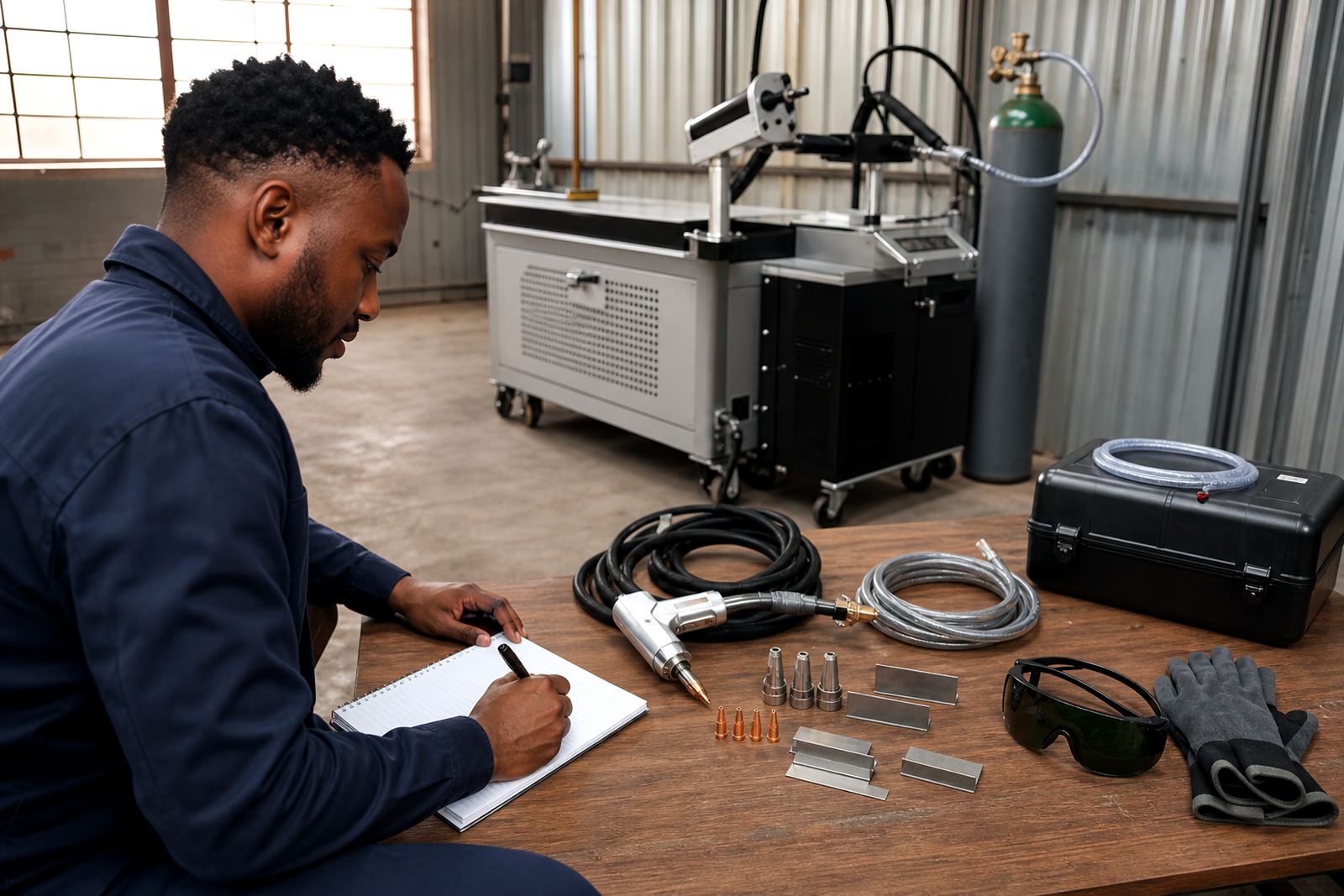
A proper starter setup does not need a full factory rebuild, but it does need the right support gear. Most workshops start with the handheld laser welding unit, a suitable cooling arrangement, shielding gas where required, a clean work bench, clamps, protective screens and a fume extraction solution sized for the room.
Starter kits for learners and workshops are normally put together around the type of work being done. A kit may include spare nozzles, contact tips, wire feed parts where applicable, basic consumables, cleaning items, a safety pack and a training document pack for operators and supervisors. The exact contents should match the metals, thicknesses and duty cycle of the work you plan to do.
- Handheld laser welding unit with suitable power for your material range
- Workholding tools and clamps for thin sheet and small assemblies
- Eye protection rated for the laser class in use
- Fume extraction or local extraction at the point of welding
- Protective screens, clear signage and controlled access to the bay
- Spare consumables and a basic maintenance pack
Workshop Layout And Planning That Saves Rework
A well planned bay matters just as much as the machine. Laser welding is not something to run from a crowded corner next to cutting, grinding and painting. You need a defined space with controlled entry, clear marking, stable power, dry storage for consumables and enough room to move the torch cleanly around the joint. In Gauteng, dusty floors and mixed-use workshop spaces can quickly affect lens life and finish quality if housekeeping slips.
For coastal towns like Durban and Cape Town, humidity adds another layer. Keep consumables dry, store sensitive parts properly and check the workshop for corrosion on fittings and fixtures. In Boksburg and the East Rand, power interruptions and load-shedding planning should be part of the setup conversation from day one, especially if you want to avoid downtime on a small production run.
Common planning questions include whether the team needs a dedicated table, how parts will be moved in and out, and where supervisor checks will happen. Good layout saves time on each job and helps keep operators from working around clutter or poor lighting.
- Separate the laser bay from grinding sparks and heavy traffic
- Mark the safe zone and keep unauthorised people out
- Plan cable runs, gas lines and extraction before installation
- Set up a clean loading area for parts and a place for finished work
- Allow space for maintenance access, not just welding access
Safety Basics Experienced Welders Still Need To Respect
Handheld laser welding is often seen as neat and efficient, but the safety controls are serious. The laser class must be understood before anyone uses the equipment, and eye protection must match the wavelength and class of the system. Standard workshop spectacles are not enough. Operators and anyone nearby need the correct protection, plus training on when to use screens and restricted access.
Fume extraction matters too. Even when the weld looks clean, fumes and fine particles can still build up around the operator. A proper extraction unit or local capture point should be part of the setup, especially in enclosed workshops or where several people work nearby. Material type matters here as well, because different metals and coatings can change the fumes produced.
Practical safety also includes operator induction, a simple workflow for switching on and shutting down, and a rule that no one adjusts settings casually between jobs. A short briefing before each shift can save time and prevent mistakes, especially when different staff share the same equipment.
Common Mistakes When Experienced Welders Make The Switch
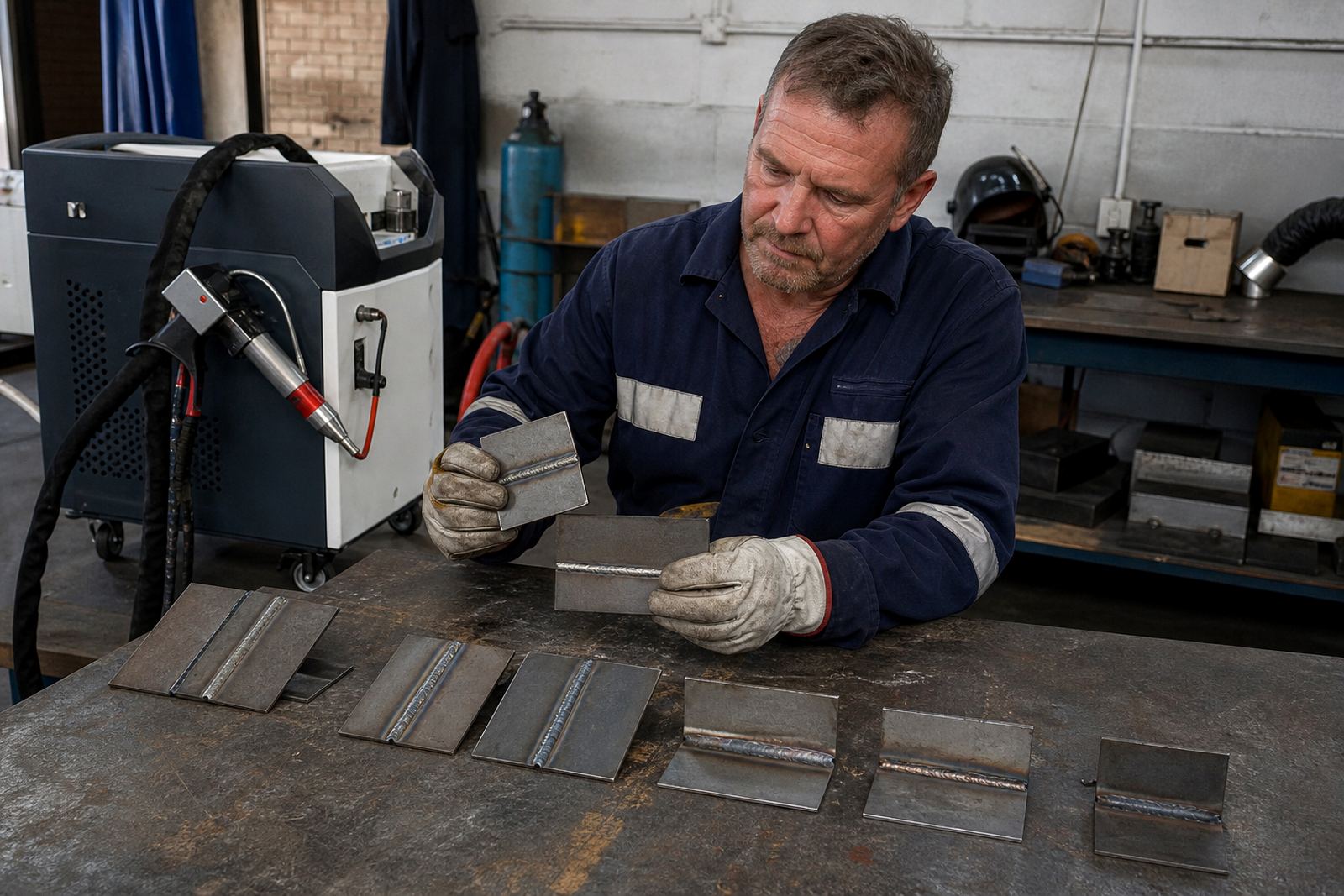
Experienced welders often pick up the torch quickly, but a few habits can cause poor results. One common error is assuming the same settings work across different metals or thicknesses. Another is moving too fast because the bead looks fine at first glance, only to find weak fusion or uneven finish later.
Other mistakes come from treating laser welding like ordinary workshop work without enough control around prep and positioning. Dirty edges, poor fit-up and loose clamping can waste a lot of time. Some teams also skip the extraction setup and then wonder why the bay becomes uncomfortable after a few runs.
- Using the wrong protection for the laser class
- Starting without a proper fume extraction plan
- Trying to weld over poor prep or gaps that should be corrected first
- Mixing training, production and testing in the same crowded area
- Assuming one setup will suit every material and joint type
What To Budget For Training, Setup And Support
Budgeting depends on whether you are buying one unit for training, setting up a small repair bay, or fitting out a workshop for repeated use. In many cases, the machine is only part of the spend. You also need to allow for extraction, safety gear, training time, consumables and the practical changes needed to keep the bay tidy and controlled.
For a small workshop, a sensible starting budget can range from the low hundreds of thousands of Rand upward once you include the equipment, starter kit items and basic setup work. A more complete workshop plan, with better extraction, training support and supervisor coaching, can move higher depending on the duty cycle and the metals you work with. It is better to cost the full setup than to buy the tool first and patch the rest later.
LaserWelder Training runs hands-on courses in Boksburg, Gauteng and supports learners and workshops across Johannesburg, Pretoria, Durban, Cape Town and Polokwane. Courses lead to a certificate of completion from LaserWelder Training only, and the team can help with site readiness checks, operator inductions, safety briefings, workflow advice, starter kit setup, practice plans and refresher visits.