Why sheet metal work calls for more control
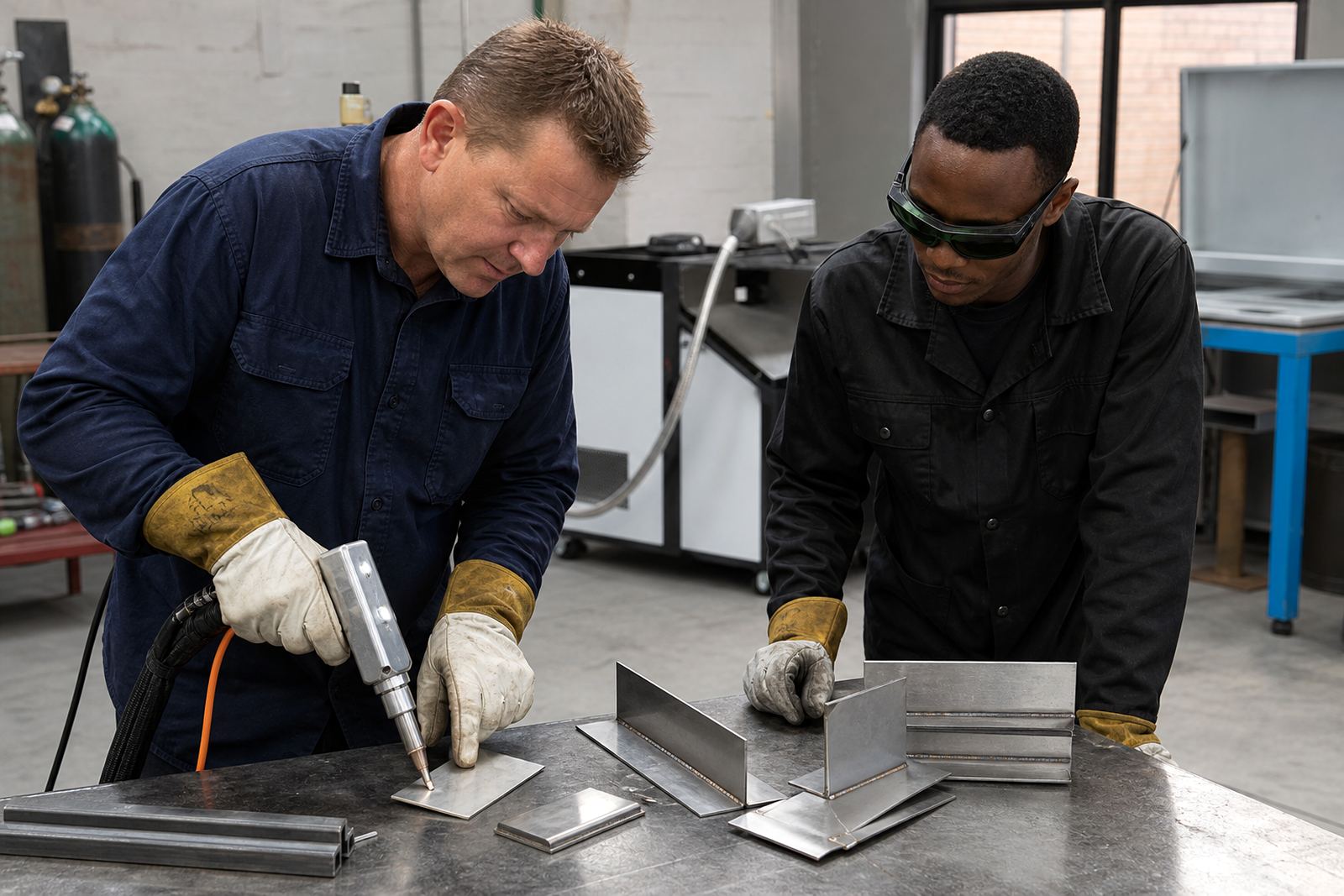
When your jobs are built from thinner material, small mistakes show straight away. Heat can pull panels out of shape, burn through edges or leave finishing work that takes longer than the weld itself. Handheld laser welding is useful in this setting because it lets an operator work with a focused heat source and keep the weld area tight, which helps with cleaner joints and less distortion on light gauge steel, stainless steel and some aluminium jobs.
For sheet metal shops in Boksburg and across Gauteng, the aim is not only to join material but to keep parts straight enough for folding, fitting and final assembly. That means the operator must understand joint fit-up, clamping, torch angle, travel speed and when not to push the machine too hard. Good results start before the trigger is pulled.
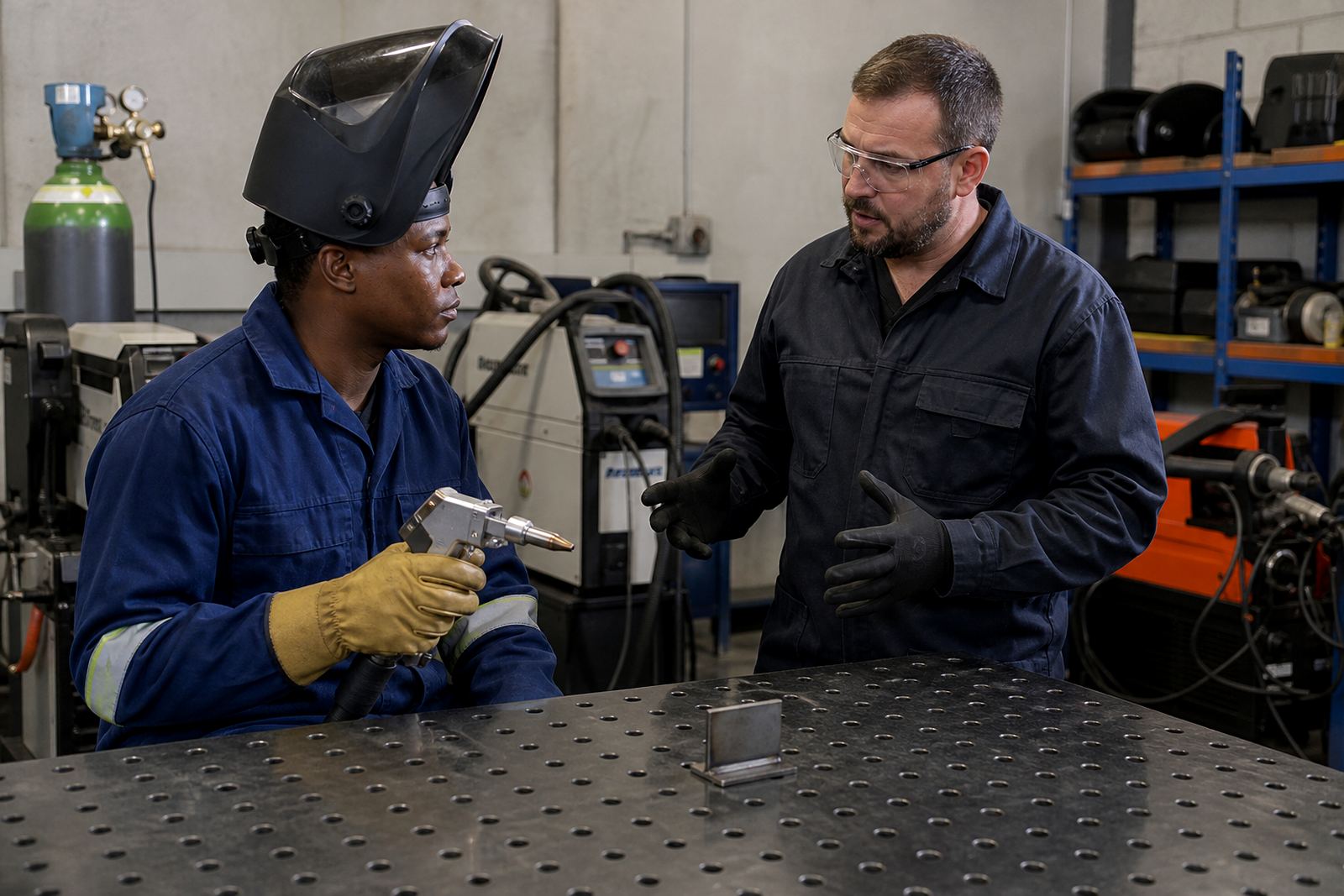
LaserWelder Training works with businesses that need practical training for production teams, new hires and supervisors who want a better handle on process control. We focus on real workshop conditions, including busy benches, mixed job cards and the pressure to keep work moving. Because thin material reacts quickly, the person behind the hand tool needs proper practice, not guesswork.
Typical equipment for thin-gauge work
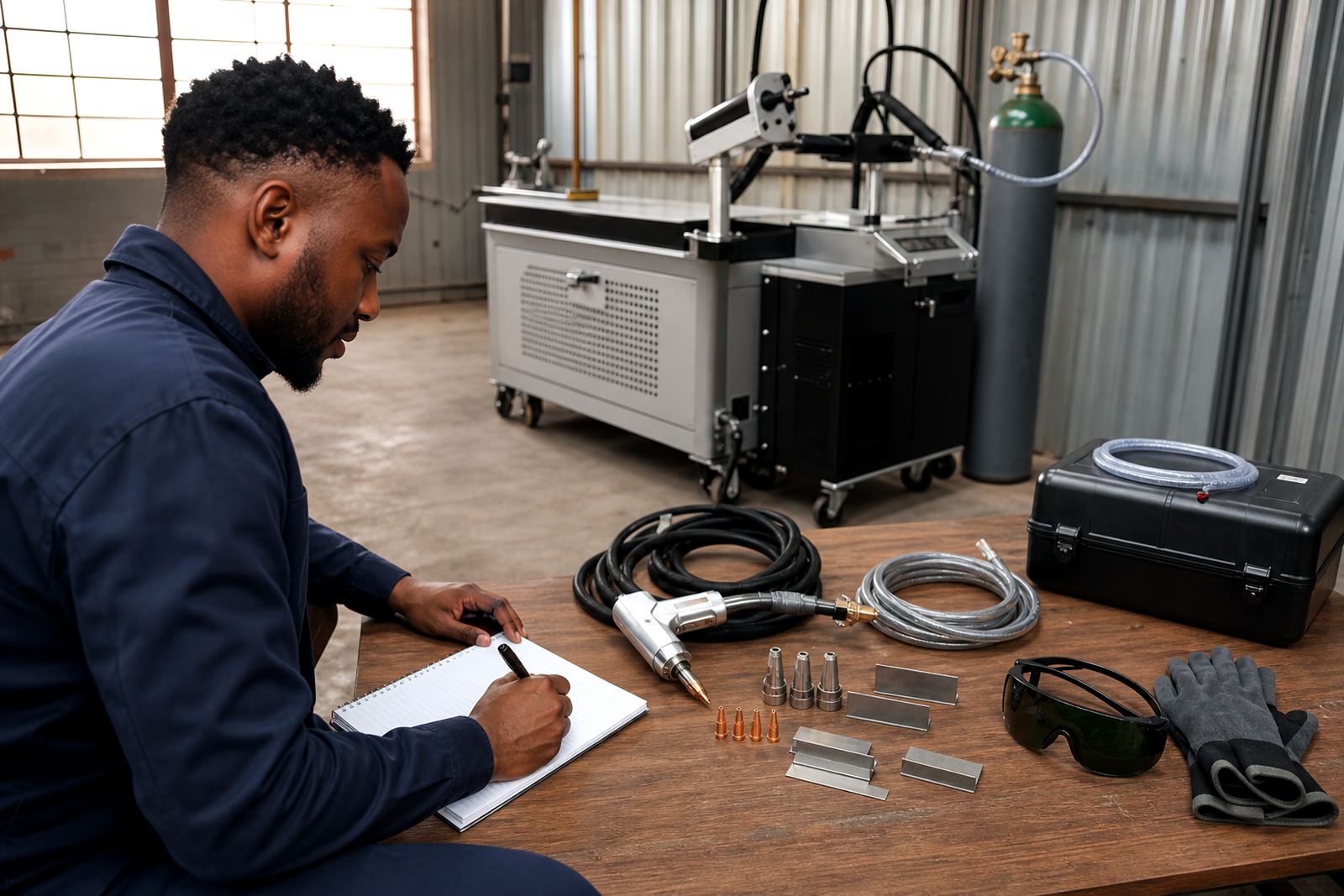
A sheet metal shop does not need a complicated setup to begin. What matters is matching the equipment to the jobs coming through the door and setting up the work area so the operator can work cleanly and safely. A starter setup for handheld laser welding usually includes the welding unit, handpiece, cooling system if required, suitable gas supply, workholding, eye protection and a proper extraction plan.
- Handheld laser welding unit matched to the material thickness and joint type
- Fibre delivery handpiece with correct nozzle set and consumables
- Gas supply for shielding where needed, especially on stainless steel and aluminium jobs
- Clamps, squares and flat tables for fit-up and repeat work
- Fume extraction suited to metal fumes and workshop airflow
- Protective eyewear rated for the specific laser class in use
- Cleaning tools for prep, including degreasing and surface cleaning before welding
For many shops, the biggest win comes from a starter kit that removes confusion. That can include the basic accessories, consumables and setup items needed to get a learner or small team working from day one. The right kit depends on the parts you make, the thickness range and how often the machine will run. In a coastal area like Durban, for example, storage and maintenance also need to deal with humidity so consumables and metal surfaces do not rust up between jobs.
How to plan the shop layout before the first weld
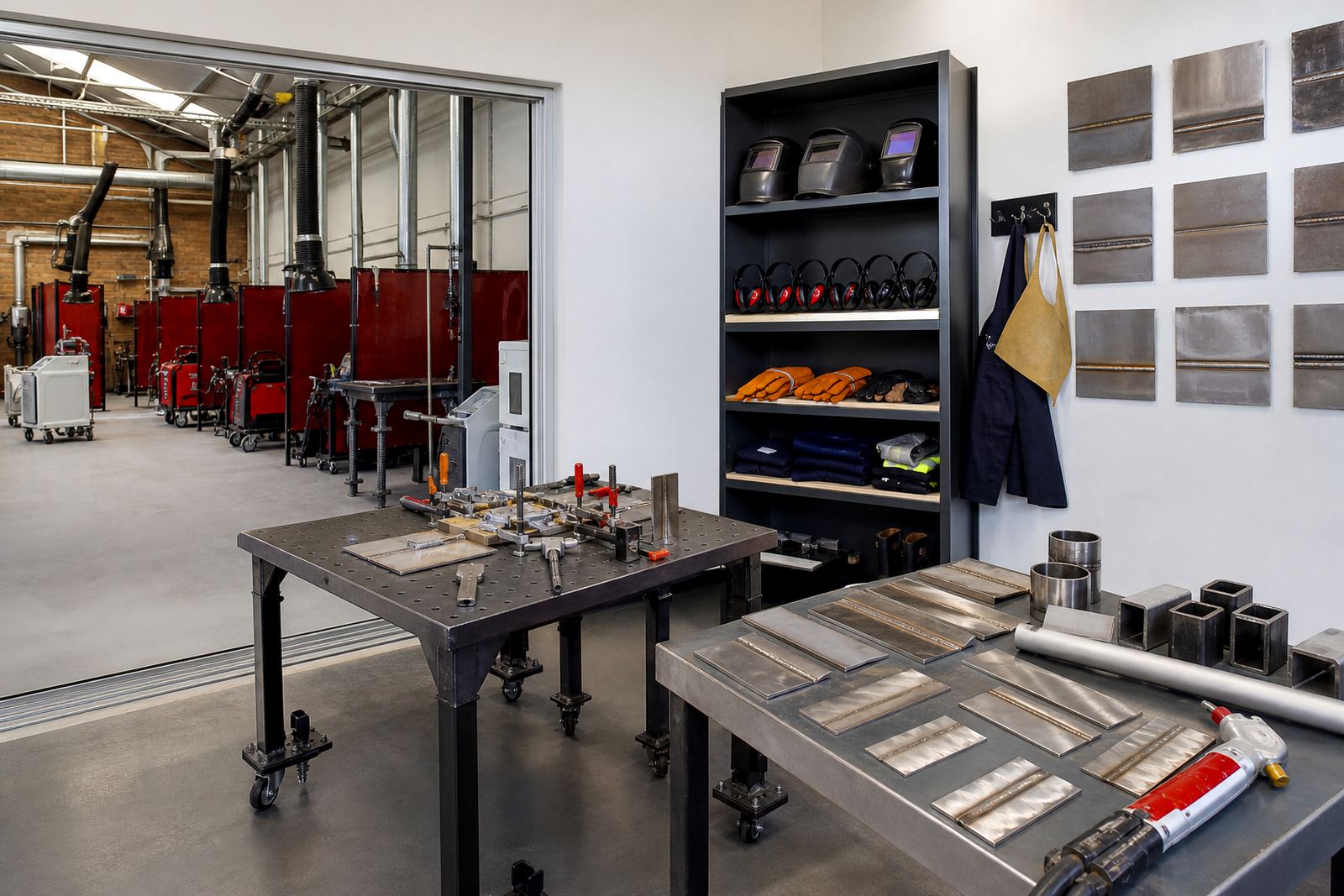
A tidy layout makes the training easier and the production better. Thin material work depends on clean benches, straight clamping and enough room to move parts without bending them. If the welding area is too cramped, operators start lifting panels awkwardly, leading to edge damage and poor alignment. We often advise shops to separate prep, welding and finishing zones so each step has its own place.
Power supply, cable routing and ventilation should also be checked before the equipment arrives. Load shedding can interrupt learning and workflow, so some businesses budget for backup power support or schedule training around the most reliable hours of the day. In Pretoria or Polokwane, where sites may have long workshop runs and mixed equipment, it helps to confirm what can be powered safely and what should stay off the same circuit.
Layout planning should also include access for supervisors. If a manager can see the work and check quality without interrupting the operator, training sticks better. That is where our Site Readiness Checks, Workflow Advice and Supervisor Coaching help. We look at the space, the job flow and the practical steps needed before a learner starts production work.
Safety rules that cannot be skipped
Laser welding is controlled work, but it still demands discipline. The laser class, the shielding around the work area and the eye protection all need to match the equipment in use. Anyone working near the process should know where they may stand, what can reflect the beam and who is allowed into the area during welding. A tidy bench is not enough if people can walk into the line of fire or look toward the arc without protection.
Fume extraction matters just as much. Thin sheet can produce smoke, vapour and fine particulate when coatings, oils or contaminants are present. Good extraction keeps the air cleaner for the operator and for everyone else in the shop. We also stress surface prep, because dirty material can create extra fumes and inconsistent welds.
- Wear the correct laser-rated eye protection at all times during live work
- Keep reflective tools and shiny offcuts away from the beam path
- Use extraction close to the weld zone, not only a general fan
- Check material coatings and remove oil, paint or grime before training
- Set clear access rules for operators, supervisors and visitors
Anele Dlamini, our Safety and Compliance Officer, leads the safety briefings and operator inductions so teams understand the limits of the process from the start. That is especially useful for workshops with mixed skill levels or staff moving over from traditional welding methods.
Common mistakes we see in sheet metal shops
Most problems on thin material come from rushing the setup. The first mistake is poor fit-up. If the joint gap is too wide, the operator chases the material and adds unnecessary heat. The second is using the wrong travel speed, which can leave undercut or a weak seam. The third is skipping surface cleaning, which affects both the look and the strength of the weld.
Another common problem is trying to solve all jobs with one setting. Thin material, corner joints and small repairs each need different handling. Workshops that do not document the right settings often repeat the same mistakes on every shift. That is why our Training Document Pack and Quality Walkthroughs are useful for day-to-day consistency.
- Bad fit-up and loose clamping
- Too much heat on thin edges
- No clear cleaning routine before welding
- Poor visibility because the bench is cluttered
- Skipping post-weld inspection and touch-up checks
We also see teams buying equipment before the business has agreed on who will use it, where it will live and how consumables will be tracked. Without a plan, even a good machine gets underused. Starter kit setup and consumables planning solve that early, before the first batch of work comes through the door.
What to budget for training and starter kits
Budgeting depends on whether you are training one operator, a small workshop team or a multi-branch business. For sheet metal shops, a practical starting point is to budget for the training itself, then add the handpiece accessories, safety gear, fume extraction and basic setup items. A smaller entry-level starter kit can begin in the lower Rand tens of thousands, while a fuller workshop package with better extraction, more consumables and added support can move into a higher bracket. The right figure depends on the work mix and the level of production expected.
Businesses should also plan for ongoing consumables, replacement nozzles, protective eyewear, maintenance and refresher visits. If a shop runs in Johannesburg, Durban, Cape Town or East Rand conditions, the plan may also need transport, site access and storage considerations. A cheap start often becomes expensive if the team has to stop for parts, rework or failed joints. It is better to set up properly and keep the process steady.
LaserWelder Training provides Certificate of Completion documents for learners who finish the course, along with starter kit guidance, support and technical help after the session. Our team, led by Mpho Johannes Maseko with support from Pieter van der Merwe, Naledi Khumalo and the rest of the crew, works with learners and businesses from Boksburg to the rest of South Africa.