Why travel speed matters on every weld
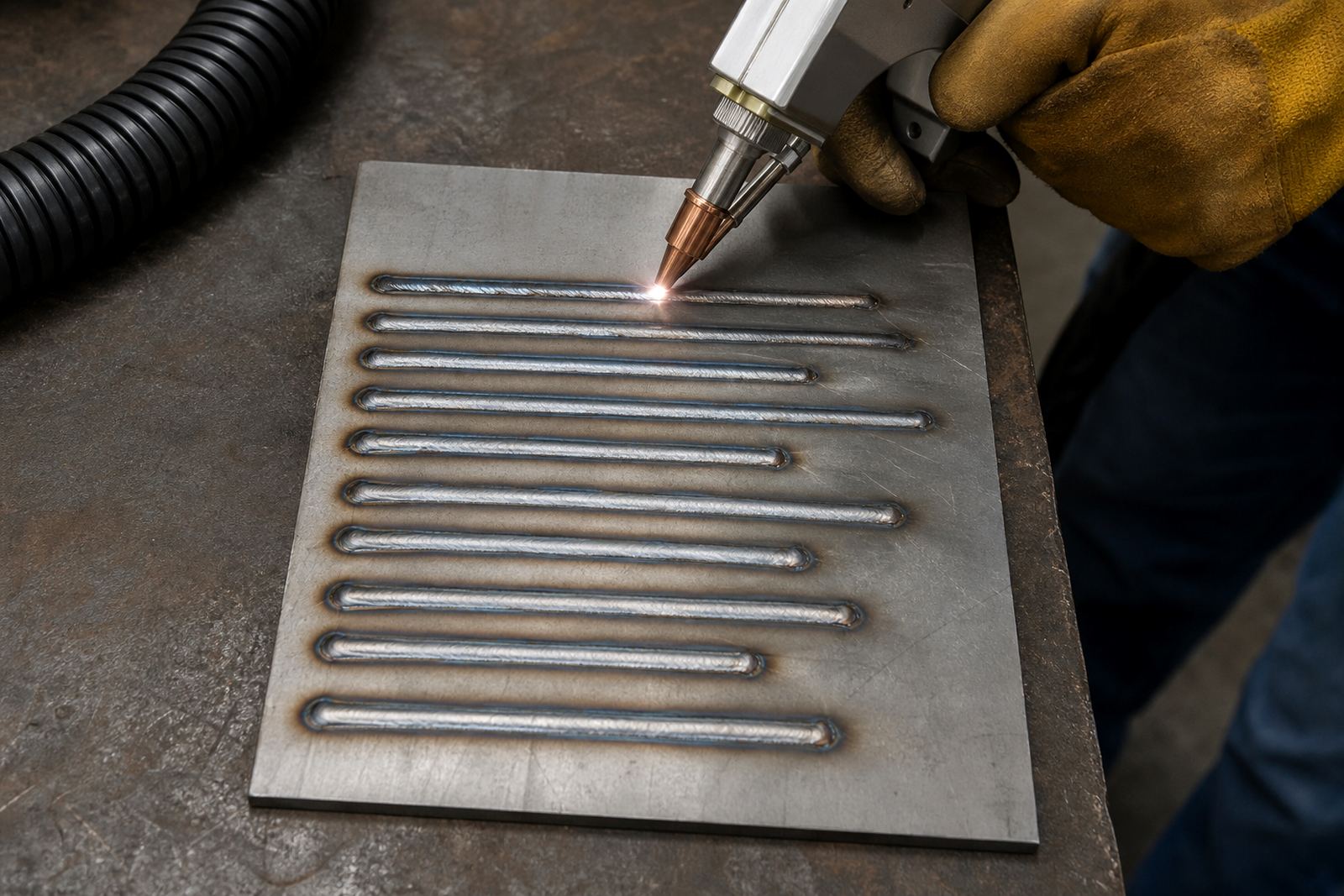
Travel speed is simply how fast the torch moves along the joint. In handheld laser welding, that movement controls how much energy stays in one place, how the puddle forms, and how even the bead looks from start to finish. A steady hand matters, but the real skill is keeping the same pace through the full weld, not only on the easy parts.
On thin sheet, small brackets, and light fabrication work, the wrong speed shows up quickly. Go too fast and you can leave an underfilled seam or poor fusion at the edges. Go too slow and the heat can build up, causing more distortion, discolouration, or a wider weld than needed. The goal is not to weld fast. It is to weld at a speed that suits the thickness, the joint and the finish required.
What learners should watch for while they practise
When people first train, they often focus only on the beam and forget the rest of the set-up. Travel speed is affected by your stance, torch angle, joint fit-up, and even how tired your arm feels after a few minutes. If the workpiece is clamped well and the joint is clean, it becomes much easier to keep one pace. If the parts are moving or the surface has oil and scale, the hand naturally starts to compensate and the weld becomes uneven.
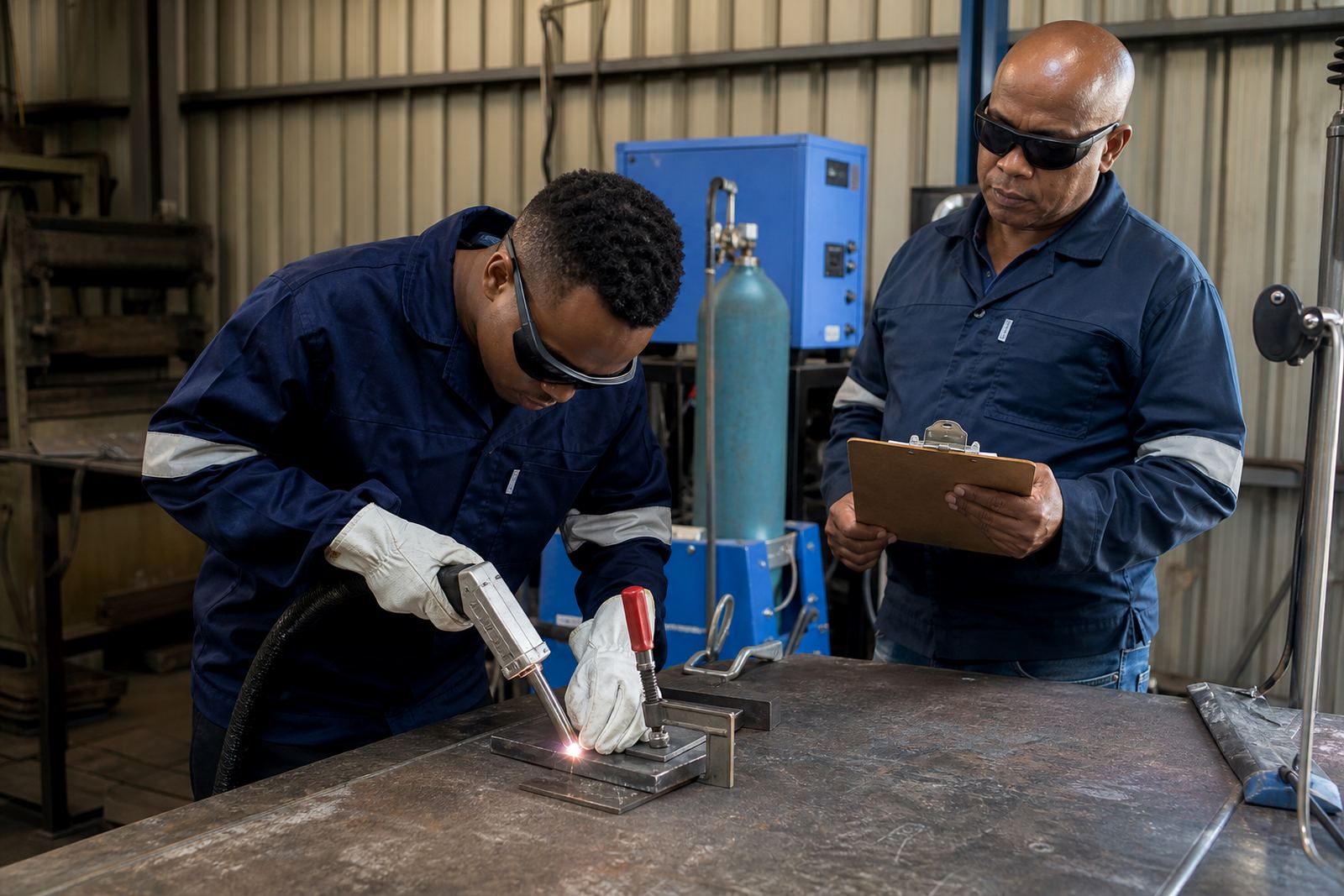
In class, we usually tell learners to watch for three signs while they work: the size of the bead, the sound or feel of the process, and the heat pattern around the weld. With repetition, those signs start to make sense. A learner begins to notice when the torch is drifting, when the motion is hesitating, or when they are rushing a corner. That awareness is where consistency starts.
- Keep your elbow and wrist in a comfortable position before you start
- Move in one smooth line, then stop and assess the result
- Practise on short samples before moving to longer joints
- Check the same workpiece size more than once so you can compare results
How repetition builds a steadier hand
No one develops good travel speed by guessing. The body needs repetition. Short practice runs help learners build muscle memory, and that matters because handheld laser welding asks for control over a long seam, not just a single spot. The more often a learner repeats the same joint on the same material, the easier it is to recognise the right rhythm.
A useful method is to work in short lengths and then review each pass. Look at bead width, edge tie-in, and any signs of overheating. Then adjust only one thing at a time. If you change torch angle, clamp pressure and speed all at once, it becomes hard to know what improved. Learning is faster when each run has a clear purpose. That is why a proper practice plan makes such a difference.
We have seen learners in Boksburg do much better after a few structured sessions than after trying to teach themselves by trial and error. A short weld repeated ten times with review in between often teaches more than a full day of random practice.
Finding the right pace for different materials
There is no single travel speed that suits every job. Mild steel, stainless steel and aluminium all react differently, and thickness changes the pace again. A neat bead on one job may be too slow on another. Material cleanliness also changes the result. On coastal jobs in Durban or Cape Town, surface condition matters because moisture and contamination can affect preparation and repeatability if the stock has been stored badly.
For learners, the best habit is to treat every new material as a fresh set-up. Confirm the thickness, check the fit, clean the joint and run a short test piece first. This approach also helps when you are working in workshops around Johannesburg or Pretoria where jobs vary from day to day. A careful test piece saves time later and helps the operator settle into a proper pace before moving to the actual work.
- Thin material usually needs a lighter, more controlled pace
- Thicker material often allows a slightly slower and more deliberate movement
- Dirty or poorly fitted joints should be corrected before welding begins
- Test pieces help compare one speed against another in a safe way
Safety rules that support better travel speed
Safe welding supports better welding. Handheld laser welding is not a process where you can ignore protective measures and hope for the best. Learners must use the correct eye protection for the laser class in use, and everyone in the area should be briefed before work starts. Good fume extraction is also important, especially in enclosed workshops where vapour can build up quickly.
When the area is organised, the operator can focus on the weld instead of worrying about movement around the bench. Clear cable routing, a clean floor, and stable clamping all help the hand move at a steady pace. In our training sessions, safety is never treated as a side issue. A learner who understands the risks is more likely to hold the torch correctly, keep a stable position and finish the weld without unnecessary stops.
For workshops planning training in Gauteng, a readiness check is worth doing before anyone starts. That includes checking ventilation, screen placement, PPE, and whether there is enough space for safe movement around the job.
How local workshops turn practice into confidence
Travel speed becomes easier to manage when training is linked to the real work a workshop does. A fitter in Boksburg, a fabricator in Polokwane, and a maintenance team in Cape Town may all need different outcomes, but the method is the same: prepare the job, run a short sample, review the weld, then repeat until the pace is steady. That is why refresher visits and supervisor coaching are so useful. They help teams keep one standard across different operators and shifts.
For businesses coping with load-shedding or stop-start production, a clear practice plan also helps make better use of available time. Instead of wasting a short session on confusion, learners can work through a set of repeats with one clear target. The result is calmer movement, fewer mistakes, and better control over the finished weld. Our starter kits are meant for this kind of learning, giving operators the basic tools they need to practise between sessions and set up their workspace properly.
Ultimately, travel speed is learned by doing the same thing well many times. Once that pace becomes familiar, the operator can focus on the job itself instead of fighting their own movement.
What a learner should aim to take away
A good learner does not chase speed for its own sake. The aim is control, repeatability, and a weld that looks the same from one run to the next. With time, the hand learns to match the joint. The eyes learn to spot small changes early, and the body starts to settle into a pace that suits the material. That is the point at which travel speed stops being a guess and starts becoming a skill.
After training, learners receive a certificate of completion from LaserWelder Training. More important than the certificate, though, is the ability to return to the workshop and apply the same method under normal working conditions. That is where good repetition pays off.