Why the supervisor role matters from day one
Handheld laser welding is practical work, but it is not casual work. A supervisor gives structure to the learner’s day, keeps attention on safe habits, and helps the team use the same method every time. That matters in workshops where jobs change quickly, materials vary, and time pressure can lead to shortcuts.
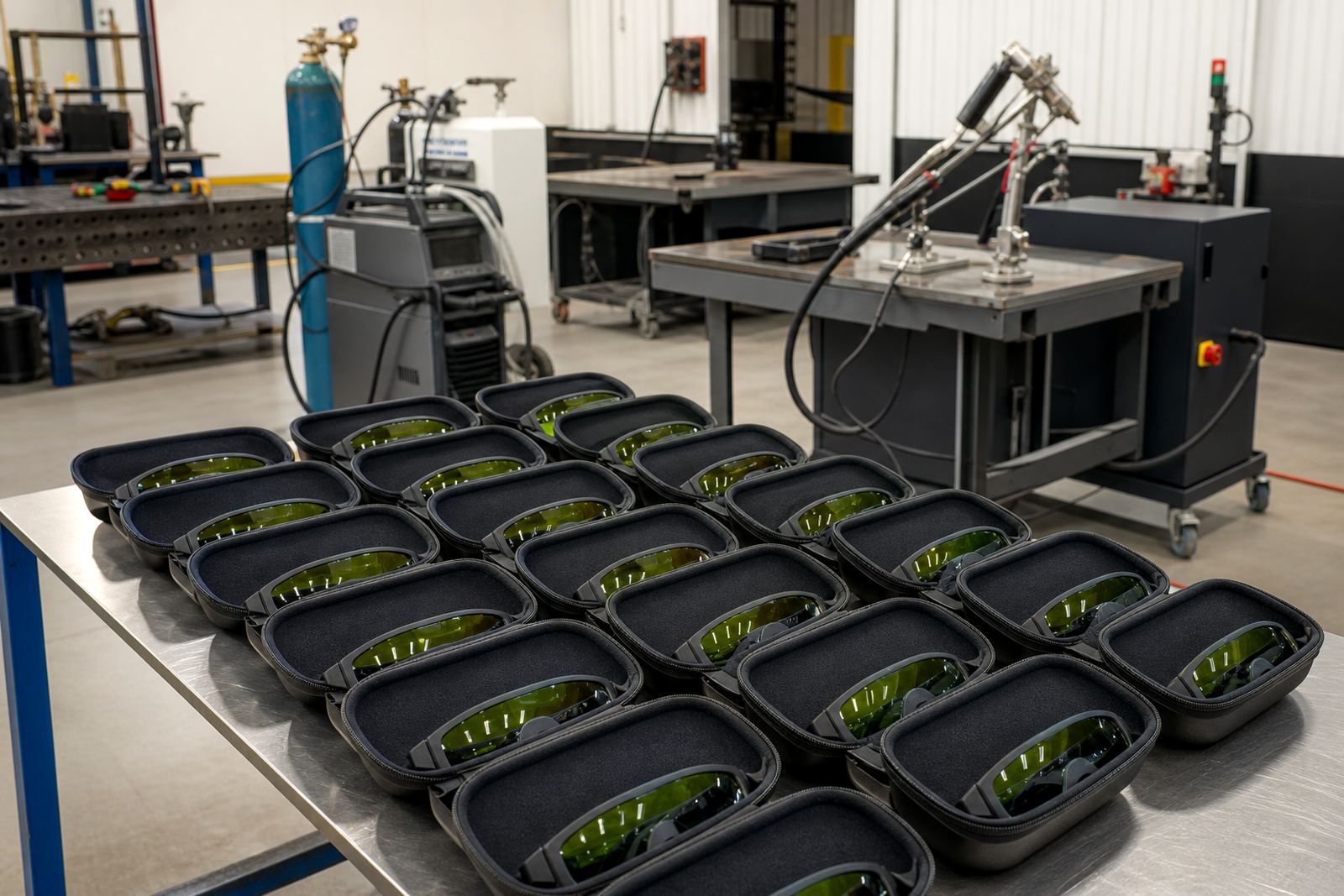
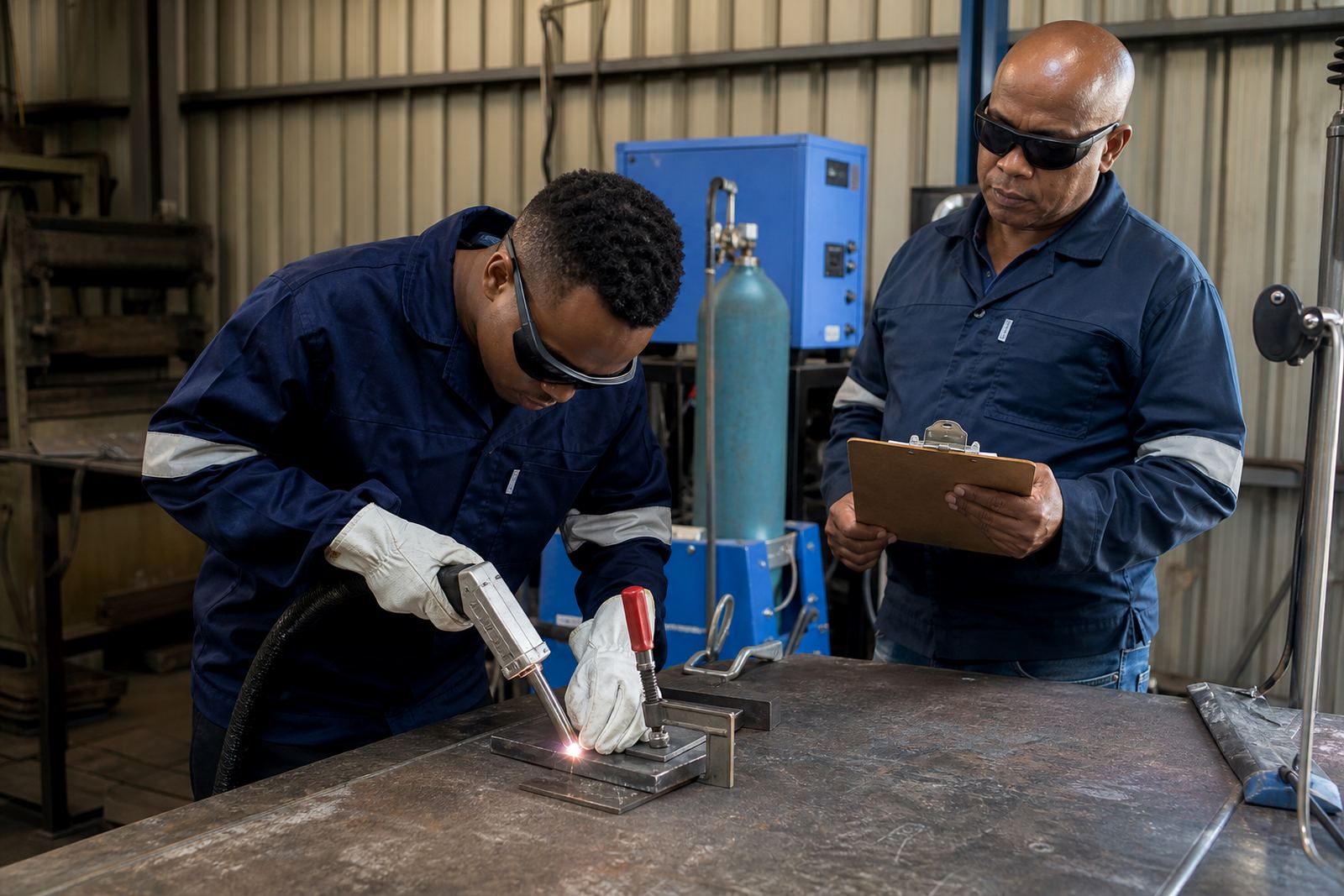
In a training setting, the supervisor is not there to do the job for the learner. The role is to set the standard, watch for risky behaviour, and correct small mistakes before they become habits. That includes confirming the laser class being used, checking that eye protection is worn correctly, and making sure fume extraction is running before welding starts. If the workspace is not ready, the learning should wait a few minutes. That is better than fixing avoidable damage later.
For businesses in Boksburg and the wider Gauteng area, this approach helps when training has to run around production, power interruptions, or shared workshop space. A clear supervisor saves time because everyone knows what safe looks like and what the next step should be.
Set the safety routine before the torch is switched on
Good supervisors repeat the same checks until they become normal practice. That routine should cover the room, the learner and the equipment. It is especially useful for new operators who may be focused on the weld itself and forget the steps around it.
- Confirm the work area is clear of reflective clutter and loose offcuts.
- Check that the correct eye protection is on before any test run.
- Make sure the fume extraction is positioned close enough to capture fumes at source.
- Inspect cables, hoses, and the handheld unit for visible wear or damage.
- Agree on who is allowed into the welding area and who is not.
With laser equipment, shortcuts can create real risk. A supervisor should also reinforce that handheld laser welding is not a general repair method for every material or thickness. Learners need to understand limits, setup, and heat control. That includes working with the right filler approach where needed, and knowing when a different process is more suitable.
Coach technique without crowding the learner
Many supervisors make the mistake of standing too close and taking over. That may get one clean weld, but it does not build confidence. The better method is to observe, ask questions, then correct one point at a time. A learner who hears six instructions at once usually remembers none of them.
The most useful coaching is practical and specific. For example, a supervisor can show how travel speed affects bead shape, how hand position affects steadiness, and how nozzle angle can change protection over the weld pool. Short corrections work better than long speeches. If the learner is moving too fast, say so plainly. If the cleaning is not good enough, stop and reset the joint before continuing.
Our hands-on courses use that same approach. Supervisors who support the training should keep notes, ask the learner to repeat the step, then check the result. That way, improvement is visible and the same mistake is less likely to return the next day.
- Use one correction at a time.
- Ask the learner to explain the step back to you.
- Compare the first sample with the last sample.
- Record the repeat issues, not just the successes.
Keep quality checks simple and repeatable
Supervisors do not need a complicated quality system to improve results. They need a consistent one. A small checklist used on every shift is often enough to keep work tidy and traceable. This is important when different learners are sharing the same starter kit, or when a workshop is trying to standardise output across several operators.
Focus on the basics first. Is the joint prepared properly? Is the weld line clean? Is penetration acceptable for the job? Is there obvious overheating, distortion, or undercut? If the answer is no, the supervisor should stop the piece and decide whether the learner needs another practice pass or a different setup.
In Durban, where coastal humidity can affect storage and consumables, supervisors should also keep an eye on rust on practice material and moisture near the work area. In Pretoria or Polokwane, dust and heat can affect where equipment is stored. These details seem small, but they affect consistency. Good supervisors notice them before they start causing repeat faults.
Use starter kits and practice plans properly
Starter kits work best when they are treated as training tools, not just boxed equipment. A supervisor should know what is in the kit, how each item is used, and what needs regular checking. That includes the handheld unit, safety items, basic cleaning tools, and the parts used for practice runs. If the kit is set up badly, the learner starts with confusion instead of confidence.
A practice plan should match the learner’s level. A beginner may need repeated runs on flat joints before moving to more difficult positions. A more experienced operator may need help with consistency, defect spotting, or speed control. The supervisor should review what has already been covered, then assign the next practice block with a clear target.
- Keep practice material sorted by thickness and type.
- Label consumables and replace worn items early.
- Store safety gear so it is easy to reach every day.
- Track which learner used which setup and when.
That kind of order helps both small workshops and larger teams that train across more than one site.
A local example from a busy East Rand workshop
Picture a workshop in Boksburg supporting repair work for equipment used across Gauteng. The owner wants two junior workers trained without slowing down the rest of the job list. One supervisor prepares the space each morning, checks the extraction unit, lays out the practice material, and confirms everyone has the right eye protection. Training happens in short blocks between production tasks, not in one rushed session.
At first, the learners move too quickly and their welds show uneven finish. The supervisor does not criticise the whole person. Instead, they adjust the grip, slow the travel speed, and ask for three repeat runs on the same joint. By the end of the week, the difference is obvious: less rework, more control, and better understanding of the process. The shop keeps moving, and the learners begin to work more independently. That is the real value of a supervisor in training. It turns a course into a working habit.
For businesses sending staff from Johannesburg, Pretoria, Durban, Cape Town or Polokwane, the same principle applies. A good supervisor keeps the standard steady after the course ends, which is where the real progress starts.