
Start with the actual laser setup, not a guess
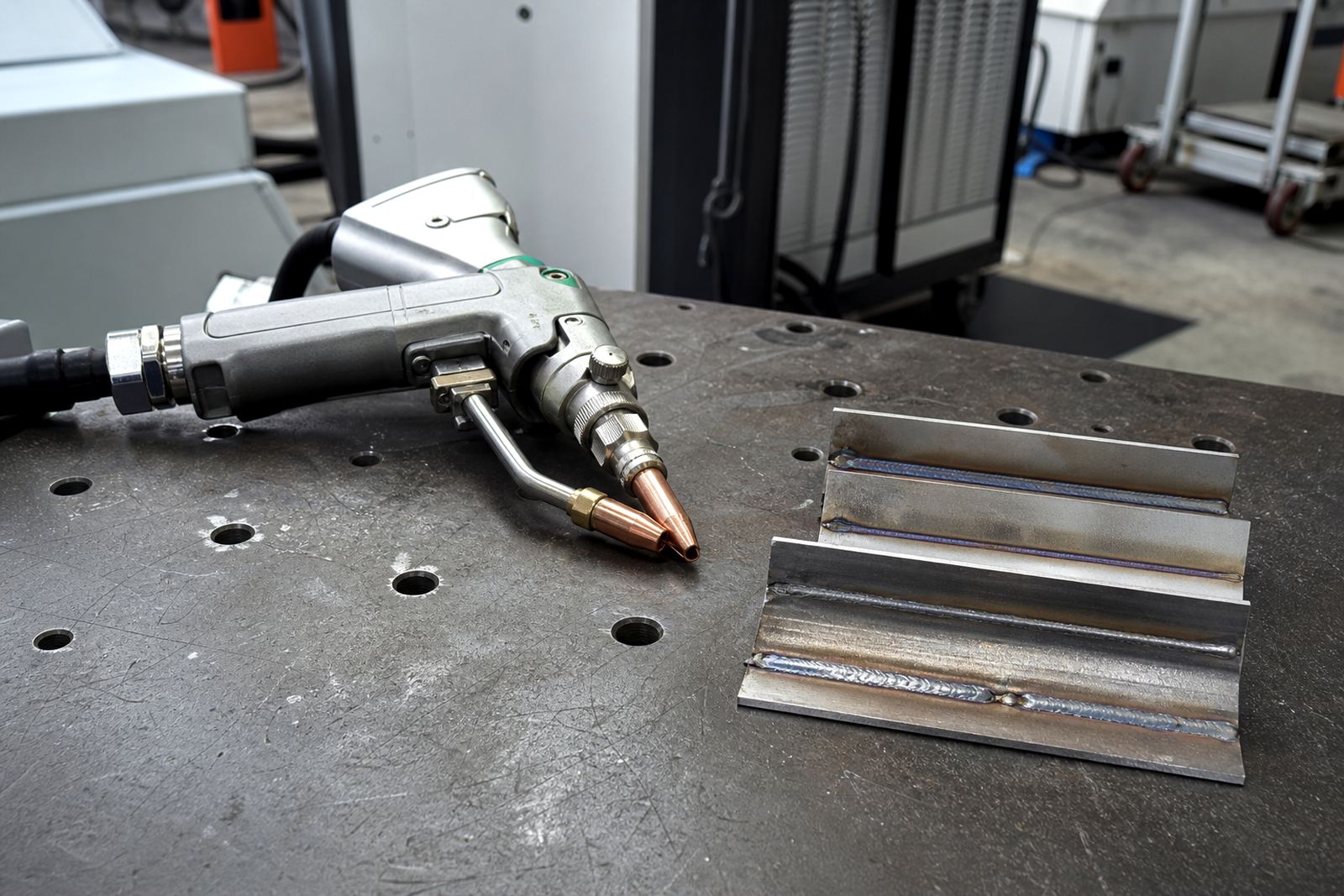
With handheld laser welding, eye protection must match the machine and the way it is used in the bay. A learner using a handheld unit in a small workshop needs different control measures from someone working at a bench with screening, even if the task looks similar on paper. The first step is to confirm the laser class, the wavelength range and the way the beam is delivered, then choose eyewear that is specified for that exact setup.
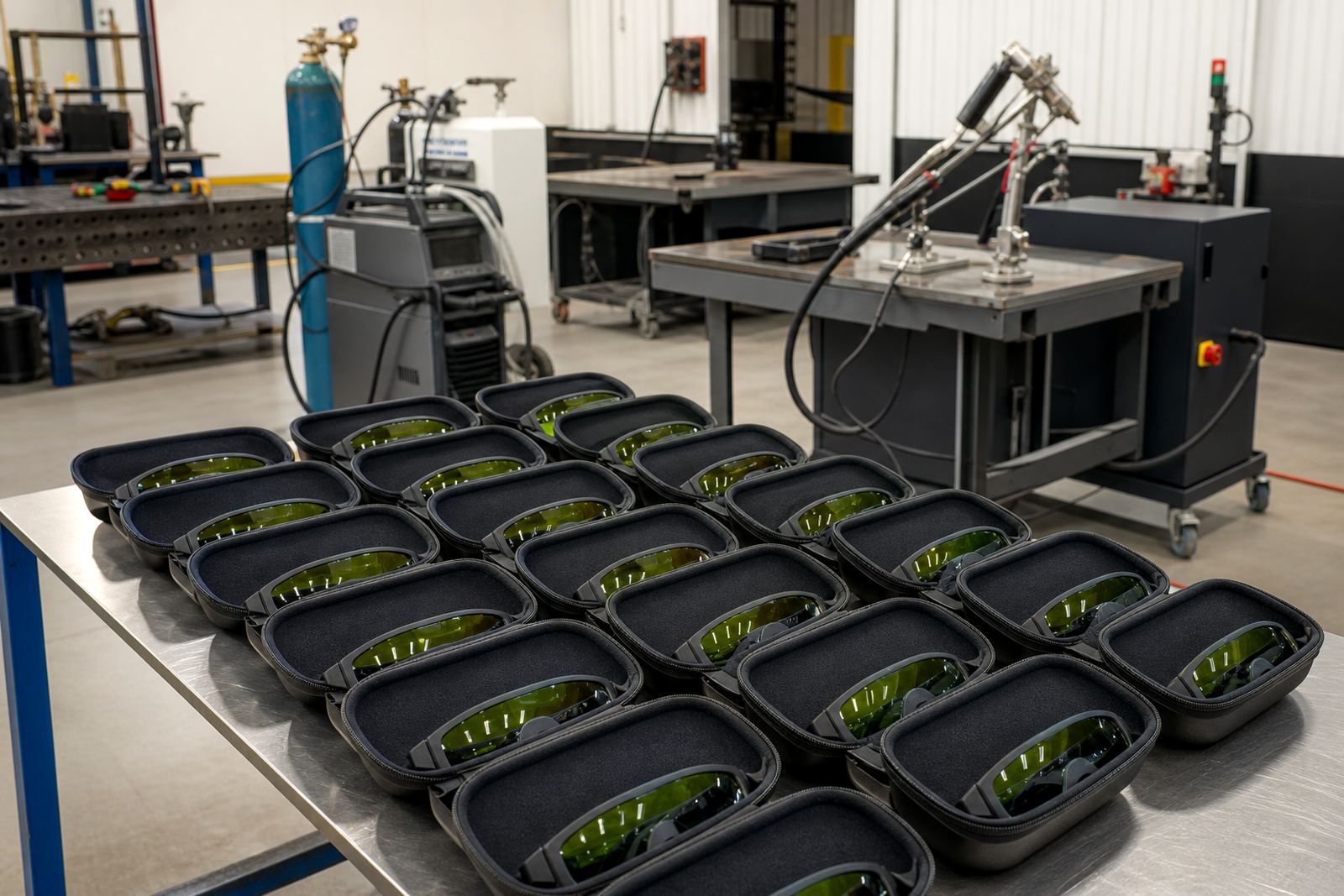
Good training spaces do not rely on general tinted glasses or basic face shields alone. Those may help with sparks and light glare, but they are not a substitute for laser-rated protection. The best practice is to use eyewear that is clearly marked for the correct wavelength range, with side coverage and a fit that stays secure when the operator bends, turns or leans in to inspect a weld seam.
In our Boksburg training rooms, we treat eye protection as part of the machine set-up, not an afterthought. If the eyewear is wrong, loose or worn over scratched lenses, the rest of the safety briefing starts from a weak point.
What makes suitable laser eyewear worth buying
Suitable laser eyewear should do more than look dark. It needs to be specified for the wavelength used by the equipment, sit comfortably over the full session, and remain effective if the learner is moving between prep, welding and inspection. For handheld laser welding, clear vision matters because the operator still has to line up joints, watch the workpiece and keep both hands steady.
Many workshops ask for the cheapest option and then struggle with fogging, slipping frames or lenses that are too dark for normal handling. That slows the job and encourages people to lift the eyewear when they should not. A better choice is a model that balances protection with visibility, especially in warm rooms or coastal conditions where humidity can make lenses mist up faster.
- Check that the eyewear is rated for the correct laser wavelength.
- Make sure the fit is snug and does not slide when the wearer looks down.
- Choose side coverage for extra shielding during alignment and clean-up.
- Keep spare pairs in the workshop for visitors, supervisors and learners.
- Inspect lenses for scratches, cracks and heat damage before each session.
Disciplined use matters as much as the lenses
Even the right eyewear will not help if people wear it loosely or only when someone is watching. Training spaces need simple rules that everyone follows every time the unit is switched on. That includes learners, instructors, supervisors and anyone stepping into the area to ask a question.
Eye protection should be worn before the laser is armed and only removed once the area is safe. If a learner needs to pause for a check, the unit must be placed in a safe state first. People should not lean around a visor, push glasses up on the nose or wipe lenses with dirty gloves. Those small habits create risk and can undo a good safety system. It sounds basic, but this is where most accidents are prevented.
For workshops in Johannesburg, Pretoria or Durban where there may be mixed teams and repeated handovers through the day, clear rules help more than long explanations. Keep the instruction short and direct: wear the correct eyewear, confirm the fit, and do not enter the welding zone without it.
Pair eye protection with fume control and a clean bay
Eye protection is only one part of safe laser welding. Fume extraction, clean benches and clear walkways also shape how safe the job feels and how well learners concentrate. Smoke and fine particles can irritate the eyes even when the operator is wearing the correct eyewear, and that distraction can lead to poor hand control or rushed movement.
In a small training space, poor extraction can also leave residue on lenses, visors and screens. Once that starts happening, people clean gear less often, or use the wrong cloths and scratch the surface. The fix is simple: keep the extraction unit positioned correctly, service it as needed, and make lens care part of the daily routine.
Where workshops are working through power interruptions, it helps to plan for load-shedding too. If extraction or lighting is affected, stop the session and reset the area properly rather than carrying on in dim conditions. Good safety practice is slower for a moment, but it protects the learner and the equipment.
A practical example from a Gauteng training room
In a Boksburg workshop with mixed learners, the first challenge is usually not the welding itself but the pace of the room. One person is setting up stock, another is checking a joint and someone else wants to watch from close range. Without structure, people drift into the work area at the wrong time.
That is why we encourage a simple routine. The instructor confirms the laser class and eyewear requirement, the safety officer checks the extraction and the learner puts on protective eyewear before moving into position. A supervisor then checks that observers remain behind the safe line. It takes a few minutes, but it keeps the room calm and organised.
- Mark the active welding zone clearly.
- Keep a spare set of laser-rated eyewear at the entrance.
- Use a short verbal check before every practice run.
- Record any damaged eyewear and remove it from use immediately.
This approach works just as well for smaller groups in Polokwane or larger teams in Cape Town. The point is not to make the room complicated. The point is to make safe behaviour normal.
Build the habit into inductions and starter kits
New learners often remember the welding torch, the material and the finish they want to achieve. They may not remember the eyewear detail unless it is built into the induction from day one. That is why starter kits and training packs should always include a clear note on when to wear the glasses, how to store them and how to check them before use.
For businesses setting up a new bay, it helps to do a brief site readiness check before training starts. That way the team can confirm where eyewear will be stored, who is responsible for issuing it and how to manage replacements. A tidy system works better than one where the glasses are kept in a drawer and nobody knows if they are still suitable.
When eye protection is handled properly, learners settle faster and make fewer mistakes. They can focus on torch control, seam tracking and practical weld quality instead of wondering if the safety gear is right. That is the standard any training space should aim for, whether it is in Gauteng or a workshop on the coast.