Start With Work You Can Repeat Well
Small workshops often begin with a simple question: what work must we do every week, and what can we refuse until we are ready? With handheld laser welding, the smart start is to focus on repeat jobs first, such as thin stainless repair, mild steel fabrication, small brackets, guards, frames and neat finishing work. The goal is not to do everything on day one, it is to build a method that gives the same result each time.
That is where training matters. A new operator needs to understand travel speed, spot size, joint prep, material thickness and when a handheld unit is the wrong tool for the job. If the team learns on the floor without structure, the workshop can waste consumables and spend too much time cleaning up poor welds. A short, planned course gives the business a better base to work from.
In Boksburg and the wider East Rand, many small shops are working in tight bays, with limited floor space and power interruptions to think about. A practical start means setting up a work area that can be packed down safely, kept clean and used without slowing the rest of the workshop. That approach is useful whether you are in Johannesburg, Pretoria or a smaller industrial area where space is tight.
Know The Safety Rules Before The First Weld
Laser welding is not a casual add-on to general fabrication. The equipment must be treated as a controlled process, with proper laser class awareness, correct eye protection and clear operator briefings. Even when a handheld unit looks simple, the beam can cause serious eye injury if it is used carelessly or without the right shields and procedures.
Fume extraction is equally important. Thin metals, coatings and contaminants can give off fumes that should not be breathed in at the bench. Small workshops should plan extraction before the first production run, not after someone starts coughing. Good airflow, local extraction and clear housekeeping rules all help keep the space workable, especially in enclosed units where windows stay shut during winter or dust blows in from nearby yards.
- Confirm the laser class and the controls needed for that class.
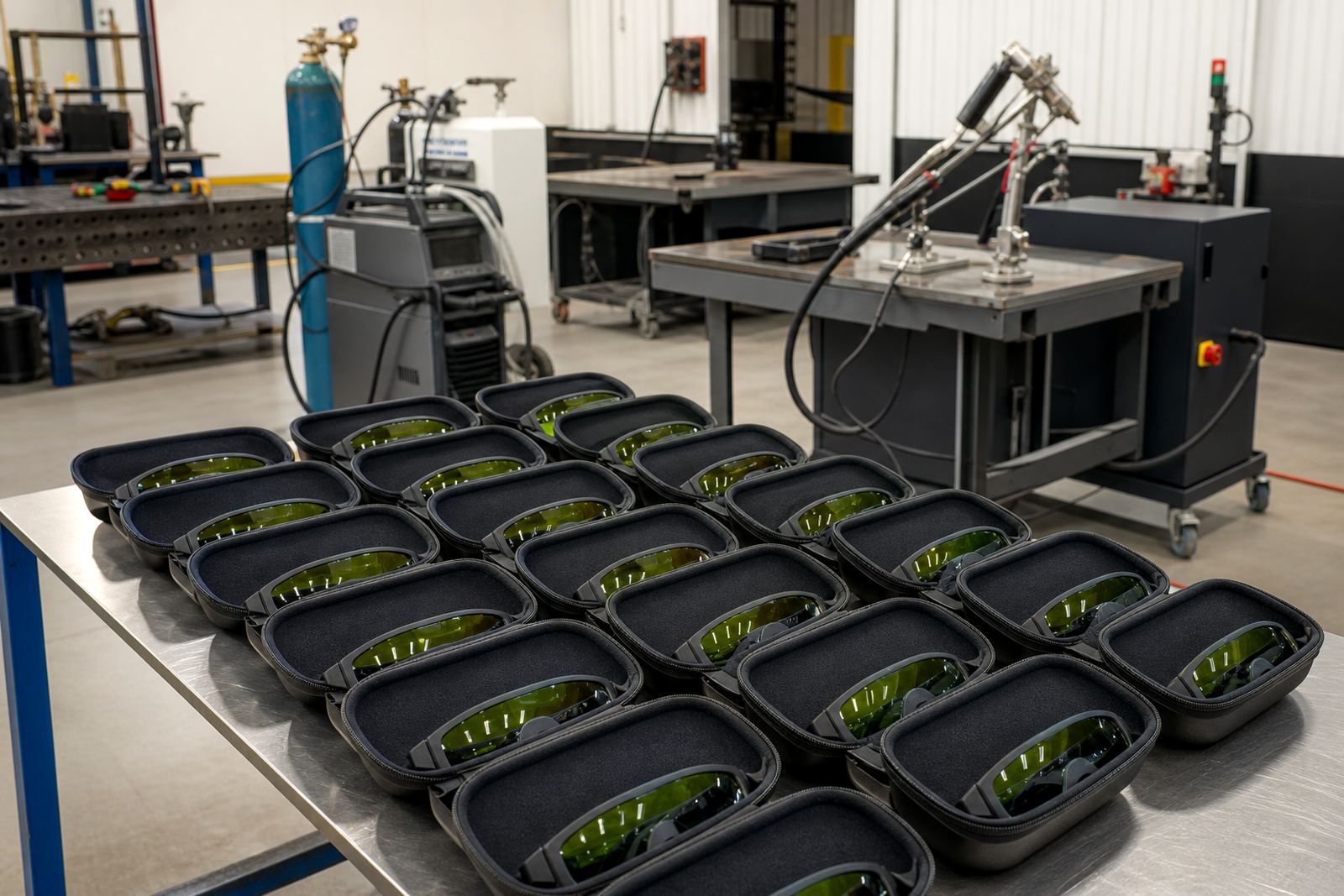
- Use eye protection suited to the system and the job area.
- Keep flammables away from the welding station.
- Fit fume extraction and check that it is working properly.
- Brief every operator before they use the equipment.
A small team can manage this well if the rules are simple and written down. For many workshops, the issue is not effort, it is consistency. One person skips a step, then another copies it. That is how minor mistakes become a habit.
Choose A Starter Kit That Matches Your Jobs
A starter kit should match the work you actually plan to do. For a small workshop, that usually means a handheld laser welding unit, suitable protective equipment, basic cleaning tools, wire or filler where needed, nozzle and lens care items, sample material and a practical setup for testing joints. If the kit is too small, the operator spends time improvising. If it is too large, the workshop pays for things it will not use.
Starter kits work best when they are matched to the first six months of jobs. A fabrication shop may need different accessories from a repair shop, and a workshop doing light maintenance work will have different requirements from one building gates and frames. That is why setup advice helps. It reduces the chance of buying the wrong extras and then leaving them in a cupboard.
- Match power and duty needs to your typical material thickness.
- Check that the consumables are easy to replace locally.
- Include cleaning and maintenance items from the start.
- Plan where the unit will be stored between shifts.
- Allow for load-shedding with a sensible power plan.
In South Africa, power planning is not optional. Even if the unit is only used for short runs, a small workshop still needs to think about supply stability, surge protection and what happens when the job must continue after an outage. That sort of planning saves time and protects equipment.
Train The Operator, Not Just The Machine
Many shops buy equipment first and think about training later. That usually leads to uneven welds, poor handling and a machine that sits unused because nobody is sure how to get the best out of it. A better start is operator induction, hands-on practice and a simple checklist for daily use. The person using the laser should know how to inspect the workpiece, set up the task, test on scrap and read the weld as it is being made.
At LaserWelder Training in Boksburg, the focus is on practical work that suits real shop conditions. Learners can build confidence through guided practice, then leave with a certificate of completion from LaserWelder Training only. That is useful for a business owner, because it gives the team a shared standard and a clear record of who has been trained.
For supervisors, the value is just as real. A supervisor who understands the process can spot poor fit-up, rushed prep or unsafe handling before it becomes waste. That makes daily work steadier and helps the workshop avoid avoidable rework.
Plan The First Month Around Simple, Testable Jobs
The first month should not be filled with difficult repairs and tight deadlines. It should be built around simple, testable jobs that help the team learn. Start with sample pieces, then move to short production runs, then move to actual customer work once the process is stable. A written practice plan helps the operator keep moving in the right direction instead of guessing from one job to the next.
For a small workshop, the best early wins are visible and measurable. Welds should look cleaner, cleaning time should come down and fewer jobs should need grinding after welding. If the job still needs heavy finishing, the team should stop and review the setup, material prep or technique. Small changes can make a large difference when the work volume is low and every mistake is felt immediately.
A local example is a Boksburg shop that starts with gates, brackets and light repair work for nearby businesses. The owner does not need a massive production line. What the workshop needs is one trained operator, a safe station, a starter kit that fits the jobs and a process that can grow as enquiries increase. That is a realistic way to start without overcommitting cash or space.
Keep Support Close After The First Purchase
The best small workshop starts are usually the ones that keep support close after the initial setup. A business may need refresher visits, technical help, quality walkthroughs, supervisor coaching or a simple training document pack once the first jobs begin. These services are useful because the real questions often come after the equipment is already in use. That is when the team notices what is missing or where a habit needs correcting.
LaserWelder Training supports learners and workshops across South Africa, including Johannesburg, Pretoria, Durban, Cape Town and Polokwane, with practical course options and starter kit guidance. If a business wants to begin carefully, with training and planning rather than guesswork, that is the right place to start. A small workshop does not need to look big on day one. It needs to be safe, well planned and ready to do the first jobs properly.