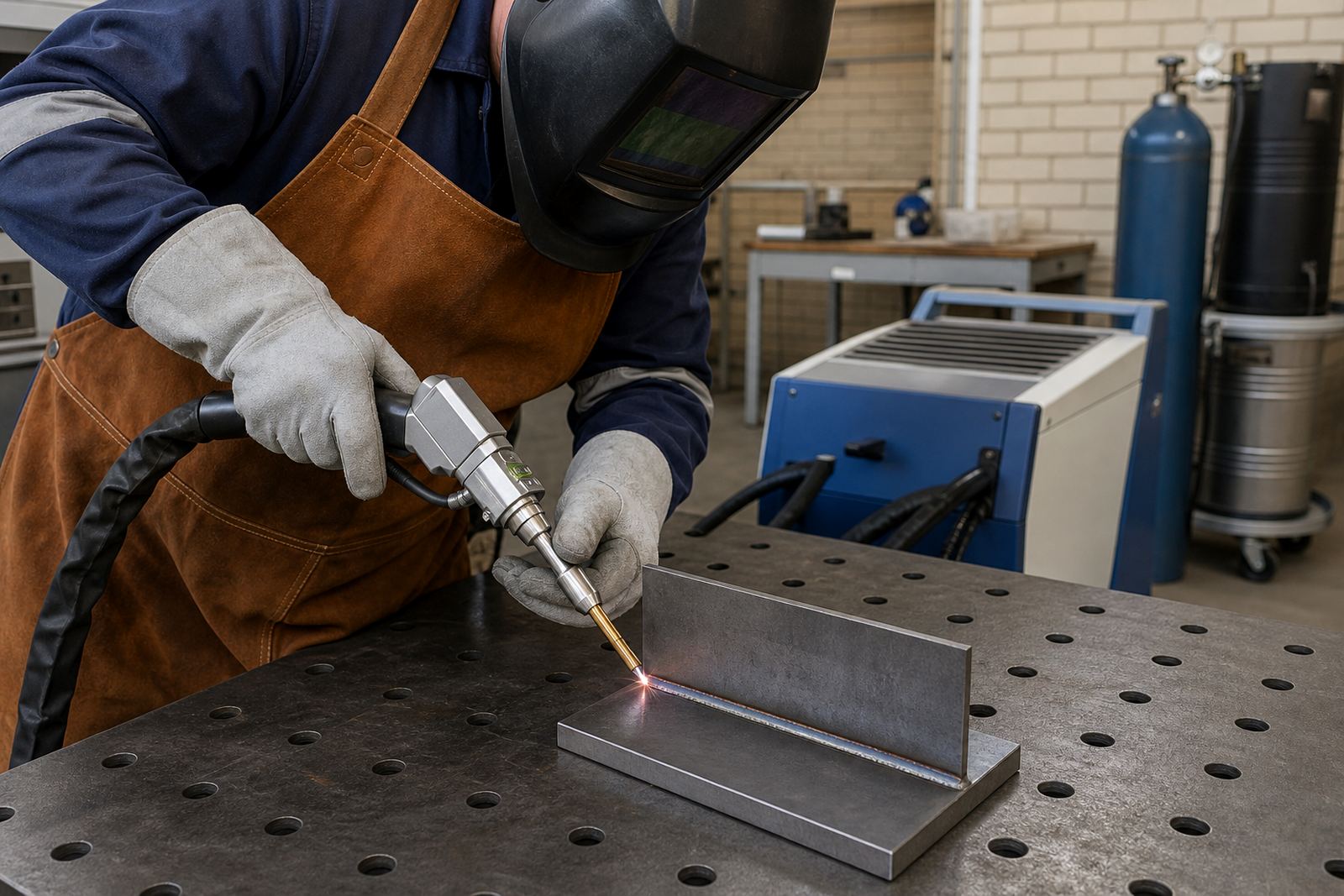
Start With A Fixed Prep Routine
Repeatable work begins before the torch is switched on. In a small workshop in Boksburg, a steady routine might start with checking material type, thickness, joint fit-up and surface condition before any clamping or welding begins. Laser welding is sensitive to gaps, rust, oil and paint, so the prep step must be the same for every job if the finish is to stay consistent.
For handheld laser welding, this is even more important because the operator is moving along the joint by hand. A practical prep routine should include cleaning the weld zone, confirming part alignment, checking backing support where needed, and laying out the order of work so pieces are fed through in the same sequence each time. That kind of discipline saves time later and it reduces rework after the first few jobs.
- Check the base metal and joint type before setting up.
- Clean at least the weld area and nearby handling surfaces.
- Mark the weld path so each operator follows the same line.
- Confirm clamps, backing bars and table height before starting.
Use The Same Setup For Similar Parts
When a workshop handles repeated brackets, frames, covers or repair jobs, it helps to group similar work together. A consistent setup means the same stand height, torch angle, travel speed range, gas flow and focus setting are used for the same family of parts. That makes it easier for a second operator to pick up the job without guessing.
Starter kits should be laid out in a standard way as well. Keep the nozzles, lenses, cleaning tools, filler wire where used, and spare consumables in fixed positions. If the kit is being shared between shifts, write a simple handover note for what was used and what must be checked before the next operator starts. It sounds basic, but it keeps the workflow steady when load-shedding or late deliveries break the day into smaller working blocks.
- Keep a fixed place for each consumable item.
- Label common settings for common jobs.
- Use one handover sheet for every shift change.
- Store parts by job type, not by where they were left last.
Build Safety Into Every Repeat Task
Good workflow is also safe workflow. Handheld laser welding must be treated as laser class equipment, with access controlled and the operator using suitable eye protection for the wavelength and application in use. Everyone nearby should know where the safe boundary is, especially in shared workshop spaces where grinders, cutting tools and other hot work may be running at the same time.
Fume extraction should be part of the routine, not an afterthought. Even on cleaner stainless or mild steel jobs, the weld area can give off fumes and fine particles that should not be breathed in. A repeatable workflow should include turning on extraction before welding starts, checking that the nozzle is positioned correctly, and confirming that airflow has not been blocked by scrap or packaging. In coastal towns like Durban and Cape Town, humidity can also affect storage and surface condition, so a dry, tidy prep area helps keep the work more predictable.
- Wear the right eye protection every time, not only on bigger jobs.
- Test fume extraction at the start of the shift.
- Keep bystanders outside the welding zone.
- Store optics and consumables in a clean, dry place.
Check The Weld Before The Part Moves On
A repeatable process is not finished when the bead looks neat. Each part should be checked against the same standard before it leaves the station. Look for bead width, edge tie-in, visible porosity, underfill, excess spatter and any distortion that could affect fit on the next step. If the same part comes back for a fix, note the reason and adjust the setup rather than simply reworking it by feel.
Simple checking methods work well for most workshops. Use a light, a ruler, a set gauge where needed, and a short visual checklist. Keep that checklist short enough that people actually use it. If one operator in Pretoria checks a frame against a jig and another in Polokwane uses a different method, the result will drift over time. The point is to make the checking step boring and predictable, because boring is often what keeps quality stable.
- Check the joint while the part is still easy to access.
- Use one visual standard for acceptable finish.
- Record any repeat fault immediately.
- Keep a sample part nearby as a reference.
Train New Operators On The Workflow, Not Just The Torch
Many workshops teach the machine first and the workflow later, but the order should be the other way around. New operators need to understand how prep, safety, welding and checking fit together as one routine. That is where supervised practice and operator inductions matter. A training session should cover how to get the part ready, how to set up the area, how to move through the weld, and how to close out the job without skipping the final check.
At LaserWelder Training in Boksburg, Gauteng, that practical approach is central to our hands-on courses. Learners and workshop teams work through repeatable steps they can use on their own sites, whether they are supporting a small repair bench or a busier production floor. The certificate of completion from LaserWelder Training shows that the person has completed the course, but the real value is the process they can carry back into the workshop and use the next day.
- Teach the sequence before asking for speed.
- Use the same checklist for beginners and experienced staff.
- Keep supervisor coaching part of the first few jobs.
- Use refresher visits when the workflow starts to slip.
A Boksburg Example For Repeat Jobs
A local workshop in Boksburg that handles repeated repairs on light fabrications can keep things moving by splitting the day into three fixed blocks: prep, welding and checking. Parts arrive, are cleaned and marked in one zone, then move to the welding station, then finish at a clear inspection point before packing. That simple flow reduces walking around the shop and it also makes it easier to spot where delays are happening.
If the same workshop also keeps a starter kit ready for new jobs, the team can standardise what gets checked before each shift. On Monday that may be a set of small brackets for a contractor in Gauteng, on Wednesday a batch of repair pieces for Johannesburg, and later in the week a repeat order for Durban or Cape Town. The shapes change, but the routine stays the same. That is what helps a workshop keep output steady when the work load changes and the power situation is not always ideal.
For teams that want to tighten this up, training support can include site readiness checks, workflow advice, practice plans, supervisor coaching, consumables planning, technical help and a training document pack. The aim is not to complicate the job. It is to make each repeat task easier to explain, easier to check, and easier to repeat without drift.
- Divide the workshop into clear prep, weld and check zones.
- Keep one repeat job flow for every shift.
- Write down what worked so the next job starts faster.