Why Mild Steel Is the Right First Material
Mild steel is forgiving enough for structured practice, yet honest enough to show poor technique straight away. That is why it remains a standard choice for foundation training, especially when learners need to understand how hand movement, beam position and fit-up affect the final weld.
In a training room or workshop, mild steel also makes planning easier. The material is widely available in common sheet, flat bar and tube sizes, so learners can practise on realistic offcuts without chasing special stock. For businesses in Boksburg and the wider East Rand, that means less time spent sourcing material and more time spent building skill.
When you are new to handheld laser welding, the aim is not speed first. The aim is to create a clean practice routine that lets you see what the puddle is doing, how the edges are joining and where your gaps are too wide. Mild steel makes those lessons easy to read.
What Learners Should Practise Before Chasing Fancy Joints
Good practice starts with basics that can be repeated every day. On mild steel, learners can work on straight beads, overlap joints, fillet joints and simple corner joints before moving to thicker sections or more awkward positions.
It helps to keep each session structured. A learner might start with clean cut pieces, then check fit-up, then run a short set of welds at a steady pace. The point is to build muscle memory and not just get one neat sample and move on. That approach suits beginners and also works well for supervisors coaching staff who need to lift consistency across a team.
- Start with material that is flat, clean and correctly clamped
- Practise short welds before trying full-length runs
- Keep the torch angle and travel speed as constant as possible
- Mark each test piece so you can compare results later
- Review porosity, undercut and heat spread after every set
A small habit like writing down the settings for each sample can save a lot of time later. It is a simple pratice, but it makes improvement far easier to track.
Safety Matters More When the Material Is Easy to Practise On
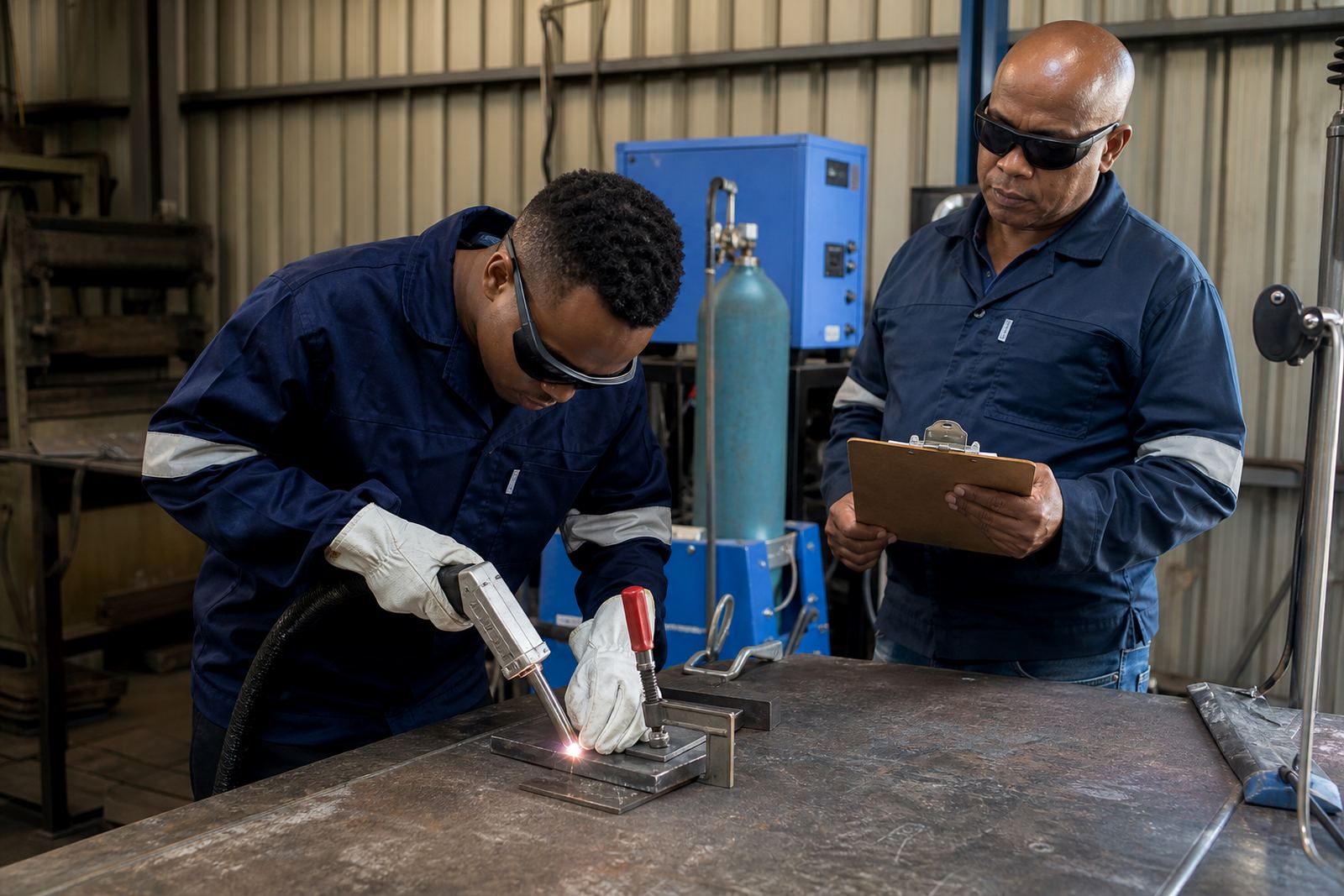
Because mild steel is common and easy to source, some learners treat practice as casual work. That is where problems start. Handheld laser welding still requires proper controls, even on simple test pieces. The laser class must be suitable for the task, with correct guarding, controlled access and clear operating rules in place.
Eye protection is not optional. Everyone in the room should wear the right laser-rated eye protection for the application, and bystanders must be kept out of the work zone. Fume extraction also matters, because mild steel can produce harmful fumes and fine particulates during welding. Good airflow, local extraction and clean work surfaces are part of a proper setup.
- Confirm the laser class and operating limits before any practice starts
- Use laser-rated eye protection for the operator and anyone nearby
- Fit fume extraction close to the weld area
- Keep reflective surfaces and loose clutter away from the station
- Brief learners on emergency stop procedures and safe handling
In South African workshops, that safety discipline is especially useful where space is tight and power interruptions can interrupt the flow of work. A planned restart is safer than trying to patch things together in a hurry.
How Mild Steel Fits into Starter Kits and Workshop Setup
A good starter kit does not need to be complicated. For mild steel practice, learners usually need the welding unit, suitable hand tools, clamps, cleaning items, sample material and basic safety gear. The useful part is not having more equipment, it is having the right equipment arranged in a way that supports consistent practice.
Starter kits sold to learners and workshops across South Africa should be easy to set up and easy to maintain. That means clear instructions, enough sample material to get through early sessions and a sensible plan for storage. In coastal areas like Durban and Cape Town, it also means thinking about moisture and keeping consumables dry. In Gauteng, dust and workshop traffic can affect cleanliness, so covered storage and regular checks matter.
- Keep a dedicated practice area for mild steel samples
- Separate clean material from scrap and offcuts
- Store consumables in a dry place away from humidity and dust
- Build a simple cleaning routine before each session
Starter kit setup should support learning, not slow it down. If a learner has to search for clamps, clean wire or marking tools every time, the session becomes about housekeeping instead of skill building.
What Good Practice Looks Like in a Boksburg Workshop
A practical example comes from a small Boksburg workshop training two junior operators on mild steel tube and flat bar. The team started with short welds on clean offcuts, then moved to simple corner joints after each learner could keep the torch steady for a full run. They did not rush into thicker material until the first set of samples looked consistent.
That kind of approach works well because the learner can see progress quickly. One session may focus on torch control, another on fit-up, and another on cleaning and inspection. Over time, the work becomes less about guessing and more about repeatable habits. For workshop managers, that means better confidence before staff move onto client work.
It also helps to record findings after each session, especially when the team is learning around live production demands. If load-shedding interrupts a class or the workshop schedule shifts, a simple training note makes it easier to resume without losing the thread.
From Practice Piece to Real Work
Mild steel practice is not the end goal, it is the base layer. Once learners understand heat input, joint prep and steady movement on mild steel, they are better placed to move into more complex tasks and different material thicknesses. That transition should be paced, with refresher visits, supervisor coaching and practical walkthroughs where needed.
For businesses and individuals, the value of structured practice is that it lowers avoidable mistakes. It supports cleaner work, better confidence and safer habits. It also helps teams spot when a job needs more preparation before a weld starts. That judgement is just as important as the weld itself.
At LaserWelder Training in Boksburg, Gauteng, courses are hands-on and finish with a certificate of completion from LaserWelder Training only. Learners from Johannesburg, Pretoria, Durban, Cape Town and Polokwane can use the training to build a proper foundation before they take on daily workshop work.