Start With Your Use Case
The right starter kit depends on where it will be used and what the operator needs to practise. A learner kit for first-time use is usually smaller and easier to manage, while a workshop kit needs to cope with daily work, longer shifts and more regular setup changes.
If you are buying for a training room in Boksburg, a fabrication shop in Johannesburg or a service team travelling between sites, we help you match the kit to the work. That includes the material thickness, the type of joints being practised and how much storage space you have on site.
- Learner practice: basic torch handling, short runs and controlled exercises
- Workshop use: repeat work, stronger organisation and quicker changeovers
- Mobile use: transportable items, secure cases and simple power planning
What A Practical Starter Kit Usually Includes
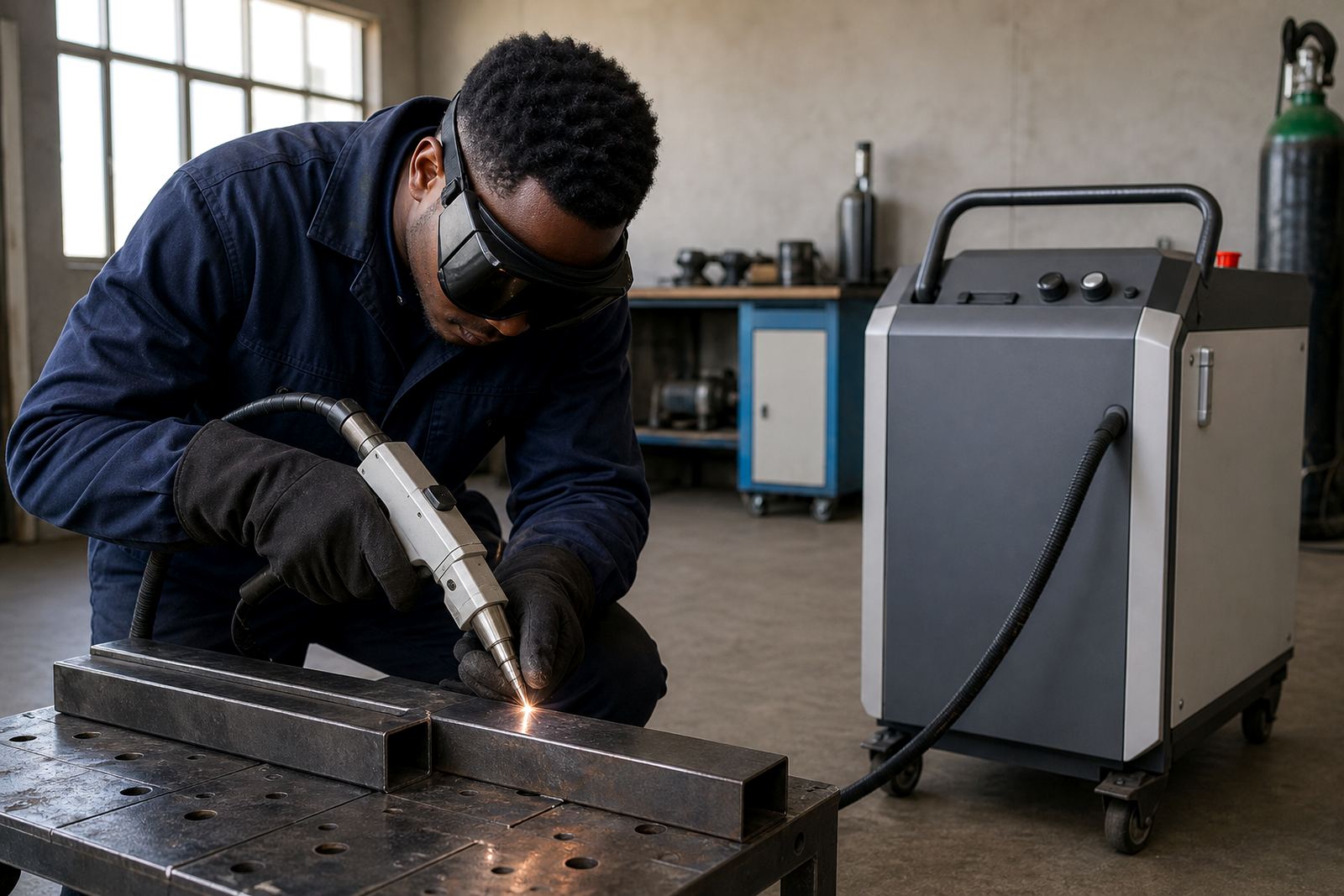
A good starter kit should support safe handheld laser welding without adding confusion. The exact contents can vary, but the core items should help the operator work cleanly, see the joint clearly and keep the workspace tidy.
We can talk you through what is needed for your setup, including consumables planning and simple storage for small parts. If your team works near the coast, extra care is worth it because humidity can affect storage and the condition of accessories over time.
- Handheld laser welding unit and torch assembly
- Protective eyewear matched to the laser class in use
- Fume extraction support for the work area
- Basic cleaning tools and spare consumables
- Storage case or organised carrier for moving between jobs
Safety Checks Before The First Practice Run
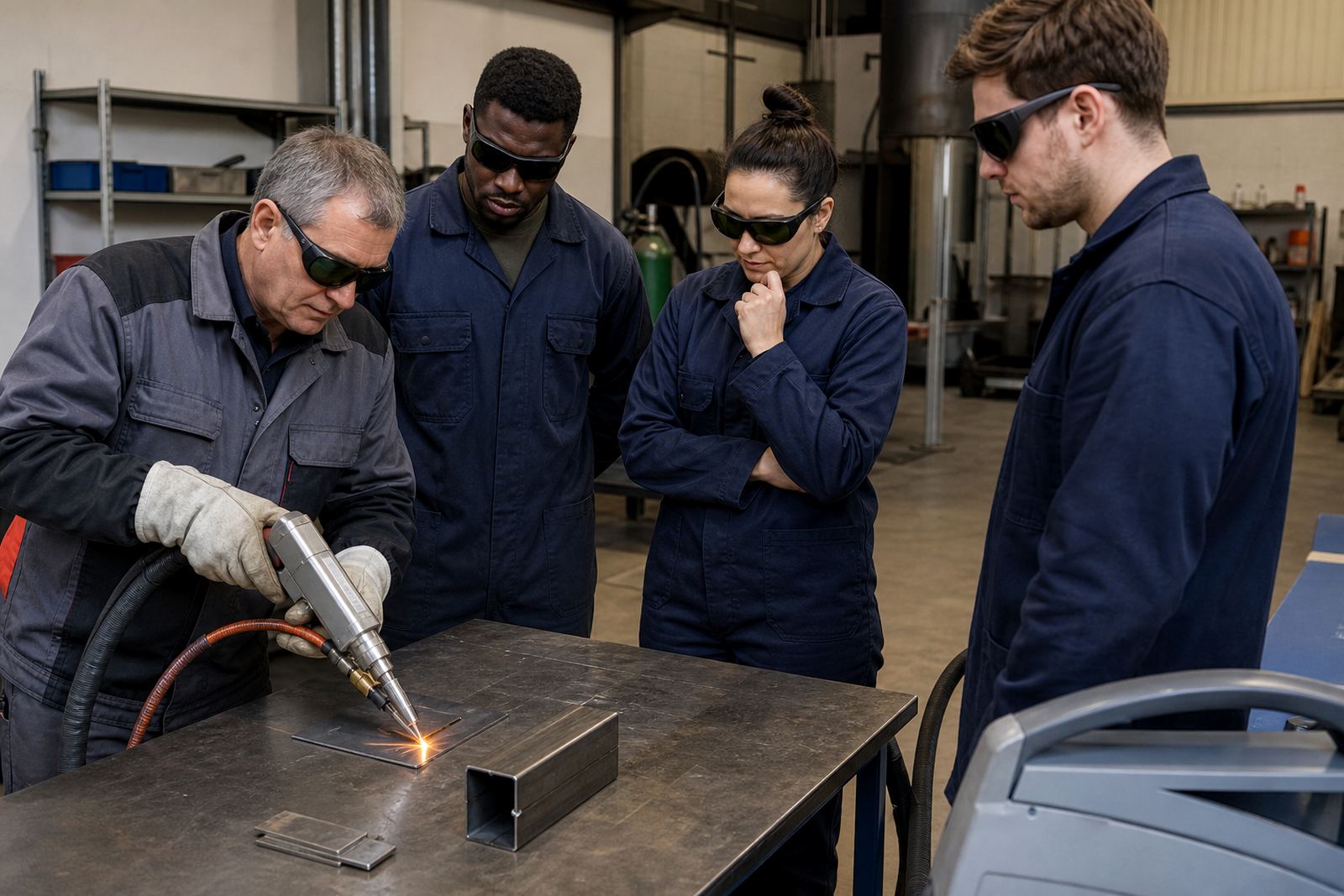
Before any learner starts welding, the kit should be checked for safe operation and the site should be ready. Handheld laser welding still needs proper control of access, clear signs and correct eye protection for everyone in the area.
We recommend a simple safety briefing before first use, especially where supervisors or assistants will be in the room. Make sure the operator understands the laser class, the correct shield setup and where the fume extraction is placed. In busy workshops around Gauteng, this step saves time later because everyone knows what to do and what not to touch.
- Confirm the laser class and required controls
- Wear eye protection suitable for the task
- Set up fume extraction near the weld zone
- Keep reflective items and unnecessary people away from the station
- Check cables, leads and storage before switching on
How We Help You Choose The Right Kit
Our support starts with your actual use case. We ask a few direct questions about the material, the type of work, the number of operators and whether the kit is for learner practice or production support. From there, we can suggest a sensible starting point without overloading the workshop with parts it will never use.
For businesses in Durban, Cape Town and Polokwane, this is also where local site conditions matter. Load-shedding, limited bench space, and heat can affect how a kit is stored and used, so the setup should be practical from day one.
- Site readiness checks before delivery or collection
- Workflow advice for training rooms and small workshops
- Starter kit setup guidance for first-time users
- Practice plans for learners and junior operators
Setting Up A Safe Practice Area
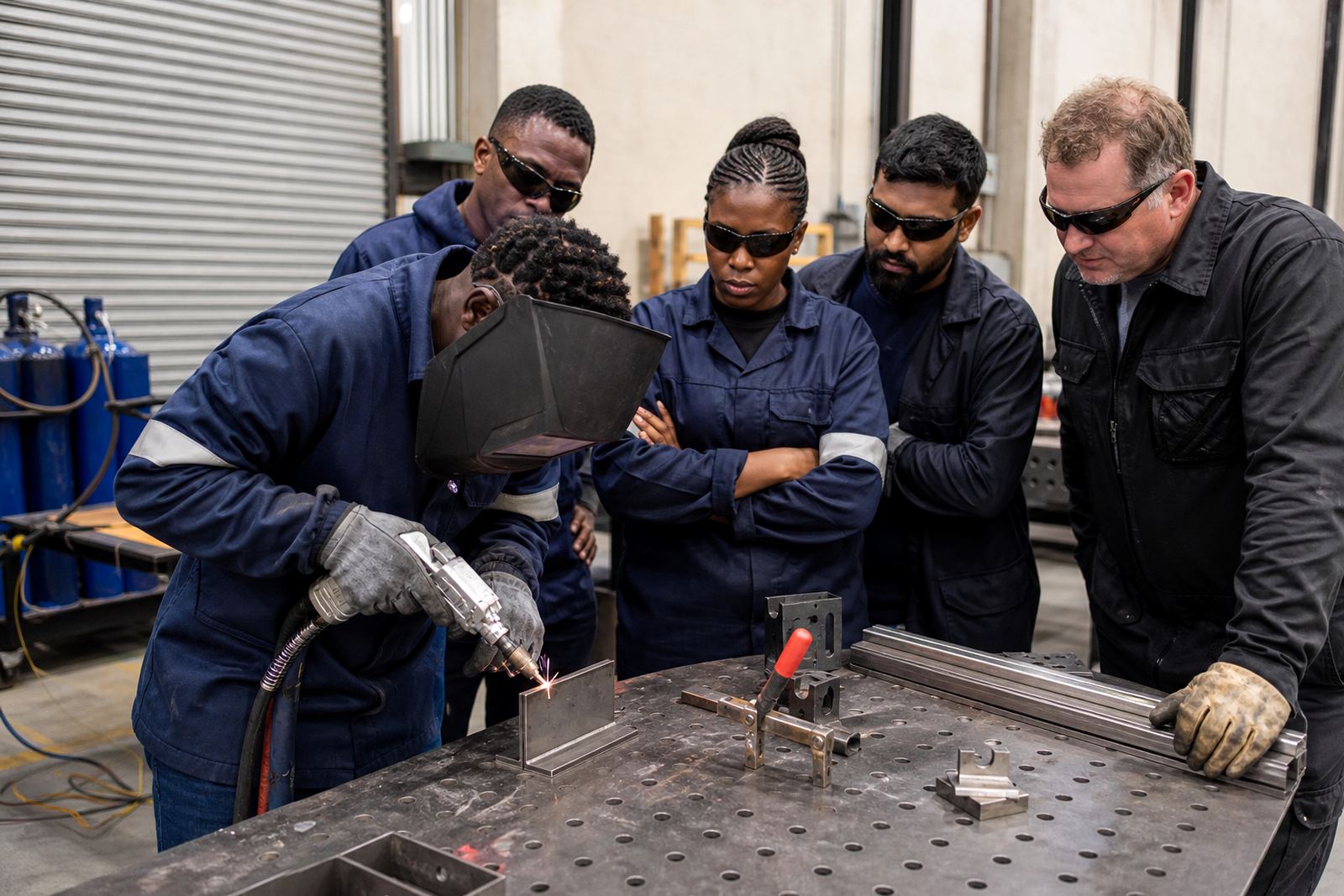
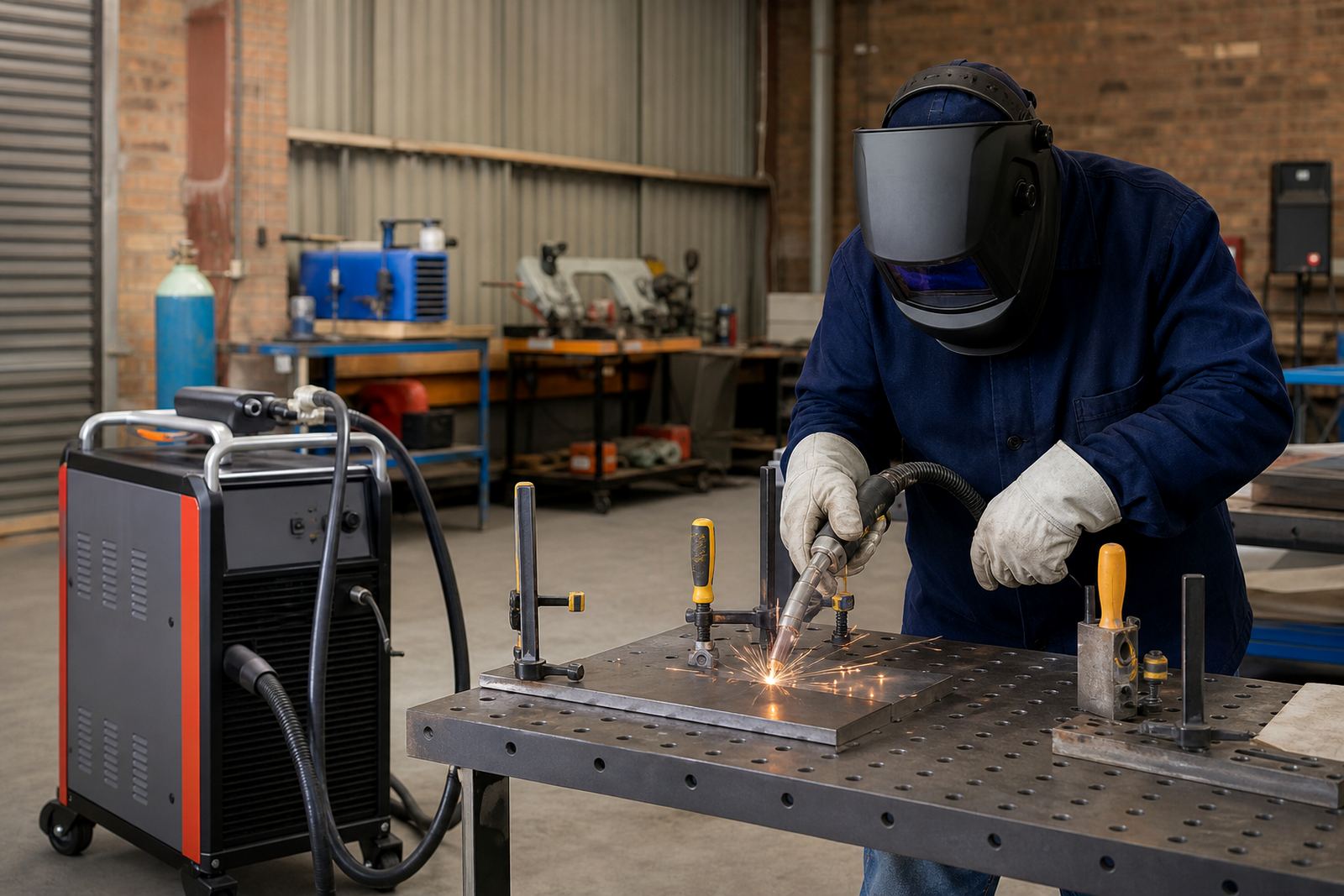
A starter kit works best when the practice area is sorted out properly. The torch and accessories are only one part of the job the work surface, ventilation and housekeeping matter just as much. We help learners and supervisors arrange the station so that practice stays controlled and consistent.
That includes where to place the workpiece, how to keep cables out of the way and how to store consumables during the shift. If several people share the same station, simple labelling and a clear handover routine will make life easier.
For workshops that run training alongside paid work, a small mistake in set-up can lead to lost time and unnecessary wear on the kit. A clear routine avoids that.
Support After Purchase
Once the kit is in place, we can still help with the practical side. Some teams only need a quick refresher, while others need more hands-on support after the first few weeks of use. Our support can include refresher visits, technical help and document packs for supervisors and learners.
We also assist with quality walkthroughs, consumables planning and supervisor coaching so the team knows how to keep work consistent. If your workshop is growing, it helps to review the kit again before adding more operators or taking on thicker materials.
- Refresher visits for staff confidence
- Technical help for setup and day-to-day use
- Training document pack for records and supervision
- Consumables planning to avoid running short mid-project