Start With Laser Class Awareness Before Any Test Run
Before anyone switches on a handheld laser welder, it helps to understand the laser class marked on the equipment and in the supplied instructions. That label tells you how careful the setup needs to be, what kind of eye protection is suitable, and whether access to the work area must be controlled. In practical terms, the higher the risk, the stricter the control around the machine and the operator.
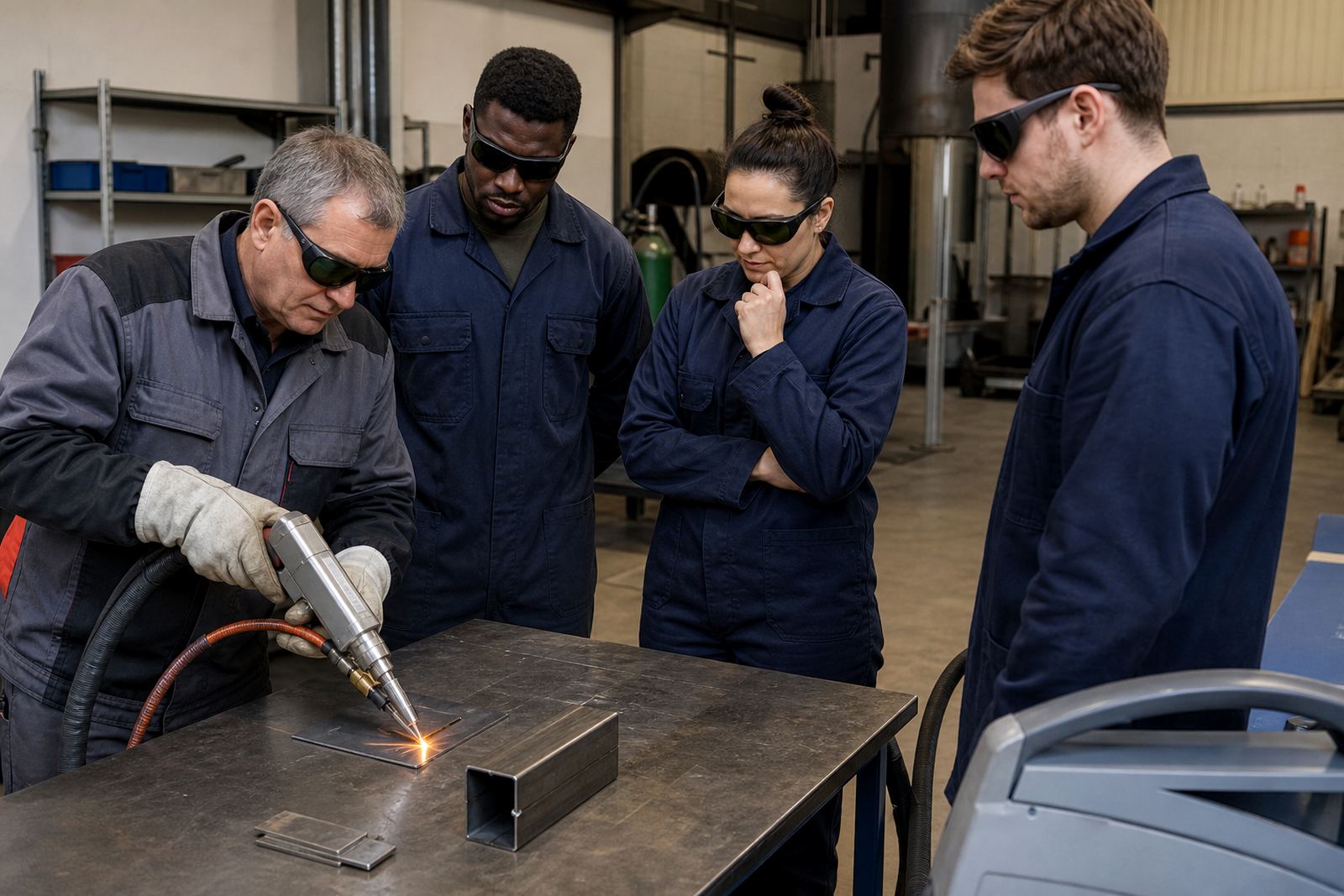
On course days and during workshop support, we explain how to check the equipment label, where the beam path can reach, and why reflective surfaces matter. Stainless steel, polished fixtures, clamp faces and even shiny offcuts can send light back in ways people do not expect. If a workshop has new staff moving in and out, or if the work area changes often, a short safety briefing before each session is worth it.
- Check the laser class and warning labels before use.
- Keep the work zone controlled, with only trained people nearby.
- Avoid reflective surfaces in the beam path where possible.
- Stop and review the setup if the task or material changes.
Eye Protection Matters More Than Guesswork
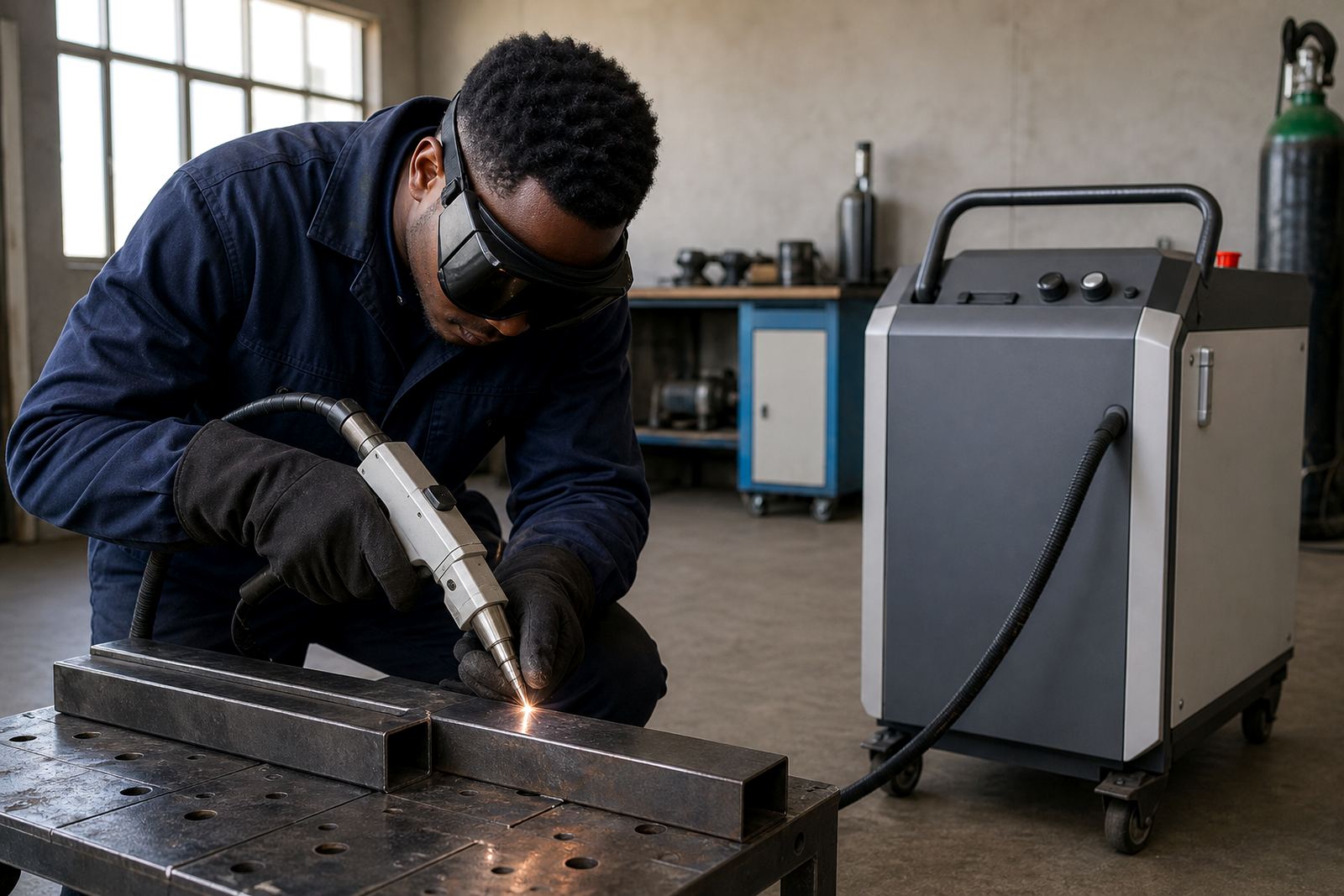
Eye protection for handheld laser welding must match the equipment and the task, not just the operator's preference. Ordinary safety glasses are not enough when laser light can reach the eyes from direct exposure or reflection. We advise learners to use the correct laser-rated eyewear specified for the machine and wavelength, and to keep it on for the full session, not only when welding starts. It sounds basic, but people often remove it for quick checks then forget to put it back on.
Clean lenses, side coverage and a proper fit all matter. If the glasses are scratched, badly tinted or loose, replace them before the next shift. We also show learners how to set up the workstation so the operator is not leaning into the beam path. Good posture, clear visibility and stable hand position reduce mistakes and help the weld stay consistent.
- Use eyewear rated for the specific laser setup.
- Inspect lenses for scratches, clouding or cracks.
- Keep eyewear on during alignment, tacking and welding.
- Store the glasses in a clean case after use.
Fume Extraction Should Be Part of the Setup, Not an Afterthought
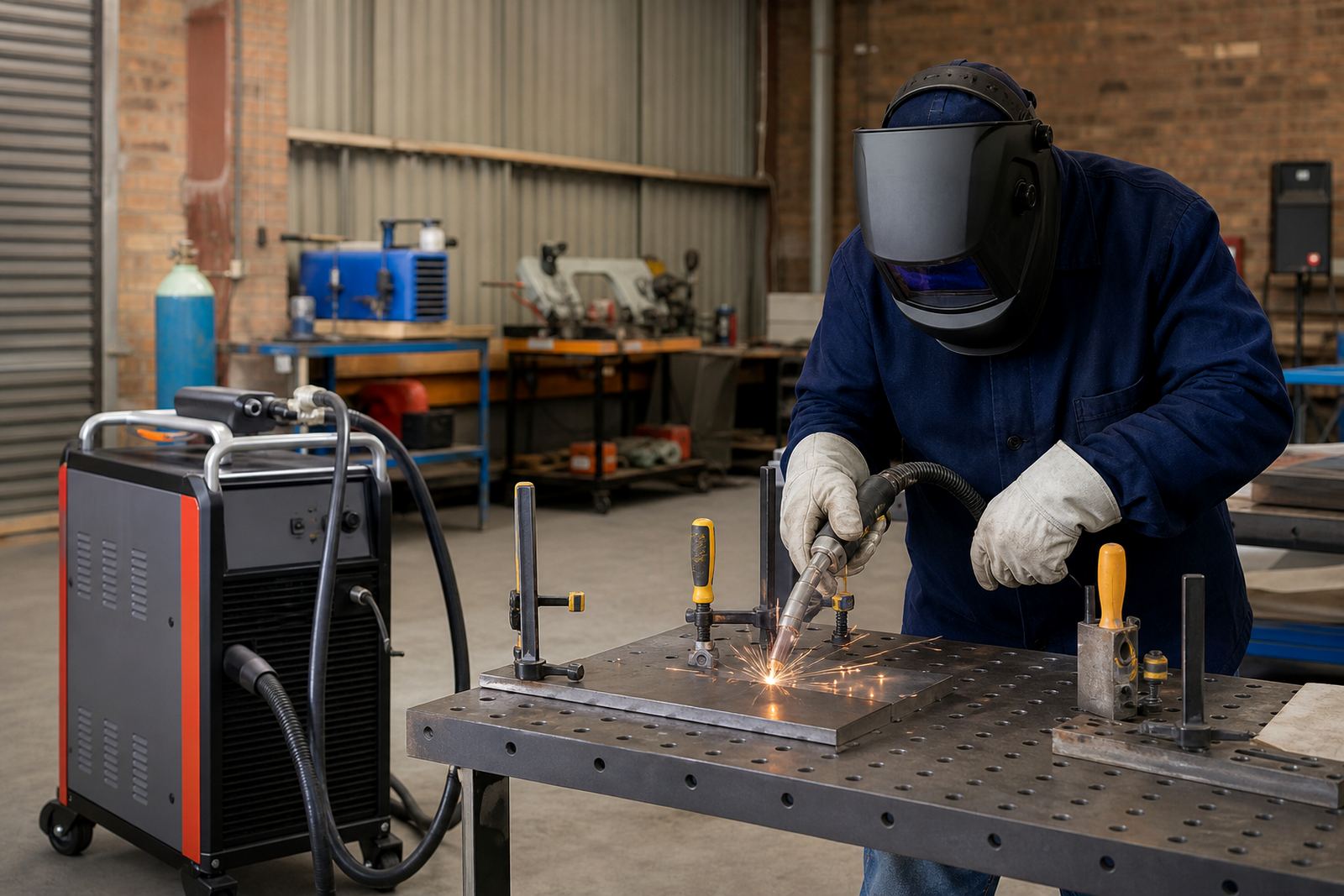
Handheld laser welding can produce fumes from the base metal, coatings, oils and any contamination on the part. That is why extraction should be planned before the first bead is laid. In a small workshop the right solution may be a local extraction arm close to the weld area, while a larger space may need more than one capture point. The aim is simple: draw fumes away from the breathing zone and keep the air clearer for the operator and anyone nearby.
We remind learners that ventilation is not the same as extraction. An open door or a fan across the shop may move air around, but it may also push fumes past the operator's face. If the job involves galvanised material, painted surfaces or unknown residue, pause and check the process first. The safest route is to clean the workpiece, set the extraction as close as possible to the source, and confirm that the airflow is working before production begins.
- Place extraction as close to the weld as practical.
- Do not rely only on a general fan or open doorway.
- Clean oil, paint and heavy contamination from parts first.
- Check filters and airflow before each shift.
What We Cover In A Safety Briefing
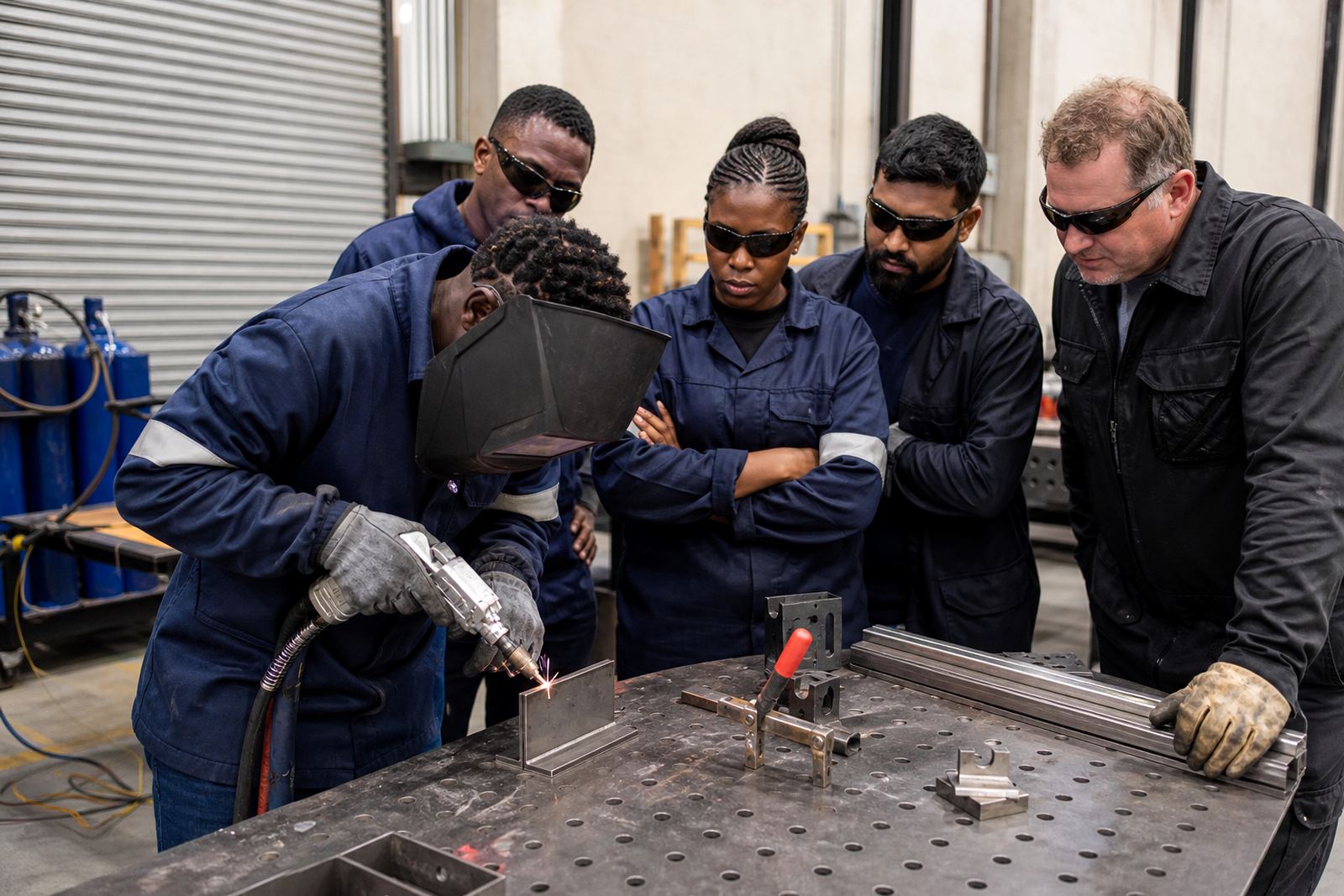
Our safety briefings are built for learners, supervisors and workshop teams that need clear steps without unnecessary jargon. We cover the basics of laser class awareness, correct eye protection, fume extraction, cable handling, safe set-down points and how to keep the work area organised. For businesses with more than one operator, we also discuss shift handover notes, who checks the kit, and how to deal with new staff entering the area.
If the workshop has load-shedding interruptions or shared power points, we can talk through safe shut-down and restart habits as well. It is important that the machine is isolated properly, and that the workspace is checked before welding starts again. A rushed restart is where small errors creep in, especially when people are trying to finish a job before the lights go off again.
- Operator induction for new learners and staff.
- Safety briefing before practical welding begins.
- Workflow advice for busy workshops.
- Supervisor coaching for teams handling daily jobs.
Starter Kits And Safe First Use
Many learners ask whether a starter kit is enough for first use. The answer is yes, if it is set up properly and used with the right controls. A useful starter kit usually includes the essential handheld welding setup, torch parts, basic consumables, cleaning items and practical items for keeping the workspace organised. The exact contents depend on the work you plan to do, so we always advise matching the kit to the material thickness, joint type and workshop output you expect.
Before the first job, we recommend a short setup check: confirm the machine settings, test the extraction, fit the eyewear, inspect the torch and clear the work area of loose offcuts. If the kit will be shared between staff, label the parts and keep a simple sign-out process. That prevents missing items and saves time when the next job comes in.
From our Boksburg base, we support learners and workshops in Johannesburg, Pretoria, Durban, Cape Town, Polokwane and across Gauteng with starter kit setup, practice plans and technical help.
When To Ask For Help From Our Team
If you are unsure about laser class labels, protective gear, extractor placement or whether a job is safe for a new operator, ask before you start. Small checks at the beginning are quicker than stopping mid-job because something was missed. Our team can help with site readiness checks, refresher visits, training document packs and quality walkthroughs so your crew knows what to look for each time.
We also work with workshops that need help after training, especially where there is staff turnover or a new mix of materials coming in. Sometimes the fix is a better workflow, sometimes it is a stronger safety reminder, and sometimes it is simply making sure the extractor is turned on before the first tack. Either way, a clear process helps the team work with more confidence and less waste.