Start With the Work You Actually Do
Before you book training, write down the jobs your workshop handles most often. Thin sheet repairs, brackets, guards, tool work, stainless touch-ups and mild steel parts all need a slightly different approach. Handheld laser welding is useful where neat welds, low distortion and quick setup matter, but it still needs proper control of fit-up, cleaning and heat management.
For owner-run shops in Boksburg, Johannesburg and the East Rand, the first question is not whether a machine is powerful enough. It is whether your team will use it safely and consistently on the parts you already make. A short site readiness check helps with that, especially if your space has mixed power supply, limited extraction or a shared workshop layout.
- List your most common materials and thicknesses
- Note where rework or distortion costs you time
- Check if you have a clean, dry area for laser work
- Confirm who will operate the equipment each day
What a Starter Kit Should Cover
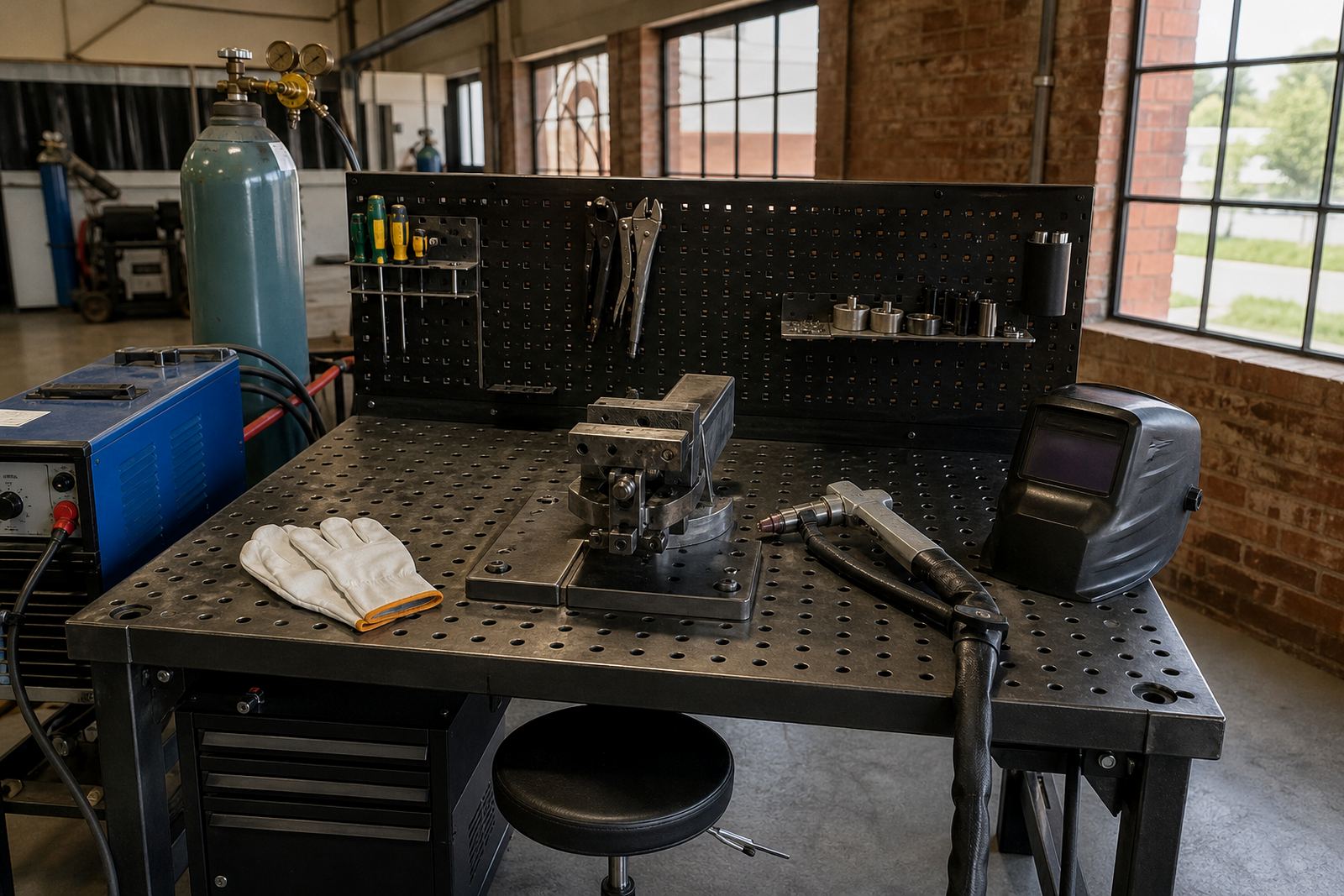
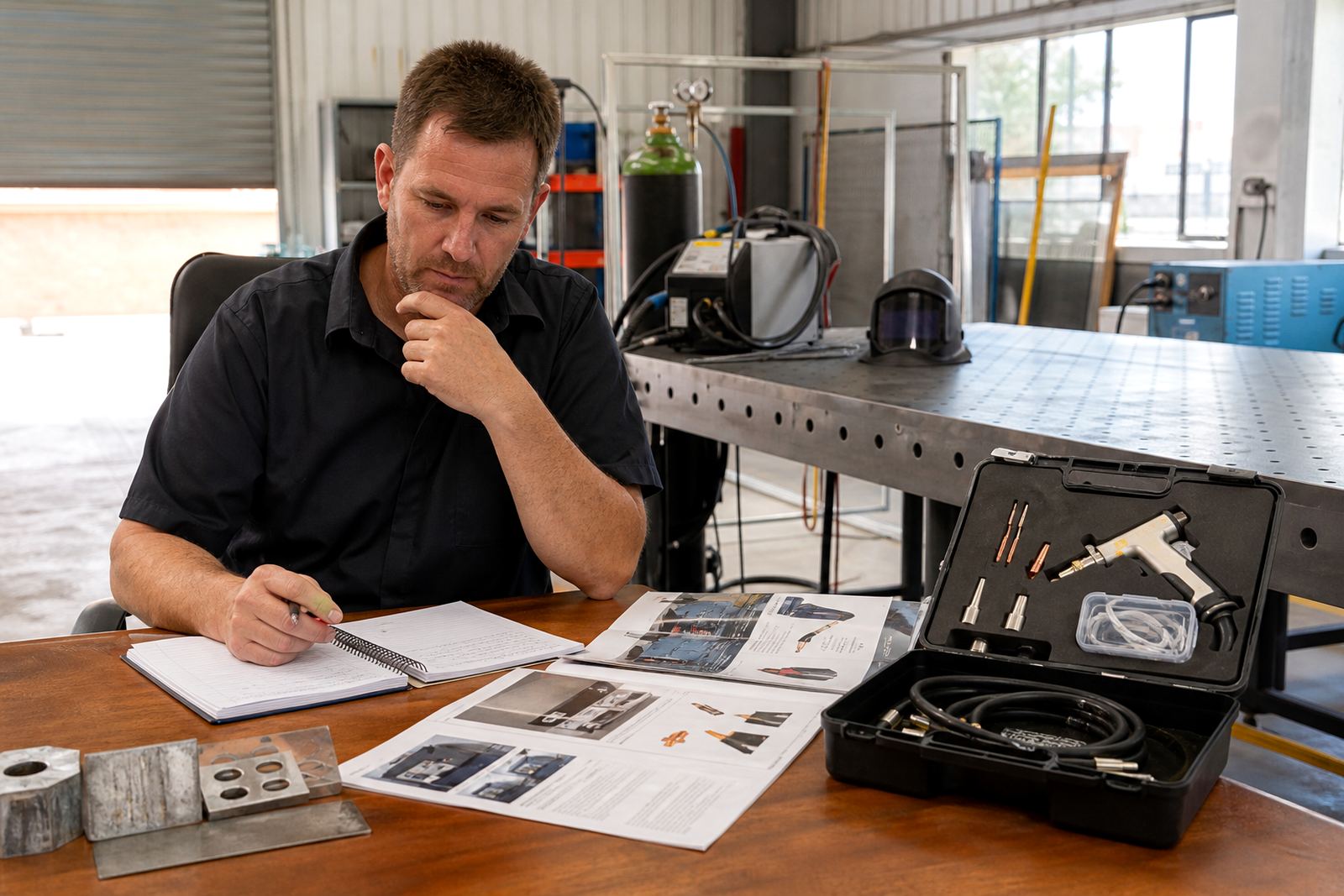
A useful starter kit should support learning, practice and day to day handling of the process. At minimum, look for the tools needed to set up, test, clean and maintain the work area. A proper starter kit setup also needs clear storage so consumables do not get mixed up with ordinary workshop stock. In coastal towns like Durban you also need to keep kit dry to avoid corrosion and moisture damage.
We recommend checking that the kit matches the level of the learner or workshop. A beginner needs simple, clearly labelled items and space for practice. A more experienced operator may need extra nozzles, cleaning tools and consumables planning for regular use.
- Protective gear suited to laser work
- Cleaning and prep tools for metal surfaces
- Basic maintenance and inspection items
- Storage that keeps consumables clean and organised
- Space for test pieces and practice plans
Safety Rules Every Workshop Must Set
Laser welding is not something to treat like ordinary joining work. The operator must understand the laser class, the correct eye protection, the working distance and how to keep other people clear of the area. The beam is not the only risk. Reflections from bright metal surfaces can also cause harm, so screens, rules and supervision matter.
Fume extraction is another basic requirement. Stainless steel, coated materials and dirty metal can give off fumes that should not be breathed in. A good workshop keeps the extraction close to the point of work and checks airflow before every session. If your site has load-shedding interruptions, make sure your shutdown process is written down so the machine, extraction and PPE are handled properly. No guesswork.
- Confirm the laser class and operating limits
- Wear the correct eye protection at all times
- Use fume extraction suited to the material being welded
- Keep bystanders out of the work zone
- Write a simple shutdown and restart procedure
How Training Fits a Small Team
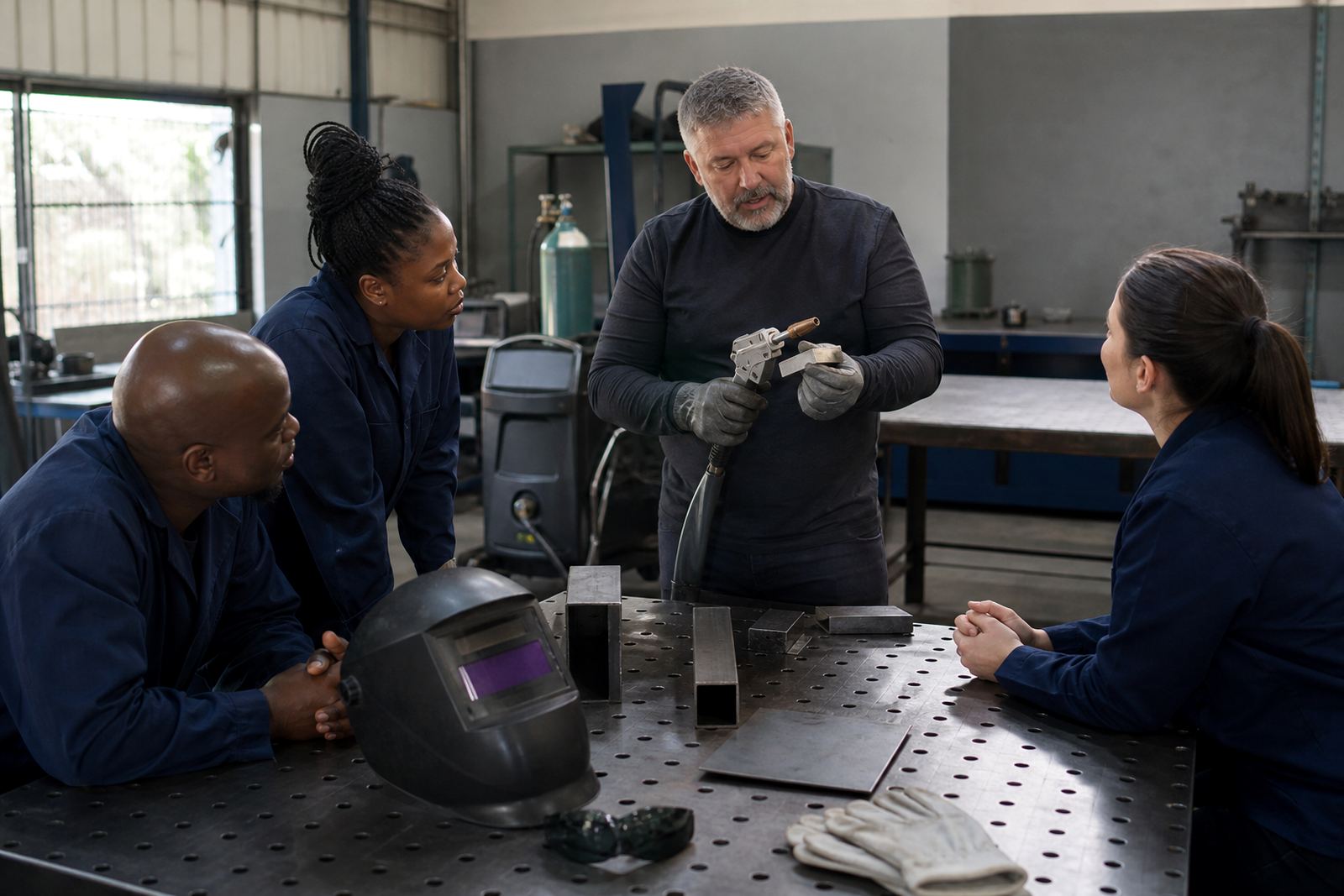
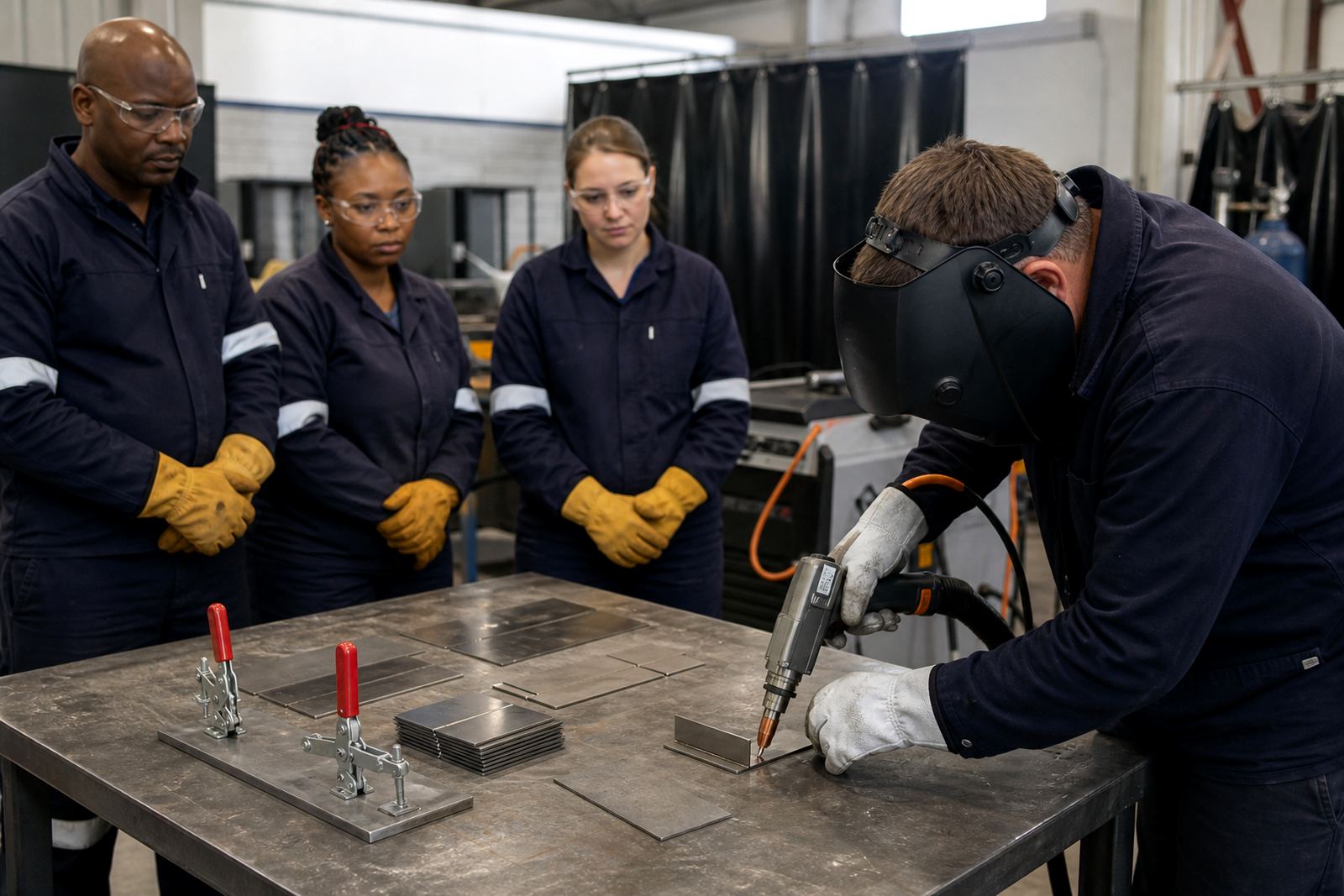
Small workshops often cannot spare staff for long periods, so training should be practical and focused. The best result is when operators learn the process, safety rules and routine checks in the same session. That way they can return to the floor and use the equipment without waiting for constant help. Our courses lead to a certificate of completion from LaserWelder Training only, which is useful for your internal records and staff sign-off.
For owner-managers, supervisor coaching is just as important as operator training. A supervisor should know how to spot poor fit-up, unsafe habits, poor cleaning and incorrect settings before those problems become expensive. A brief refresher visit later can keep standards steady when staff change or order volumes go up.
- Plan who will train first and who will observe
- Set one person to manage sign-off and records
- Use a short practice plan after training
- Book refresher support if the team changes
Keep Workflow Simple After Training
Once the first operator is trained, the next step is to make the process easy to repeat. Put the machine, cleaning tools, PPE and extraction in one fixed area. Mark the steps on a simple workflow sheet so a new worker can follow them without asking ten questions. A neat setup cuts down on waste and saves time when orders come in fast.
Many workshops in Gauteng and the North West lose time because each job is handled differently. Workflow advice helps you standardise the basics: how parts are received, cleaned, clamped, welded and checked. Quality walkthroughs also help with final inspection, so the work leaving the shop is tidy and consistent. It sounds small, but it prevents a lot of call-backs.
- Keep one fixed station for laser work
- Label consumables and inspection tools clearly
- Use the same part prep steps on every job
- Record issues found during the first few weeks
When to Ask for Site Help
If you are opening a new section, adding a machine or training multiple staff, it helps to get site support before the pressure starts. Site readiness checks can confirm whether the power, floor space, ventilation and access are suitable. Operator inductions and safety briefings make sure everyone on site knows the rules, not only the person holding the torch.
Workshops in Johannesburg, Pretoria, Cape Town, Polokwane and Durban all face different practical issues, from humidity to municipal rules and shared premises. We support learners and business owners with training document packs, technical help, refresher visits and consumables planning. That keeps the setup steady after the first class, which is where many small operations struggle most.
- New machine or new work area
- Staff member changing or being promoted
- Quality issues starting to appear
- Extraction, storage or workflow concerns
- Need for an extra refresher visit