Start with the job your team must do
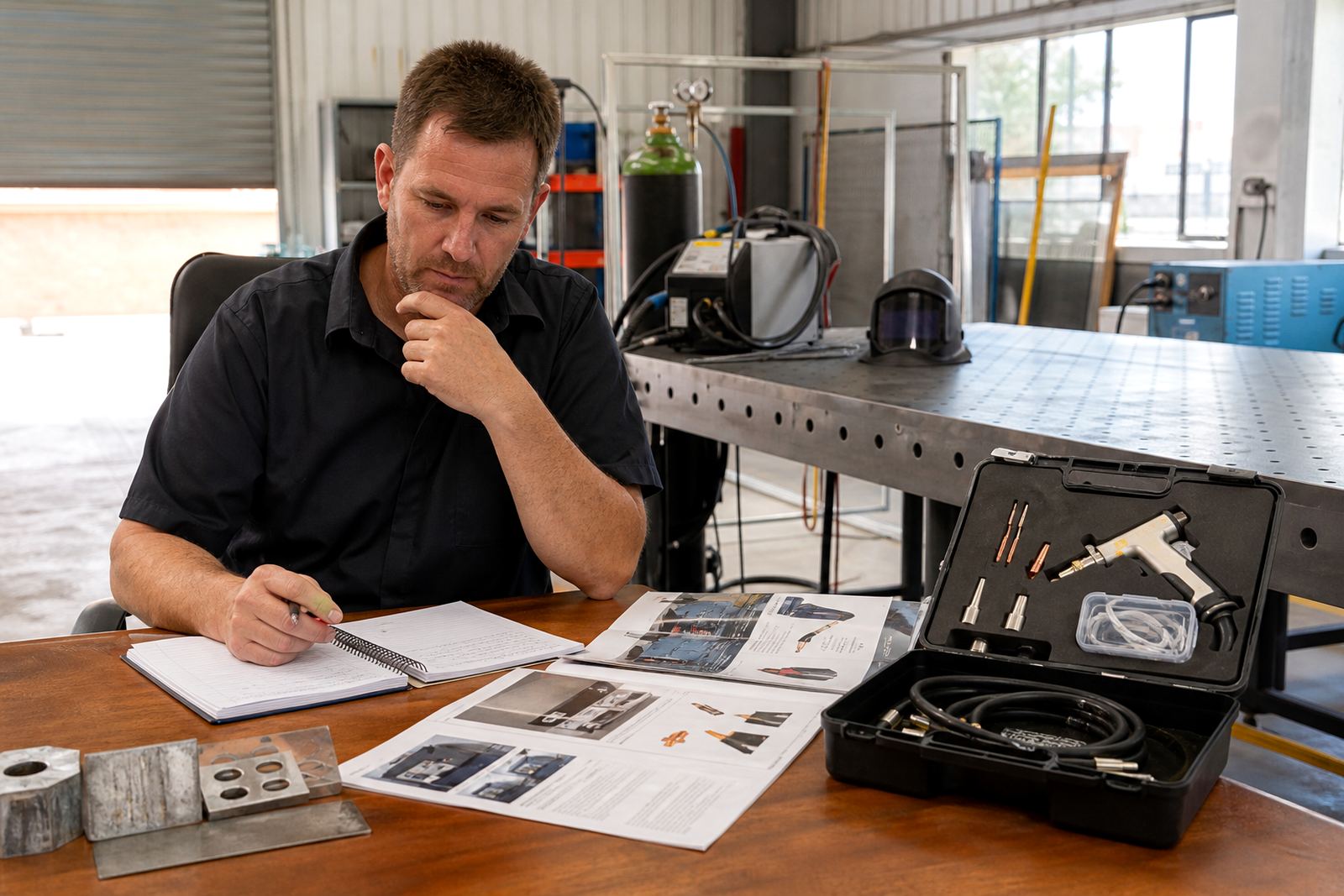
Before booking a session, define what the team needs to weld in daily work. A good group course is not just about learning the machine controls. It should match the thickness of the material, the joint type, the finish standard and the pace your workshop needs to keep.
For many South African workshops, handheld laser welding is used on mild steel, stainless steel and some aluminium work where speed and control matter. The training plan should reflect whether the team is handling repairs, fabrication, light production or maintenance jobs. That keeps the course practical and avoids wasted time on tasks they will never use.
- List the main parts or assemblies your team welds most often.
- Note material types and thickness ranges.
- Set the finish standard required by the workshop or client.
- Decide whether the session is for new operators or for upskilling existing staff.
Check the workshop before the first lesson
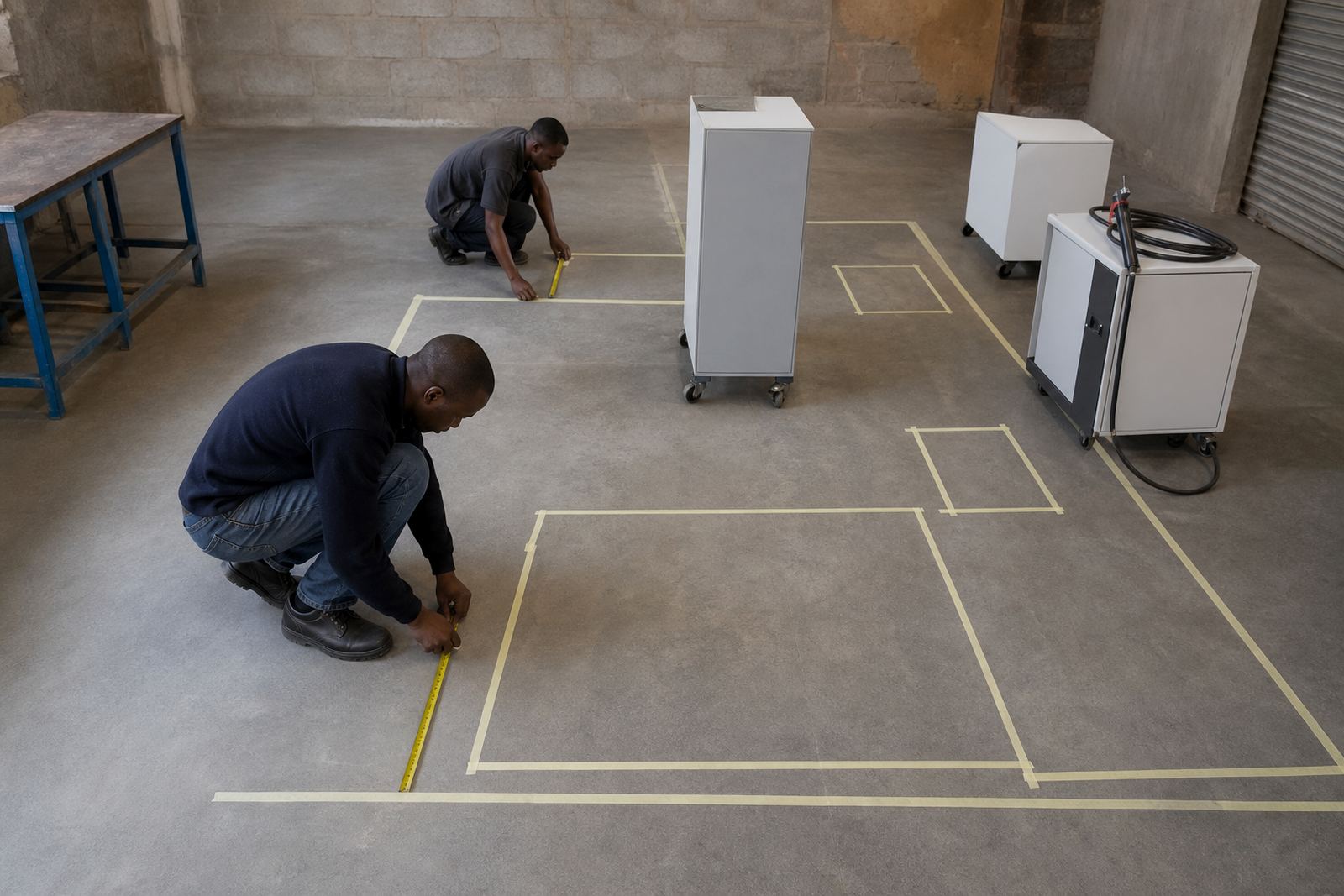
A proper site readiness check helps avoid delays on the day. The training area should be tidy, well lit and clear enough for safe movement around the workbench and machine. If the workshop runs load-shedding schedules, plan for power backup or confirm what can be done during an outage. That part gets missed more often than it should.
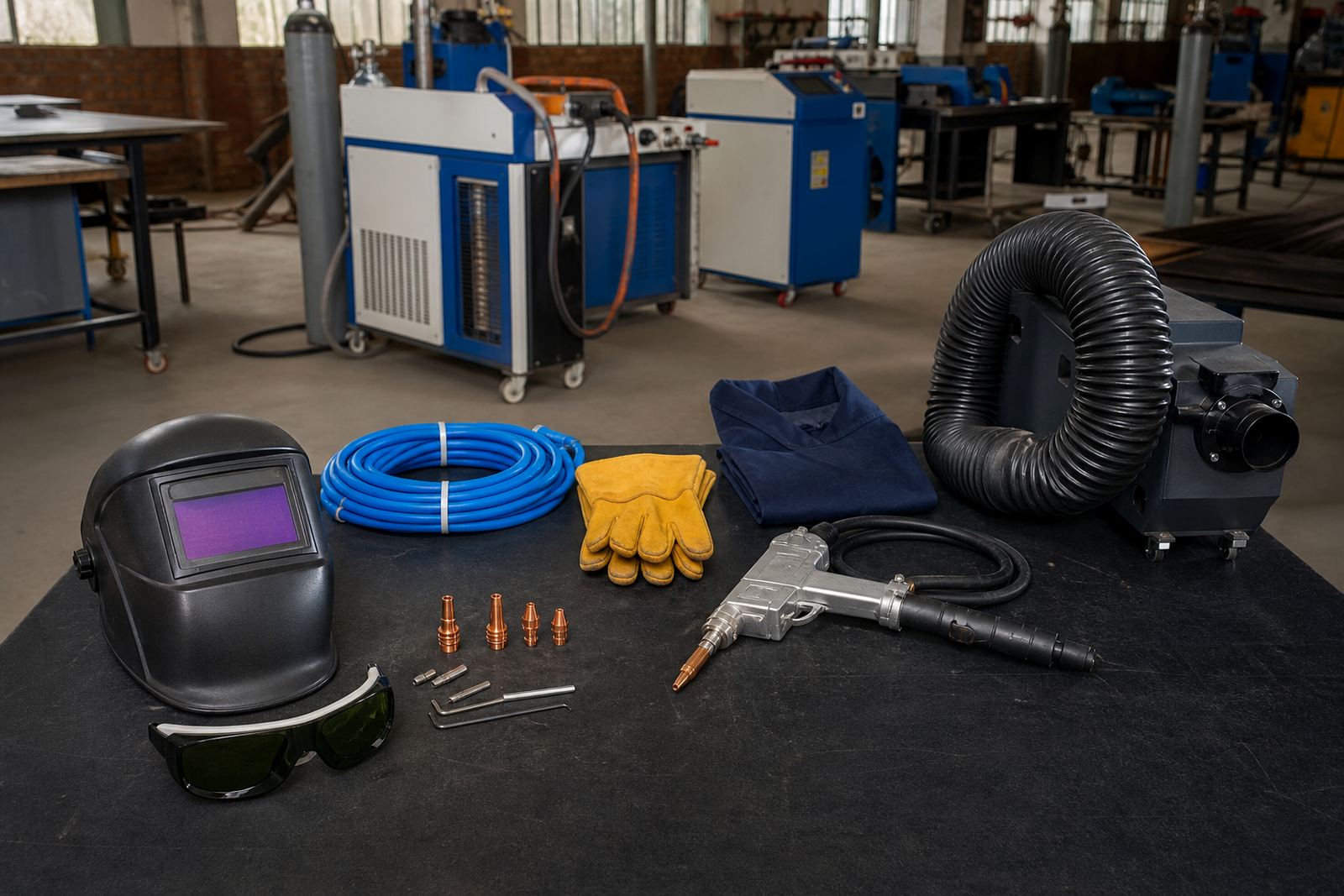
Ventilation matters too. Laser welding produces fumes that should be extracted at source and cleared from the breathing zone. Eye protection must match the laser class and the work area controls. If the workshop is near the coast, moisture in the air can affect storage and consumables, so keep the kit dry and closed up when not in use.
- Check power supply, plugs and cable routes.
- Set up fume extraction close to the weld area.
- Prepare safe storage for wire, lenses and nozzles.
- Confirm PPE for every learner before the session starts.
Choose the right group size and skill mix
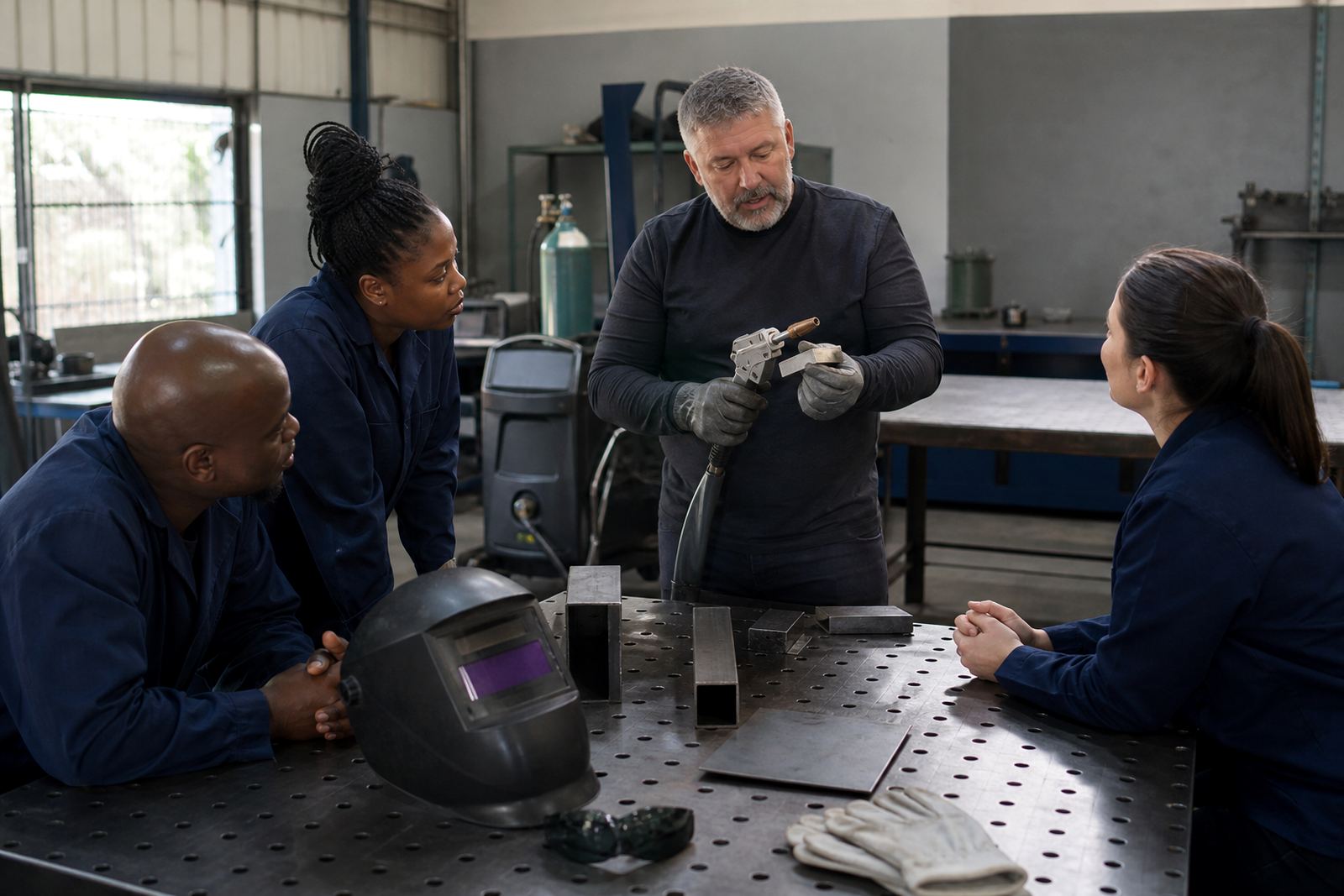
Group training works best when the learners have similar starting points. A mixed room can still work, but the instructor needs to balance hands-on time carefully. Beginners usually need more time on torch handling, joint positioning and travel speed. More experienced workers may need help with settings, repeatability and defect spotting.
For supervisors, it is useful to include a short coaching block so they can support the team after training. That helps with daily checks, quality control and keeping the process consistent across shifts. In larger teams, it can help to split the room into smaller rotation groups so nobody is standing around too long.
- Keep beginner and refresher learners in separate groups where possible.
- Limit the number of people sharing one machine at once.
- Assign one supervisor or lead hand to attend the session.
- Rotate learners between demonstration, practice and review.
Use a training plan that includes practice and review
A useful session follows a clear sequence. Start with a safety briefing, then move into machine setup, sample welds and guided practice. Once the team has some repeatable results, review the welds together and discuss what changed between one pass and the next. This is where most of the learning sticks.
LaserWelder Training supports group sessions with a practical training document pack, workflow advice and practice plans that can be used after the class. A good plan also includes time for questions, because workshop teams often need to know how to handle specific joint gaps, thin edges or awkward positions. Keep the pace steady and dont rush the hands-on time.
- Safety briefing and operator induction.
- Equipment walk-through and setup.
- Demonstration welds on sample pieces.
- Guided practice under instructor supervision.
- Quality walkthrough and corrective feedback.
- Issue a certificate of completion for attendees who complete the session.
Make safety part of the work, not an extra step
Safety is not a side topic in laser welding. It is part of the process from the first minute. Every group should understand the laser class in use, the required eye protection and the controls around access to the welding area. If visitors or other staff walk through the shop often, set clear boundaries and signage before training begins.
Fume extraction should be switched on before welding starts and kept close to the source. Learners should also know how to handle hot material, where to place offcuts and what to do if the work area becomes cluttered. A tidy bench lowers risk and makes the weld easier to see. That sounds simple, but it saves time as well.
- Confirm laser class and suitable eyewear.
- Use local extraction for fumes and fine particles.
- Keep flammables away from the welding zone.
- Give every learner a clear stop point if something feels unsafe.
After training, keep the gains in the workshop
The value of group training shows up after the instructor leaves. Give the team a short refresher plan, a named contact for technical help and a simple method for recording issues. If the workshop bought a starter kit, make sure the team knows what each item is for, how to store it and when consumables need replacing.
Refresher visits, supervisor coaching and quality walkthroughs help turn one session into a working process. For workshops in Boksburg, Johannesburg, Pretoria, Durban, Cape Town and Polokwane, this is often the difference between a good first week and a process that keeps performing months later. Keep notes on settings, common faults and any parts that need a change in workflow.
- Assign one person to keep the training notes.
- Track wear on lenses, nozzles and protective items.
- Set a date for the next refresher visit or follow-up check.
- Review whether the current setup still suits the jobs on the floor.