Start With the Job You Want the Kit To Do
Before you look at extras, be clear about the kind of work you want to practise. A beginner kit for handheld laser welding should suit thin sheet metal, small repair work, tack welding, and controlled practice on mild steel or stainless steel. It should not be loaded with parts you will not use in a training bay or small workshop.
For learners in Boksburg, Johannesburg or Pretoria, the first question is usually whether the kit supports safe indoor training with proper ventilation and steady power supply. If you are working where load-shedding is part of the day, check how the unit handles your power source and whether the workflow can stop and start without causing confusion. Keep the setup practical, not fancy.
- Choose a kit for training and light workshop use
- Check that the torch or handpiece feels comfortable to hold
- Make sure the learning material matches your metal thickness
- Ask whether the kit suits your power and space limits
Check the Laser Class and Safety Controls First
Laser welding equipment must be treated with care from day one. A beginner kit should come with clear laser class information, visible warning labels and proper controls for the training area. If a supplier cannot explain the laser class, stop there and ask again. New learners need plain guidance, not guesswork.
Eye protection is not optional. Use suitable laser-rated eye protection for the wavelength and work setting, and make sure everyone nearby understands why it matters. The kit should also be used with fume extraction, especially when welding coated material, stainless steel or anything that gives off smoke. In a small workshop, the smell may seem light at first but it still needs proper extraction and fresh air flow.
- Confirm the laser class and warning labels
- Wear correct laser-rated eye protection
- Use fume extraction every time you weld
- Keep bystanders outside the work zone
Look for a Starter Kit That Covers the Basics Well
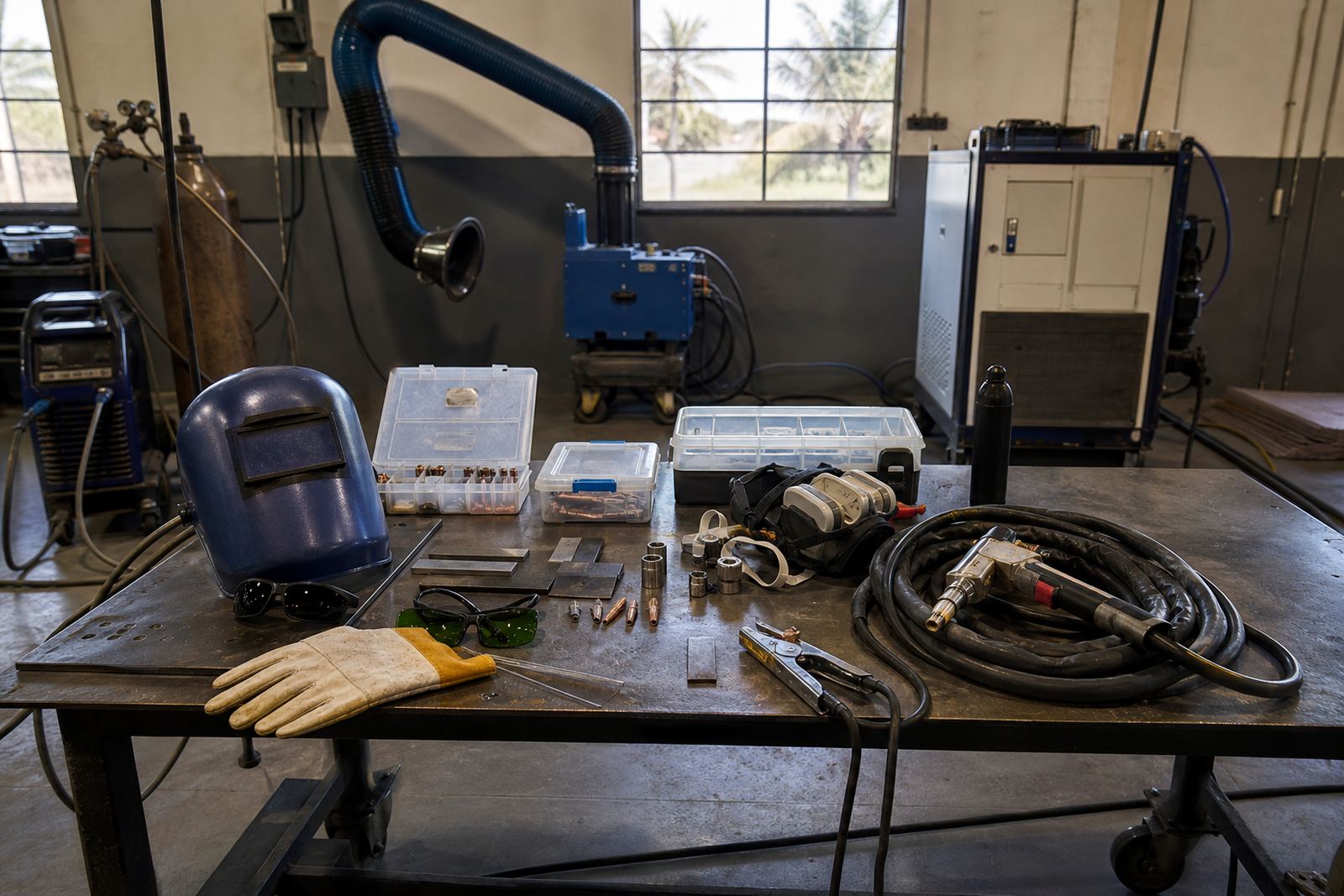
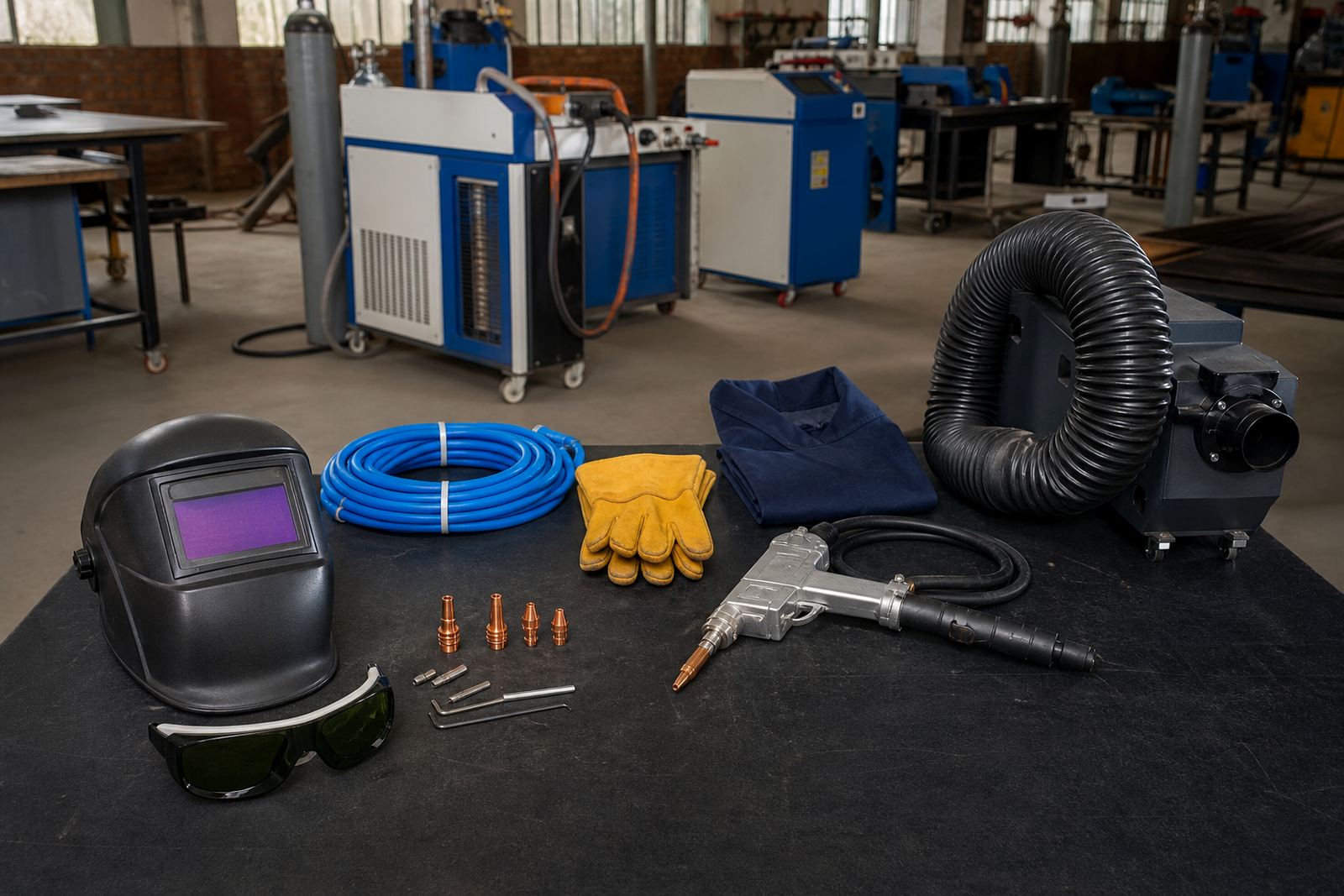
A proper beginner kit does not need everything, but it should include the essentials needed to practise safely and repeat the same setup each time. Look for a handpiece, basic supply items, protective accessories, simple setup tools and enough consumables to get through the first training sessions. If a kit is missing the small items, learners often end up stopping mid-session to search for extras.
In Durban and Cape Town, coastal humidity can affect how you store parts, wire and consumables, so the kit should be easy to keep dry and organised. A hard case, labelled compartments and sealed storage for sensitive items are useful. For Polokwane and inland workshops, dust control matters too. The kit should be easy to wipe down and pack away after use.
- Handpiece and basic operating accessories
- Protective eyewear and safety labels
- Consumables for practice and setup
- Storage case or organiser for clean handling
- Simple care items for cleaning and packing
Choose Tools That Help You Learn the Right Way
A beginner should be able to set up, weld, inspect and pack away without confusion. That means the kit should support learning one step at a time. Look for parts that are clearly marked and easy to connect. If a kit needs a long explanation before first use, it may be more suitable for an experienced operator than a learner.
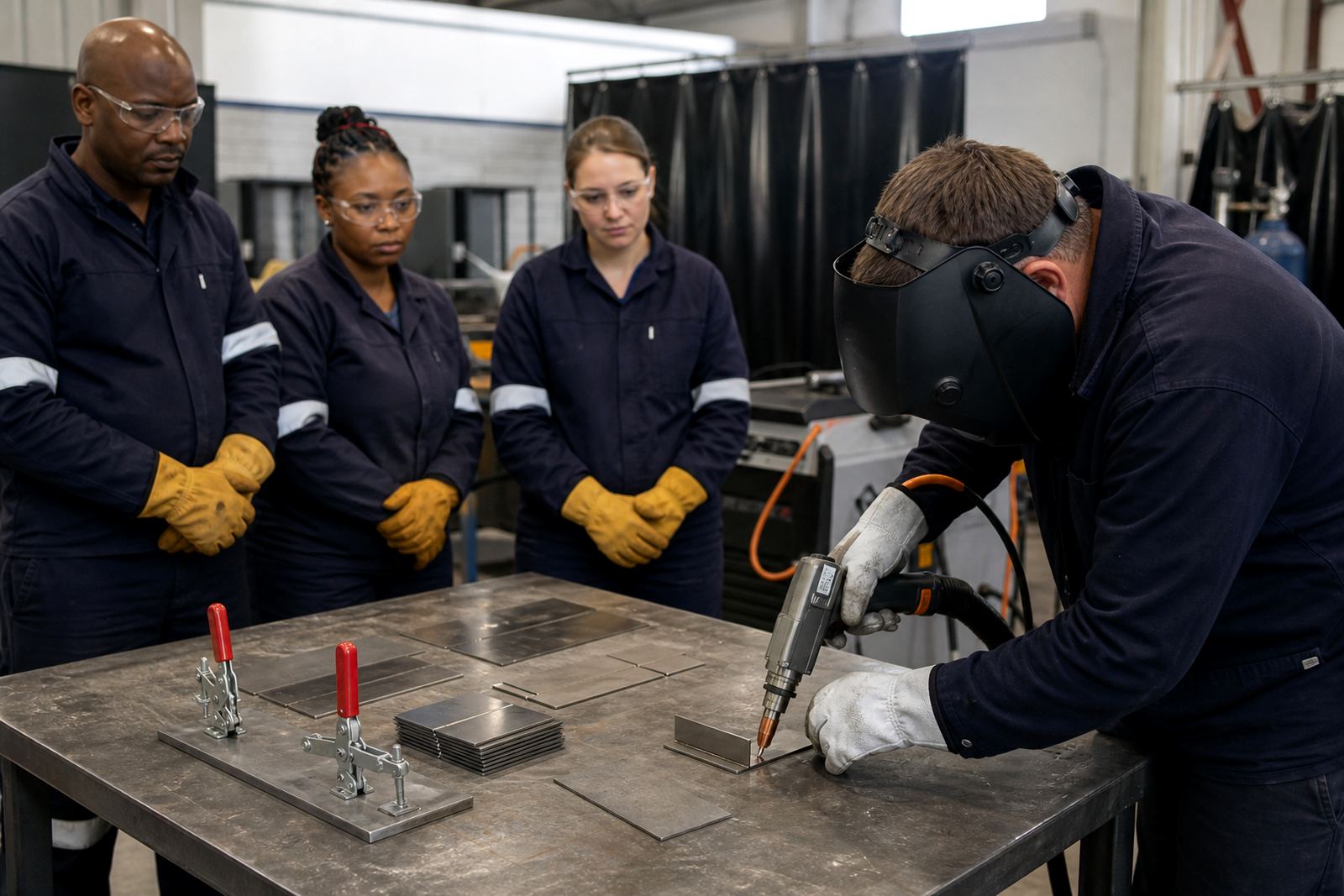
Good training comes from repeatable practice. Ask whether the kit supports straight-line practice, tack placement, bead control and simple inspection of the finished work. You want to be able to see what changed when you adjust speed, angle or focus. A useful kit makes those lessons visible.
It also helps if the starter kit is matched to the workshop layout. In a shared space, cable lengths, table height and extraction placement all matter. Small details save time and reduce mistakes, especially when more than one person is training at the same bench. It saves a lot of fuss later on.
Use a Step-by-Step Setup Checklist Before the First Weld
Before starting, complete the same checklist every time. This builds good habits and helps supervisors spot problems early. A beginner should not skip setup just because the work looks simple. Safety, alignment and clean surfaces matter on the first day and the fiftieth.
- Check the work area is clear and dry
- Confirm extraction is running
- Put on the correct eye protection
- Inspect cables, handpiece and connectors
- Prepare clean test material
- Confirm the laser settings for the task
- Keep fire control items close at hand
If you are training a small team, add a quick supervisor check before the first practice run. That is especially useful for workshops in Gauteng where operators may move between different jobs through the day. A short pause at the start prevents wasted material later.
Ask for Setup Help, Practice Plans and Document Pack Support
Many learners buy a kit and then realise they still need help with the first few sessions. That is normal. A good supplier should be able to assist with starter kit setup, workflow advice, practice plans and refresher visits where needed. For businesses, the training should fit the way your team actually works, not a perfect classroom version that never matches the floor.
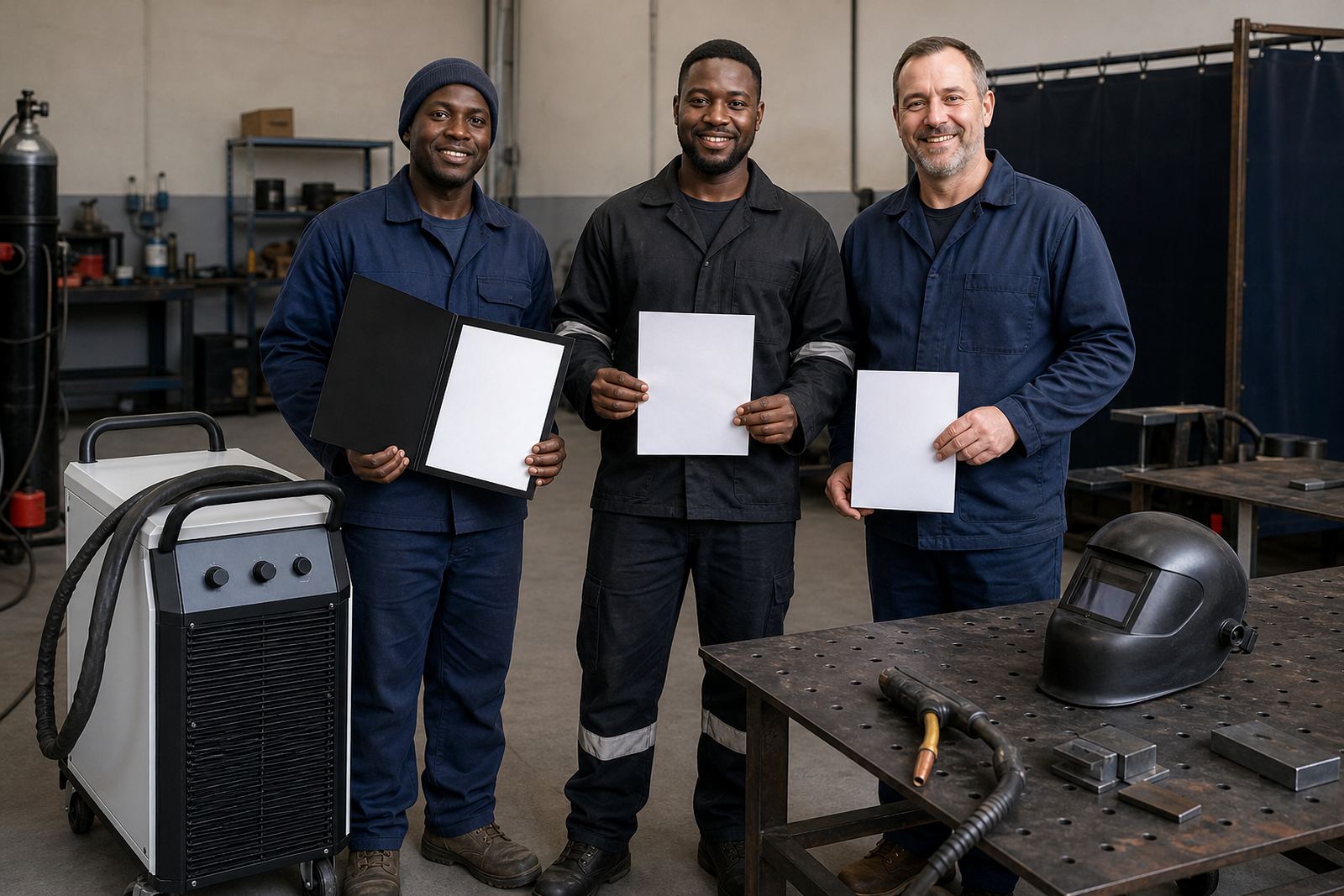
LaserWelder Training, based in Boksburg, Gauteng, supports learners and workshops across South Africa with hands-on courses, operator inductions, safety briefings and technical help. The training ends with a certificate of completion from LaserWelder Training only. If you need support after the first kit is in use, use the enquiry form on our contact page and ask for the option that suits your site or workshop. The right advice early on can save material, time and a fair bit of frustration.
When you are comparing starter kits, think about the support behind the box as much as the items inside it.