Start With What You Already Know
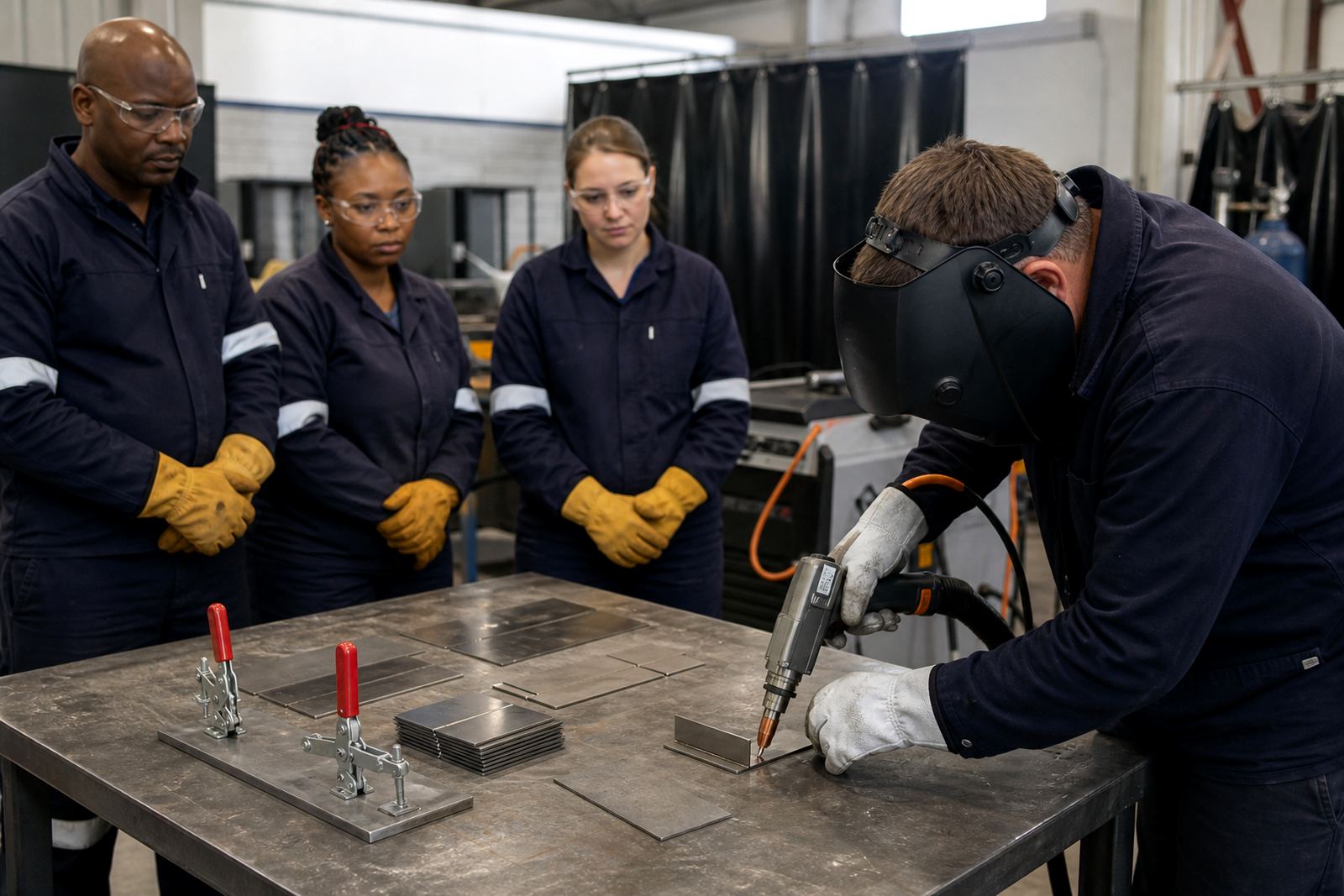
Begin by matching the course to your current welding or metalwork experience. Someone with no workshop background needs more time on machine handling, joint setup, and basic safety. A fitter, fabricator, or repair technician may be ready for faster-paced practical work with less theory and more repetition. If you are already handling thin sheet, brackets, repairs, or small fabrication jobs, you can usually move into hands-on laser welding sooner than you think.
At our Boksburg base we see learners arrive with very different needs. Some want a clean starting point for home or workshop use. Others need training for a team that works under pressure, with limited downtime and strict quality checks. The right course should meet you where you are, not where someone assumes you should be.
Check the Work You Want to Do First
Before you book, write down the type of work you expect to do after training. Handheld laser welding is often used for thin stainless steel, mild steel, aluminium and small repair jobs where speed and heat control matter. It can suit workshop jobs, maintenance, fabrication, light production and quick turnaround repairs.
- Ask whether your main work is repair, production, or general workshop use.
- Note the material thickness you work with most often.
- List the finish standard you need, such as neat cosmetic seams or stronger structural joins.
- Consider whether you need training for one operator or a small team.
If your work changes often, choose a course that covers setup, parameter awareness and practical adjustment rather than only one narrow task. That gives you more room to work safely and avoid rework.
Understand the Safety Basics Before You Touch the Torch
Laser welding is not something to approach casually. A proper starting course should cover the laser class used on the equipment, the correct eye protection for the wavelength in use, and safe working distance around the welding area. You should also learn how to control reflections, why reflective surfaces need extra care, and when screens or barriers are required.
Fume extraction is just as important. Even a tidy looking weld can produce fumes that should not be breathed in, especially in closed workshops or places with poor airflow. In coastal areas like Durban humidity can also affect storage and workshop conditions, while in Gauteng many teams need to plan around load-shedding and generator use. Good training should show you how to keep the area orderly, reduce hazards and check that your setup is ready before any welding starts.
- Confirm the laser class and the controls used for that machine.
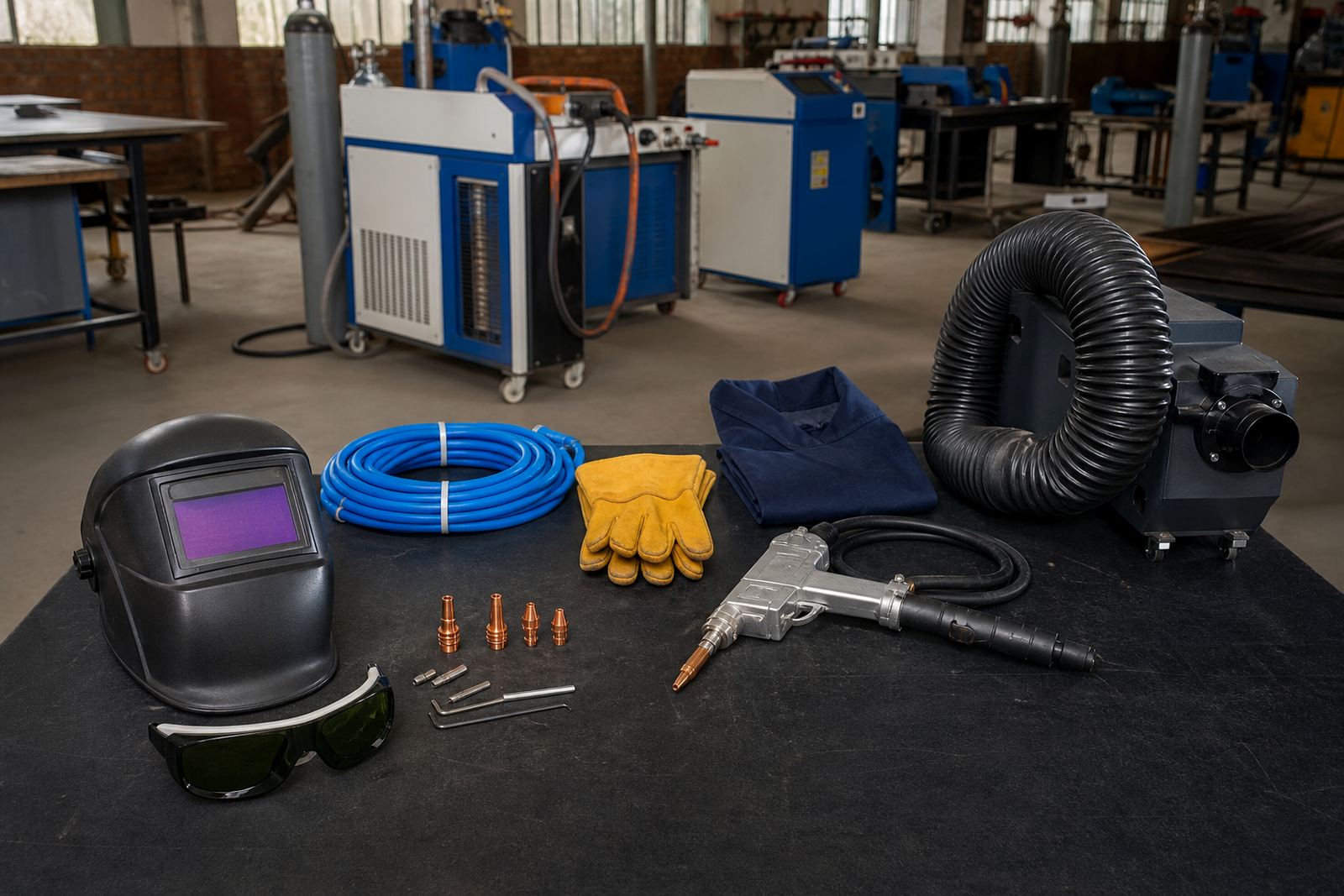
- Use the right eye protection for the work being done.
- Check extraction and ventilation before every session.
- Keep reflective items, loose tools and bystanders away from the work zone.
Choose Between Learner Training and Team Training
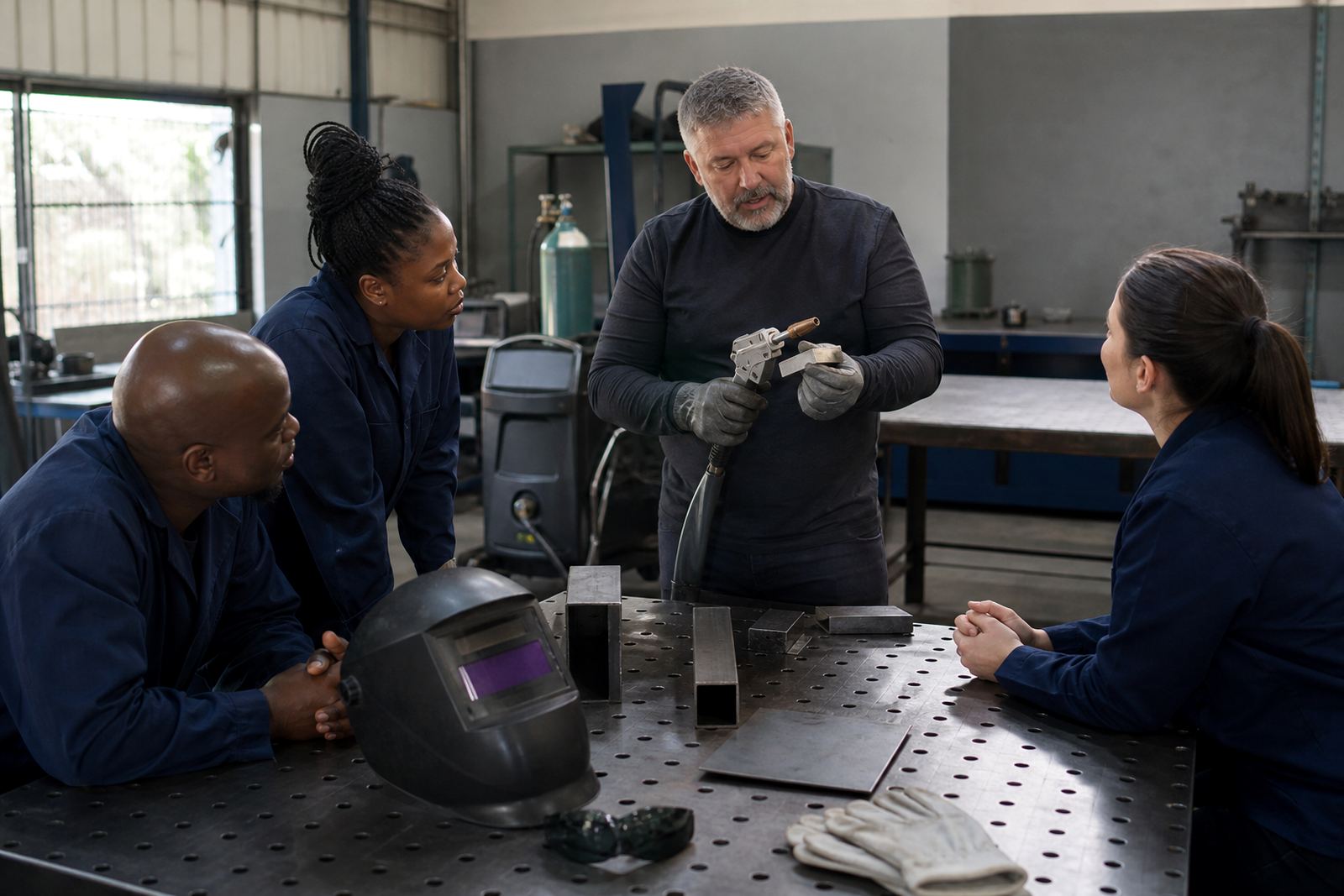
If you are learning alone, a beginner course with guided practice and clear repetition is usually the best place to start. If you are training staff, look for a course that can include operator inductions, supervisor coaching and workflow advice so the whole team works from the same method.
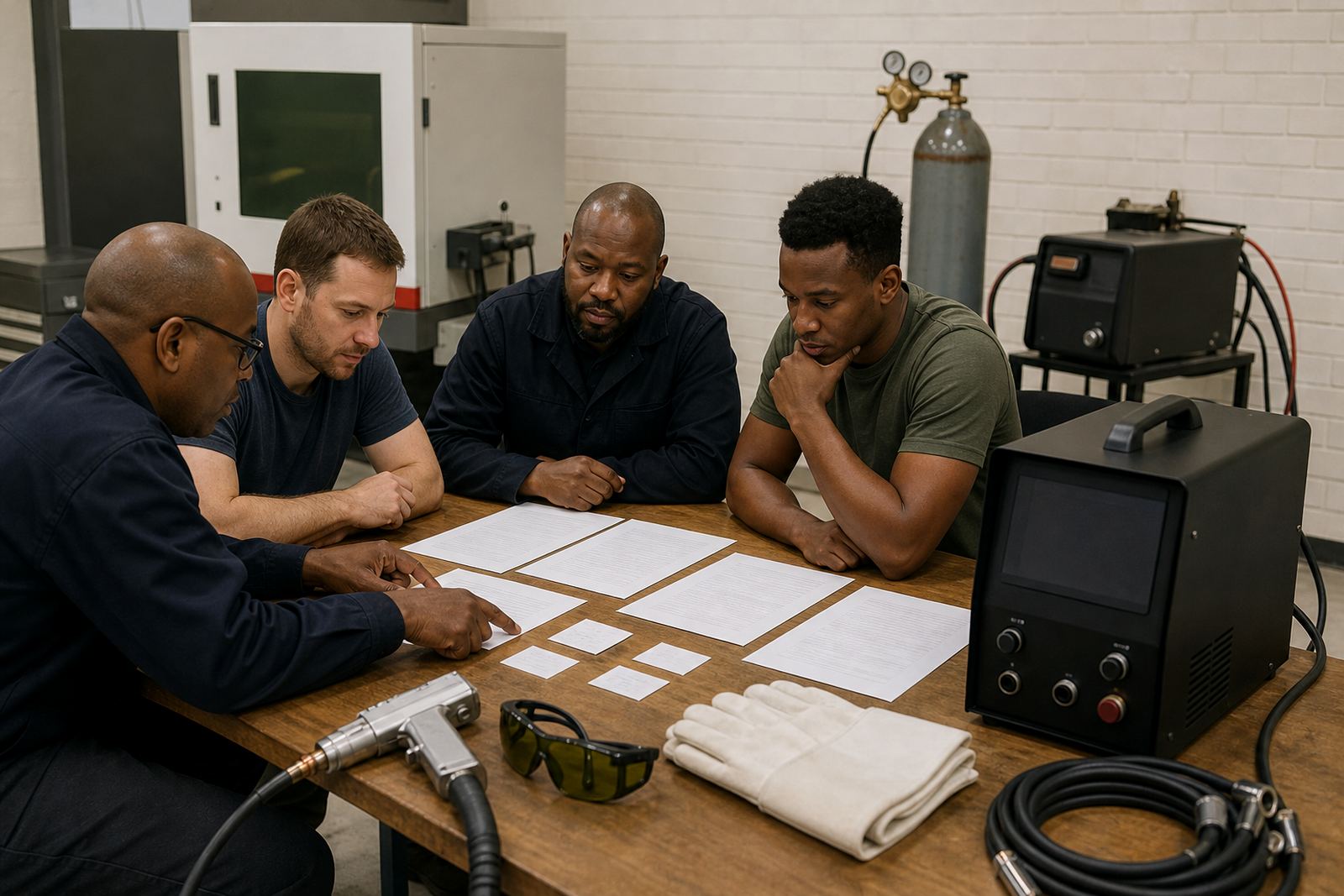
For businesses in Johannesburg, Pretoria, Durban, Cape Town, Polokwane and the East Rand, the first course should fit the pace of the workshop. A small repair shop may need short practical sessions and a simple training document pack. A busier site may need a more detailed programme with site readiness checks, safety briefings and refresher visits later on. The aim is to avoid guesswork and get everyone using the same safe process from day one.
Use a Simple Checklist Before You Book
A good first course should leave you clearer, safer and more useful at the bench. Before you send an enquiry through the contact form, use this checklist to compare your options.
- Does the course include real hands-on welding time?
- Will you learn setup, safety, and basic fault checks?
- Is there guidance on starter kit setup and consumables planning?
- Does the provider offer practice plans after the course?
- Will you receive a certificate of completion from LaserWelder Training?
- Can the course be matched to your workshop size and daily workload?
If the answer is yes to most of these, you are likely looking at the right starting point. If not, keep asking questions until the course fits the work you actually do.
When a Starter Kit Makes Sense
Some learners are ready to train and start practising at the same time. In that case, a starter kit can make the first course more useful because you can work with the right accessories from the start. A good starter kit should support basic practice, setup and safe use, not overload you with items you do not yet need.
Look for practical items that help you get going, such as the correct protective gear, basic setup tools, cleaning items, and consumables that suit the type of work you plan to do. Our starter kit sales support learners and workshops across South Africa, with technical help available for setup, practice plans, and consumables planning. If you are not sure what to buy, start small and build from the jobs you expect to do next.
What You Should Leave With After Course One
Your first course should not feel like a theory exercise only. You should leave with a working understanding of handheld laser welding, better confidence around safe setup, and a clear sense of what to practise next. You should also know how to judge whether a joint is acceptable, when to stop and check the setup, and how to keep the work area organised.
Most important, you should leave with a certificate of completion from LaserWelder Training and a practical plan for your next steps. That might mean refresher visits, quality walkthroughs, or a supervisor session for the rest of the team. For many workshops, the first course is not the finish line. It is the point where safe, repeatable work starts to make sense.