A Weekend Course Built For Real Workshop Time
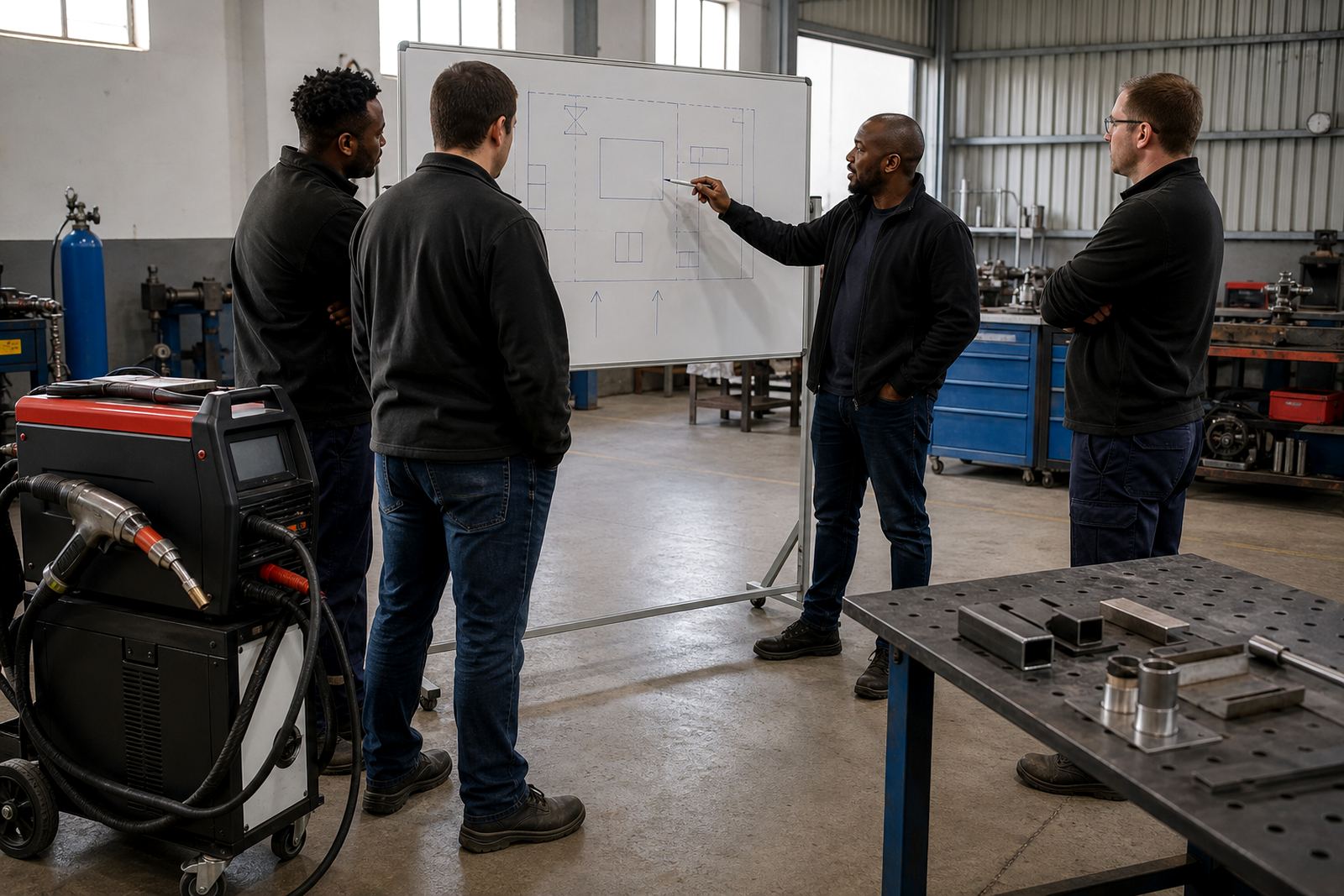
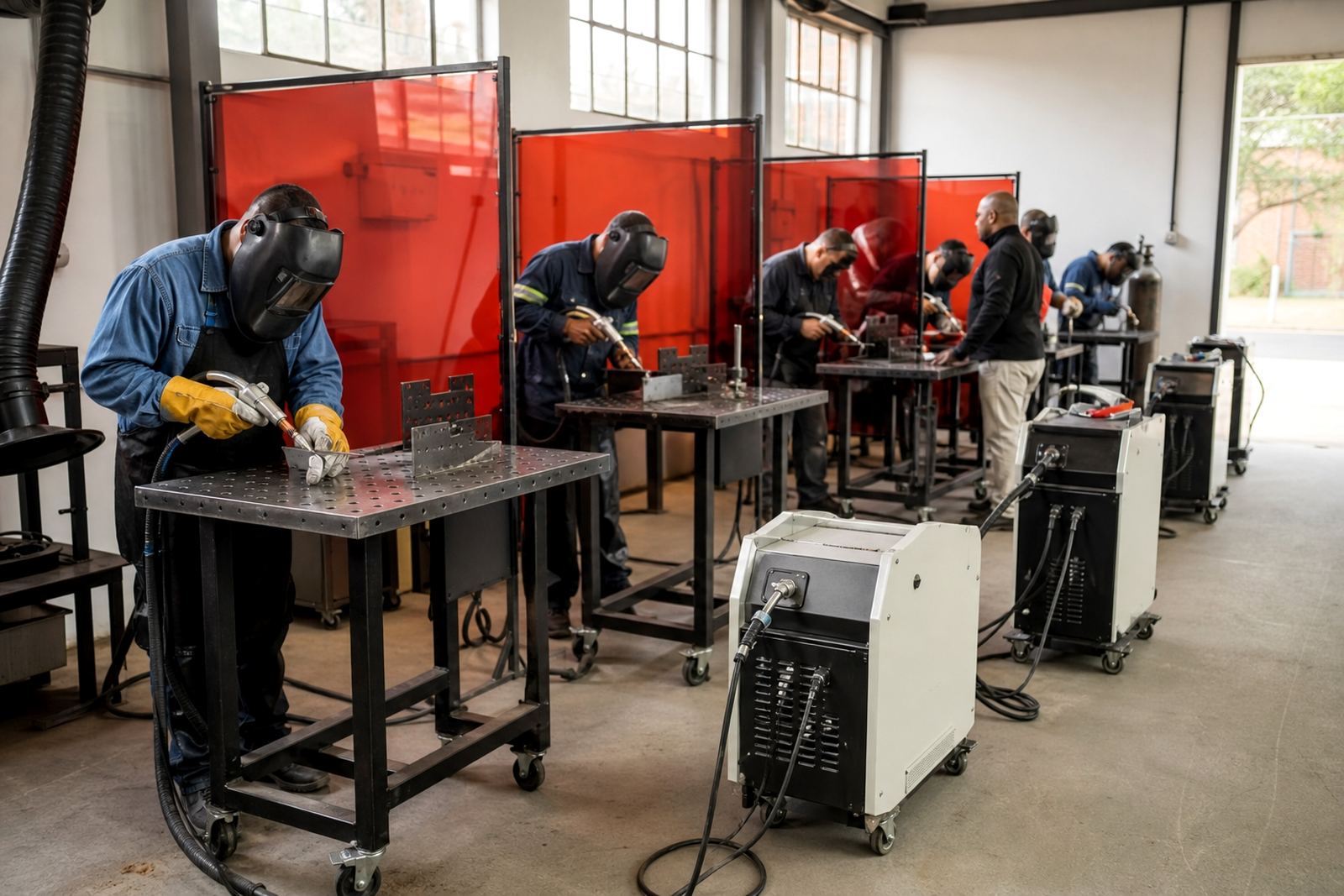
The Weekend Bootcamp is a short-format practical course for people who want solid time on the torch over two days. It suits beginners who need a clear start, as well as tradespeople who want to add handheld laser welding to their current work. The pace is direct and practical, with time split between guided demonstrations, supervised practice and feedback on technique.
Because the course is concentrated into a weekend, it works well for businesses that cannot spare staff for a full week. It also suits learners travelling from nearby towns, or those from further afield who want one organised training visit in Boksburg, Gauteng. You leave with a certificate of completion from LaserWelder Training only, plus a better grasp of setup, safety and day to day machine care.
- Format: intensive weekend practical training
- Level: beginner friendly with room for experienced operators
- Outcome: certificate of completion from LaserWelder Training
- Location: Boksburg base, with learners from Gauteng and other provinces
Where The Bootcamp Fits Best
This course suits small fabrication shops, maintenance teams, sign and metalwork workshops, repair businesses and learners setting up a first handheld laser welding station. It is also useful for supervisors who want to understand what good operator setup looks like before they buy equipment for the team. If your work involves thin stainless steel, mild steel or aluminium parts, the bootcamp gives a practical starting point for clean, controlled joins.
The weekend format is a good fit where production time is tight and staff need a quick but proper introduction. In shops dealing with load-shedding, you also get guidance on planning workflow around power interruptions, safe shutdowns and restart checks. On coastal jobs or workshops near Durban and Cape Town, we also discuss basic care for humid conditions and keeping the work area dry and clean.
- Good for new operators, workshop teams and supervisors
- Useful for repair work, light fabrication and maintenance tasks
- Helpful for businesses wanting a short, practical skills block
- Suitable for learners from Johannesburg, Pretoria, Durban, Cape Town and Polokwane
Handheld Laser Welding: What You Practise
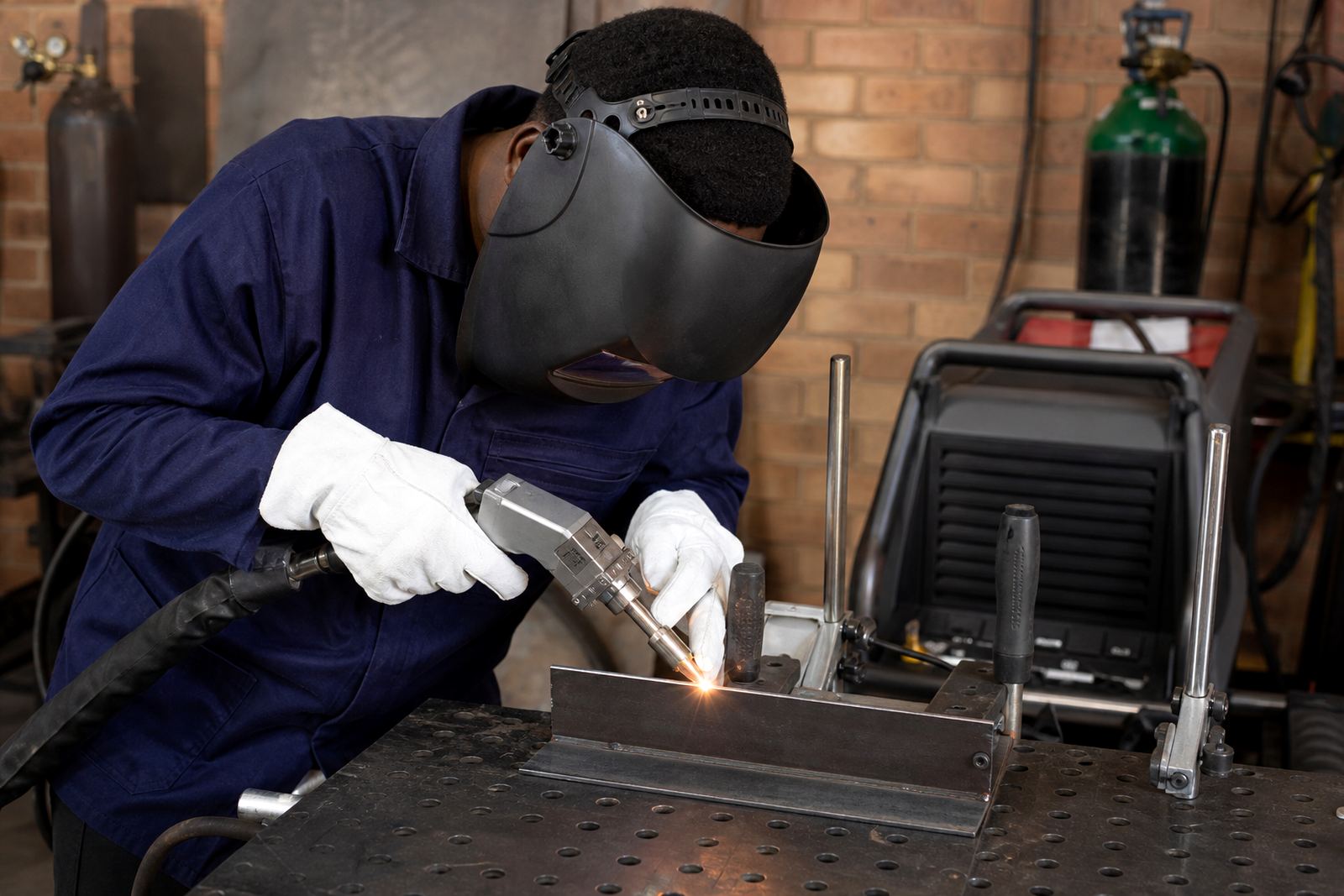
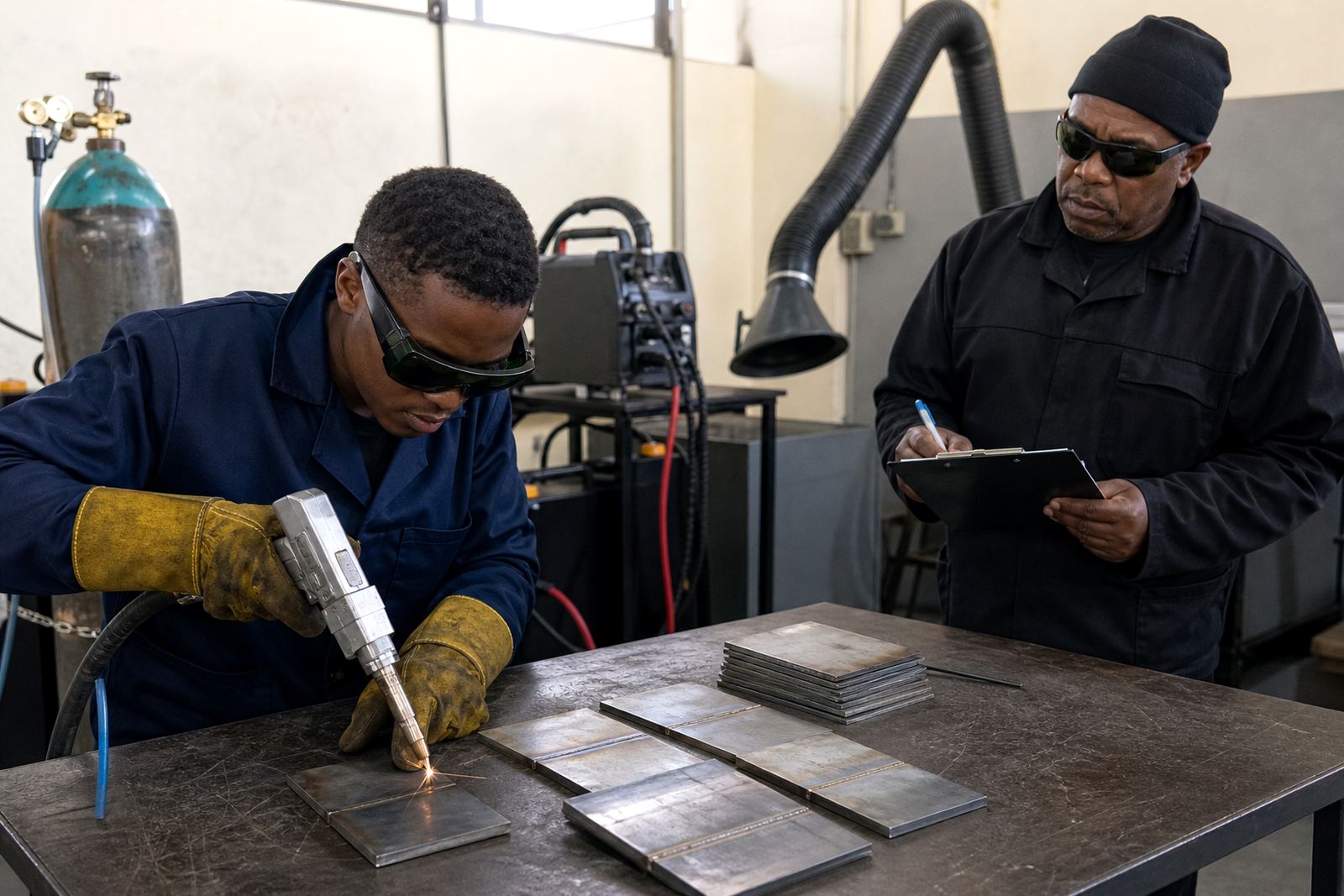
The bootcamp focuses on handheld laser welding with practical control of the tool, work angle, travel speed and heat input. Learners practise on sample joints so they can see how the weld behaves on different thicknesses and edge conditions. You also get a clear introduction to cleaning the metal before welding, because surface contamination is one of the most common reasons for poor results.
Core topics usually include setting up the workstation, choosing a suitable joint approach, managing the weld pool and checking finish quality. Learners work through common mistakes too, such as moving too slowly, holding the torch at the wrong angle, or trying to weld over dirty material. The aim is not only to press the trigger but to understand what the machine is doing and how to correct the result. That makes a big difference when you are back in the workshop on your own.
- Tool control, stance and torch handling
- Surface preparation before welding
- Joint positioning and travel control
- Visual quality checks after each sample
Safety, Eye Protection And Fume Extraction
Safety is part of the bootcamp from the first session. Handheld laser welding equipment is generally treated as Class 4 laser equipment, so learners are shown how to keep exposure under control, where to stand and how to keep bystanders out of the working area. You are guided on the correct eye protection for the task, plus why ordinary workshop spectacles are not enough for laser work.
We also cover local extraction and ventilation needs. Even when the weld looks clean, fume and fine particles can still be present, so the work area should have proper extraction or at least controlled airflow with the torch zone well managed. This matters in enclosed workshops, small units and places where people work nearby. Good housekeeping, cable management and fire awareness are also part of the checklist, because a tidy bay is safer and faster to work in.
- Laser class awareness and controlled access to the work area
- Correct eye protection for laser welding tasks
- Fume extraction or suitable ventilation
- Basic fire safety and clean bench habits
Starter Kit Sizes, Power Needs And Workshop Setup
Starter kits are discussed as part of the course so learners know what is needed for a sensible first setup. A basic kit may suit a smaller workshop that only needs to practise and handle light jobs, while a fuller kit suits a business planning regular use. We look at the machine itself, protective gear, consumables, cleaning tools, sample material and storage for accessories.
Power needs depend on the equipment chosen, so it helps to check the available supply before ordering. Workshops should confirm plug type, available amperage and whether the site has stable power or will rely on a generator or backup plan during load-shedding. Some set-ups may also need a suitable dry area, a stable bench and space for extraction equipment. Gas requirements vary by job, so check if your process will need shielding gas, what bottle size is practical, and where the cylinder will be stored safely. A workshop with limited space might need a more compact arrangement, while a larger site can plan a fuller station with better material handling.
- Check available power supply before ordering
- Allow space for machine, bench, extraction and safe storage
- Confirm whether shielding gas will be needed for your jobs
- Make sure the work area is dry, level and well ventilated
Care, Servicing And What To Check Before You Book
Handheld laser welding gear needs regular care, even for a weekend learner. After each session, clean the work area, inspect the torch and cables, check lenses and nozzles where relevant, and store consumables properly. Dust, metal debris and moisture can cause avoidable problems, especially in humid weather or a busy shop where tools get moved around often.
Before you book, confirm the learner level, the number of people attending and whether the workshop wants a training-only visit or training plus starter kit guidance. It also helps to check access to power, ventilation and a safe indoor area for practical work. If your team needs follow-up support, ask about refresher visits, workflow advice, supervisor coaching or a document pack for internal use. That way the bootcamp is not just a weekend class, but a proper starting point for the work that follows.
- Clean and inspect the torch, cables and work area after use
- Store consumables in a dry place away from metal dust
- Check learner numbers and space before confirming the booking
- Ask about follow-up support if the workshop is rolling this out to staff
Key facts
| Course type | Weekend practical bootcamp |
|---|---|
| Training focus | Handheld laser welding, safety and starter kit guidance |
| Delivery | Hands-on supervised workshop sessions |
| Completion | Certificate of completion from LaserWelder Training |
| Typical fit | Beginners, operators and small workshop teams |
| Base | Boksburg, Gauteng |