What the Lap Joints Module Covers
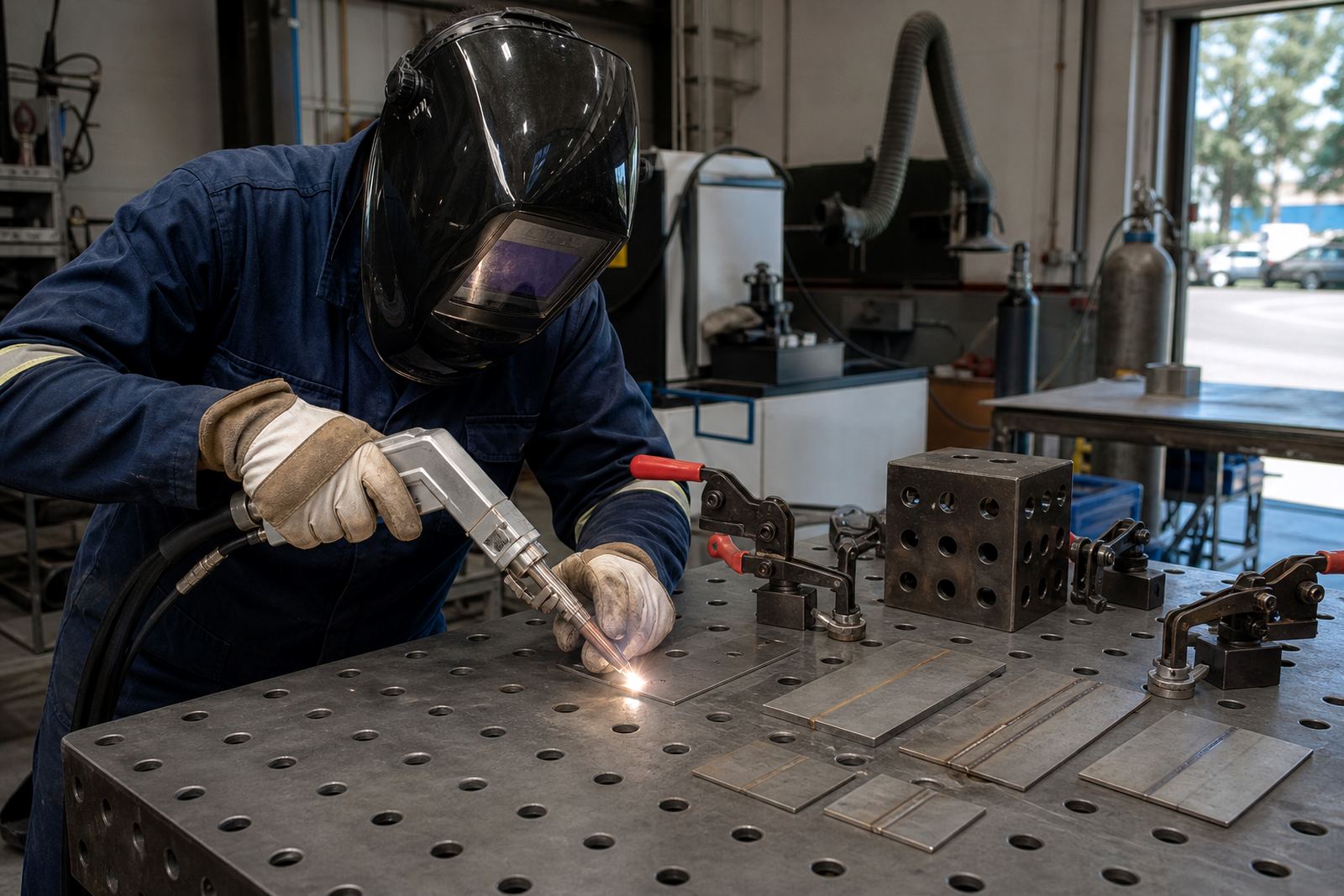
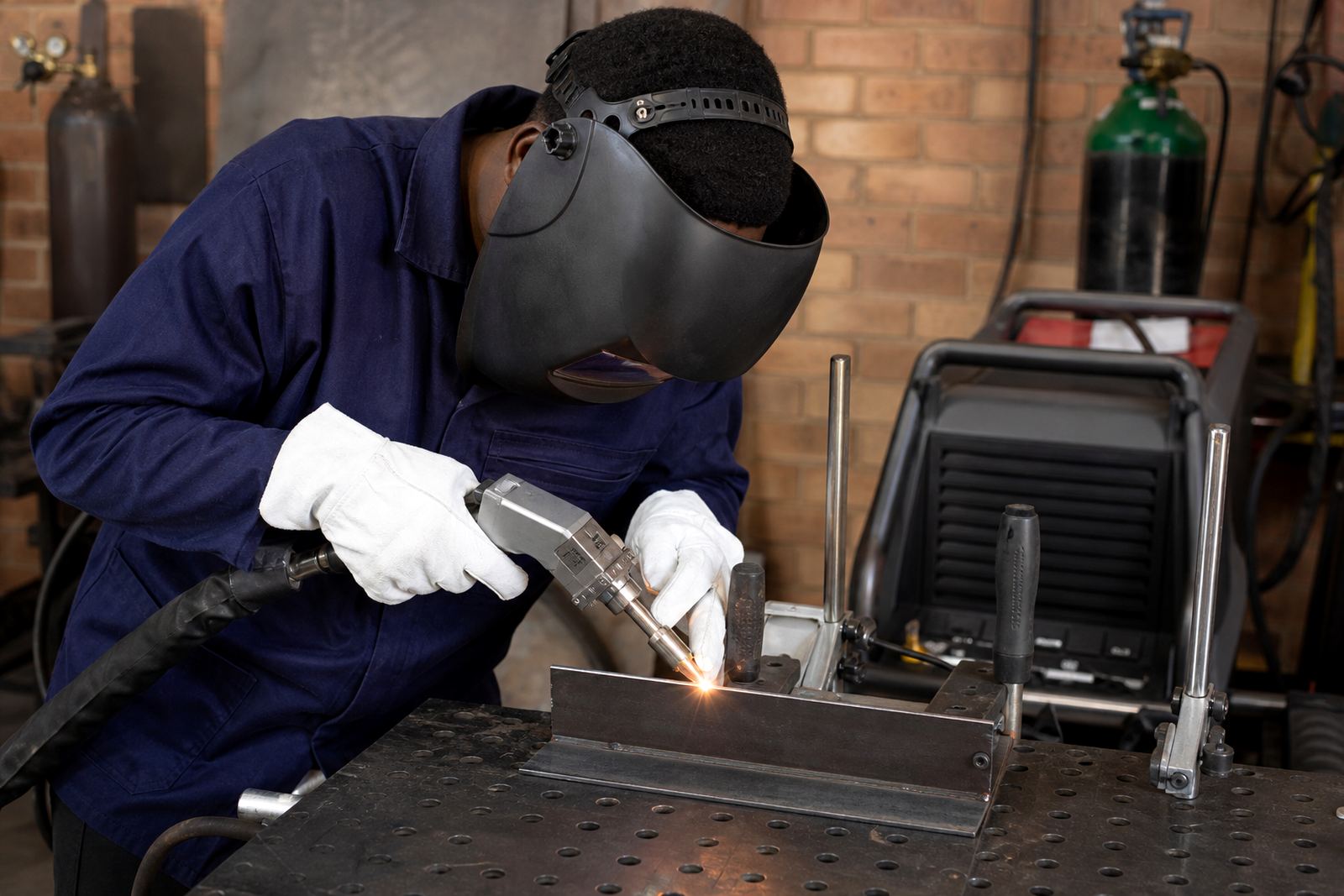
This module concentrates on one of the most common joint types in workshop work, where one plate, tube wall or sheet overlaps another before welding. The training shows how to prepare the overlap, hold a constant angle and keep the beam on the correct line so the weld sits where it should. For learners in Boksburg, Johannesburg, Pretoria and across Gauteng, it is a useful way to build control on real parts instead of only on test coupons.
Handheld laser welding is used because it gives a narrow heat input, cleaner appearance and faster progress on suitable materials. That said, the process still needs sound fit-up, clean surfaces and correct settings. A poor overlap will still give a poor weld, so the module focuses on the practical details that make a repeatable result possible.
The course is suited to mild steel, stainless steel and selected aluminium work where the joint preparation and thickness are within the capability of the equipment being used. It is also relevant for repairs, fabrication, signage frames, guards, small assemblies and maintenance work where lap joints come up often.
Sizes, Thicknesses and Training Options
The module is built around workshop sized examples, with material thickness chosen to match common South African fabrication jobs. Typical training covers thin sheet through to medium gauge material, with the exact range depending on the learner's machine, torch setup and material type. The instructor will explain how overlap width and edge condition change the heat required, which matters a lot on stainless and aluminium.
Options can be adapted for individual learners, small teams and production staff. Some groups need a short practical session on a few sample joints, while others want a fuller programme with setup, welding practice and a certificate of completion from LaserWelder Training. The training can be matched to the pace of the group and the work they actually do in the shop.
- Thin sheet lap joints for light fabrication and cover panels
- Medium gauge overlap joints for brackets and frames
- Repeat weld practice on straight runs and short returns
- Material-specific guidance for mild steel, stainless steel and aluminium
- Handheld torch handling for right-handed and left-handed operators
Where It Suits Best in the Workshop
Lap joints show up in many jobs, especially where two parts need to be joined without a full butt fit-up. This module is a strong fit for workshops doing equipment repairs, small batch fabrication, light structural work, sheet metal assembly and maintenance in factories. It also suits teams that need to train new operators before they are allowed onto live production work.
In coastal areas like Durban and Cape Town, the discussion also covers surface preparation and storage, because humidity can affect rusting, contamination and the condition of consumables. In Gauteng, where many workshops work through load-shedding with generators or alternative power, the module includes practical notes on keeping the machine stable and the work area organised when power changes or interruptions happen. A tidy bay saves time and prevents avoidable mistakes.
- Fabrication workshops and repair bays
- Maintenance teams in manufacturing plants
- Jobbing shops handling repeated small assemblies
- Supervisor refreshers for consistent production standards
- Starter teams learning overlap weld technique from scratch
Installation, Power and Gas Needs
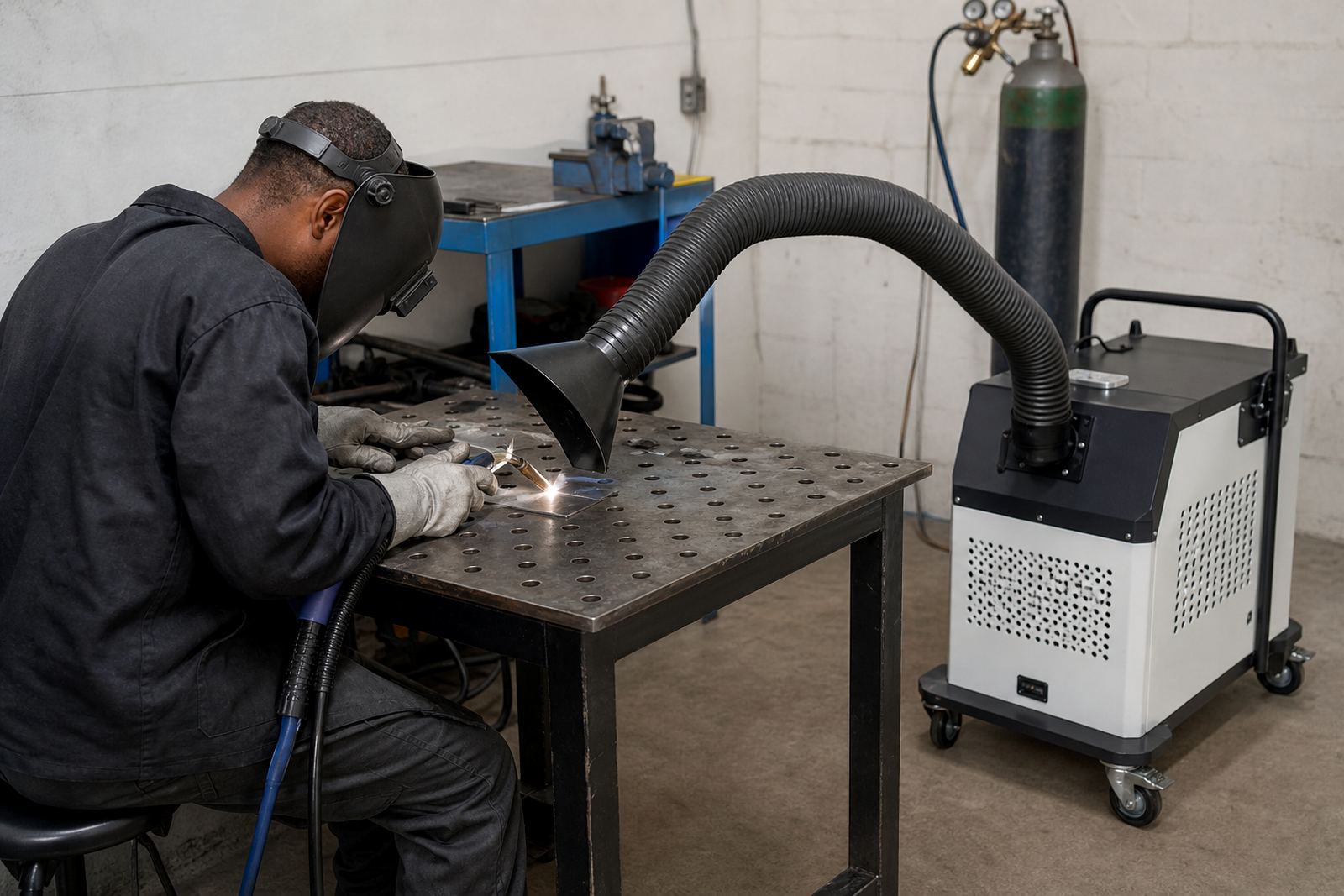
This product is designed for handheld laser welding setups that need a stable working area, clear airflow and safe access around the part. The module explains the basics of placing the unit, routing cables neatly and setting up a bench or stand that keeps the work at a comfortable height. If the operator has to fight the position of the part, the weld quality drops very quickly.
Power requirements depend on the machine in use, but the operator should plan for a proper supply that matches the machine plate and the site conditions. In some workshops that means a dedicated circuit, in others it means running the unit from approved backup power during outages. The gas requirement is usually a protective shielding gas suited to the job, with the correct regulator, hose and flow control. This is checked during setup so the weld pool is protected and the finish stays consistent.
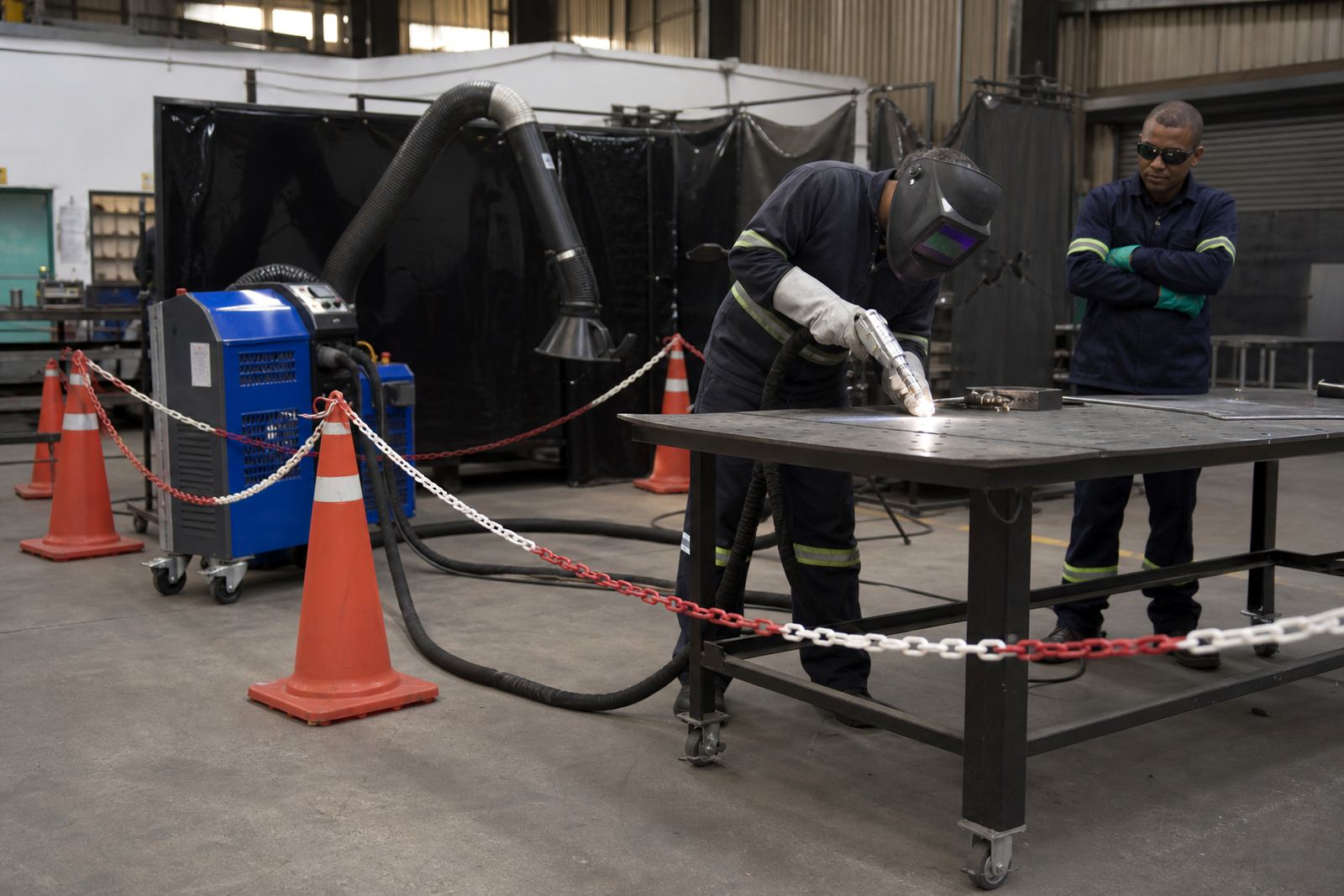
Fume extraction is part of the setup, not an add-on. The module covers the need for local extraction or adequate ventilation, especially when working on coated steel, stainless or dirty material. It also includes the basics of laser class awareness and eye protection so operators understand why the correct eyewear and barriers matter every time they strike an arc, or in this case fire the beam.
Safety, Care and Ongoing Servicing
Laser welding safety starts with the right controls and habits. The machine class must be understood, the operator must wear suitable eye protection and the workspace needs warning signs, clean lines of sight and a proper control routine. Reflective surfaces can create risk, so the training covers how to manage shiny metal, nearby tools and loose scrap before work begins.
Care is straightforward but important. Keep the torch clean, check lens and nozzle condition, inspect cables for wear and make sure consumables are stored dry. If the site has dust, grinding residue or coastal moisture, the machine and accessories need more frequent cleaning. Small faults grow into stoppages if they are ignored, so the module includes the checks that keep the setup working day after day.
Servicing support can include refresher visits, technical help and workflow advice for teams that want better consistency. Where a workshop is using the module for routine work, the support team can also help with practice plans and supervisor coaching so the standard does not drift after training. That matters when different shifts handle the same machine.
What to Check Before You Order
Before ordering, check the material types you will be working with, the thickness range, the size of the overlap and whether your team needs beginner guidance or a more advanced refresh. It is also worth confirming the power available on site, the shielding gas you plan to use and whether you already have fume extraction in place. These details affect the training setup and the way the module is delivered.
Please also confirm who will attend, how many operators need hands-on time and whether you want the training to include a starter kit setup. If you are buying starter kits for a workshop, it helps to list the consumables you already have so duplicates are avoided. A good order starts with clear use case, because that makes the setup quicker and the training more practical.
- Material type and thickness
- Overlap width and part size
- Power supply and backup arrangement
- Shielding gas and regulator details
- Need for starter kit setup or refresher support
- Number of operators attending
Training Support Across South Africa
LaserWelder Training runs hands-on courses from Boksburg, with training support for learners and workshops in Johannesburg, Pretoria, Durban, Cape Town and Polokwane. The team also supports East Rand and Gauteng operations that want practical help with safety briefings, operator inductions, supervisor coaching and quality walkthroughs. Enquiries come through the contact page form, and the team follows up with the details needed to match the module to the job.
The people behind the training are there to keep the process practical. Mpho Johannes Maseko leads the business, with Naledi Khumalo handling training coordination, Pieter van der Merwe as lead welding instructor, Anele Dlamini on safety and compliance, Kagiso Molefe for starter kit sales, Lerato Mokoena for technical support and Brandon Naidoo assisting with workshop support. That mix helps keep the module grounded in day-to-day workshop work, not theory only.
Key facts
| Module focus | Overlap fit-up, travel control and repeatable lap joint welds |
|---|---|
| Training method | Hands-on handheld laser welding practice |
| Typical materials | Mild steel, stainless steel and selected aluminium |
| Output | Certificate of completion from LaserWelder Training |
| Support options | Starter kit setup, safety briefings and refresher visits |
| Locations served | Boksburg, Johannesburg, Pretoria, Durban, Cape Town and Polokwane |