What the Clamp Fixture Pack does on the floor
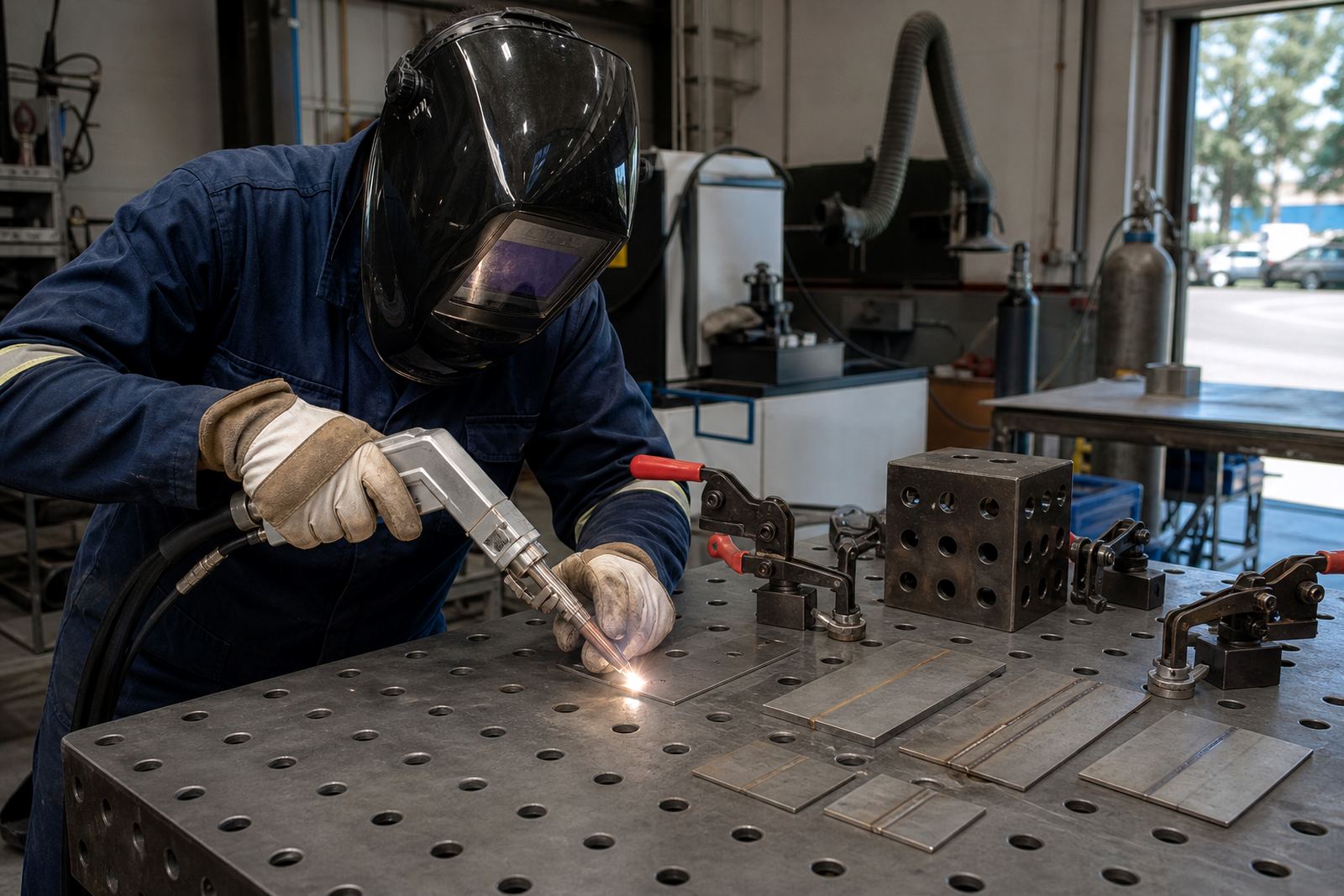
This pack is put together for repeatable positioning, not for heavy fabrication or structural lifting. It helps keep small and medium components aligned while learners practise lap joints, corner joints, edge joints and simple repair work with a handheld laser welding machine. Good fit-up matters because laser welding gives a narrow, focused heat input, so the parts need to sit properly before the torch is switched on.
The usual items in the pack are clamps, stop blocks, angle guides, flat plates, hold-down pieces and simple locating accessories. It suits a training bay, a small repair workshop, a fabrication corner or a mobile setup where parts must be clamped quickly between welds. For teams working in Boksburg, Johannesburg, Pretoria, Durban, Cape Town or Polokwane, it is also useful where different people use the same station and need the same job to set up the same way each time.
- Helps reduce movement during tacking and welding
- Makes repeat jobs quicker to set up
- Supports cleaner fit-up on thin material
- Useful for practice plans and supervisor coaching
Sizes, options and what can be included
Clamp Fixture Pack options are usually chosen around the type of work being done and the size of the parts. A learner pack may suit small sheet and tube samples, while a workshop pack is better for repeated use on a wider range of parts. Some users want a basic layout for training, while others need more location points and extra hold-downs for production-style practice. The exact mix can be matched to the work being done and the space available.
Common size ranges are designed around compact workshop benches and portable training tables, with pieces suited to thinner sheet, small brackets, mild steel coupons and light stainless work. In many cases the pack includes more than one clamp type so the user can switch from flat work to corner work without wasting time. If you are preparing a new room or adding to an existing bay, it is worth checking how much bench space you have and whether the parts you weld are flat, formed or tubular.
- Compact training pack for small parts and learner exercise work
- Workshop pack for repeated use on mixed joint types
- Optional extra locating pieces for right-angle and edge work
- Suitable for benchtop training and mobile demonstrations
Where it suits best in South African workshops
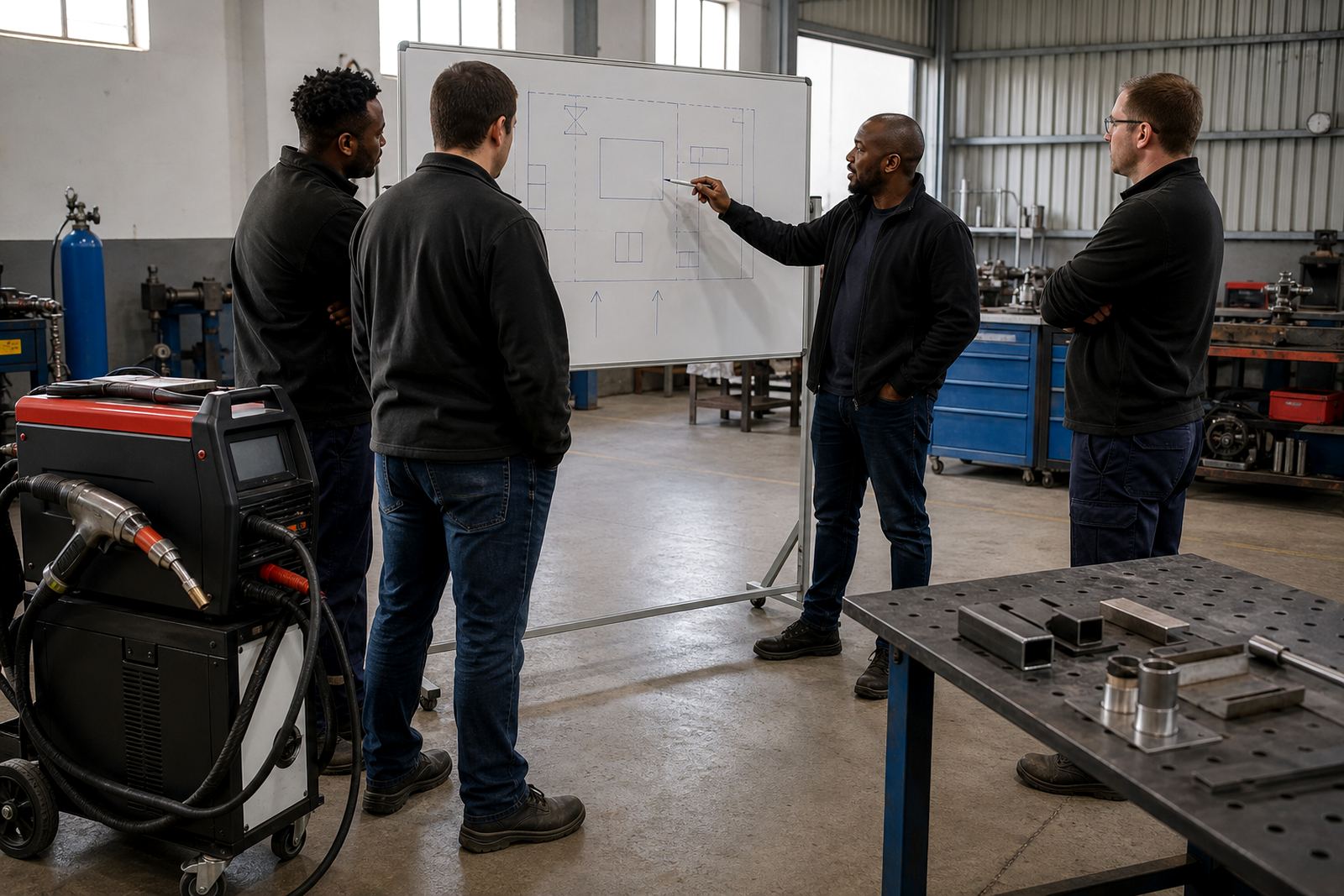
This pack is a good fit for entry level training rooms, small workshops, supplier demo bays and maintenance teams that need consistent fit-up before repair welding. It is also useful where work changes often, because the same fixture layout can be reset for a new learner or a different part with very little delay. On sites that deal with load-shedding or moving work around between stations, a simple fixture pack helps keep the flow steady even when the day is interrupted.
It suits most places where handheld laser welding is being introduced, especially where staff need to understand how part condition affects the finished weld. In coastal areas like Durban and Cape Town, stainless parts and stored tooling need a bit more care against moisture, while inland sites in Gauteng often focus more on dust control and organised storage. The pack is practical for job shops, technical colleges, workshop inductions and refresher visits where the same fit-up standards must be repeated.
- Training centres running beginner and refresher sessions
- Maintenance workshops handling repair and small batch work
- Sites needing repeatable fit-up for quality walkthroughs
- Areas where parts are moved between operators or shifts
Installation, power and gas requirements
The clamp pack itself does not need electrical power or shielding gas. It is a manual support set used before and during setup, so it works alongside the laser welding machine rather than replacing any machine-side requirements. That said, the station around it should still be set up properly. The operator needs enough bench height, stable footing, good lighting and enough space for the workpiece, torch movement and inspection after each pass.
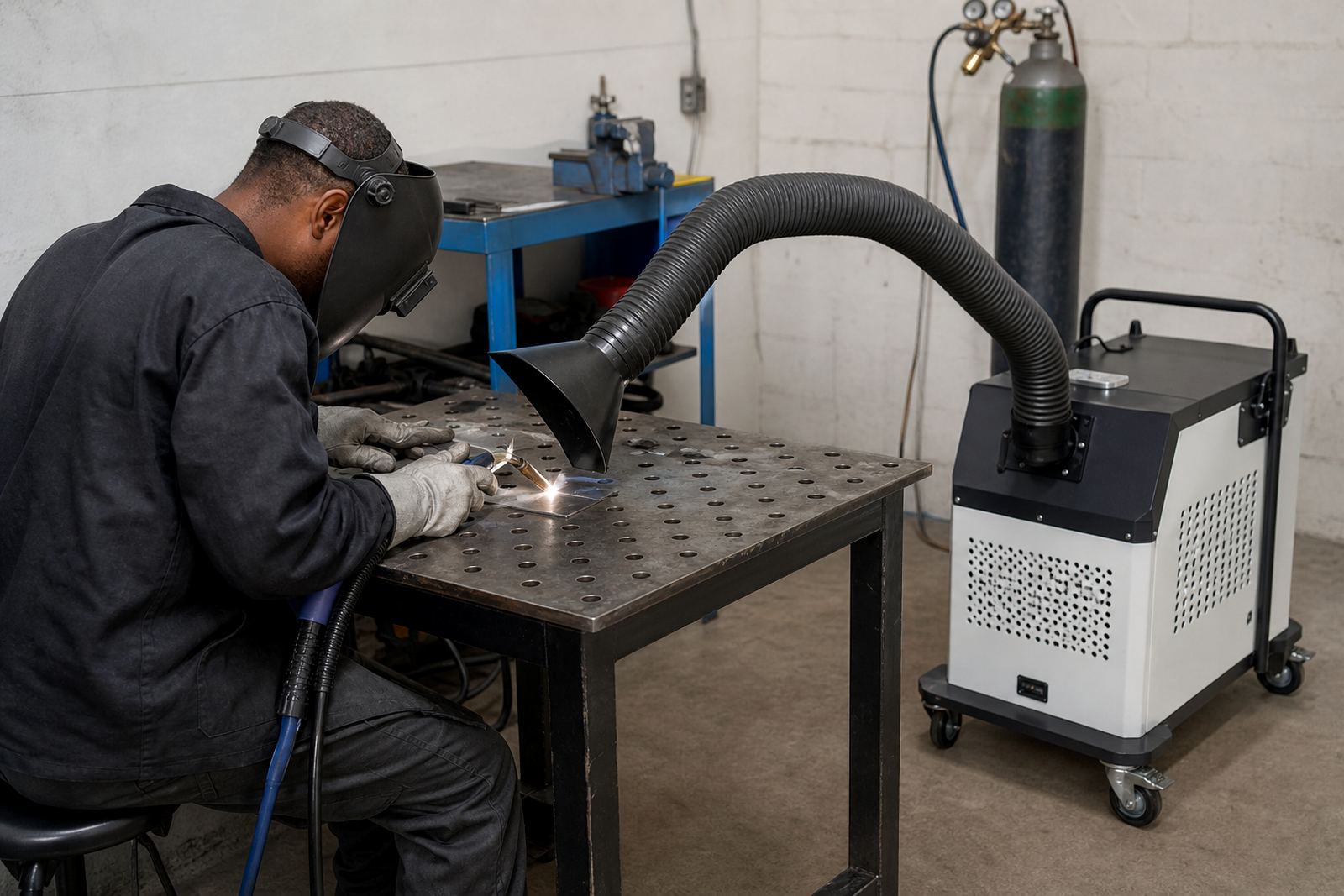
If the same station is also being used for handheld laser welding, make sure the area is arranged for the correct laser class in use, with eye protection available to match the machine and process. Fume extraction should be in place whenever material conditions or filler use create visible fumes, and the bay should be kept clear of reflective clutter. If gas shielding is used for the welding job, the clamp pack simply needs to leave enough access for the torch, gas nozzle and the job itself, without crowding the weld zone.
- No direct electrical supply required for the pack itself
- No gas connection required for the pack itself
- Needs a stable bench or table and clear access around the job
- Works best with proper PPE and local fume extraction
Care, storage and servicing between sessions
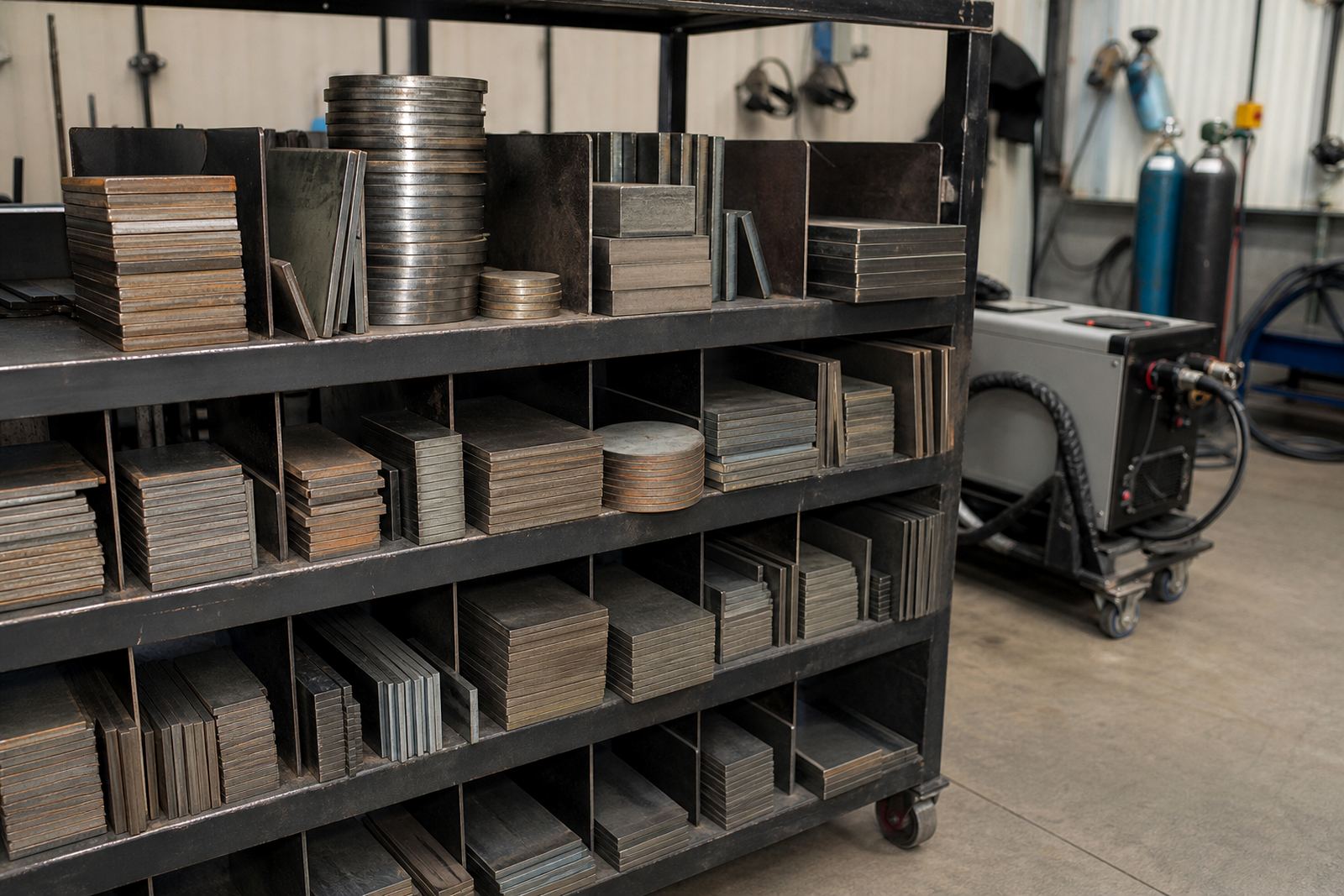
Clamp fixtures last longer when they are cleaned after use and stored dry. Wipe off metal dust, spatter, cutting residue and any oil film before putting items away. In humid areas, especially near the coast, keep the pack in a dry cabinet or sealed container so the moving parts do not seize or rust. If the pack is used in a busy training room, assign someone to check the threads, pads and locating faces on a regular basis.
Small damage can affect repeatability, so it is worth checking for bent arms, worn pads, loose screws or marks that stop the part sitting flat. If a clamp no longer bites evenly, it can shift the job and spoil the fit-up. Keep the pack away from hot work drop zones and do not use it as a striking point or pry bar. A simple care routine helps the team get the same setup each time, which saves time and reduces rework.
- Clean after each session and store dry
- Check threads, pads and alignment faces regularly
- Replace worn or bent parts before they affect fit-up
- Keep fixtures out of spark and heat paths
What to confirm before you order
When ordering a Clamp Fixture Pack, check the part sizes you will be working with, the materials involved and the level of repeatability you need. A learner pack for small coupons is not the same as a workshop pack for mixed repairs. It also helps to know whether the team needs a very simple layout or a more flexible setup with extra stops and angle pieces. If the jobs are mostly stainless, mild steel or thin sheet, mention that too, because fit-up and handling expectations can differ.
You should also confirm how much bench space you have, whether the station will be used for one operator or several, and whether the pack must travel between sites. If your workplace has specific safety rules, ask for the fixture arrangement to fit around your PPE and extraction plan. A proper order review avoids missing pieces and keeps the training document pack, supervisor coaching and starter kit setup aligned with the actual work. Mpho Johannes Maseko and the team can help with practical questions through the enquiry form on the contact page.
- Workpiece size and shape
- Material type and thickness
- Benchtop space and storage limits
- Training use, workshop use or mobile use
Key facts
| Pack type | Manual clamping and fixturing set for handheld laser welding fit-up |
|---|---|
| Typical use | Training bays, repair workshops, practice stations and starter kit setup |
| Material compatibility | Thin sheet, brackets, small sections, mild steel and stainless work |
| Power requirement | None for the pack itself |
| Gas requirement | None for the pack itself |
| Care note | Keep dry, clean and checked for wear, especially in coastal humidity |