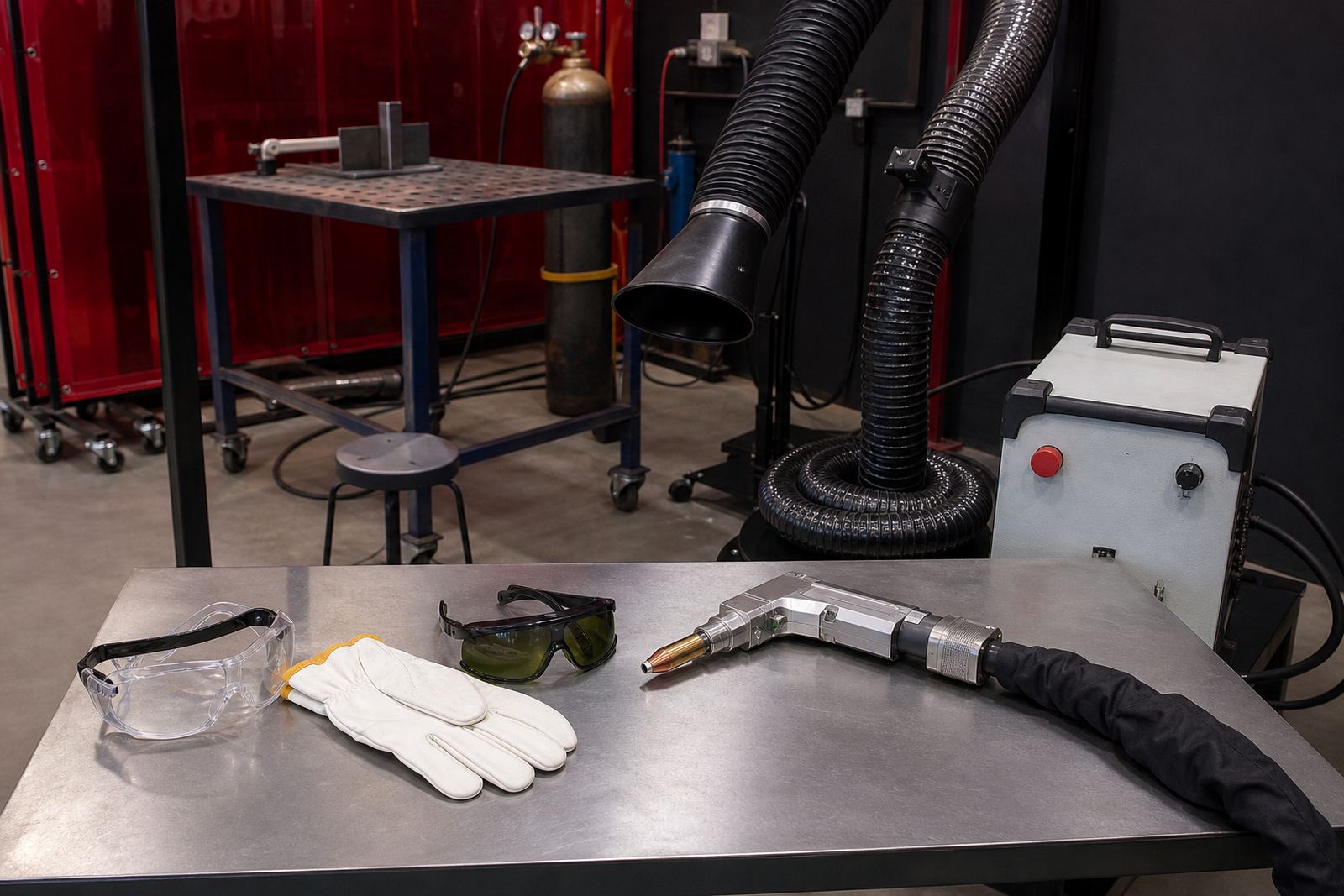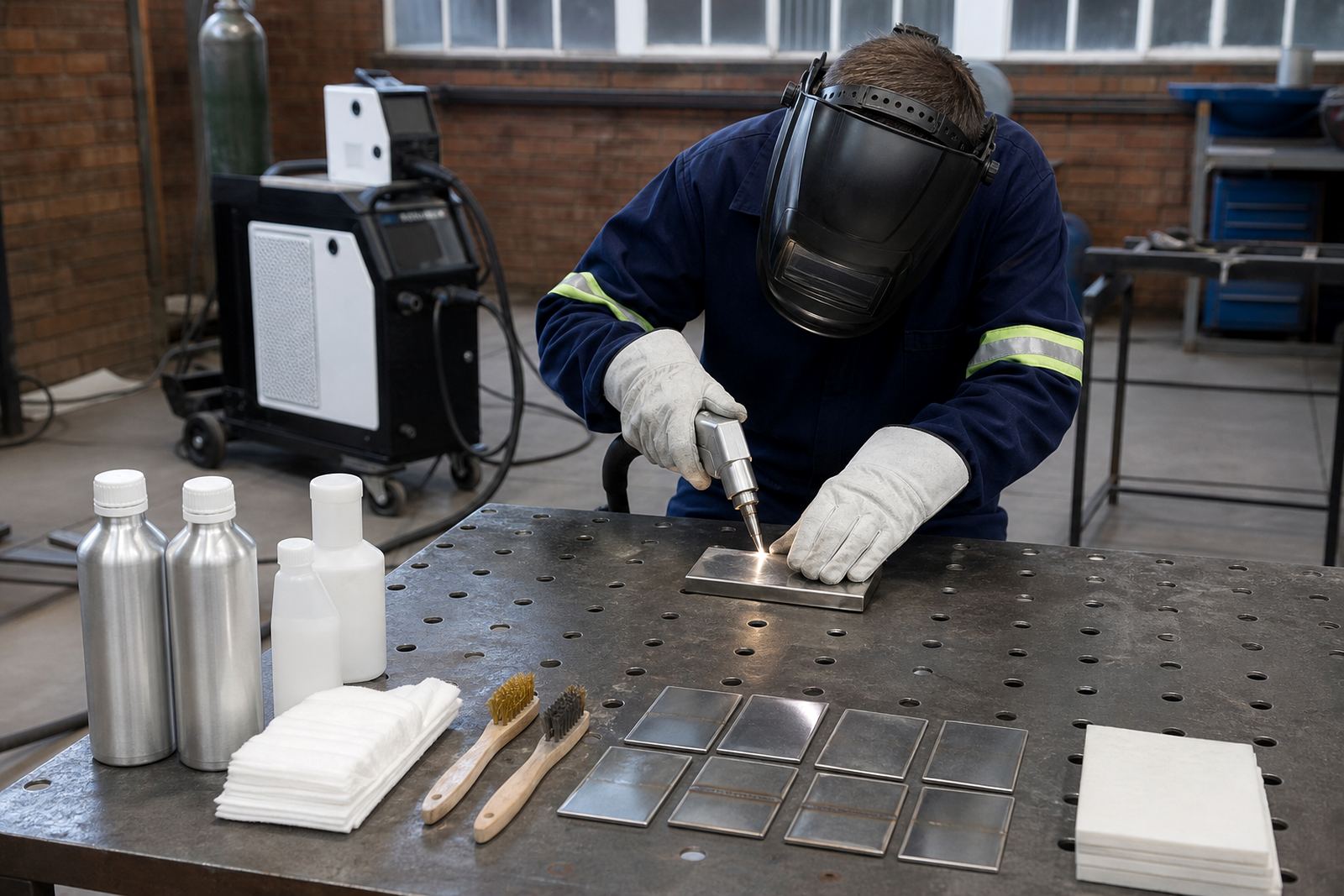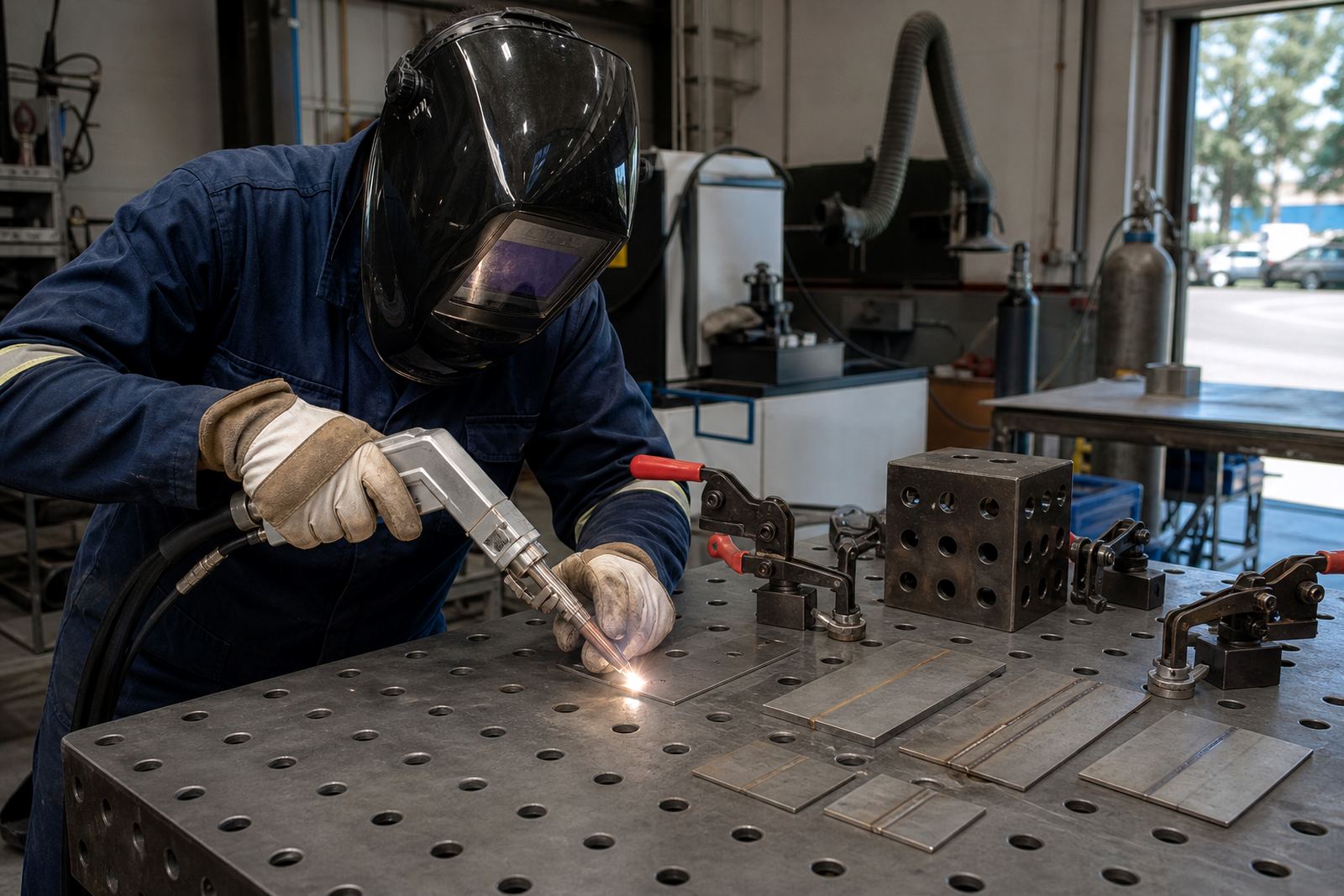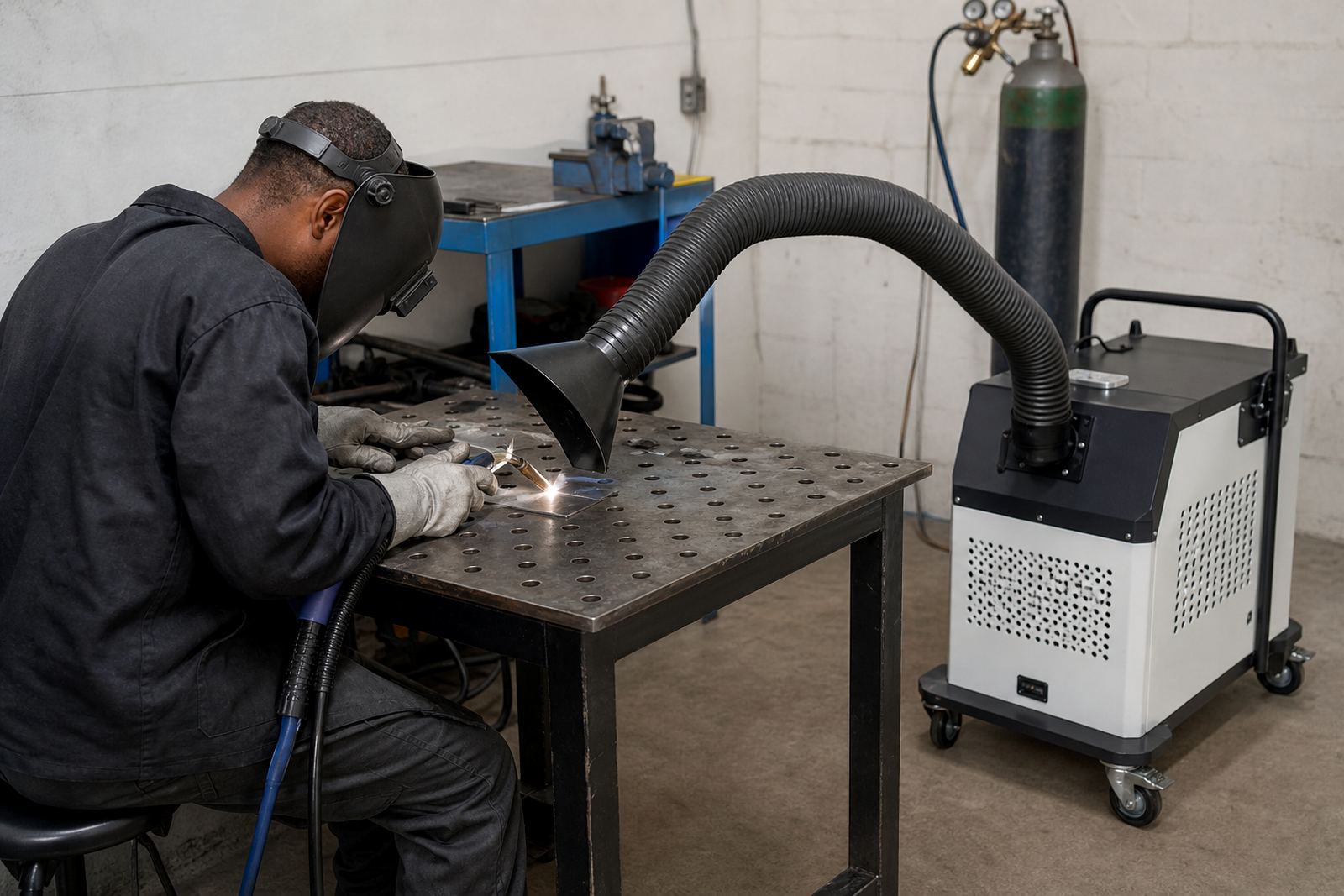
What the Fume Extraction Pack covers
This pack is for workshops that want a sensible starting point for managing fumes and fine particles around handheld laser welding. It is not a full plant extraction project, but it gives learners and supervisors a clear path for placing capture points, checking airflow and keeping the work area tidy enough for daily use.
Handheld laser welding produces less smoke than many traditional processes, but it still creates fumes from the base metal, coatings, oils and any filler material used. In South African workshops, this becomes more noticeable in closed rooms, in winter with windows shut, or in coastal areas where moisture can carry odours and residue further than expected. A basic extraction plan helps reduce nuisance, protect visibility and support better housekeeping.
- Suitable for small training rooms, fab bays and repair benches
- Supports local extraction planning for handheld laser welding tasks
- Helps set up capture points near the weld zone
- Useful where learners rotate between stations
Sizes and options for different workshop layouts
The pack is offered in practical sizes so a workshop can match the extraction support to the amount of handheld laser welding being done. Smaller spaces often need a single mobile unit with a short capture arm, while busier rooms may need a pair of units or longer ducting to cover two or three working positions.
Choice depends on room size, ceiling height, whether the unit needs to be moved between bays, and how close the operator stands to the weld. Workshops in Boksburg, Johannesburg and Pretoria often work in mixed-use spaces where the same floor area is used for training in the morning and production later in the day. In those cases a flexible setup is usually the better choice. For coastal sites in Durban or Cape Town, casing and filters should be checked more often because humidity can affect dust build-up and corrosion over time.
- Compact pack for one bench or one training bay
- Mid-size pack for two workstations or rotating learners
- Expanded pack for busier shops with repeated daily use
- Mobile version for workshops that rearrange bays often
Where it suits best
This product suits workshop environments where handheld laser welding is used for repair, light fabrication, sheet work, maintenance or training. It is especially practical where staff need to keep the floor open and avoid fixed ducting that gets in the way of carts, trolleys and material movement.
It also works well in learner spaces where an instructor needs to supervise several people at once. A clear extraction point near the work area helps with visibility, reduces smell and supports a calmer training bay. If a workshop is near municipal boundaries or in a mixed-use area, it is still important to follow local noise, ventilation and fire safety rules. Extraction fans and filters should be placed so they do not push fumes toward doors, passageways or neighbouring bays.
- Training centres and technical colleges
- Small repair shops and metal workshops
- Fabrication yards with limited ceiling height
- Sites that need portable, simple air handling support
Installation, power and gas needs
The pack is designed for straightforward setup by a competent workshop team. Most systems need a level surface, enough clearance for the capture arm, and a position that does not block emergency exits or normal movement around the bench. If the unit is mobile, castors should lock properly before use. If it is fixed, the frame should be anchored where vibration will not affect the filter housing or duct joints.
Power requirements depend on the unit selected, but many workshop extraction packs run from standard single-phase supply. This makes them easier to place in smaller premises, including units where load-shedding backup is already being managed for welding equipment and lighting. If the workshop uses shielding gas on the welding side, the extraction unit must be positioned so hoses and cables do not cross the operator path or catch on the gas line. Keep the unit away from open flame processes and hot grinding dust unless the maker of the system states it can handle that use.
- Place the capture point as close as practical to the weld area
- Keep cables, hoses and foot traffic clear of the unit
- Check that power supply and backup arrangements suit the site
- Do not share a poor-quality extension lead with heavy equipment
Care, filters and servicing
Like any extraction equipment, the pack works best when filters are checked before they clog and airflow is monitored regularly. A blocked filter reduces capture at the nozzle and can leave smoke hanging around the bench. That is often the first sign that maintenance has been left too long. Workshops should set a simple routine for cleaning, filter changes and visual inspection.
In dustier inland areas, filters may load up faster than expected. In coastal towns the housing and fasteners should be checked for rust or sticking parts, especially if the unit is moved in and out of a yard. The operator should also inspect the hose, seals and capture hood for cracks or loose clamps. If the workshop has multiple learners, make one person responsible for the daily check so the unit does not get ignored between shifts. A quick inspection takes less time than fixing a badly clogged system later.
- Check airflow at the start of each shift
- Clean pre-filters on the schedule set for the workshop
- Replace main filters when pressure drop or smell increases
- Inspect casters, clamps and seals for wear
What to check before you order
Before ordering, measure the space around the welding bench and note where the operator stands, where learners queue and where material enters the bay. This helps match the pack to the actual workflow instead of guessing. It is also worth checking whether the unit must fit through a narrow door, share space with a cutting station, or move between rooms during the week.
Ask what material is being welded most often, because coated steel, stainless steel and dirty repair work can create different fume loads. If the workshop runs long sessions, check whether you need a larger filter capacity or a spare cartridge so the unit does not sit idle during changeover. Also confirm if the workshop has a stable power point, whether the supply is single-phase, and if the team needs help with first-time setup or a refresher visit later on. A few good measurements at the start save a lot of back-and-forth afterward.
- Bench size, ceiling height and available floor space
- Type of material welded and how often work is done
- Power point position and backup power plan
- Need for mobile use, spare filters or a second capture arm
Starter pack support from our Boksburg team
LaserWelder Training supports workshops across South Africa from our Boksburg base, including Johannesburg, Pretoria, Durban, Cape Town and Polokwane. The team can help with starter kit setup, supervisor coaching, workflow advice and training document packs so the extraction pack fits into real workshop use. For some sites, a short site readiness check is the best first step before a learner starts using handheld laser welding equipment.
This product page is intended for practical planning, not guesswork. If you are setting up a training bay or adding basic extraction to an existing room, the aim is to keep the process simple: clear positioning, sensible servicing and a setup that supports daily work without getting in the way.
- Useful for new learner bays and small workshop upgrades
- Can be paired with operator inductions and safety briefings
- Helps supervisors plan day to day airflow control
- Supports practical training without clutter around the bench
Key facts
| Product type | Basic extraction support pack for handheld laser welding workshops |
|---|---|
| Typical layout coverage | 1 to 3 workstations depending on unit size and room layout |
| Power requirement | Usually single-phase workshop supply, subject to unit selected |
| Main components | Extraction unit, capture arm or hood, ducting, filters and fittings |
| Best use | Training bays, small fabrication shops and repair work areas |
| Maintenance focus | Filter checks, airflow checks, hose inspection and seal replacement |