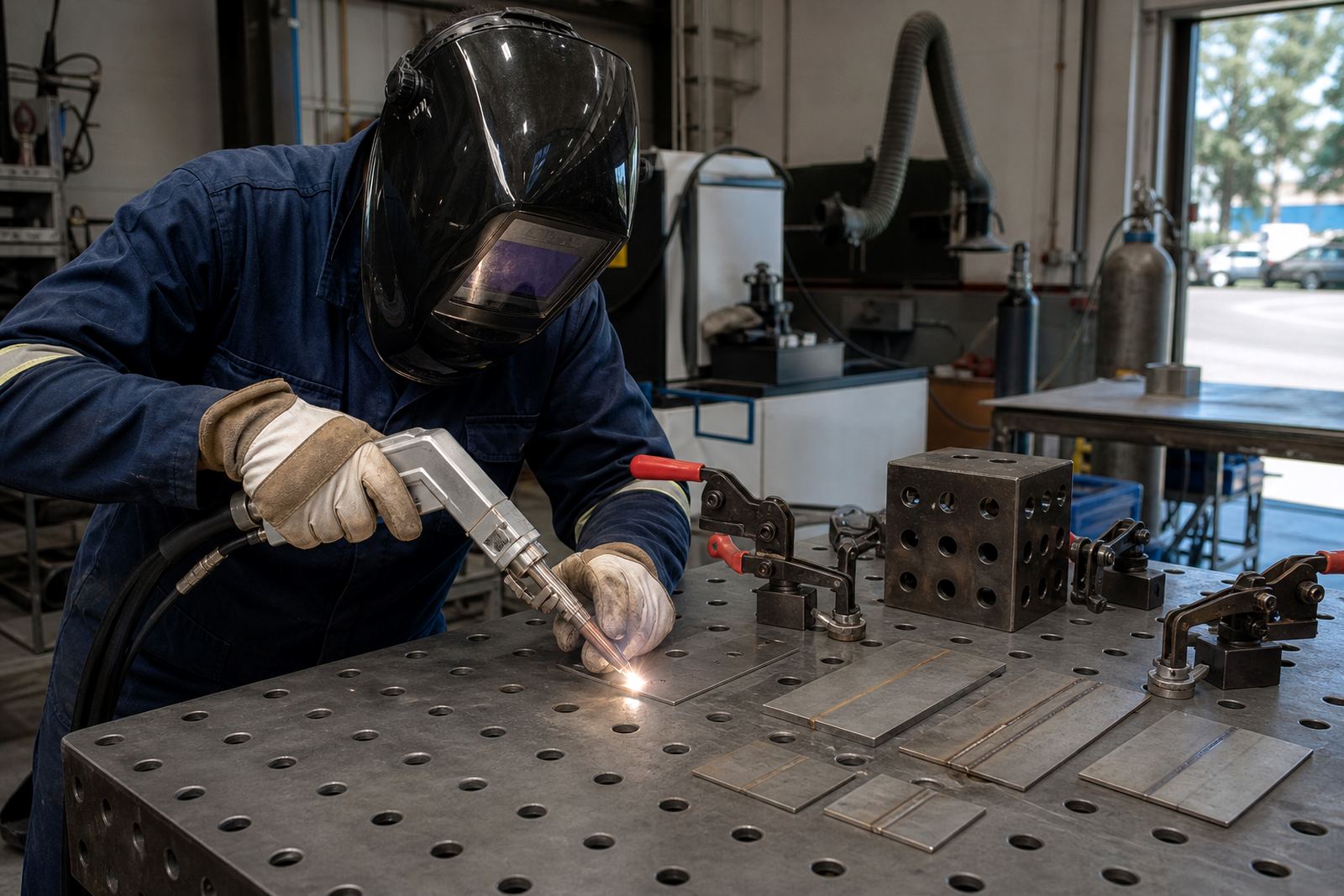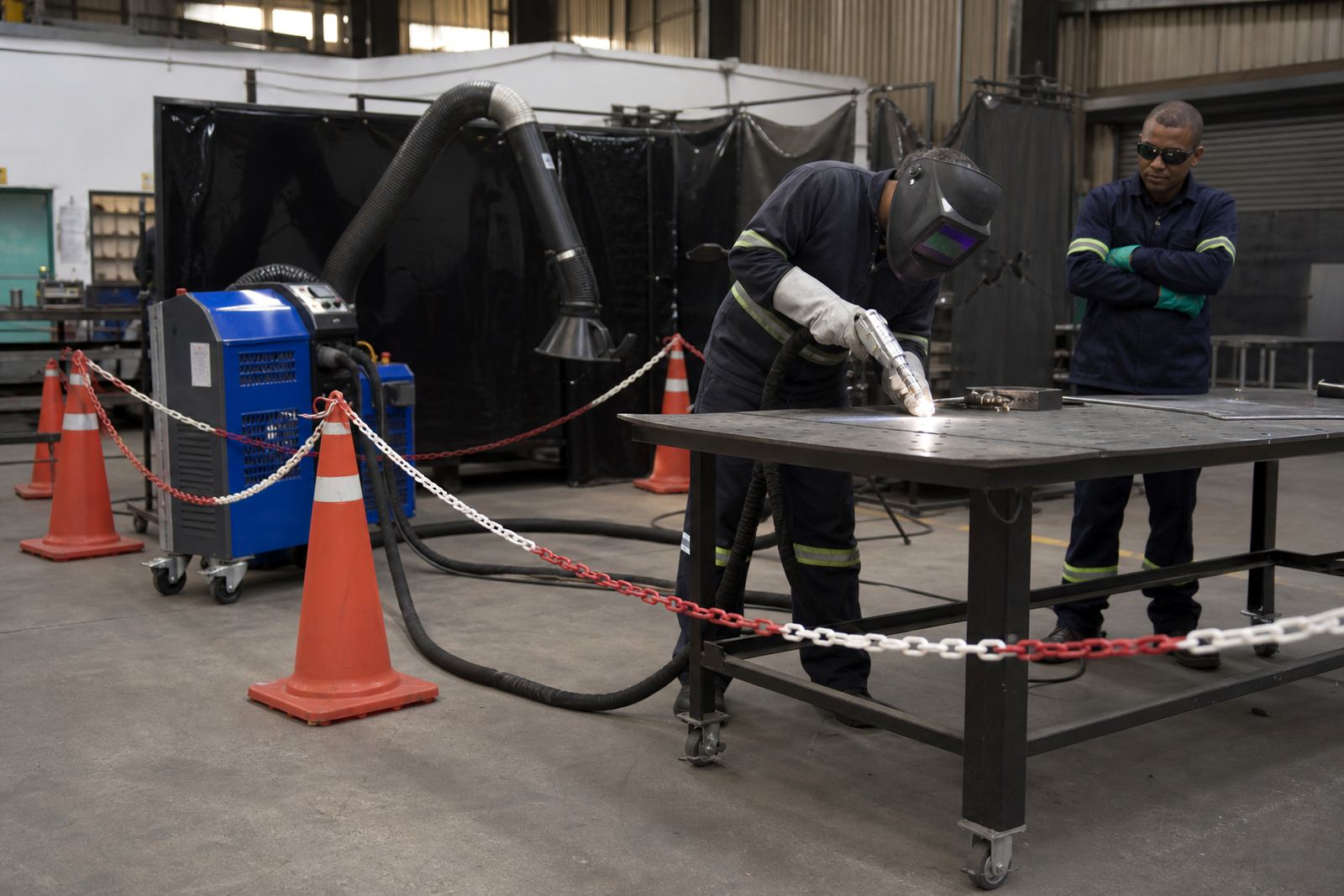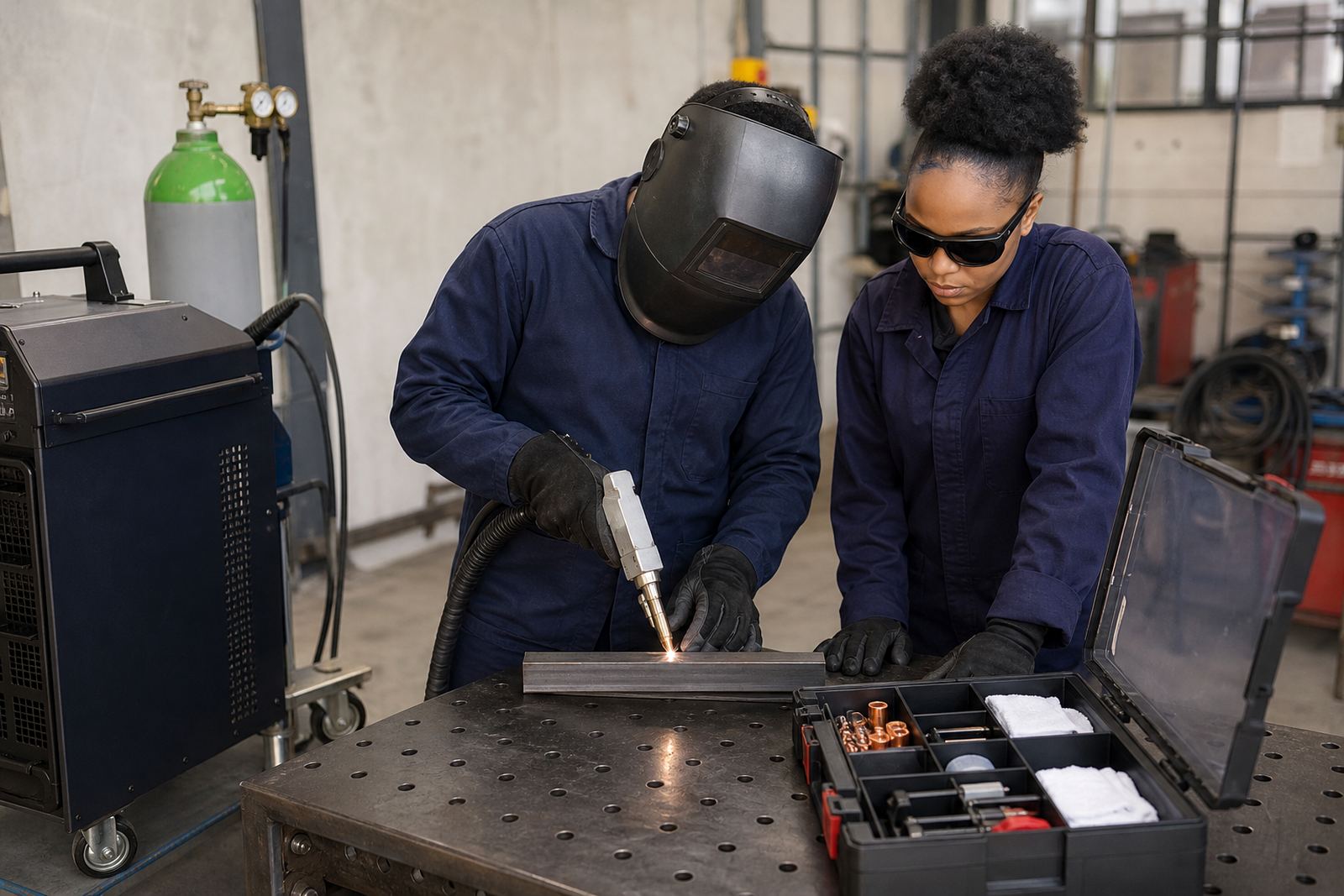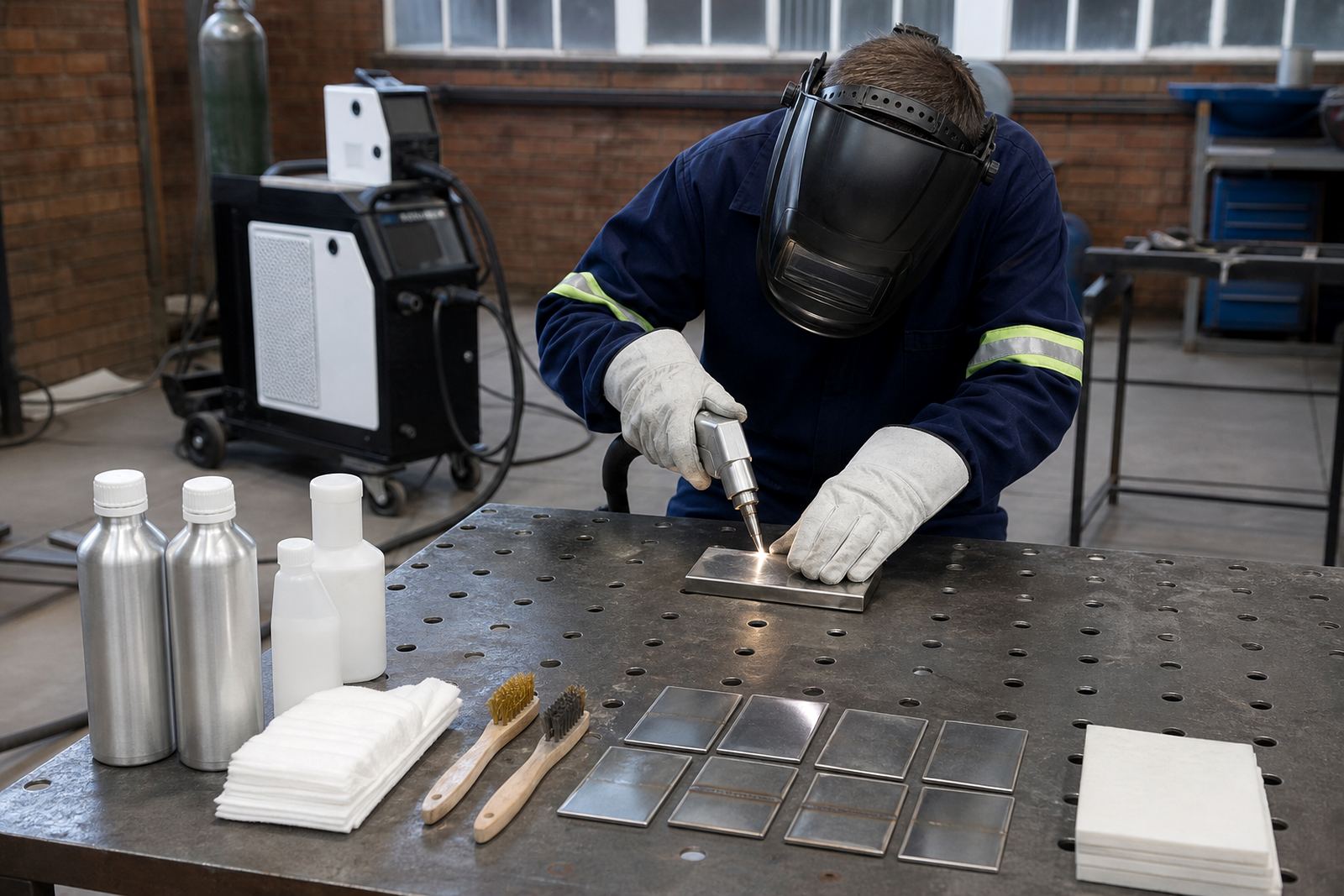
What the Surface Cleaning Pack does on the job
This support pack is aimed at the cleaning stage before handheld laser welding starts. It is not a welding machine and not a consumable replacement for welding wire or shielding gas. Instead, it gives learners and workshop teams the tools and routine needed to remove dust, oil, light oxidation, marking residue and loose surface contamination before the weld begins.
For stainless steel, mild steel and aluminium preparation, good cleaning habits make a real difference. A clean joint line helps the laser energy reach the workpiece properly and reduces the chance of porosity, inconsistent fusion or rework. The pack is useful for training rooms, maintenance workshops, fabrication bays and mobile teams working across Johannesburg, Pretoria, Durban, Cape Town, Polokwane and the East Rand.
Pack contents and size options
The Surface Cleaning Pack is available in practical workshop sets so learners can work in a controlled way and supervisors can keep the process consistent. Typical pack formats suit both a small training class and a shared workshop bench.
- Starter pack for individual learners or one operator station
- Workshop pack for multiple users on one shift
- Training pack for class demonstrations and practice rotations
- Reorder option for consumables that wear out with regular use
Contents may include lint-free wipes, solvent-safe cleaning cloths, abrasive pads for light surface prep, surface markers for identification, hand brushes, application bottles and storage items. Where needed, the pack can be matched with a simple cleaning station layout so the user keeps clean and dirty items separate. That keeps prep work neater and saves time during busy sessions.
Where it suits in South African workshops
This pack suits workshops that do short-run fabrication, repairs, prototyping, equipment maintenance and learner training. It is especially useful where operators need to prepare parts quickly between jobs and where humidity, dust or coastal air can leave residue on metal surfaces. In Durban and Cape Town, for example, surface film and salt exposure can become a daily issue. In Gauteng, dust from general workshop activity can do the same.
It also suits businesses that need a simple standard for operator inductions or refresher visits. A clear prep routine helps different staff members work the same way, which is important when a supervisor needs repeatable results from one shift to the next.
- Training centres and learner workshops
- Maintenance and repair shops
- Metal fabrication and assembly bays
- Mobile service teams working on site
- Supervisors setting a standard cleaning workflow
Setup, power and gas considerations
The Surface Cleaning Pack itself does not need mains power or gas to function. It is a manual support pack for surface preparation. That said, some workshops may pair it with extraction, lighting or compressed air nearby so the prep area stays tidy and safe. If solvent wipes or cleaning fluids are included in a user’s workflow, the space should be ventilated and stored according to the product instructions and site safety rules.
For handheld laser welding generally, the work area should have good ventilation, suitable eye protection for the laser class in use and fume extraction where the process creates vapour or fine particles. The cleaning area should also be kept away from open flames, grinding sparks and unnecessary clutter. In load-shedding conditions, a simple no-power prep pack is still useful because operators can keep cleaning, marking and staging parts even when powered equipment is down.
Care, storage and servicing
Surface prep items last longer when they are stored clean, dry and separated from oily rags or metal dust. Wipes, pads and brushes should be checked often and replaced when they stop doing the job properly. Containers should be closed after use, especially in coastal areas where damp air can affect cleanliness and storage life.
For regular servicing, the main task is not machine maintenance but stock control. Keep an eye on wear items, replenishment timing and the condition of any labels or containers in the pack. If the pack is used in a shared workshop, assign one person to check the station at the end of the day so the next shift starts with a ready setup.
- Store away from direct sun and moisture
- Keep cleaning media sealed when not in use
- Replace worn pads, brushes and cloths before they shed fibres
- Check that solvents or fluids are within their safe use period
What to check before ordering
Before placing an order, check the type of metals you are preparing, the number of operators, the size of the parts and whether the pack is for training or production use. A learner station usually needs a simpler setup than a busy workshop handling multiple jobs a day. If your team works with stainless steel, mild steel and aluminium, ask for a pack that matches the cleaning method you use most often.
It also helps to confirm whether you need consumables for one location or a few branches. Businesses in Boksburg, Johannesburg and Pretoria often order repeat stock for training and workshop support, while teams serving Durban, Cape Town or Polokwane may need a more mobile setup. The enquiry form on our contact page is the easiest way to request the right pack for your use case.
- Material type and surface condition
- Number of operators using the pack
- Whether the pack is for learner use or production prep
- Storage space and refilling needs
- Any site rules for solvents, ventilation or waste disposal
Key facts
| Product type | Surface preparation support pack for handheld laser welding |
|---|---|
| Use | Pre-weld cleaning, marking and basic prep support |
| Suitable metals | Stainless steel, mild steel and aluminium |
| Power requirement | None for the pack itself |
| Gas requirement | None for the pack itself |
| Typical use setting | Training rooms, fabrication shops, repair bays and mobile workstations |