What the Safety Starter Kit is used for
This kit brings together the basic safety items needed around handheld laser welding work. It is aimed at Class 4 laser use, where controlled access, correct eye protection and good housekeeping all matter. The kit is useful in a training room, a small fabrication shop, a repair bay or a workshop that is adding laser welding to its normal MIG, TIG or general metalwork activities.
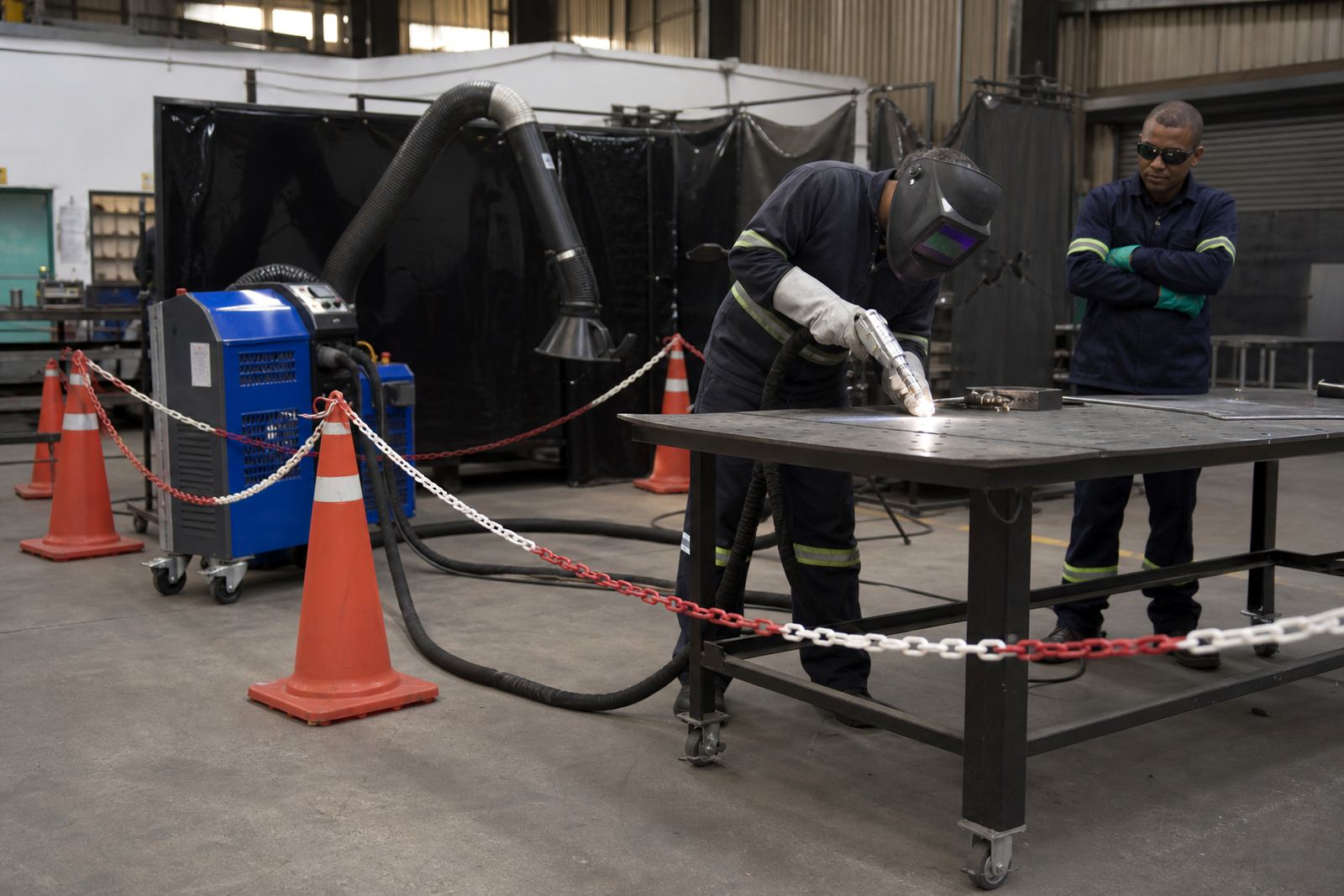
The main purpose is simple: help the operator, the people nearby and the workspace stay organised while the machine is in use. It supports a practical setup where the work zone is marked, the operator is protected and fumes are dealt with properly. In Gauteng, the high dust levels from open yards and the extra stress of load-shedding can make a tidy, disciplined setup even more important.
- For handheld laser welding training and supervised practice
- For small workshops adding laser welding to existing work
- For teams needing PPE, barrier items and setup support in one pack
What is inside the kit and the size options
The exact contents can be matched to the learner count and the floor space you have available. A basic kit suits one operator and a small practice area. A larger workshop pack covers a team, a shared work bay or repeated daily use. Items are selected for practical wear and easy replacement.
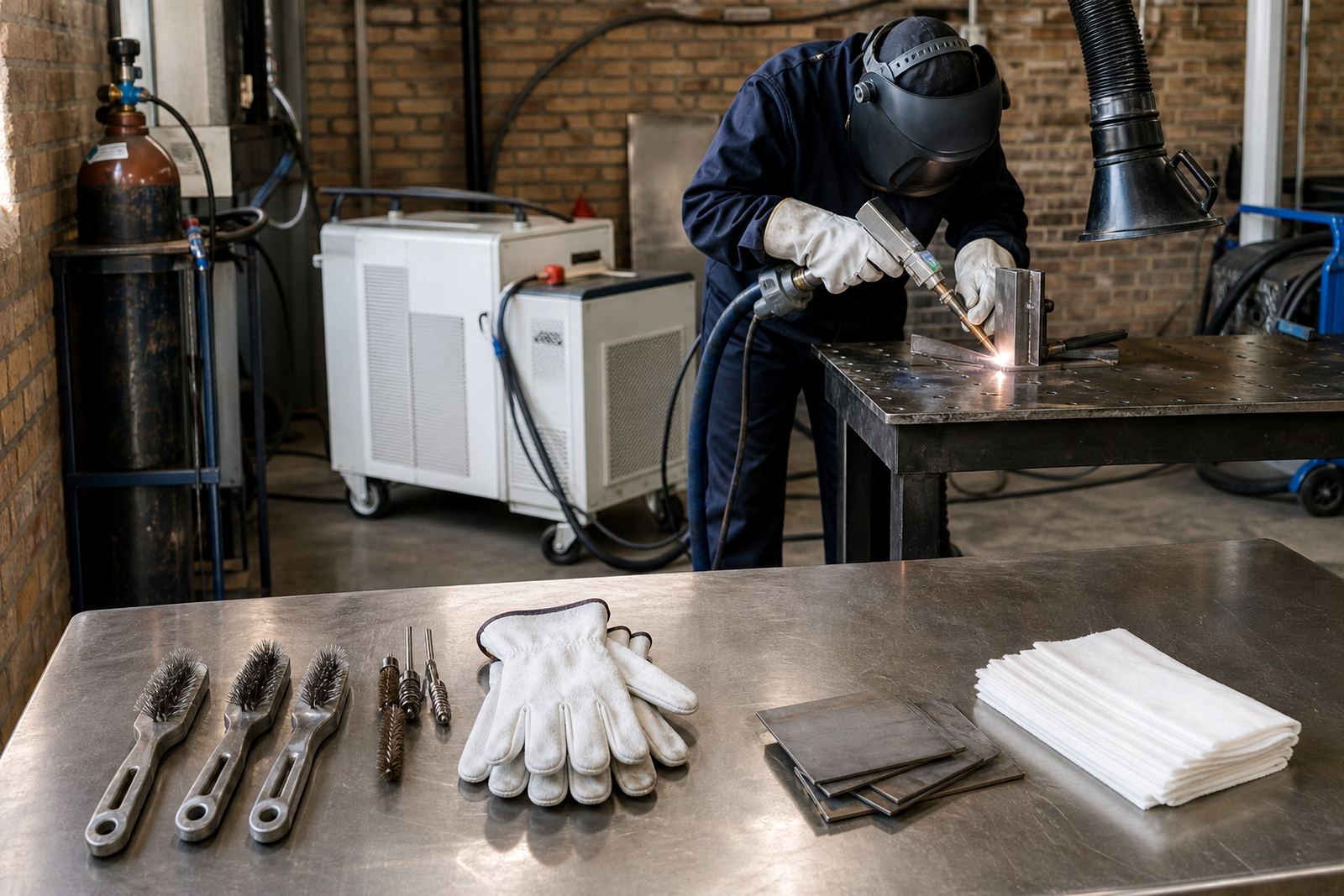
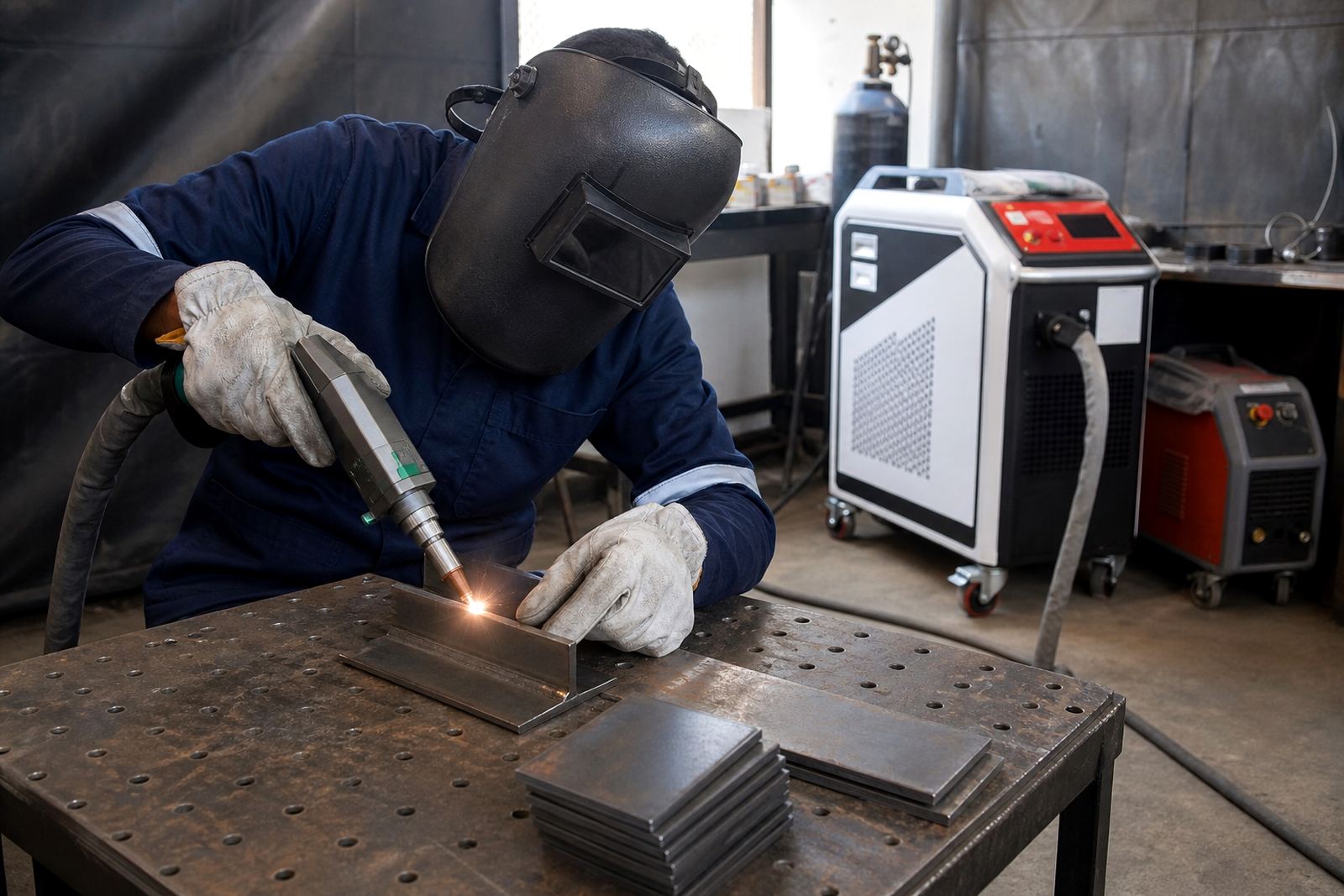
Typical inclusions are laser-rated eye protection, a face shield for additional splash and glare protection where suitable, welding gloves, a protective apron or jacket, warning signage, floor marking tape or cones, a nearby fire extinguisher reminder card, and simple barrier or curtain items for zone control. Some orders also include a small fume extraction add-on or ducting support item where the workshop needs better air movement.
- Single-operator pack: 1 set PPE, signage and basic zone markers
- Two to four operator pack: shared PPE sizes, extra markers and warning signs
- Workshop pack: expanded PPE, barrier items and stronger control of the welding bay
Sizes are usually chosen by PPE fit rather than by machine size. Eye protection must suit the laser wavelength used by the equipment, and gloves or jackets should give enough coverage without slowing hand movement too much.
Where the kit suits best in South African workshops
This product suits learners, new operators and workshop teams in Boksburg, Johannesburg, Pretoria, Durban, Cape Town and Polokwane. It is a good fit for metal fabrication shops, repair centres, maintenance teams, sample-making bays and training facilities that need clearer safety control around handheld laser welding.
In coastal areas like Durban and Cape Town, extra care with storage and drying helps protect PPE and metal fittings from humidity and salt air. In inland towns and industrial parks, dust and grinding residue can build up quickly, so the kit helps create a clear boundary between welding, cutting and cleaning tasks. If your site has visitors, apprentices or multiple trades sharing the same floor, the area-control items are especially useful.
- Training bays with regular learner rotation
- Small workshops with shared equipment and changing shift teams
- Sites that need clear walkways, warning points and better access control
Power, gas and workspace setup needs
The safety kit itself does not need gas, but the welding setup around it may need proper ventilation and, where fitted, fume extraction. For handheld laser welding, the most important point is not to rely only on open doors or a fan. Fine fumes and metal vapours should be pulled away from the breathing zone and not just moved around the room.
Where a portable extractor is used, it usually needs standard workshop power and a stable place to stand. Keep cables out of the walk path and avoid running them through wet or oily areas. If your shop works during load-shedding, plan where emergency lighting, battery backup or a generator will sit so the area stays visible and safe. The kit also works best where the operator has a clean bench, good floor space and enough room to move the torch tip without bumping into stored stock.
Make sure the work area has clear signs, controlled entry, and enough space for the operator to step back if the part needs repositioning.
Care, replacement and day to day servicing
PPE and control items last longer when they are cleaned and stored properly after every session. Wipe down face shields and eye protection with a soft cloth, check gloves for wear at the fingers and palm, and keep jackets or aprons dry. If a curtain or barrier panel becomes scratched, heat-marked or torn, replace it rather than patching it with tape.
Dust, metal spatter and oil mist can build up in a workshop quickly, so the kit should be checked at the same time as your machine start-up routine. Replacement consumables are easier to manage when the team keeps a simple list of what gets used most often. In many shops, that includes lens cloths, glove sets, signage, tape and any filter items linked to extraction.
- Inspect before each use for cracks, wear or missing items
- Store PPE away from heat, grinding sparks and direct sun
- Keep spare signage and markers ready for shift changes or new learners
What to check before you order
Before ordering, confirm how many operators need protection, what laser wavelength your equipment uses, and how much floor space you have for barriers or markers. If you are training new staff, it helps to choose a kit that includes enough items for inductions, briefings and repeat practice. Check whether you need left- and right-handed glove sizes, or a mix of sizes for different staff members.
Also think about the workshop conditions. A site near the coast may need better storage planning. A busy East Rand workshop may need stronger boundary control because trucks, grinders and welders are moving through the same space. If you are not sure what to choose, ask for a site read and the kit can be matched to the way your team works.
- Number of users and their PPE sizes
- Laser wavelength and class used on site
- Need for barriers, warning signs or fume extraction support
- Indoor, outdoor or mixed workshop conditions
How it supports training and supervision
For training, the kit makes it easier to teach safe habits from the start. Learners can see the zone layout, wear the right protection and understand why access control matters around a handheld laser. For supervisors, it gives a clear starting point for operator inductions, workflow advice and refresher visits when a team is getting used to new equipment.
This is a practical support pack rather than a machine bundle. It works alongside training, not instead of it. Good welding results depend on steady handling, clean surfaces and correct setup, and safety is part of that standard from the first session. The aim is a calmer work area, fewer interruptions and better control of the people and space around the weld.
Key facts
| Product type | Safety support kit for handheld laser welding |
|---|---|
| Typical user | Learners, operators, supervisors and small workshop teams |
| Protection focus | Laser eye protection, PPE and area control |
| Laser suitability | Class 4 handheld laser welding environments |
| Power requirement | None for the kit itself, extraction add-ons may need standard workshop power |
| Options | Single-operator pack, multi-user pack, workshop pack, optional extraction support items |