What the Stainless Starter Kit Covers
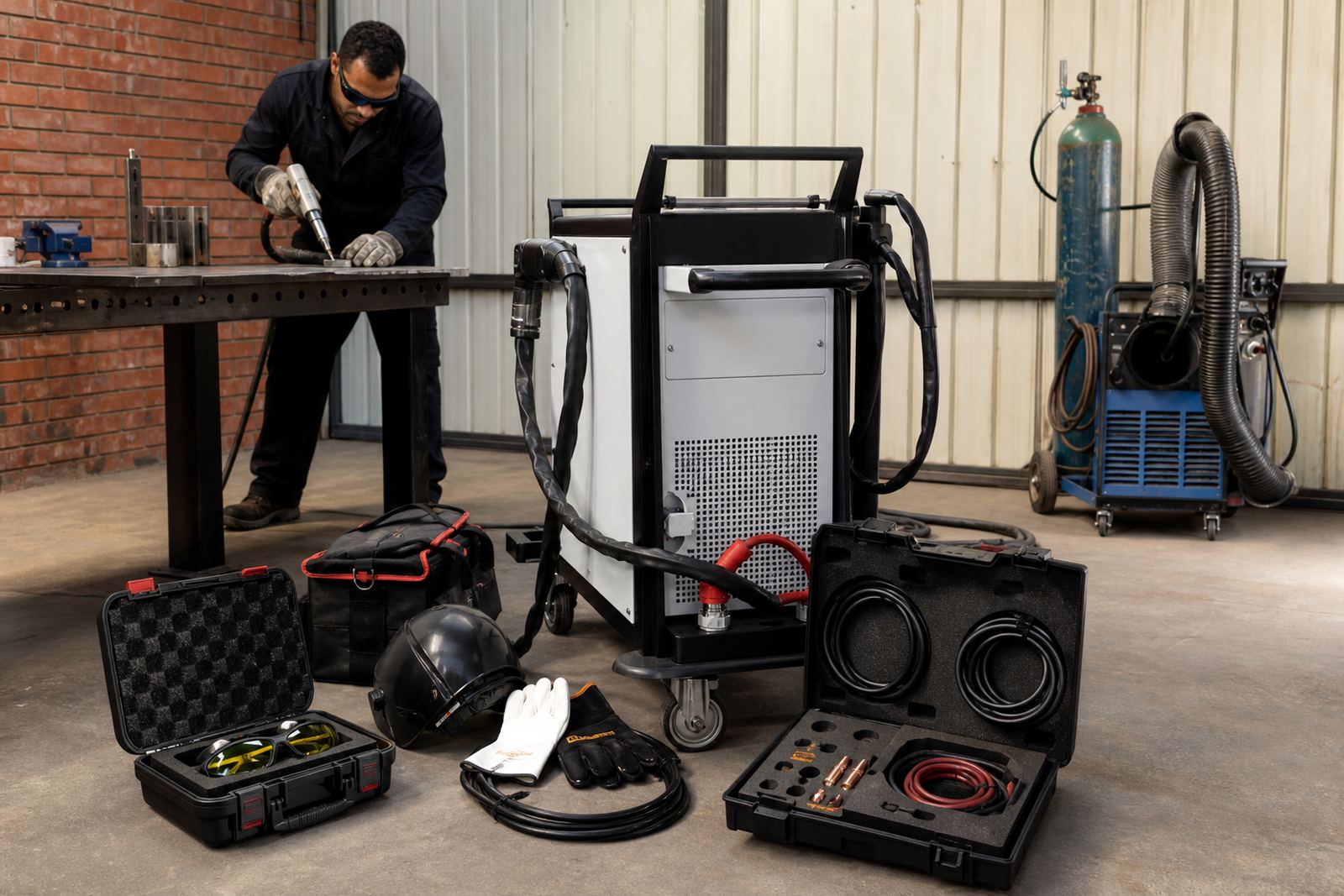
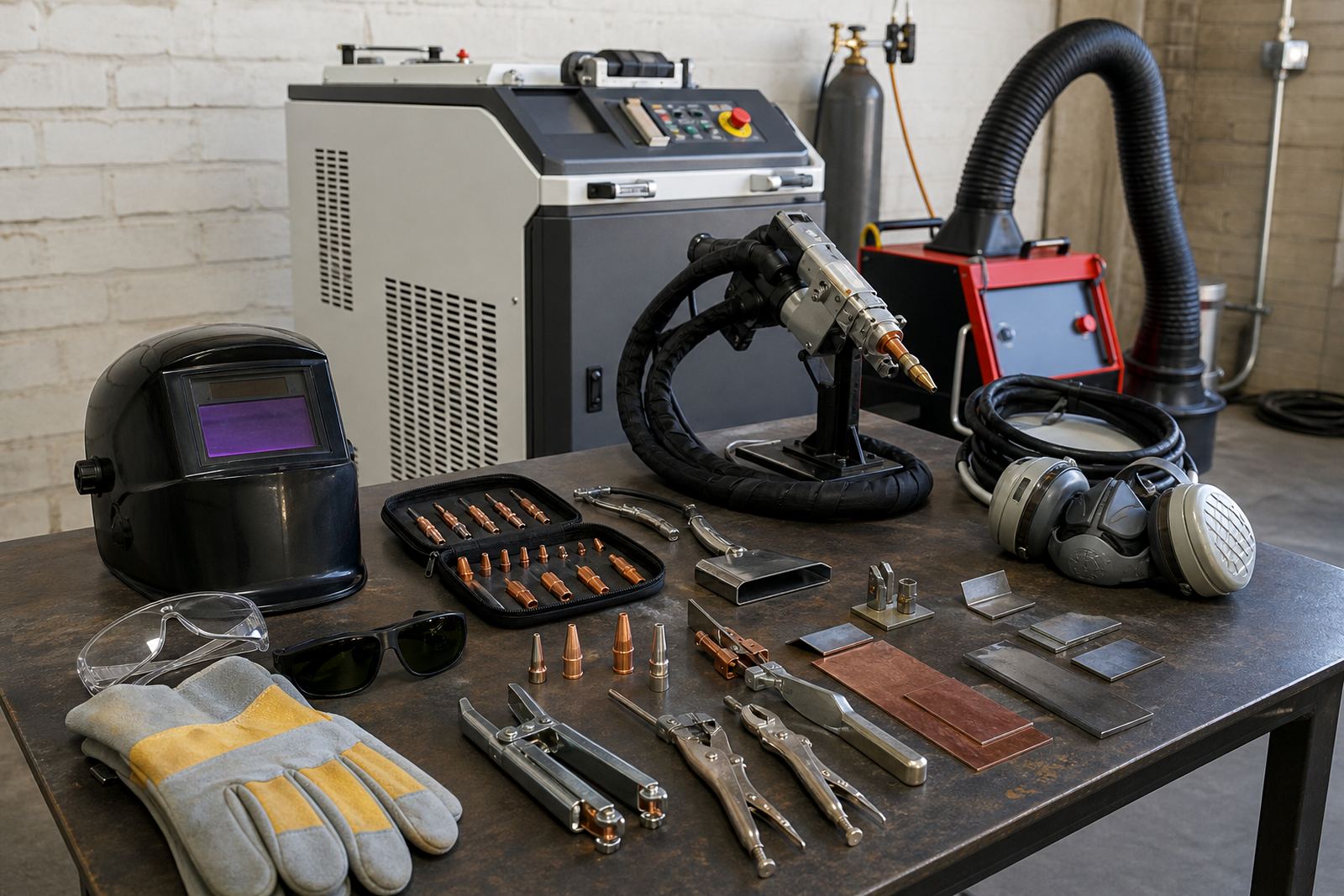
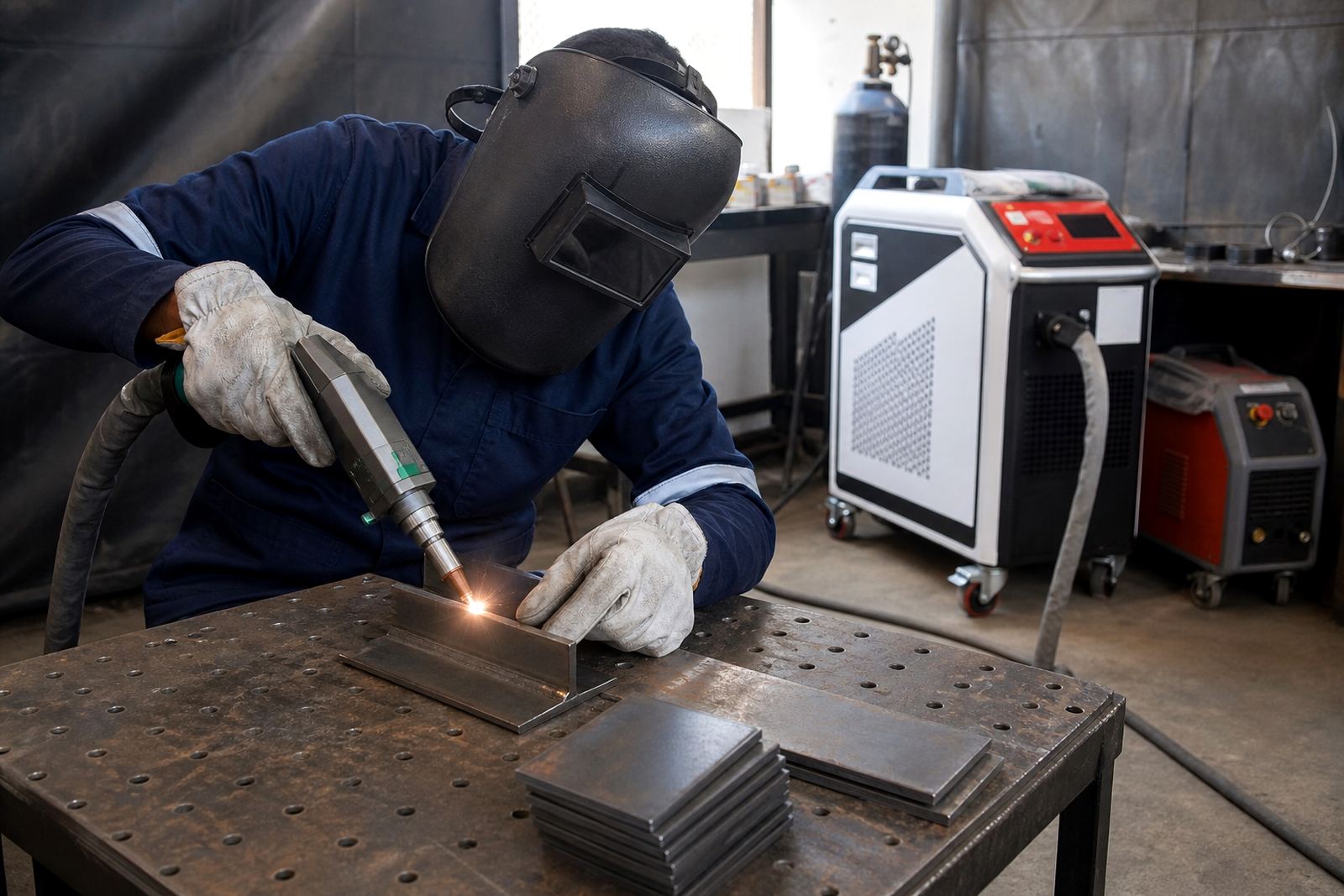
The stainless starter kit brings together the items commonly needed for handheld laser welding where appearance, cleanliness and repeatable results matter. It is aimed at stainless steel jobs that need tidy joints, controlled heat input and a safer working setup in a workshop or on site.
The kit is suitable for stainless fabrication, light repair work, trim jobs and practice runs on sheet, tube and formed sections. It is not a machine on its own, but a supporting kit that helps the operator prepare, protect, finish and maintain the work area properly.
Where It Suits Best
This kit is a good match for workshops that handle stainless gates, kitchen fittings, balustrades, tanks, enclosures and general repair work. It also suits training rooms where learners need to understand the routine around stainless work before moving into production.
- Small fabrication shops doing short runs and repairs
- Maintenance teams working on polished or brushed stainless parts
- Training centres teaching operator setup and weld control
- Busy workshops that need a cleaner process than old arc methods
In humid coastal areas, stainless needs careful handling to avoid staining and surface marks. In Gauteng and other inland areas, dust control and consistent cleaning still matter, especially when the workshop is open to traffic or grinders running nearby.
Sizes, Options and Typical Contents
The starter kit is supplied in practical workshop options so it can suit a small bench setup or a fuller training bay. Some buyers want the basic consumable and safety pack, while others need a more complete setup with cleaning tools and setup accessories.
- Standard starter kit for learner use and light workshop work
- Expanded kit for supervisor-led training and repeat practice
- Consumable top-up pack for ongoing stainless jobs
- Workshop support pack with setup and care items
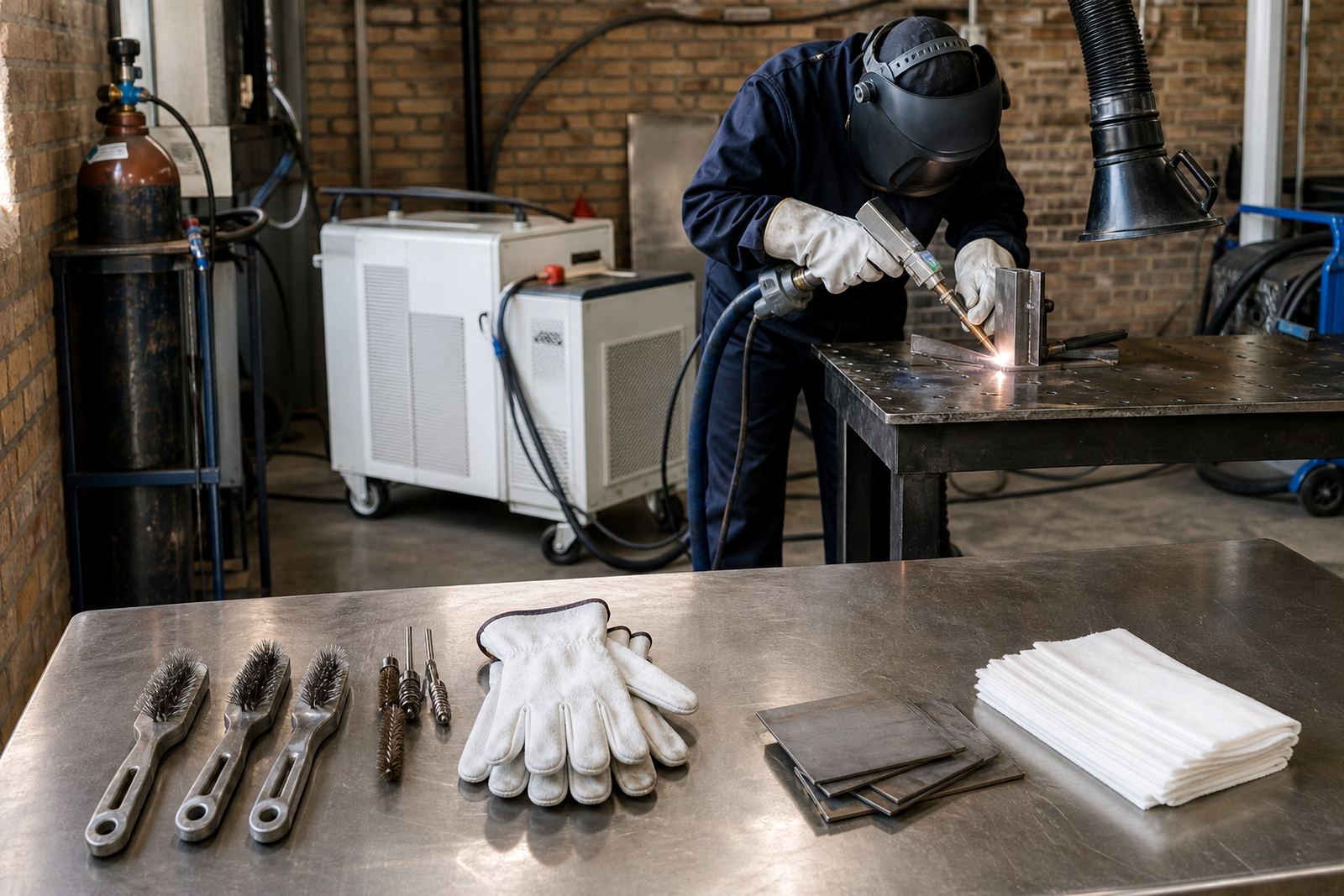
Typical contents can include protective eyewear rated for laser use, hand protection for handling metal parts, surface cleaning items, marking tools, nozzle care items, wire guides where needed and starter consumables for basic practice. The exact contents should be checked before ordering so the kit matches the machine, the workpiece thickness and the intended duty cycle.
Installation, Power and Gas Requirements
Handheld laser welding equipment needs a stable electrical supply, a clear work area and proper extraction. Most workshop setups use single phase power, but the exact supply depends on the welding unit and the supporting accessories being used. Before installation, check the plug type, cable length, breaker size and whether the area can carry the load without nuisance trips during busy periods or load-shedding recovery.
For stainless work, shielding gas and clean delivery lines are important. The gas type and flow rate must suit the machine and the job, and the hose route should be kept tidy so it does not get damaged underfoot. A clean, dry gas source helps reduce surface oxidation and keeps the finish more even.
- Provide a dry, level surface with enough room to move around the bench
- Check power supply, earthing and cable condition before first use
- Set up local fume extraction or a suitable extraction arm near the weld point
- Keep reflective surfaces and bystanders out of the direct working zone
Safety for Stainless Laser Welding
Laser welding requires proper control of the work area because the beam, reflections and fumes can create risk if the setup is poor. Stainless steel can throw strong reflections off bright surfaces, so the operator must use the correct laser class precautions and eye protection for the equipment in use.
The kit supports safe working habits, but it does not replace operator training. Fume extraction should be used whenever possible because stainless fumes and cleaning residues can build up quickly in a closed room. Good practice includes clear signage, controlled access, pre-use checks and no loose reflective items near the weld zone. One missed step can lead to contamination or injury, so the safety routine has to be taken seriously.
- Wear eye protection rated for the wavelength and laser class of the machine
- Use local extraction or a filtered fume unit near the point of welding
- Keep the work area free of solvents, rags and unnecessary clutter
- Use operator briefings before each new job or new shift
Care, Servicing and Ongoing Use
Stainless jobs often need a cleaner finish than general mild steel work, so the kit should be kept in good condition. Store consumables dry, wipe down accessories after use and check cables, lenses and nozzles regularly for wear or contamination. If the machine is used daily, a simple end-of-shift inspection helps catch small issues before they become breakdowns.
Servicing should include checking the condition of the torch head, gas delivery, filters and safety items. If the workshop runs in a coastal area, extra attention should be given to corrosion, moisture and salt contamination. In inland workshops, dust and grinder sparks are more common problems, so covers and cleaning routines still matter.
- Keep the kit sealed when not in use
- Replace worn protective items before they fail
- Inspect gas hoses, fittings and power leads often
- Clean stainless contact points to avoid marks and contamination
What to Check Before You Order
Before placing an order, check what type of stainless work you will be doing, how often the kit will be used and whether the machine already on site needs any specific consumables or accessories. The right starter kit should match the weld size, the finish required and the skill level of the operator. If the team is still learning, a fuller support pack can save a lot of trouble later.
It also helps to confirm workshop space, power access and extraction. A kit that looks complete on paper may still need extra fittings, a better gas regulator or a different protection setup once it reaches the shop floor. We find that a short readiness check upfront avoids delays, wasted consumables and awkward setup changes later on.
- Confirm the machine model and laser setup already in use
- Check the stainless thicknesses and joint types you work on most
- List any extra safety items, cleaning gear or setup tools needed
- Make sure the workshop can handle power, gas and extraction requirements
Key facts
| Product type | Starter kit for handheld laser welding on stainless applications |
|---|---|
| Use case | Learner support, workshop setup, maintenance and light fabrication |
| Power need | Matched to the welding machine; commonly single-phase workshop supply |
| Gas requirement | Shielding gas setup required; flow and hose spec depend on machine |
| Safety items | Laser-rated eye protection and local fume extraction support |
| Typical contents | Protective gear, care items, consumables and setup accessories |