What the Operator Safety Module Covers
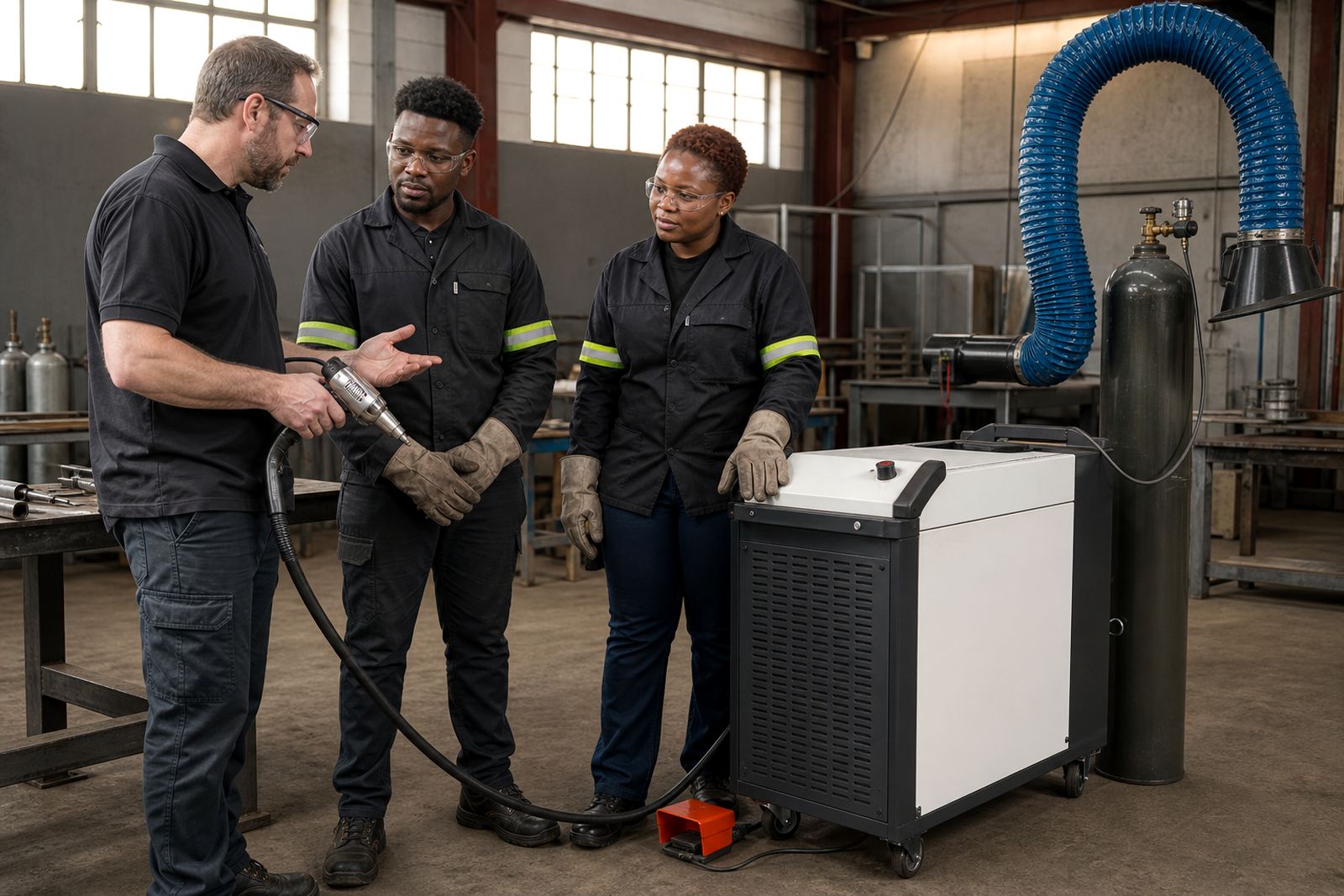
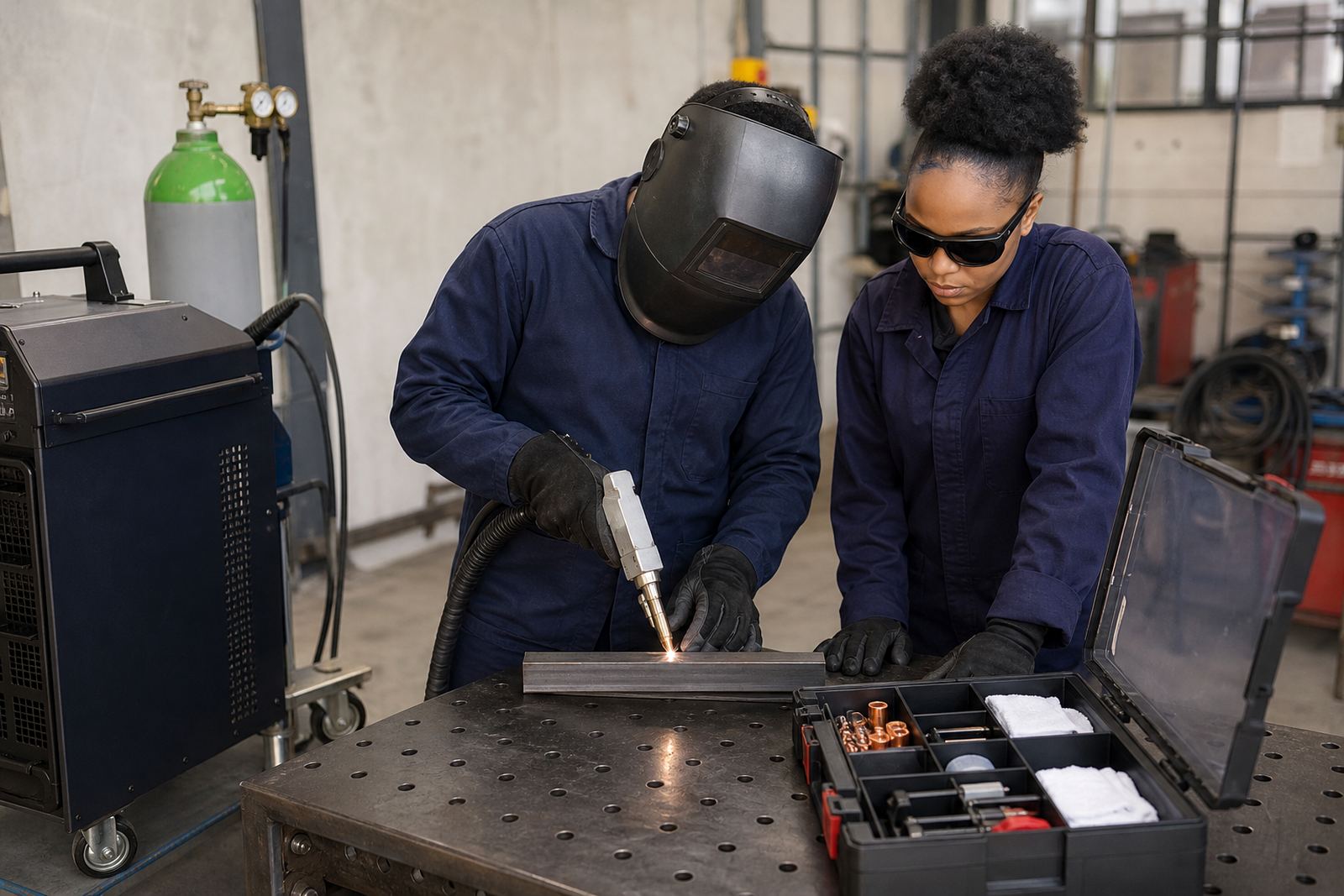
This module is built for people who are already learning handheld laser welding, or for workshops bringing new operators into a live bay. It focuses on the safety habits that matter before the torch is switched on, during the weld and after the job is cleared away. The aim is simple: less confusion, fewer mistakes and better control around the machine, workpiece and surrounding team.
Training covers laser class awareness, the reason correct goggles matter, how to mark and control the work area, and how to handle fumes and reflections in a practical way. It also explains the basic checks that should happen before every session, especially where sheet metal, stainless steel or coated material is being welded in a shared workshop.
- Laser class awareness and operator responsibility
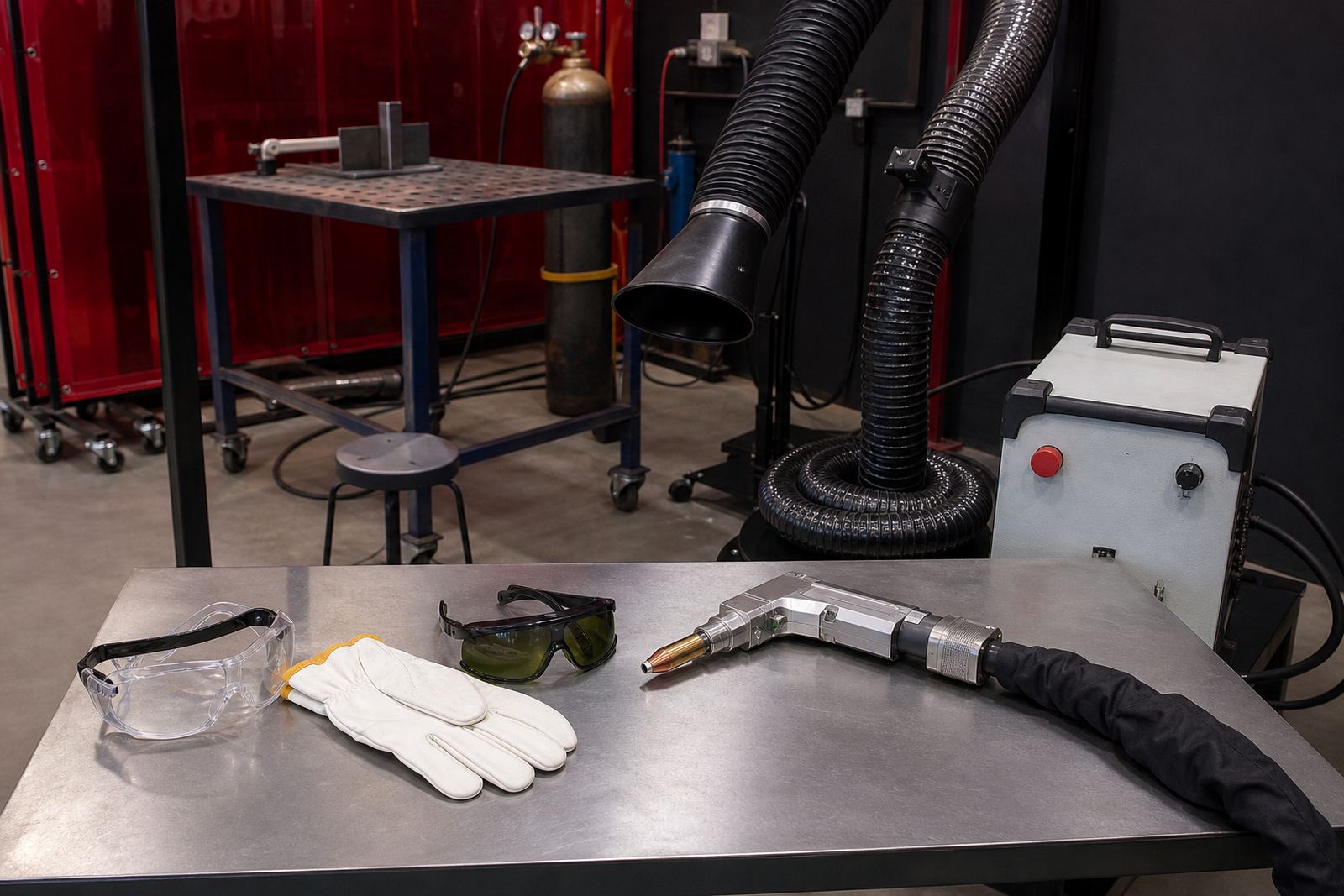
- Eye protection selection and fit checks
- Controlled area setup and warning controls
- Fume extraction basics for handheld laser welding
Where It Suits Workshops And Learners
This module suits beginners who need a solid safety foundation, as well as workshop supervisors who want a common rule set for the whole team. It is useful for training bays, fabrication shops, maintenance teams and small production spaces where handheld laser welding is being introduced alongside cutting, grinding or conventional welding.
It is also a good fit where different shifts share the same space and equipment. In busy areas like Boksburg, Johannesburg, Pretoria, Durban, Cape Town and Polokwane, workshops often have mixed activity, dust, traffic and limited floor space. A clear safety module helps keep the laser area defined, even when the rest of the shop is occupied.
- New operator inductions
- Supervisor refresher sessions
- Workshop rule setting for shared spaces
- Safety briefings before live welding starts
Sizes, Options And Training Formats
The module is offered as a focused safety session or as part of a broader starter package for learners and workshops. The content can be adapted for a single operator, a small team or a larger group that needs the same safety standard across the floor. For businesses setting up a new bay, the module can be paired with site readiness checks and workflow advice so the safety setup matches the way work is actually done.
Options are usually based on the level of detail needed. Some teams need a short, practical introduction before using a starter kit. Others want a more detailed walk-through that includes signs, boundary control, PPE checks and extraction placement. The material can also be matched to the type of jobs being done, from repair work to light fabrication and training room practice.
- Single operator induction
- Small team session
- Workshop supervisor version
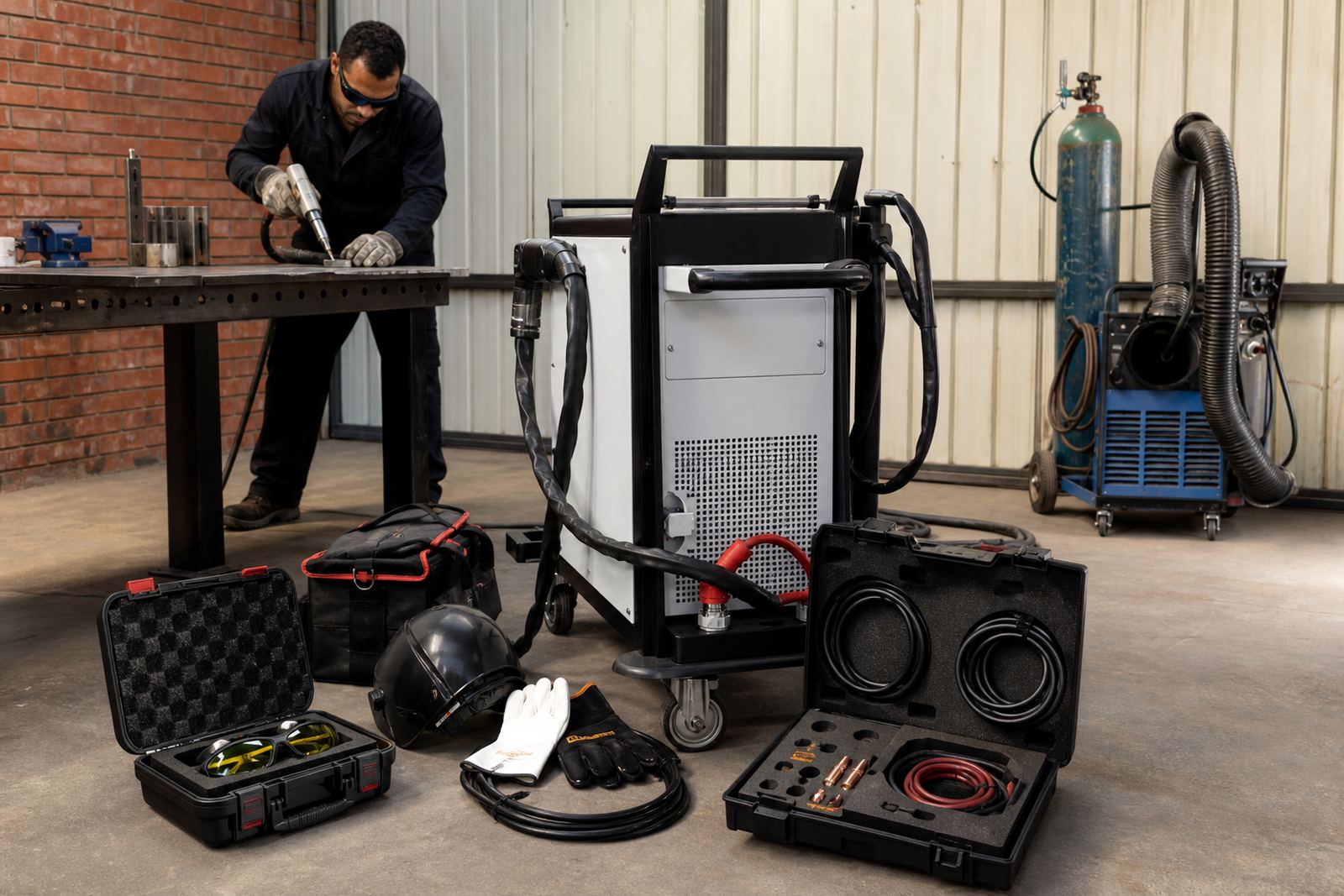
- Starter kit safety add-on
Installation, Power And Fume Extraction Basics
Because this is a safety module rather than a machine package, the setup is straightforward. It helps operators understand what must be in place before any handheld laser welding starts. That includes a stable working surface, a defined controlled area, clear signage where needed and enough space for the operator to move without crowding the torch path or the cable run.
Power needs depend on the equipment supplied with the welding setup, but the training explains the usual workshop checks: reliable mains supply, safe cable routing and protection against overloads or poor extension leads. If the workshop uses assist gases or shielding arrangements, the module also covers storage and handling basics, plus the need to keep hoses, fittings and regulators in good condition. Fume extraction should be positioned so it captures smoke at the source without pulling the operator off the weld line.
- Check electrical supply before first use
- Keep hoses and cables out of walkways
- Place extraction close to the weld point
- Use clear boundaries for the active work zone
Safety Checks That Matter On The Floor
The strongest part of this module is the practical checklist. Operators are shown how to look for signs of unsafe practice before starting, not after a near miss. That includes checking the laser class marking, confirming the correct eye protection is worn, making sure reflective surfaces are managed and confirming that nobody enters the controlled area without permission.
Handheld laser welding can seem simple once the torch is in hand, but the risks are still there if people are careless with reflections, fumes or eyewear. For that reason the module spends time on disciplined habits. It is not about making the job harder. It is about making the routine safe enough to repeat every day, even in hot weather, in a dusty bay or during load shedding when the workshop is running on backup power.
- Confirm laser class and warning labels
- Wear the right eye protection every time
- Remove shiny loose items from the work area
- Keep bystanders outside the controlled zone
Care, Servicing And Refreshers
The module also explains how to keep the safety routine in good shape after training. Eye protection should be inspected for scratches, fit and cleanliness. Extraction units need routine attention so filters, ducts and nozzles do not clog with dust or fine particles. Any damaged cables, loose fittings or worn PPE should be replaced before the next session, not left for later.
Refresher visits are useful when staff change, when a workshop moves premises or when the welding layout is altered. If a team starts doing more work on stainless steel, coated material or enclosed parts, the fumes and access rules may need to be reviewed again. A short follow-up can prevent bad habits from creeping in once the first few jobs are done and everyone feels comfortable.
- Check eyewear before each shift
- Clean extraction points regularly
- Replace worn PPE and damaged leads
- Review safety after layout changes
What To Check When Ordering
When ordering this module, it helps to be clear about the type of learners, the workshop layout and the kind of welding work being done. That lets the training team pitch the session at the right level and include the most relevant controls. If the training is for a mixed group, mention who has used handheld laser welding before and whether the team needs a basic introduction or a more detailed supervisor briefing.
It is also useful to confirm whether the module will be paired with a starter kit, operator induction, workflow advice or a safety briefing for a live workshop. If the site has limited ventilation, shared extractor equipment or a tight production area, those points should be raised early so the advice fits the space. Clear details at the start save time and help the session land properly.
- Number of operators attending
- Current skill level of the group
- Workshop size and layout
- Any extraction or power limits on site
Key facts
| Module focus | Laser class awareness, eye protection, controlled areas and fume extraction basics |
|---|---|
| Training format | Single operator, small team or workshop group |
| Suitable for | Handheld laser welding learners and supervisors |
| Location fit | Boksburg, Gauteng and teams across South Africa |
| Support options | Site readiness checks, inductions, safety briefings and refresher visits |
| Completion | Certificate of completion from LaserWelder Training |