What An On-Site Training Day Covers
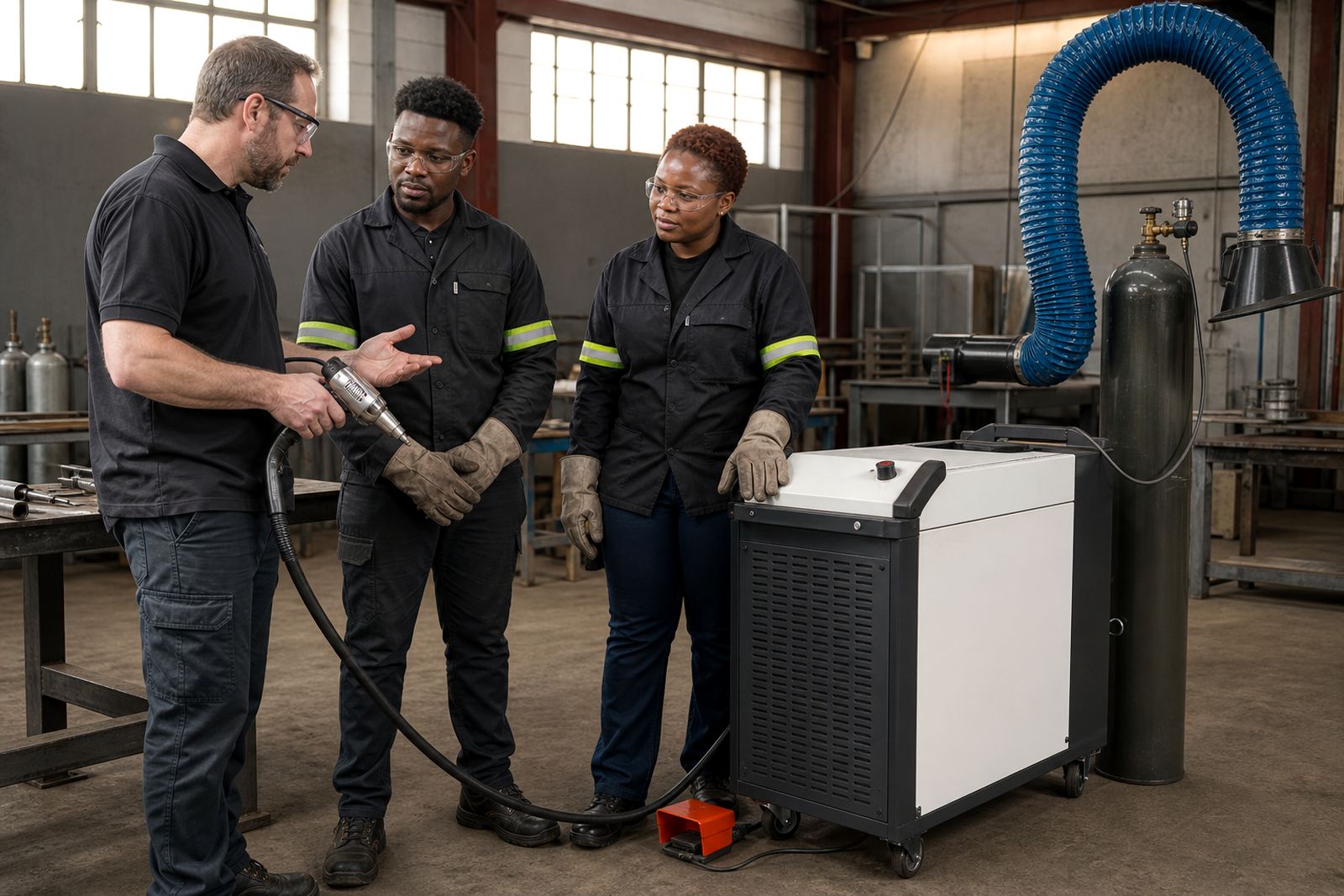
This is a focused, practical day for welders, workshop teams and supervisors who need hands-on guidance at their own premises. The trainer works through the machine, torch, wire feed if fitted, shielding gas setup, cleaning steps and a simple start-up routine that suits the jobs you do most often. It is ideal when you want to reduce trial and error and get everyone on the same page before work starts.
Laser welding is not the same as a conventional arc process. The beam is concentrated, the joint prep must be clean and fit-up needs care. On-site training gives your team a clear working method for thin sheet, brackets, small repairs, stainless steel, mild steel and selected aluminium work, depending on the unit and materials you use. It also helps with load-shedding planning, since many workshops need to know what power draw to expect and how to keep the area safe when the supply comes back on.
- Trainer-led familiarisation at your own workshop
- Safe start-up and shutdown routine
- Basic beam handling and joint prep guidance
- Operator and supervisor Q&A on the day
Where This Day Suits Best
This option suits fabrication shops, repair workshops, maintenance teams, jobbing welders and manufacturing sites that already have a handheld laser welding machine or are about to commission one. It works well for teams in Boksburg, the East Rand, Johannesburg, Pretoria, Durban, Cape Town and Polokwane, especially where staff rotate between shifts and need a common method. It is also useful for businesses that handle repeat jobs and want fewer rejects from poor cleaning, wrong speed or inconsistent torch angle.
For smaller shops, a single day can be enough to set the working standard and assign responsibilities for daily checks. For larger sites, we can split the day between operators, supervisors and support staff so each group gets the right detail. If your workshop runs in a coastal area, we can also talk through storage and care in humid conditions, because moisture and dust both affect machine life and weld quality. There is no one-size-fit-all approach, the setup must match your floor and your work.
- Best for workshops with new staff or mixed skill levels
- Useful when changing from conventional welding to laser welding
- Suitable for sites needing a simple site-specific work method
Handheld Laser Welding Sizes And Options
Starter training is usually built around the handheld laser welding unit on site, together with the accessories supplied or already in use. Power levels vary by machine, and the practical day is adjusted to the unit’s output, cooling system and material range. A smaller unit is often used for thin gauge work and light repair jobs, while higher-output units are better for wider material ranges and faster production runs. The trainer will explain what the machine can and cannot do, rather than promising more than the setup can handle.
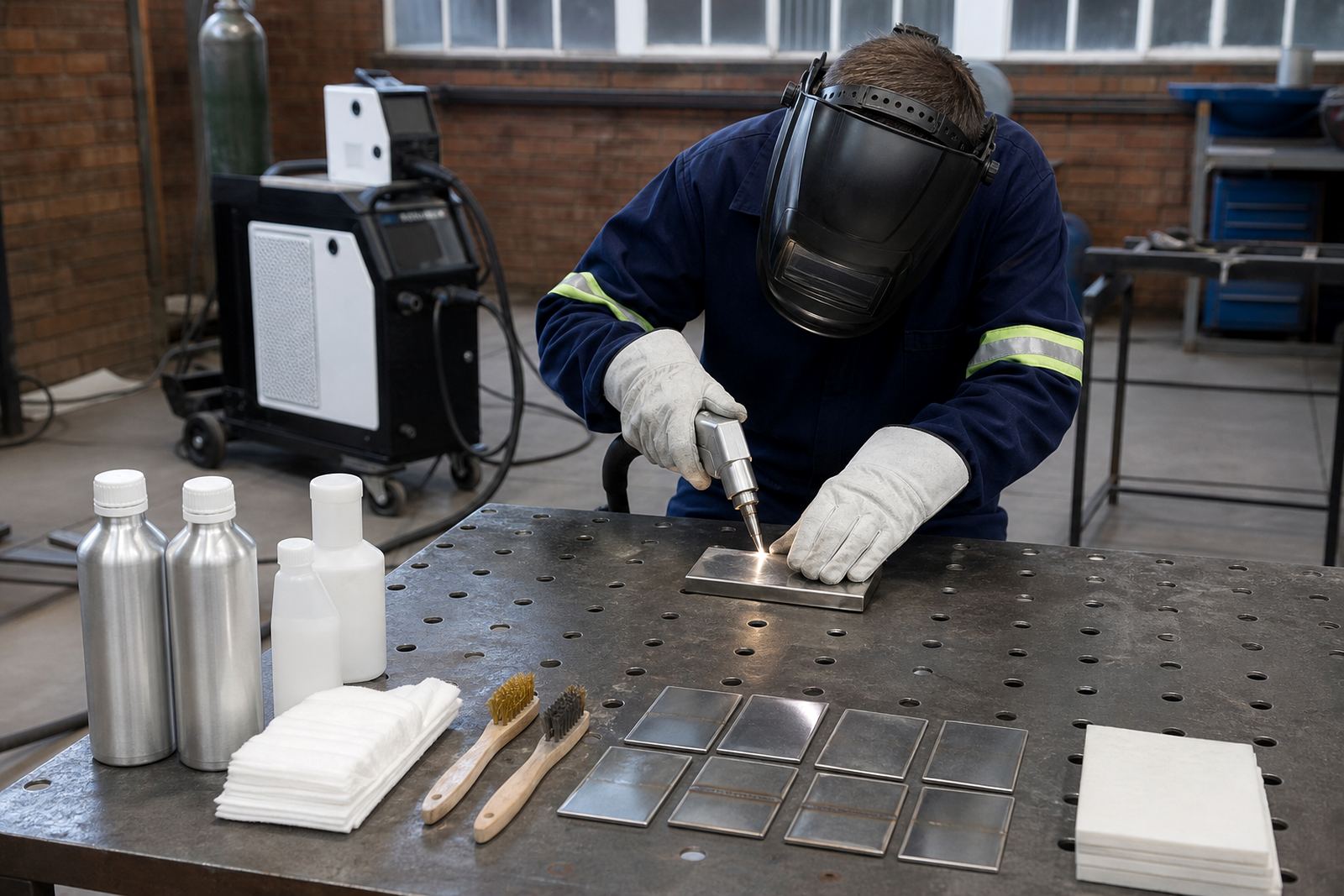
Typical options covered during the day include different torch nozzles, wire feed settings, cleaning accessories, nozzles for gas delivery and the use of a suitable trolley or stand if the unit is moved often. If your business uses a portable system, we will look at how to store the unit safely between jobs and how to protect hoses, cables and optics from impact. Starter kits can also be discussed on the day so learners know which consumables are worth keeping on hand from the start.
- Machine output matched to the workpiece thickness
- Portable or fixed workshop use
- Accessory and consumable planning for the first jobs
Power, Gas And Workshop Readiness
Before the day begins, the site should have a suitable electrical supply, a clean work area and enough space for the operator to move safely around the bench. The trainer can advise on basic site readiness checks, including clear access, fire precautions and where the machine will sit during use. Power needs depend on the unit, but the workshop should be able to confirm the available supply, plug type and protection on the circuit before training starts. In many South African workshops, a stable plan for load-shedding is just as important as the machine itself.
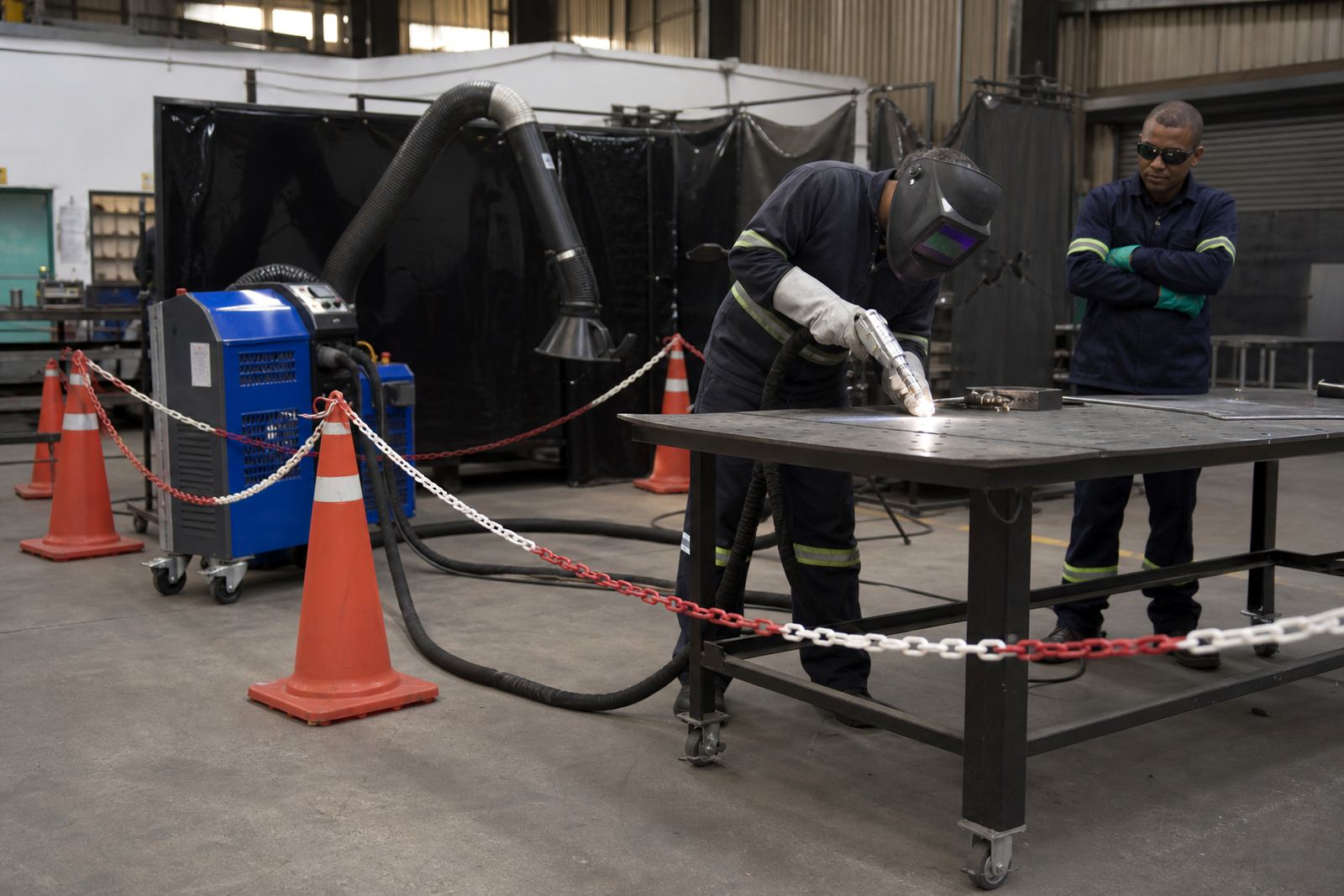
Shielding gas requirements depend on the material and machine setup. The correct gas flow, regulator and cylinder handling need to be in place, and the area must allow safe storage of cylinders. The trainer will also check that there is proper fume extraction or local extraction at the work point, especially when working on coated, painted or contaminated materials. Eye protection is essential, along with suitable laser safety controls, marked work zones and controlled access while the beam is in use.
- Confirm the electrical supply and protection on the circuit
- Prepare shielding gas, regulator and secure cylinder storage
- Set up eye protection, extraction and a restricted work zone
What Happens During The Visit
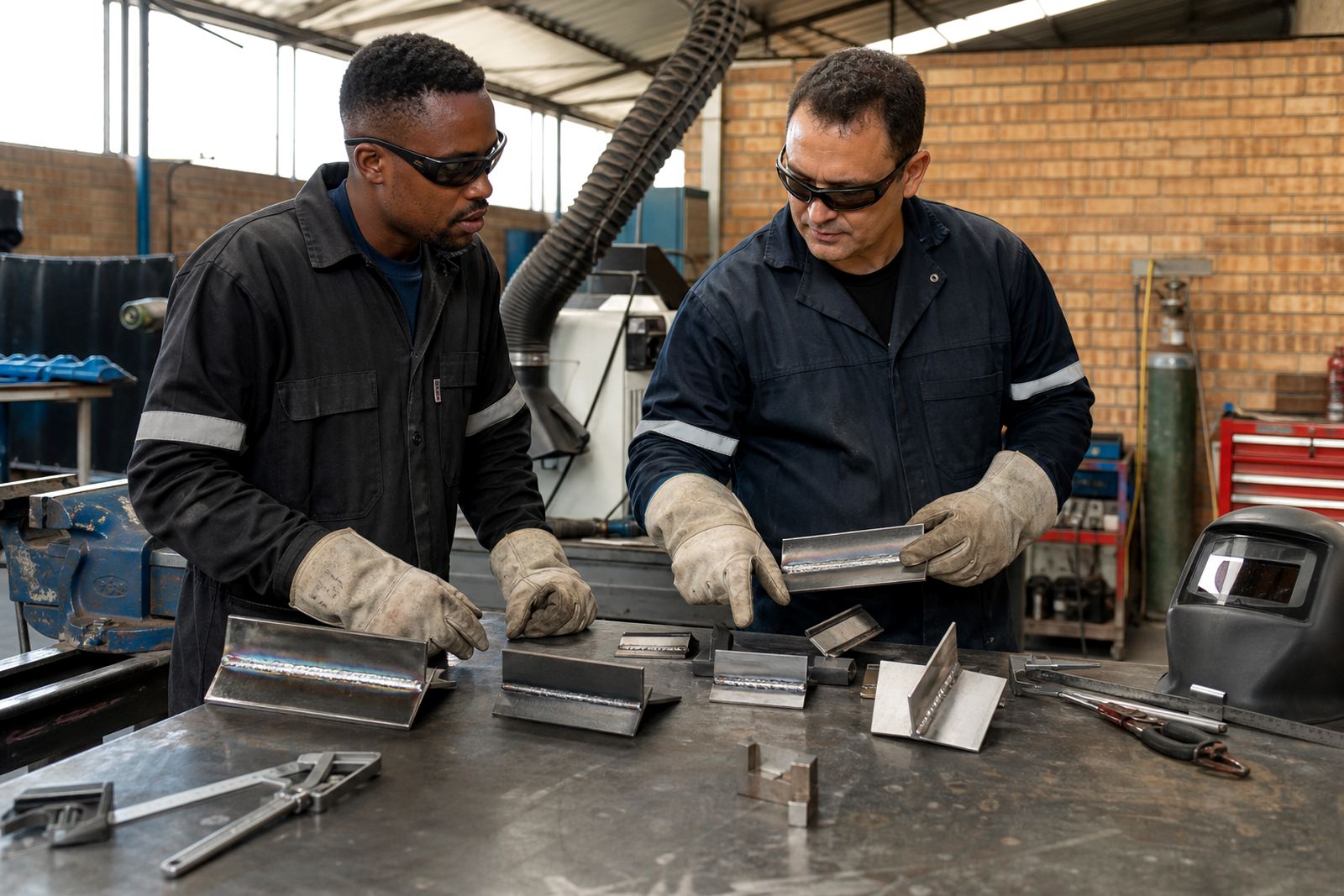
The day usually starts with a quick site review and a safety briefing. After that, the trainer walks the team through machine checks, material cleaning, joint fit-up, test runs and basic technique. The aim is to show a repeatable process that operators can use after the visit ends. Depending on the workshop, the day can also include supervisor coaching, workflow advice and a simple practice plan for the next few weeks. That way, the learning does not stop when the session ends.
We keep the session practical and job-focused. If your team needs help setting up a new unit, the trainer can show the sequence for unpacking, placing, connecting and checking the equipment before the first weld. If the machine is already in use, the focus can shift to improving consistency, cleaning up the workflow and catching avoidable mistakes early. Training packs can be issued after the visit so supervisors have a written reference for the operating steps and safety checks.
- Safety briefing before any welding starts
- Machine familiarisation and live practice
- Workflow advice for day-to-day workshop use
- Training document pack for follow-up
Care, Servicing And What To Check When Ordering
Care is simple when it is done regularly. Keep the lens and nozzle area clean, check hoses and cables for wear, store consumables dry and keep the work area free from grinding dust and oil. In humid areas, especially near the coast, equipment should be stored properly after use so moisture does not settle on sensitive parts. The trainer will also explain what daily and weekly checks should be done by operators, and what should be left for technical support or servicing.
When ordering an On-Site Training Day, check the machine type, material thickness, power supply, gas arrangement and the exact jobs you want to cover. It helps to know how many operators will attend, whether the team needs supervisor coaching, and whether starter kit setup is part of the visit. If your workshop needs refresher visits later, it is easier to plan if the initial day includes the right details from the start. Founded in 2012, LaserWelder Training has kept the process practical from the first machine check to the final handover.
- Confirm machine type, output and material range
- List the operators and supervisors who will attend
- Check whether starter kit setup and document pack are needed
- Note any site limits on power, gas storage or extraction
Key facts
| Training format | Trainer-led practical day at the client workshop |
|---|---|
| Typical duration | 1 day on site, timing set by the workshop and scope |
| Focus | Safe familiarisation, setup, first-run checks and basic technique |
| Who attends | Operators, supervisors, workshop owners and support staff |
| Equipment covered | Handheld laser welding machine and starter kit accessories |
| Service area | Boksburg, Johannesburg, Pretoria, Durban, Cape Town, Polokwane and wider South Africa |