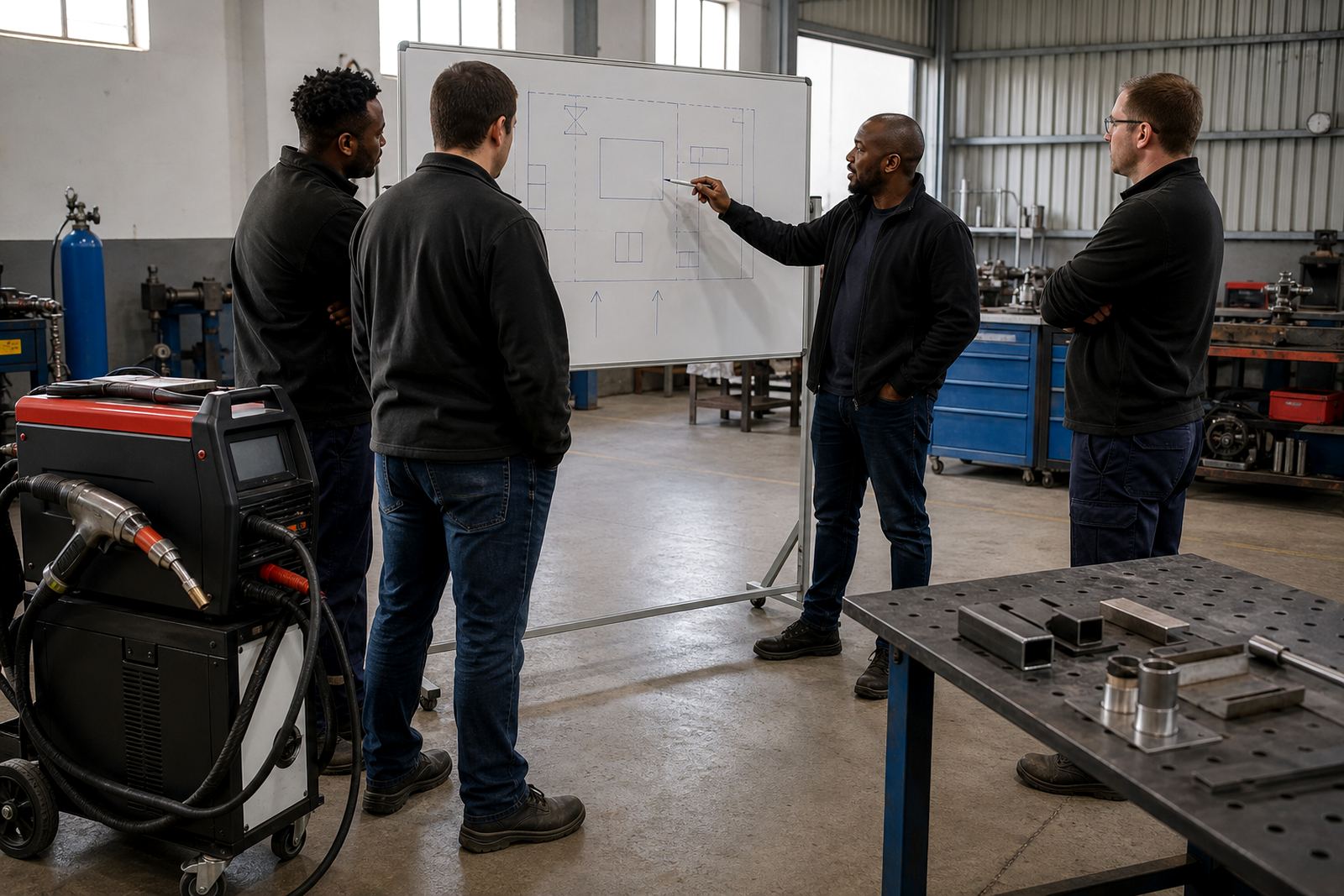
What the Supervisor Briefing Covers
This briefing is for the person who has to make handheld laser welding work in a real workshop, not just in a training room. It helps supervisors understand the basics of the process, what learners need on day one, and how to keep work moving while safe operating habits are built in.
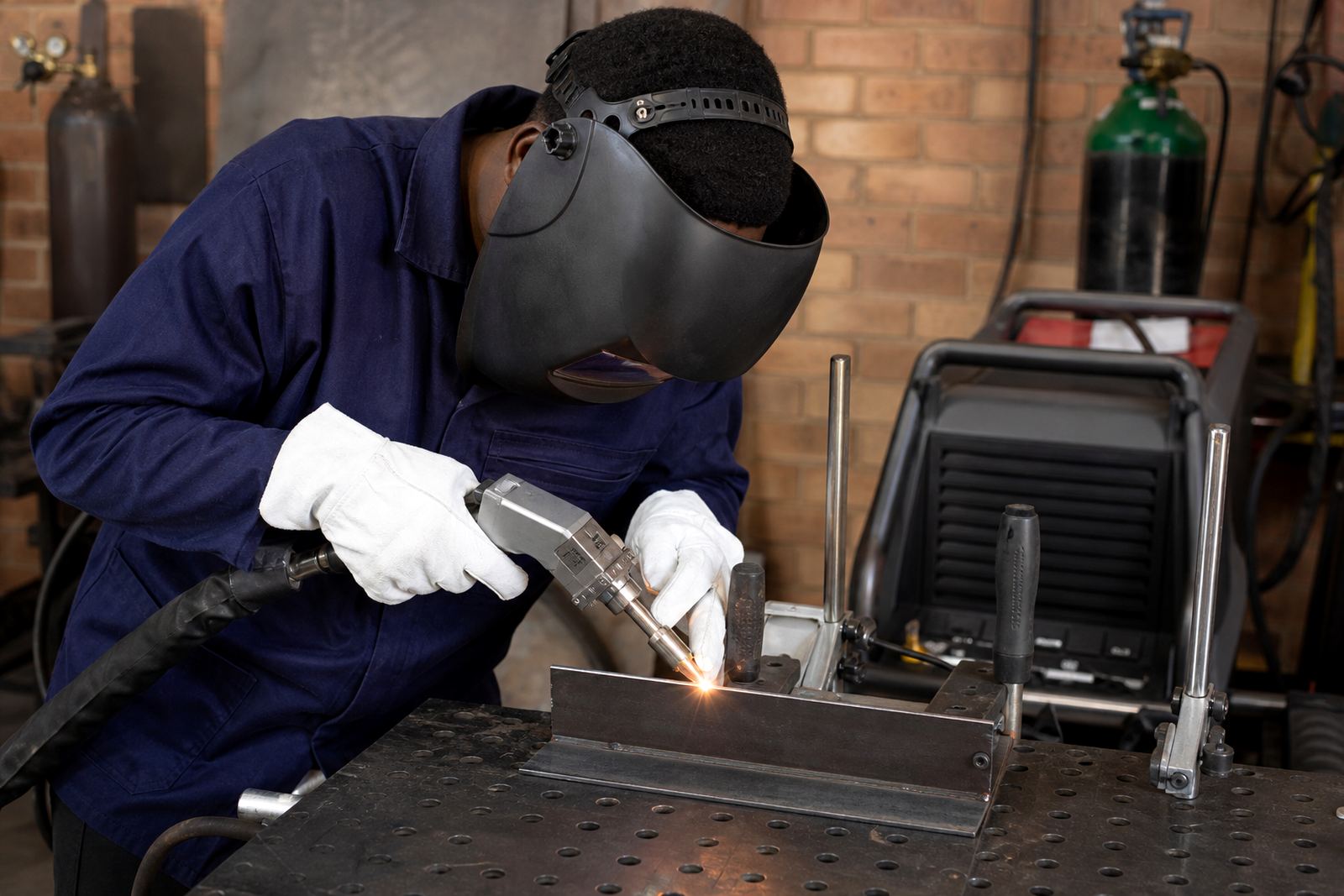
Handheld laser welding uses a focused beam to join compatible metals with controlled heat input and a narrow weld zone. That means less distortion on lighter material, but it also means the operator must keep a steady hand, set the correct parameters and maintain proper line of sight. The briefing gives managers a practical view of what to expect from new operators and how to plan support before jobs start.
- Suitable for supervisors, workshop managers, foremen and owner operators
- Useful before staff attend training or when a new unit is being introduced
- Helps with learner supervision, workflow planning and safety controls
- Includes a certificate of completion from LaserWelder Training after the briefing is delivered
Safe Use, Eye Protection and Fume Control
Laser welding safety starts with knowing the class of laser equipment in use, the exposure risk around the work area, and the controls needed to keep people protected. The briefing covers eye protection for all people near the welding area, not only the operator. It also covers screen placement, warning signs and keeping non essential staff out of the line of the beam.
Fume extraction is an important part of the setup, especially when welding coated material, mild steel, stainless steel or parts with residue from cutting and grinding. Good airflow, local extraction and tidy housekeeping reduce exposure and keep the bay easier to work in during long shifts. In Gauteng workshops where doors may stay open for ventilation, dust control still needs attention because open areas can pull in grit and fine debris.
- Confirm the laser class and keep the correct access control in place
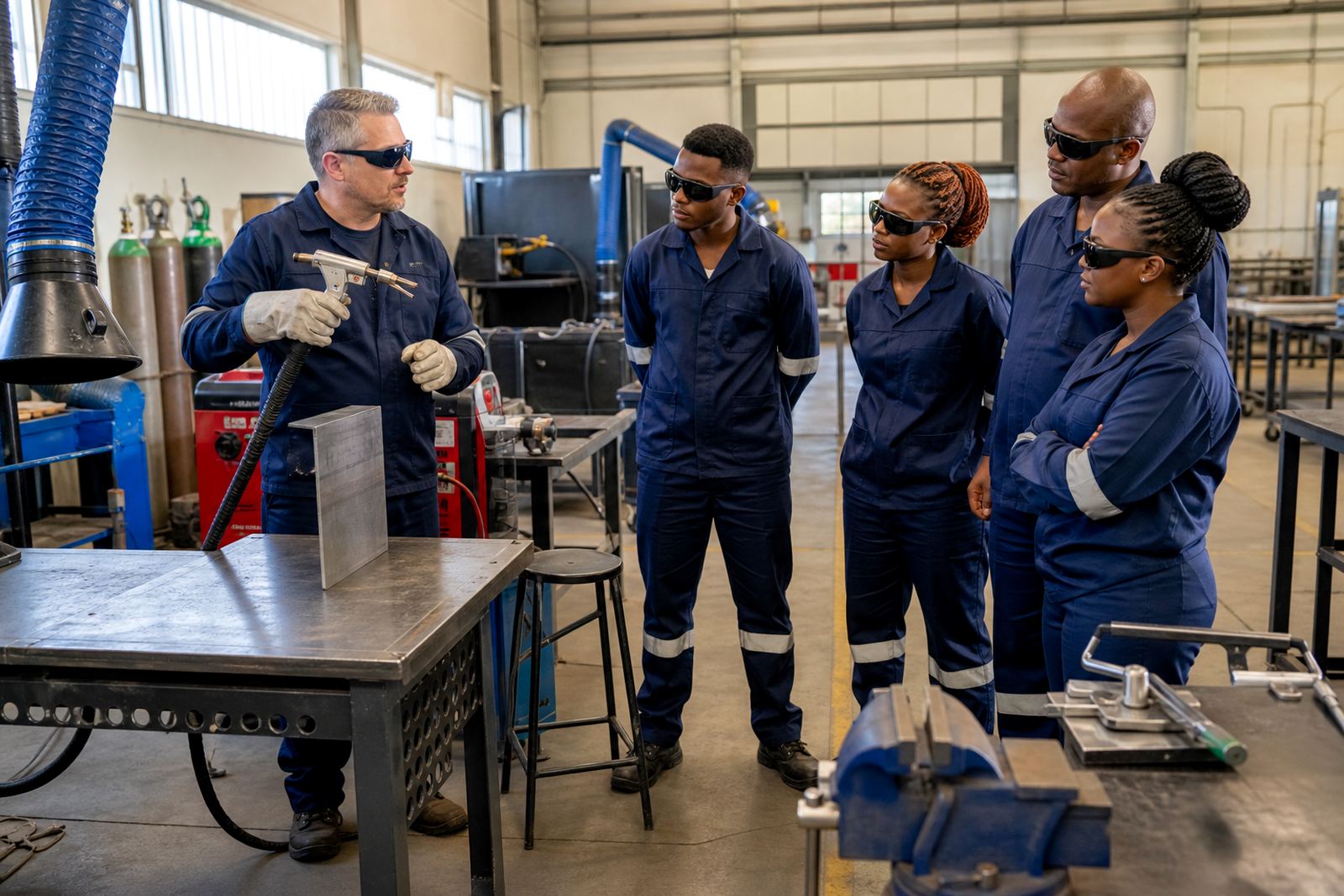
- Use suitable eye protection for the operator and nearby staff
- Plan local fume extraction at the point of weld, not only general ventilation
- Keep reflective surfaces, loose tools and clutter away from the weld zone
Where This Briefing Suits Best
This product suits workshops that are adding handheld laser welding to an existing fabrication or repair setup, as well as businesses that want to support learners properly from the first week. It is especially useful where several staff members may rotate through the same bay, or where a supervisor needs a simple process for signing off readiness before work starts.
It works well for small repair shops, production floors, training centres and maintenance teams that handle brackets, covers, light frames, machine parts and general fabrication repairs. In coastal areas like Durban and Cape Town, the briefing is handy for planning storage and care too, because humidity can affect consumables, lenses and electrical components if equipment is left open or uncovered. In inland areas like Boksburg, Pretoria, Johannesburg and Polokwane, dust control and stable power planning usually need more attention.
- Best for workshops with new operators or mixed skill levels
- Useful when introducing laser welding beside MIG, TIG or grinding work
- Suitable for training rooms, factory floors and repair bays
- Good for teams that need clearer sign-off and supervision rules
Power, Gas and Workshop Setup Needs
Installation planning starts with a clean and level work area, enough space around the machine, and a power supply that matches the unit specifications. The briefing covers the practical questions supervisors should ask before equipment arrives, including plug type, circuit capacity, cable routing and what happens during load shedding. If the site relies on a generator or inverter backup, that should be checked before the first shift so the unit is not run on unstable power.
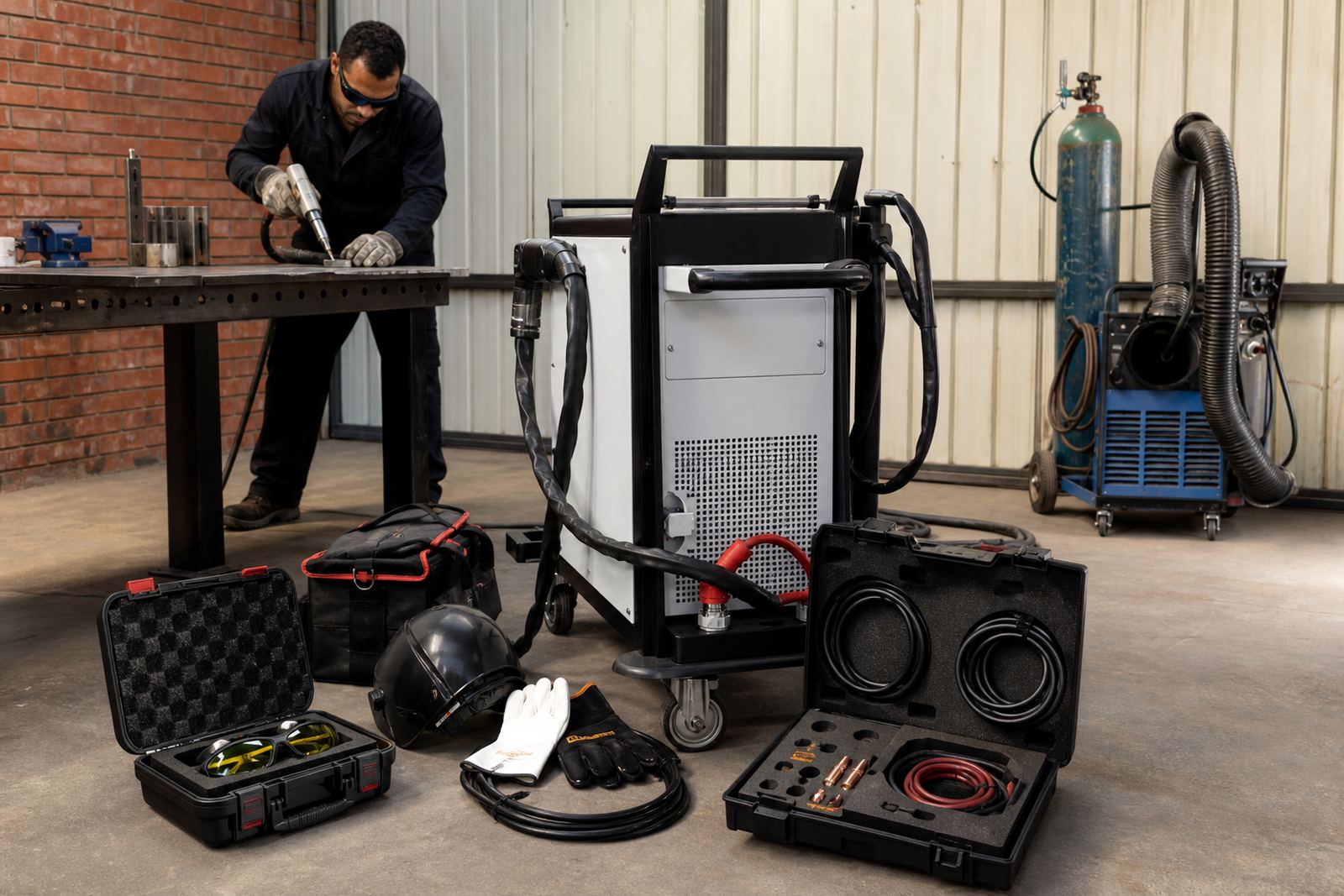
Many handheld laser welding setups also use shielding gas depending on the material and finish required. The briefing explains how to plan for gas cylinder storage, securing cylinders correctly, and checking regulators and lines for leaks or wear. It also helps supervisors decide where the starter kit should be stored so it stays dry, organised and easy to issue. On busy shop floors, a labelled trolley or covered storage point can save time and reduce breakage.
- Confirm supply voltage and outlet arrangement before installation
- Plan for load shedding and backup power if the site needs it
- Check gas requirements, cylinder storage and regulator condition
- Allow enough bench space, cable space and safe walking room
Starter Kit Planning and Learner Support
Starter kits are most useful when they support the first few weeks of practice without leaving learners to guess what they need. This briefing helps supervisors check that a starter kit includes the expected basics for safe practice, routine cleaning and day to day setup. It also helps the team decide which consumables must be kept on hand so training does not stall because a nozzle, lens cloth or spare part is missing.
For learners, the first challenge is usually consistency. They need time to learn torch control, travel speed, joint positioning and the limits of the process on different metals and thicknesses. The briefing gives supervisors a way to plan practice sessions, keep records of who has used the unit and set a clear route from observation to supervised work. That makes the workshop calmer and the learning more practical.
- Check that the starter kit suits the intended material and job type
- Make room for consumables, cleaning items and basic spares
- Use a simple practice plan with clear supervision stages
- Keep a record of adjustments, faults and learner support needs
What to Check When Ordering This Briefing
Before booking the supervisor briefing, it helps to confirm the site name, workshop location and the kind of work the team will be doing. A supervisor handling repair work will often need different support from a production supervisor or training coordinator. It also helps to note whether the team already has extraction, gas supply, power backup and storage sorted, or whether those items still need attention.
When ordering, check who will attend, how many people need the briefing, and whether the focus should be on setup, learner support, or a broader safety walk through. If you need a short refresher after the team has used the machine for a while, that can be planned too. The aim is to leave the supervisor with a clear checklist and a practical way to keep the bay safe, tidy and ready for work.
- Confirm the site, team size and main job type
- State whether the focus is safety, setup or learner support
- List any existing power, gas or extraction limitations
- Note if you need a refresher visit after the first round of use
Key facts
| Product type | Supervisor briefing for handheld laser welding implementation |
|---|---|
| Format | On-site or workshop-based briefing for managers and supervisors |
| Coverage | Safety, learner support, workflow planning, starter kit checks and site readiness |
| Typical attendees | Supervisors, workshop managers, owner operators and training coordinators |
| Power and setup | Checks for supply, backup power, gas storage, extraction and work area layout |
| Completion outcome | Certificate of completion from LaserWelder Training |