What Group Training Covers
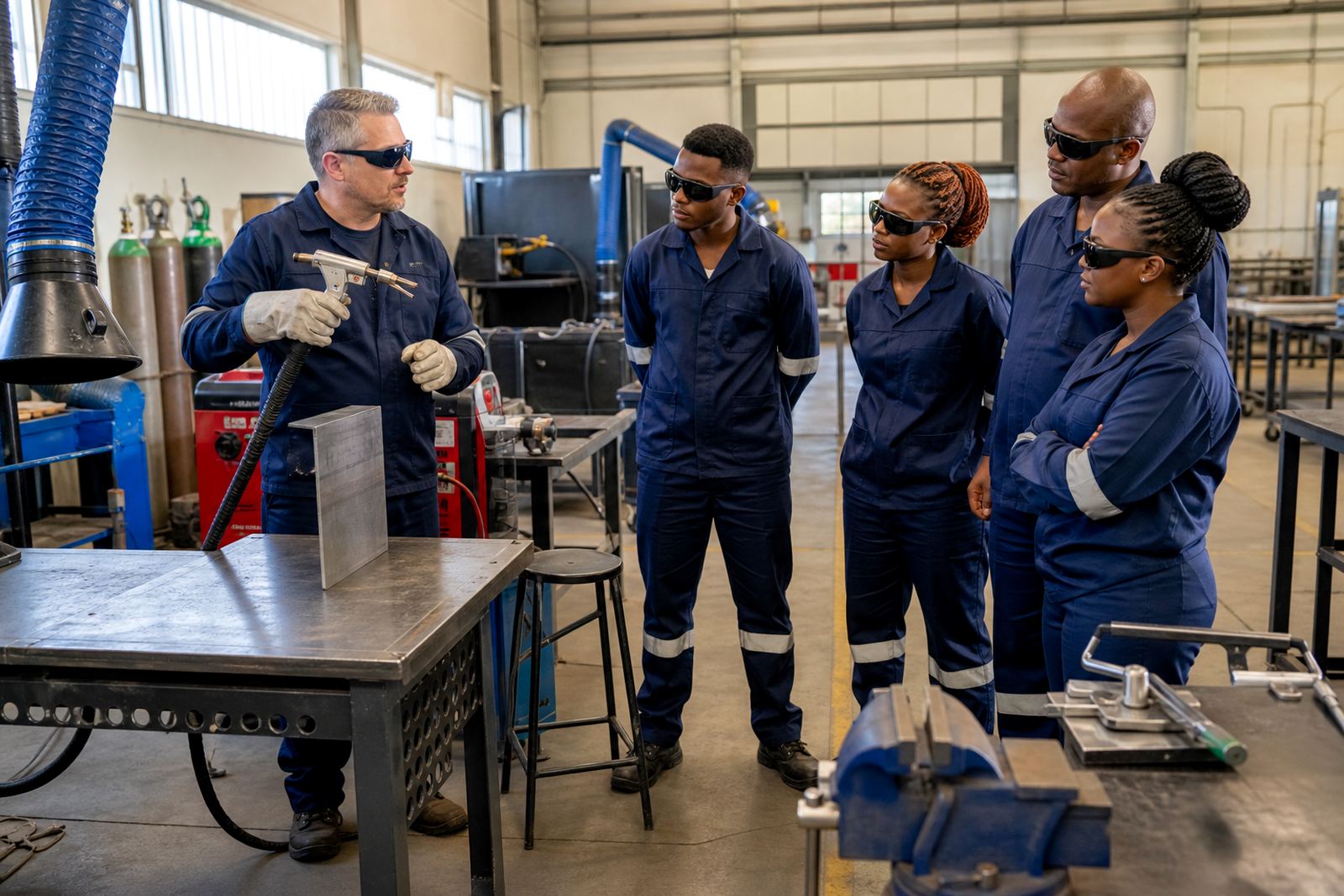
Group Training is set up for teams that need the same method, the same safety habits and the same quality expectations from the start. It suits workshops that are adding handheld laser welding, moving operators from older joining methods, or bringing several staff members onto the same workflow at once. The aim is simple: everyone learns the process in one room, on the same equipment, with the same standards. That saves time later and avoids mixed habits on the floor.
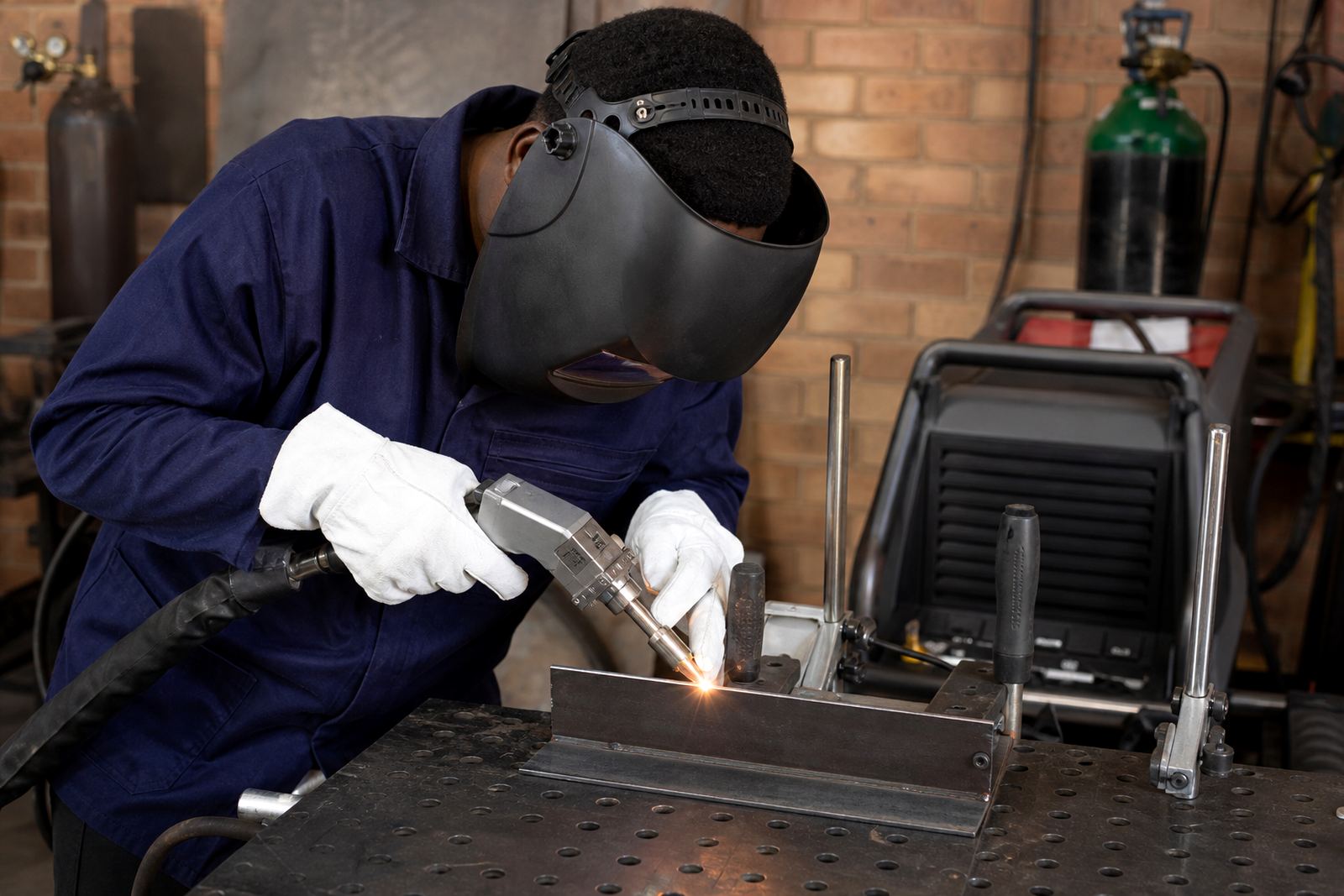
Each session combines theory and practical work. Learners cover machine setup, torch handling, joint prep, travel speed, bead control and basic troubleshooting. We also cover work area control, clean-up steps and how to hand over work between operators without losing consistency. For teams with different experience levels, the trainer can pace the session so beginners get the foundations while more experienced staff refine technique.
- Best for 3 to 12 learners per group
- Suitable for beginners and upskilling sessions
- Certificate of completion issued by LaserWelder Training
Team Sizes, Session Formats and Skill Levels
Group training is available in small, medium and larger team formats. Small groups work well when you want close instructor attention and more hands-on time per learner. Medium groups suit a full workshop crew or mixed shift team. Larger groups are best when you need a standard operating method introduced to a wider staff base, then reinforced with supervisor coaching afterwards. We can also split a team into practical rotations, so no one waits too long between turns on the equipment.
The course structure can be adjusted for the team’s starting point. Beginners usually need more time on safety, torch angles and basic weld continuity. Experienced users may need more focus on material behaviour, distortion control, repeatability and inspection habits. If your team works with sheet, tubing, brackets or repairs, the exercises can be aligned to those tasks. The goal is not only to teach the process but to make sure the process works in your own workshop conditions.
- Beginner, mixed skill and refresher options
- Workshop-specific examples and practice pieces
- Shared standards for supervisors and operators
Where Group Training Fits Best
This product suits businesses that want cleaner handovers, fewer errors and better control over output. It is a practical choice for fabrication shops, maintenance teams, light manufacturing, motor repair work, sign and frame workshops, and businesses that need repeatable finishing on metal parts. It also works well when a new supervisor needs to understand what correct laser welding looks like, so quality checks are done with confidence rather than guesswork.
Because the training is hands-on, it is useful for teams dealing with production pressure, staff turnover or new equipment rollout. In places where load-shedding affects planning, teams can learn how to organise work in shorter, focused blocks and keep consumables, cleaning routines and inspection steps in order. On coastal sites, especially around Durban and Cape Town, we also discuss humidity, storage and post-shift care so the team protects lenses, tools and materials from damp air and dust.
- Good for production teams and maintenance crews
- Useful for sites with high staff turnover
- Helpful for supervisors who check weld quality
Power, Gas and Workshop Readiness
Before a group session starts, it helps to confirm the workshop can support the equipment safely. Handheld laser welding units normally need a stable electrical supply, correct plug points and enough space for a controlled practice area. If the site has power instability, it is wise to plan around the available supply and avoid running the training next to other heavy loads. Good lighting, a clean bench area and clear movement space also matter. We can advise on site readiness so the session starts properly and the team is not working around avoidable problems.
Some applications may use an assist gas depending on the material and setup. The exact gas choice and flow depend on the process and the metal being welded. The training covers what the team should check before use, how to keep hoses and fittings in order, and how to store cylinders or gas accessories if they are part of the setup. Safety is always part of the practical work, including laser class awareness, proper eye protection and fume extraction. No one should weld in a closed area without proper extraction and clear control of reflections.
- Stable power supply and clear bench space
- Laser safety eyewear matched to the equipment used
- Fume extraction or strong local ventilation required
Starter Kits for Teams and Workshops
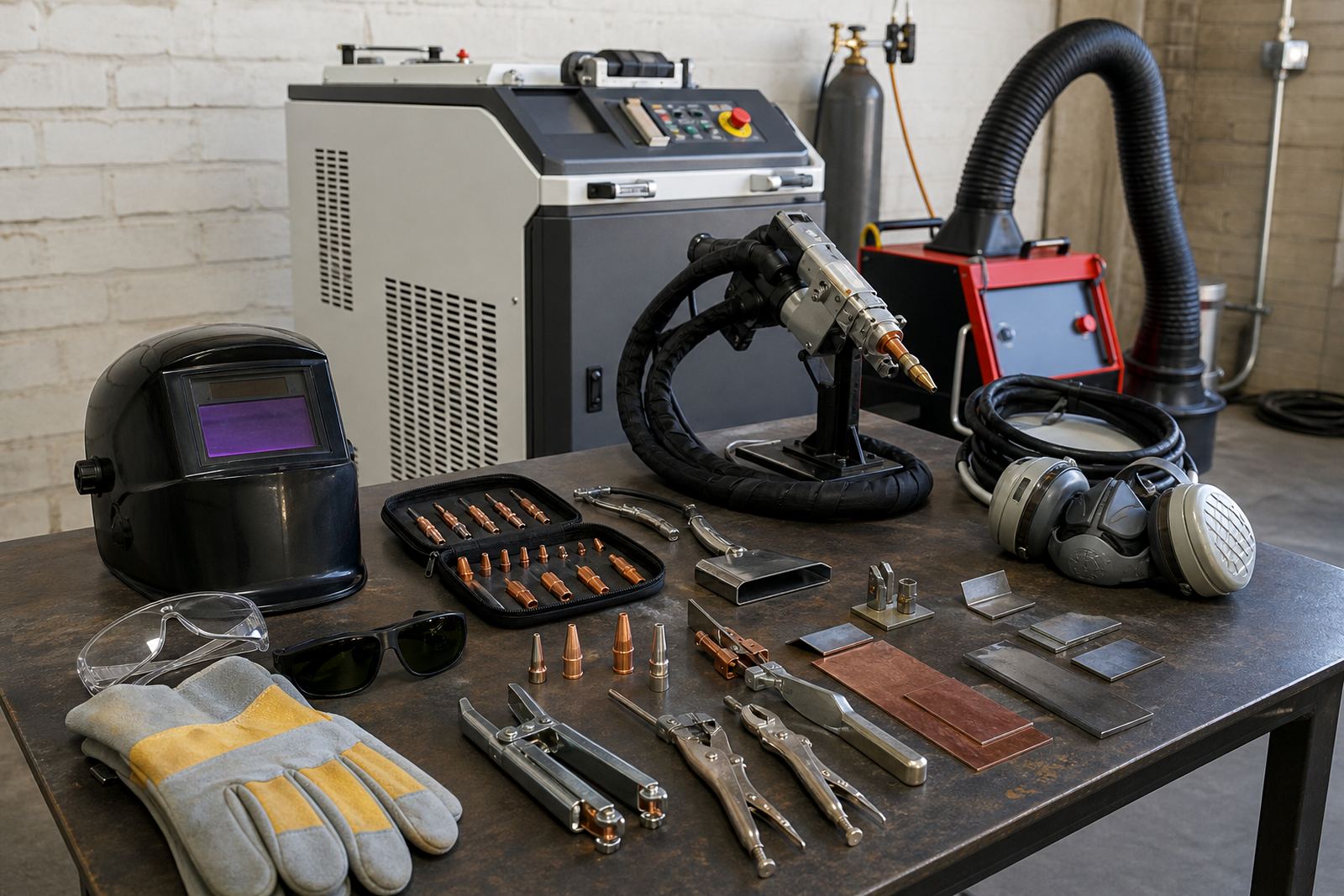
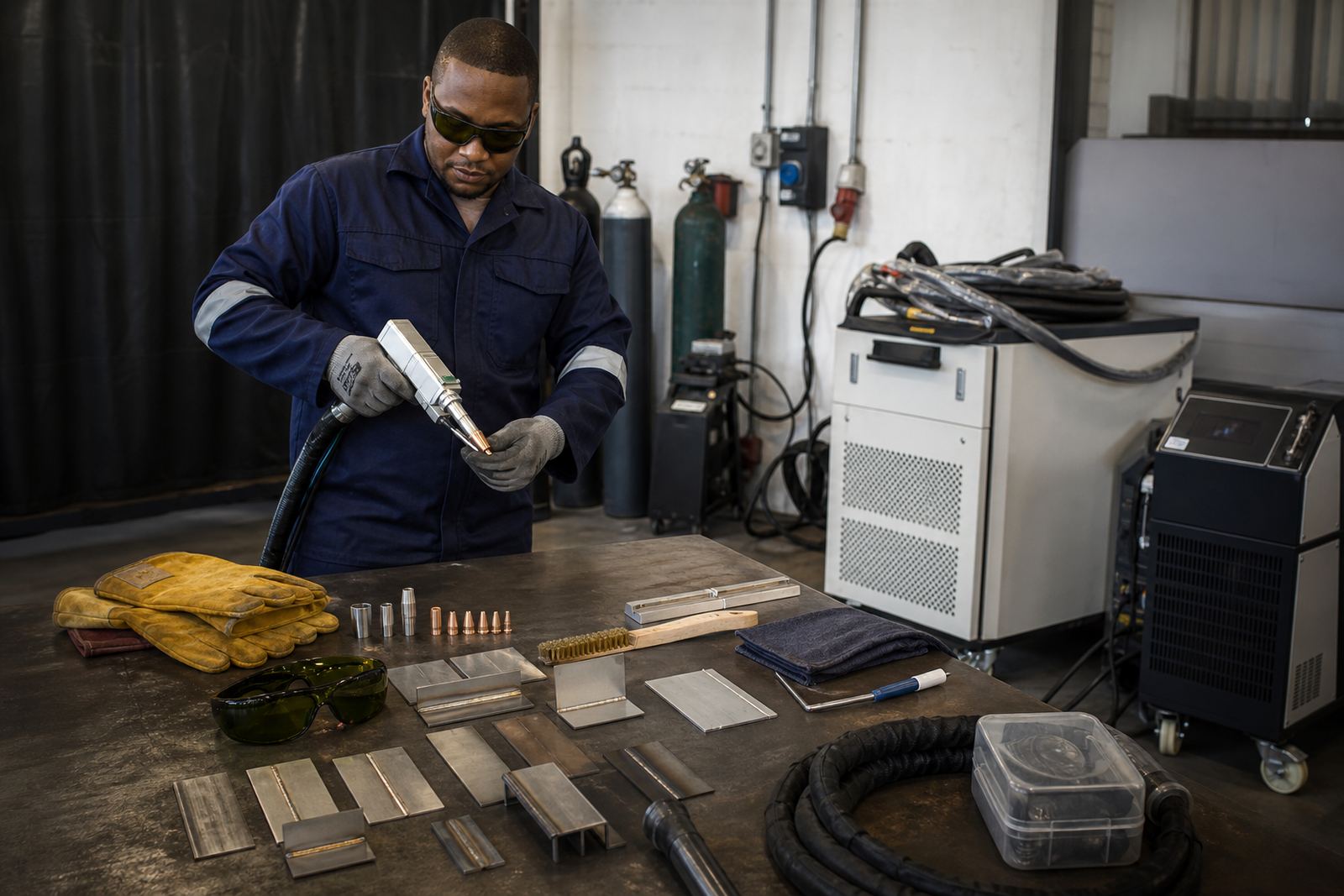
Some clients want group training together with starter kits so the team can continue practising after the course. A starter kit is usually made up of the basic items needed to begin supervised work and routine practice. That may include protective gear, hand tools, cleaning items, sample materials, marking accessories and selected consumables. The exact contents depend on the equipment, the materials being used and the level of the team. For a new workshop, it is better to choose a kit that suits the work you actually plan to do rather than buying extras that sit unused.
We can help you decide what belongs in the kit and what can be added later. If your team is spread across branches or shifts, it is useful to standardise the kit contents so everyone starts with the same items. That makes stock control easier and helps with training follow-up. It also means supervisors can check if the right protective items and maintenance items are in place before work begins.
- Starter kits matched to the training level
- Useful for new teams and workshop rollouts
- Can be standardised across multiple sites
Care, Servicing and What to Check When Ordering
Good results depend on more than technique. The team must learn how to care for the equipment, keep the work area clean and spot problems before they interrupt production. After training, the machine should be checked for dust build-up, cable wear, lens contamination, loose fittings and any sign of poor ventilation around the work point. Consumables should be stored properly and rotated before they degrade. If the unit is used often, a simple maintenance routine saves time and avoids avoidable downtime.
When ordering group training, check the number of learners, the type of metal you work with, the thickness range, the number of shifts and whether the training is for beginners or experienced staff. Also confirm whether you want a training document pack, site readiness check, operator induction, supervisor coaching or a refresher visit later on. If the team will be working on your own premises, make sure the site is clear, the power supply is ready and the safety controls are already in place. It helps to be specific, because the more we know about the job the better the training can be matched to it, no fuss.
- Confirm learner count and skill level
- State material type and thickness range
- Ask for follow-up support if your team needs it
Our Training Base and Support Areas
LaserWelder Training is based in Boksburg, Gauteng and supports teams from Johannesburg, Pretoria, Durban, Cape Town, Polokwane and the wider East Rand. We work with businesses that need practical, local support rather than generalised advice. If your team is coming in from a workshop, we can structure the session around the hours you can spare. If you need support for a site rollout, we can align the content to your branch layout and workflow.
The team includes instructors and support staff who understand both the technical side and the practical side of getting a workshop ready. That means the training is not only about running the machine, but about keeping people safe, keeping the work moving and keeping the standard consistent after the session ends.
- Boksburg base with South African reach
- Suitable for single-site and multi-branch teams
- Practical support before and after training
Key facts
| Product type | Group hands-on laser welding training for teams |
|---|---|
| Group size | 3 to 12 learners per session, depending on setup |
| Skill levels | Beginner, mixed skill and refresher training |
| Training outcome | Certificate of completion from LaserWelder Training |
| Safety coverage | Laser class awareness, eye protection and fume extraction |
| Support options | Site readiness checks, starter kit setup and follow-up visits |