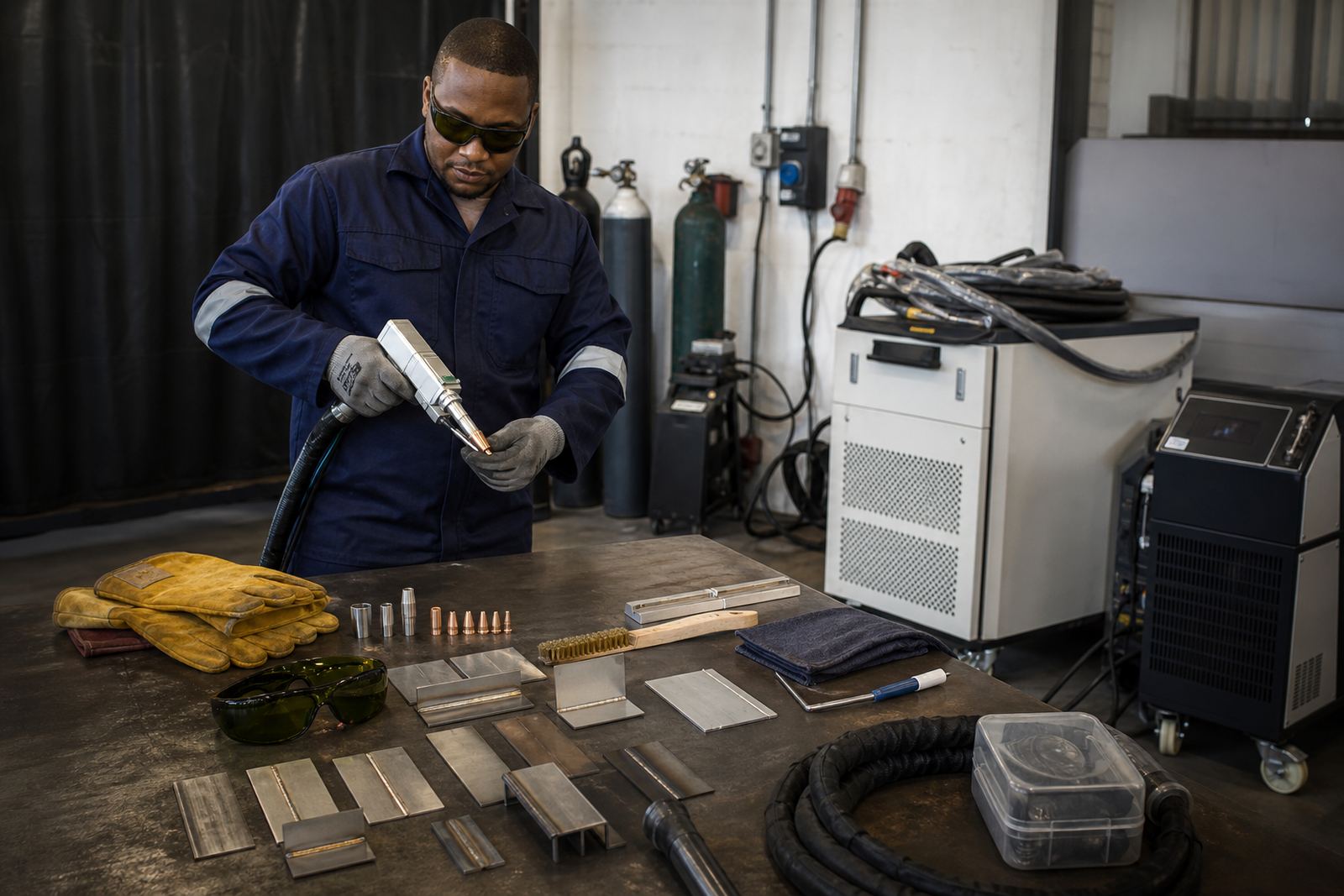
What The Basic Starter Kit Covers
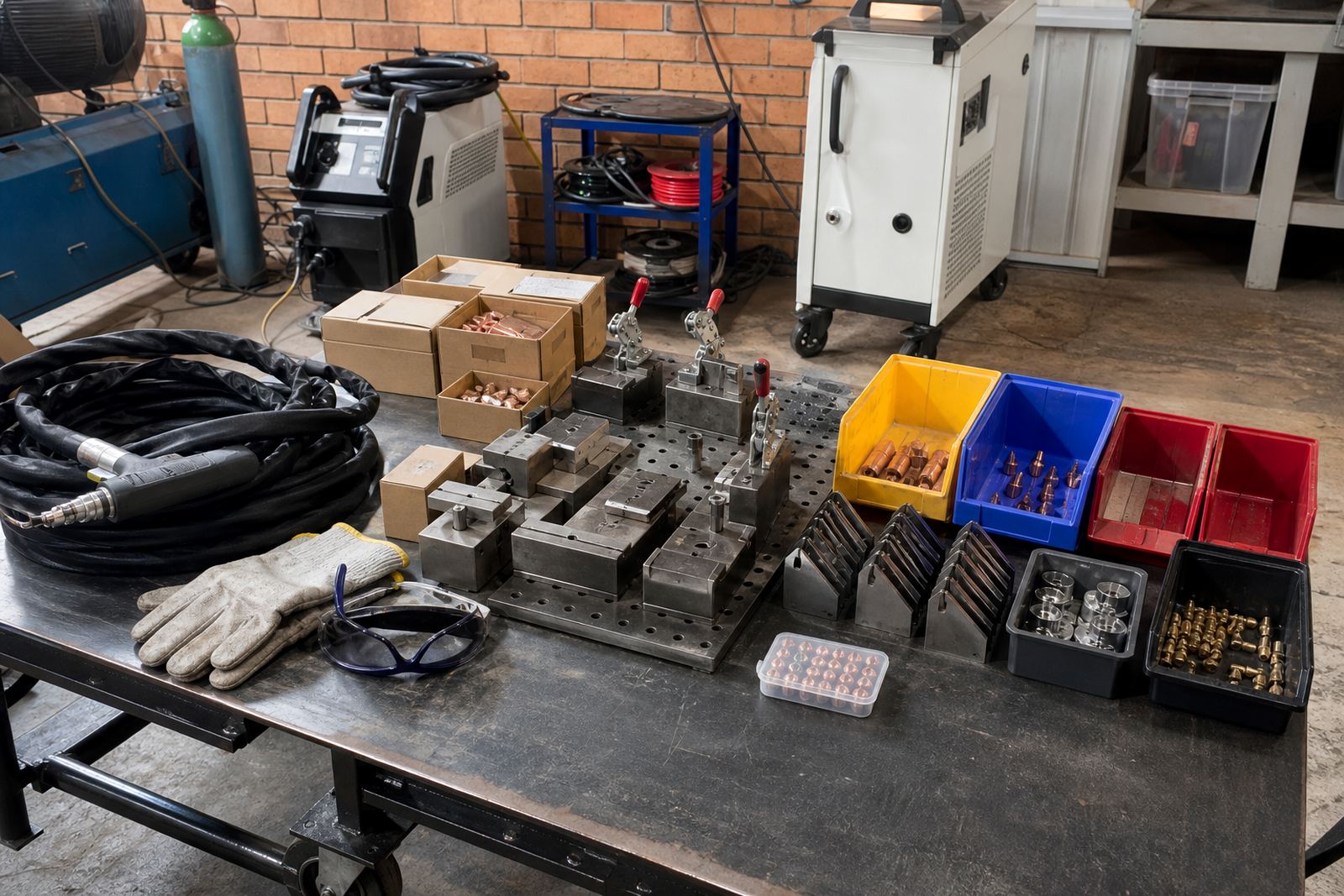
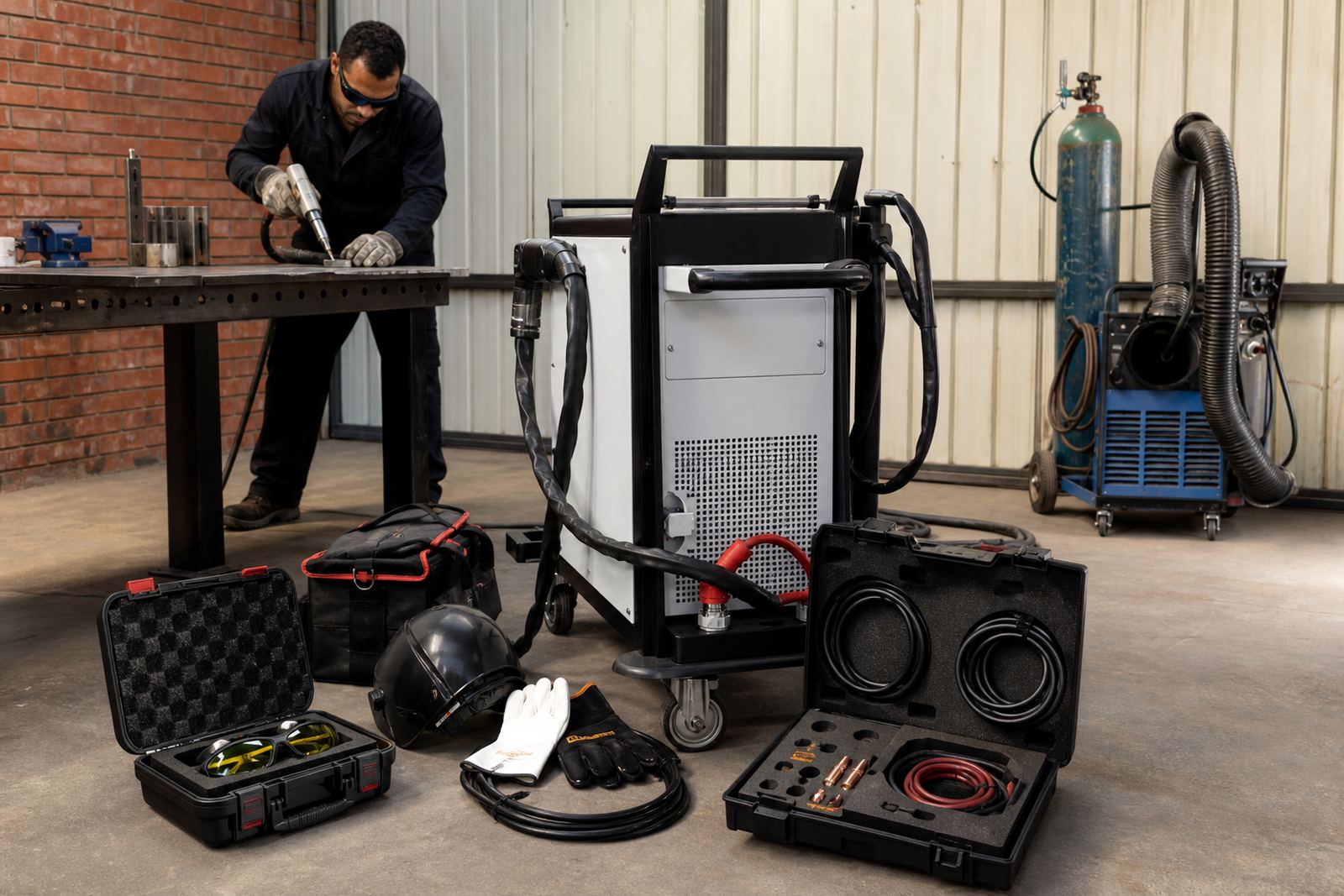
This starter kit is put together for people who are learning handheld laser welding and need the essentials in one place. It is not a full production package, but it does cover the items most learners need to start practising safely and to set up a small training bay or workshop corner with less guesswork.
The kit is suited to mild steel, stainless steel and aluminium practice work, depending on the laser welding source and wire or filler setup being used. It is also useful for supervisors who want a simple learner kit that can be issued, checked and returned with less loss of small items. For workshops in Johannesburg, Pretoria, Durban, Cape Town, Polokwane and across Gauteng, this kind of kit helps keep training organised and easier to repeat.
- Core hand tools and setup accessories for learner use
- Basic safety items for laser welding practice
- Consumables needed for short training sessions
- Storage and carry items for neat movement between bays
Sizes, Options And Typical Use
The Basic Starter Kit is intended for entry-level use, so the contents are kept practical rather than overloaded. It is normally supplied as a compact learner kit that fits into a small storeroom, workshop shelf or mobile training vehicle. Where required, the contents can be adjusted for left or right handed users and for different workshop layouts.
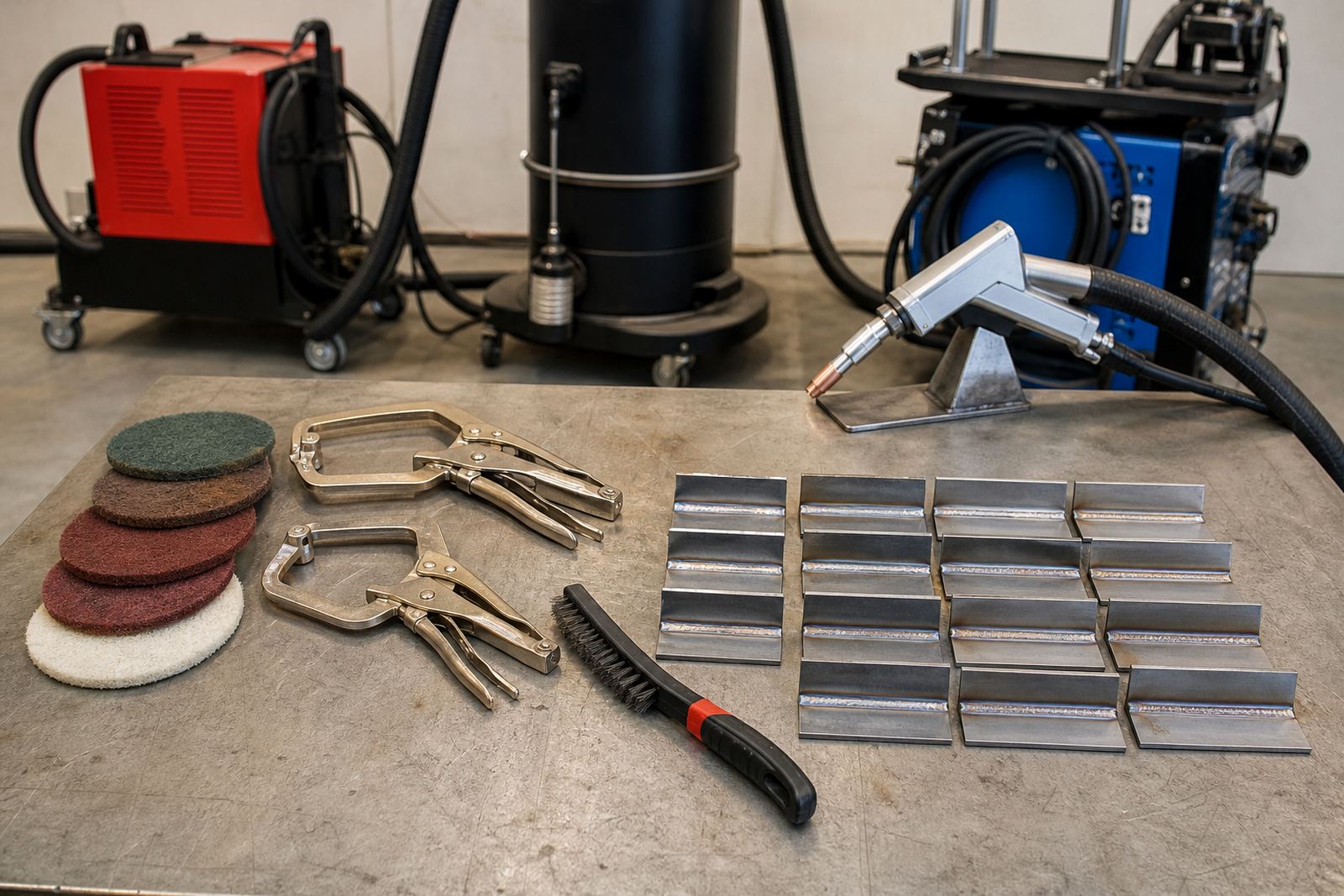
Handheld laser welding units vary, but learners should expect the kit to support common training work such as straight seams, short fillets and simple repair practice. It suits small fabrication shops, maintenance teams, fitment bays and training rooms where the operator is still building confidence with torch control, travel speed and workpiece preparation.
- Entry-level learner kit for practice and induction work
- Compact carry option for training sites and shared workshops
- Suitable for basic joining, repair and sample weld exercises
- Can be matched to different workshop routines and storage needs
Safety Items Included For Handheld Laser Welding
Laser welding is not a casual tool and the safety side must be taken seriously from day one. Handheld units are commonly used in a controlled work area with laser classification controls, suitable eye protection and proper fume extraction. The Basic Starter Kit is intended to support that approach by including the practical items learners use during supervised training.
Operators should always use laser-rated eye protection that matches the laser source being used, keep reflective surfaces under control, and work with local extraction or adequate ventilation to remove fumes and fine particles. This matters in enclosed workshops and even more in coastal areas where humidity can affect visibility and corrosion on stored accessories. A clear safety briefing before each session is still needed, because PPE alone is not enough.
- Laser-rated eye protection for supervised training
- Support for basic fume extraction and airflow planning
- Items that help mark and control the training area
- Practical storage for safety gear between sessions
Power, Gas And Workshop Setup Needs
The starter kit itself does not require a complicated installation, but the workspace around it must be prepared correctly. Most handheld laser welding training areas need a stable power supply for the welding source, extractor and any ancillary equipment, plus enough floor space for safe movement around the bench. Where shielding gas is used, learners should have the correct regulator, gas bottle storage and leak checks in place before training starts.
In South African workshops, load-shedding and voltage variation can interrupt practice, so it is wise to plan for safe shutdown steps and proper power protection where needed. A tidy cable route, dry floor area and clear bench height make a big difference. For learners in municipal buildings or shared sites, check the local site rules around gas storage, ventilation and fire equipment before bringing the kit in.
- Stable mains power and safe shut-down planning
- Space for torch movement, sample pieces and extraction
- Correct gas handling where the training process needs shielding gas
- Dry, well lit work area with clear access around the bench
Care, Cleaning And Servicing Between Sessions
This kit lasts better when it is cleaned and checked after every training block. Dust, metal fines and welding residue can build up quickly, especially in busy workshops. Learners should wipe down tools, inspect cables, check consumables and store eye protection in a clean case. If the kit is used near grinding or cutting work, keep those activities separated to reduce contamination.
Servicing is mostly about routine checks rather than major repairs. Look for damaged leads, worn grips, loose fittings, cracked lenses on protective gear and blocked airflow in any extractor attachments. If a component feels hot, noisy or inconsistent during use, stop and inspect it before the next session. A small amount of attention after each class can save a lot of downtime later, and yes, it is worth the few extra minutes.
- Clean after each use and keep consumables dry
- Inspect cables, clamps and protective items regularly
- Replace worn safety gear before it becomes a risk
- Store the kit away from moisture, dust and vibration
What To Check Before You Order
Before placing an order, confirm what kind of learner work the kit must support and how often it will be used. A training team may need a different mix from a small workshop that only wants supervised practice sessions. It helps to know the laser welding source, the job materials, the storage space available and whether the kit must travel between branches or stay in one place.
You should also check whether your site already has eye protection, extraction and gas handling in place, or whether those items need to be included. Confirm the bench height, power arrangement and any site rules for safety inductions. For businesses in Gauteng and beyond, it is also useful to confirm if the kit will be used in a humid coastal setting, a factory floor or a smaller repair bay, because that affects storage and care.
- Workshop type, learner level and expected frequency of use
- Existing safety gear, extraction and gas setup on site
- Storage space, transport needs and access to power
- Material types and the training tasks the kit must support
Key facts
| Product type | Entry-level handheld laser welding starter kit |
|---|---|
| Primary use | Learner training, supervised practice and small workshop setup |
| Included focus | Core accessories, safety items and basic consumables |
| Suitable materials | Mild steel, stainless steel and aluminium, subject to the laser setup |
| Workspace need | Clean bench area with power, ventilation and safe storage |
| Support level | Setup guidance, use checks and ordering advice through enquiry |