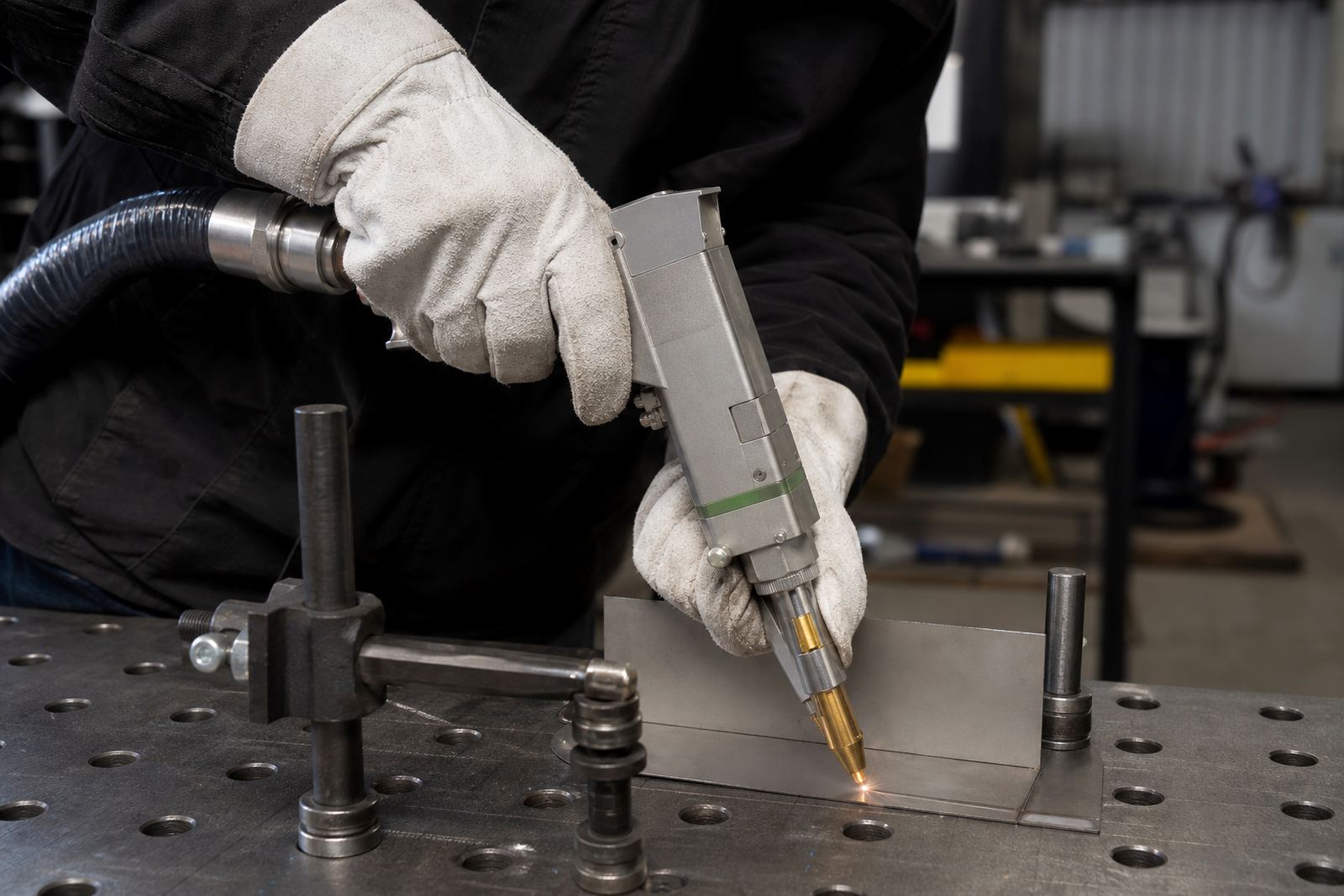
What the Torch Handling Module Covers
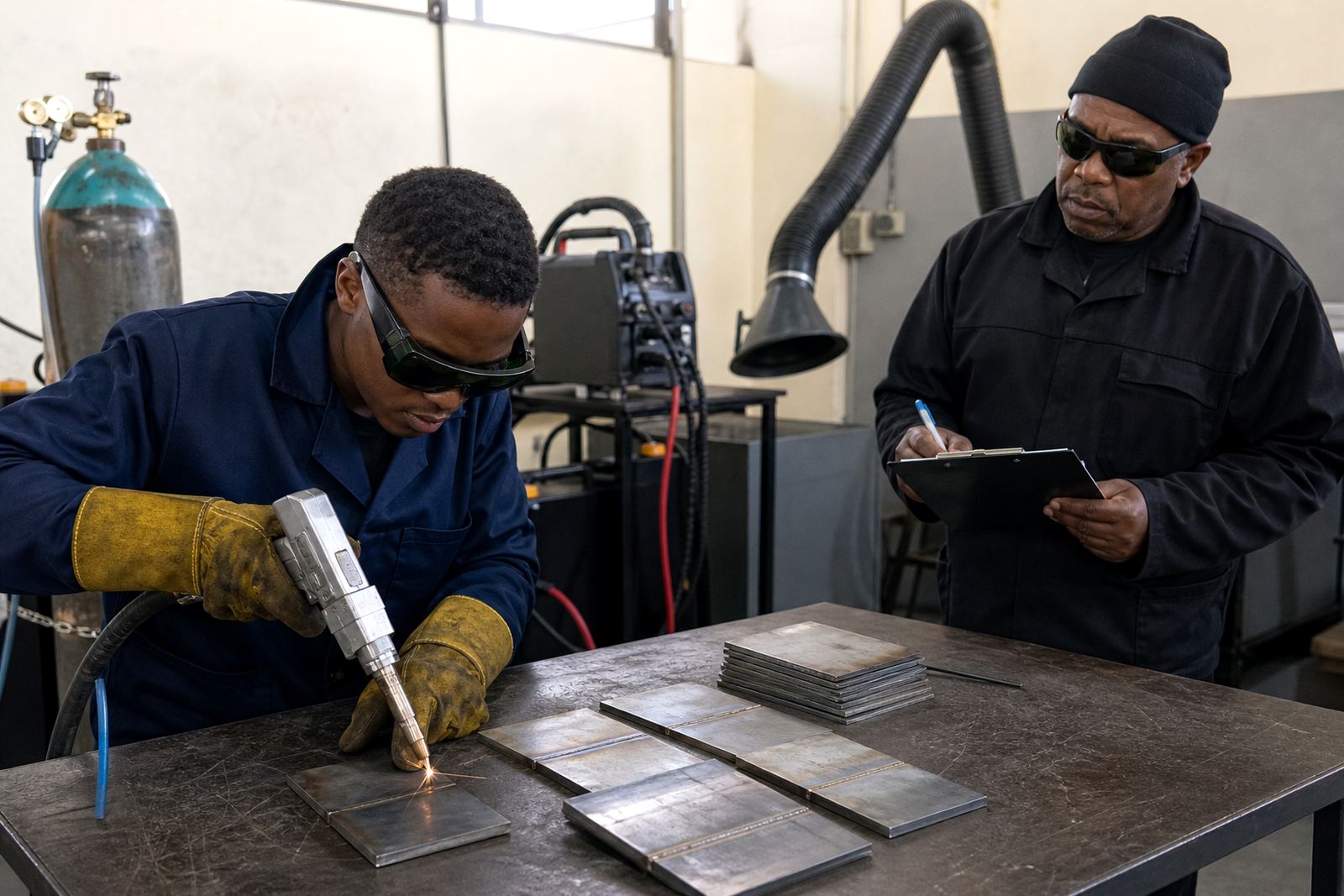
This module focuses on the practical habits that make handheld laser welding easier to control. Learners work on body position, two handed support where needed, torch angle, travel speed and how to keep the cable moving freely without pulling the hand off line. The aim is simple, a steadier torch and fewer stops when working on mild steel, stainless steel or aluminium jobs where consistency matters.
The module is especially useful for new operators and for experienced welders moving into laser welding for the first time. It also helps supervisors set a common standard across a small workshop or a larger team, so everyone handles the torch in the same safe and predictable way.
- Stance for bench work, floor work and awkward corners
- Grip pressure that keeps movement steady without fatigue
- Cable path control to reduce snags and sudden pulls
- Torch movement for straight runs, short seams and corner transitions
Sizes, Options and Learner Levels
The module is offered as a focused add on or as part of a wider practical course. Some learners need a short refresher on torch control only, while others need a fuller session that includes setup, safety and bead consistency. We can run the module for individual learners, small groups or workshop staff in Boksburg and at selected training sessions for Johannesburg, Pretoria, Durban, Cape Town and Polokwane.
Options are usually matched to the size of the team and the type of work being done. A smaller workshop may only need one practical group, while a business with multiple operators may need staggered sessions so production can continue. If your staff work with light fabrication, repair work or batch production, the module can be shaped around those tasks.
- Beginner level for first time handheld laser welding users
- Refresher level for operators who need better control and repeatability
- Supervisor level for lead staff who coach others on the floor
- Group sessions for workshops with shared tools and mixed shifts
Where It Suits in a Workshop
This module suits shops that want cleaner movement on small to medium parts, especially where access is tight and the torch must be guided accurately around joints. It works well for fabrication teams, maintenance workshops, repair counters and learner groups that need supervised practice before handling customer work. In coastal areas like Durban, keeping the motion steady also helps reduce hesitation when operators are managing humidity affected materials and changing surface conditions.
In Gauteng, many workshops use handheld laser welding for quick repair work, small assemblies and repeat runs. The torch handling skills from this module help with production flow, because the operator spends less time correcting posture and more time keeping the weld path consistent. That matters on busy sites with load-shedding, limited time windows and shared power points.
- Workshop practice bays and training rooms
- Maintenance and repair work on site
- Short run fabrication and repeat jobs
- Learner induction before supervised production use
Installation, Power and Gas Requirements
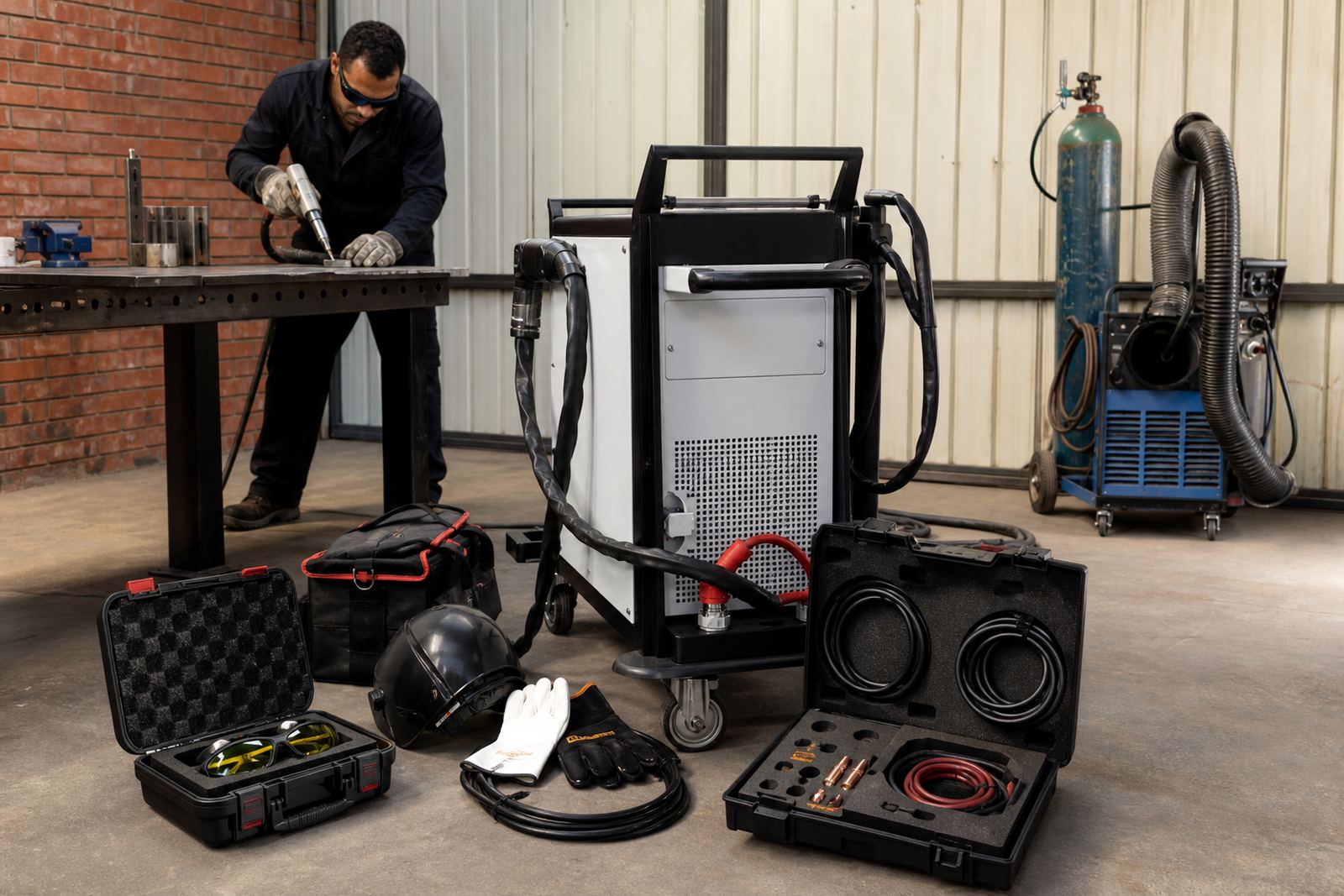
The module itself does not need permanent installation, but the working area must be set up properly before training starts. Learners need a clean bench or stable work surface, enough floor space to move safely and a place for the cable to run without sharp bends. Where shielding gas is used, the supply must be connected correctly and checked for leaks before any practical work begins. If your site already has an extractor or local ventilation point, we can work around that setup and advise on placement.
Handheld laser welding equipment normally needs a stable electrical supply, correct earthing and a protected area away from unnecessary traffic. For teams in areas with voltage fluctuation or load-shedding, it is worth planning sessions around available power and checking backup arrangements before the day starts. Good cable routing, proper ventilation and a clear work zone all help the operator stay focused.
- Stable work surface and clear walkways
- Correct electrical supply and earthing
- Appropriate shielding gas connection where required
- Fume extraction or local ventilation recommended for active welding areas
Safety Checks Before Any Practical Run
Safety is part of the module from the first minute. Handheld laser welding equipment is treated as high risk if operators skip the basics, so learners are shown how to check the laser class markings, confirm eye protection is suitable for the wavelength in use and keep bystanders out of the work zone. We also cover how to position extraction so fumes are drawn away from the breathing zone and not across the face of the operator. A rushed start can cause trouble later, especially when a team is trying to finish before the power goes off.
The safety briefing also covers clothing, gloves, reflective surfaces and where to stand when adjusting the torch or moving between parts. The point is not to slow work down, but to keep hands, eyes and lungs protected while the operator builds good habits. If a site has its own rules, we align the module with those steps and explain any gaps that need attention.
- Confirm laser class and controlled access to the work area
- Use eye protection matched to the equipment and process
- Keep fume extraction or ventilation running during welding
- Check clothing, gloves and surface reflections before starting
Care, Servicing and What to Watch Over Time
Good torch handling is easier to maintain when the equipment is kept clean and checked often. The torch body, cable, lens area and nozzle should be inspected for wear before each practical session. If the cable starts to stiffen or catch, the operator will feel it straight away in the hand. That is why this module includes routine checks and simple servicing habits that help avoid downtime.
Workshop teams should also watch for heat build up, dust around the handpiece and any damage caused by repeated bending at the same point. A tidy storage habit goes a long way. Keep the torch in a safe place after use, coil the cable without tight loops and make sure the unit is dry before packing away. In humid areas, especially near the coast, that small routine helps reduce corrosion and contact issues.
- Inspect torch body, lens area and cable before use
- Keep the handpiece clean and dry after each session
- Avoid tight cable bends and hard pulls
- Store the torch where it will not be knocked or contaminated
What to Check When Ordering
When ordering the Torch Handling Module, confirm the learner level, the number of people attending and whether you want it linked to a full course or taken on its own. It helps to note the materials your workshop handles, the size of parts you commonly weld and whether you need extra focus on operator posture, cable management or consistency over long runs. That information lets us match the practical examples to your real work instead of keeping it too general.
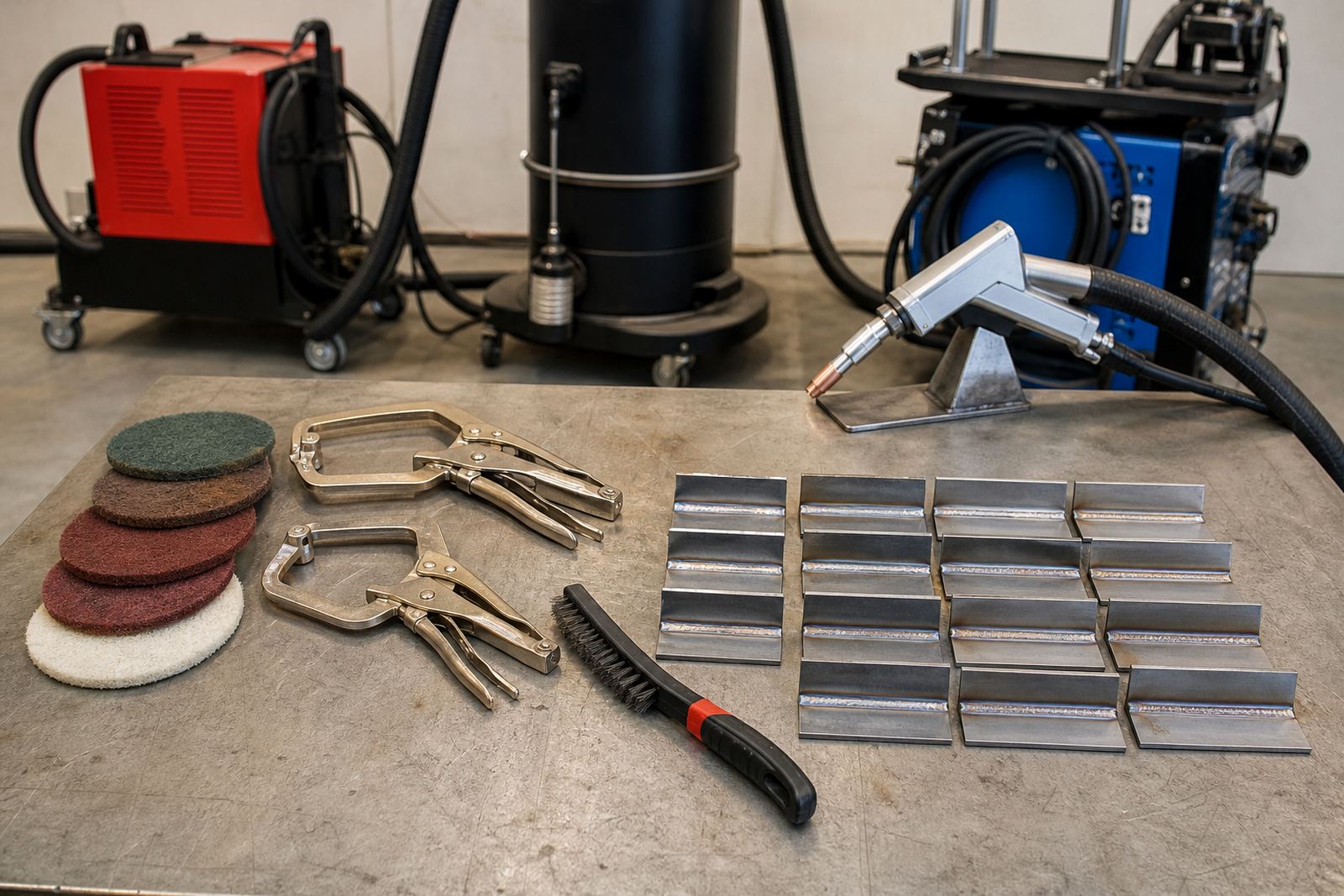
Also check whether your site has sufficient power, suitable eye protection and a working extraction point before the session date. If you are buying starter kits for learners, it is worth matching the kit to the kind of torch handling taught in the module so the same habits carry through after training. Learners leave with a certificate of completion from LaserWelder Training once the module requirements are met.
- Number of learners and skill level
- Site location and workshop conditions
- Material types and typical job sizes
- Need for starter kits, refresher support or supervisor coaching
Key facts
| Module type | Hands-on handheld laser welding torch handling training |
|---|---|
| Focus areas | Stance, grip, cable control, torch angle and movement control |
| Learner level | Beginner, refresher and supervisor support |
| Suitable for | Individuals, small workshops and production teams |
| Safety elements | Laser class awareness, eye protection and fume extraction checks |
| Completion | Certificate of completion from LaserWelder Training |