What the Stainless Steel Module is built to teach
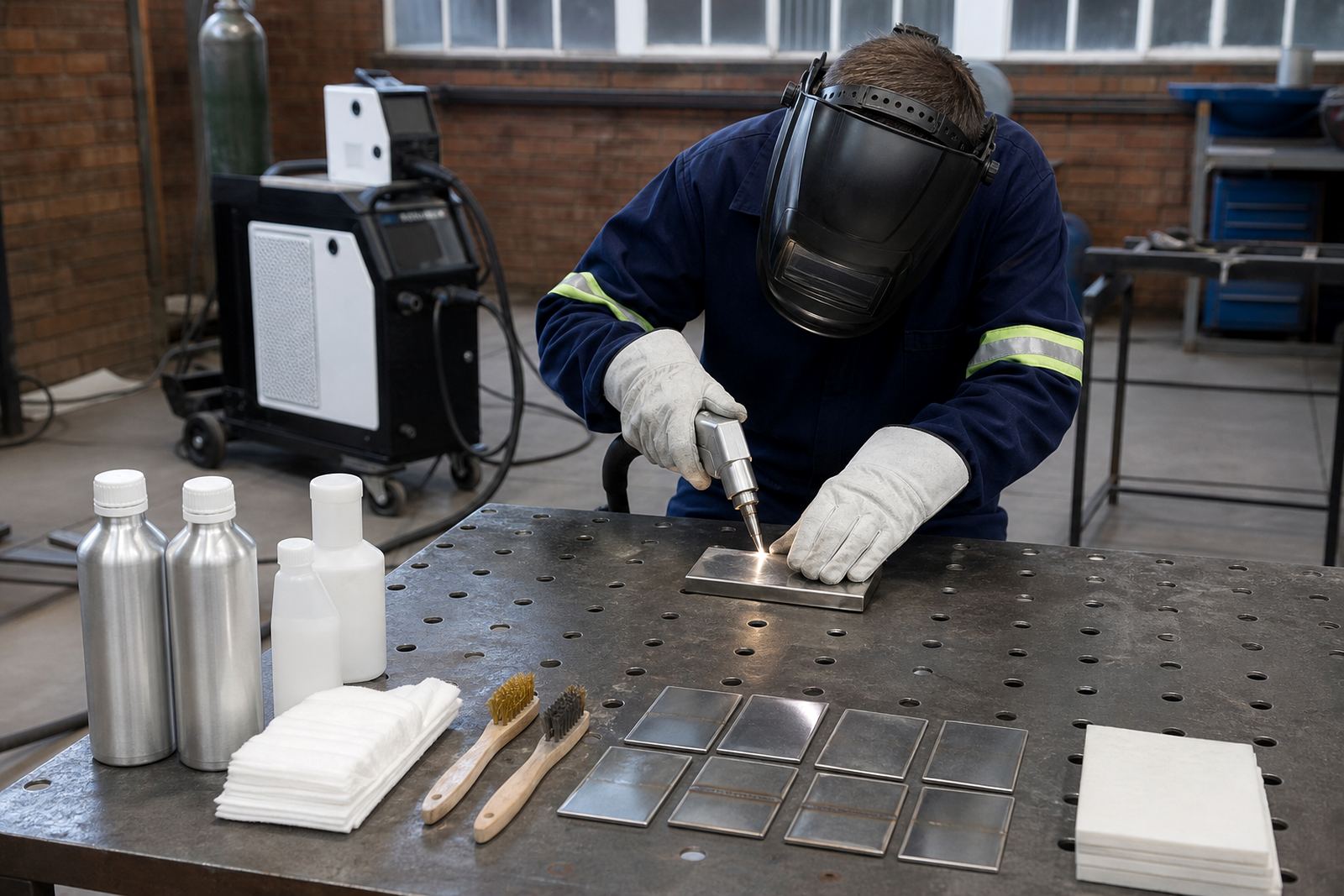
This module is set up for hands-on learning on stainless steel components, using handheld laser welding methods that suit fabrication, maintenance and light production work. The aim is not just to run beads, but to teach how stainless behaves under heat, how to set parts correctly before welding, and how to keep the finish neat enough for visible work.
Learners work through real fit-up and joint preparation tasks, then move into practical welding on stainless pieces that reflect everyday workshop demands. You get a clear feel for travel speed, focus position and heat input, which matters a lot on stainless because over-heating can leave discoloration, distortion and extra finishing work.
This module works well for people who already handle general metalwork, and also for beginners who need a structured start. The exercises are practical and direct, with guidance on how to spot poor alignment, manage gaps and avoid common stainless problems such as overheating at the edges.
Sizes, joint types and finish options
The module can be used on a range of stainless steel thicknesses and part sizes, depending on the learner level and the workshop task. It is commonly suited to sheet, tube, light frame work and small fabricated assemblies where appearance and clean edges are important.
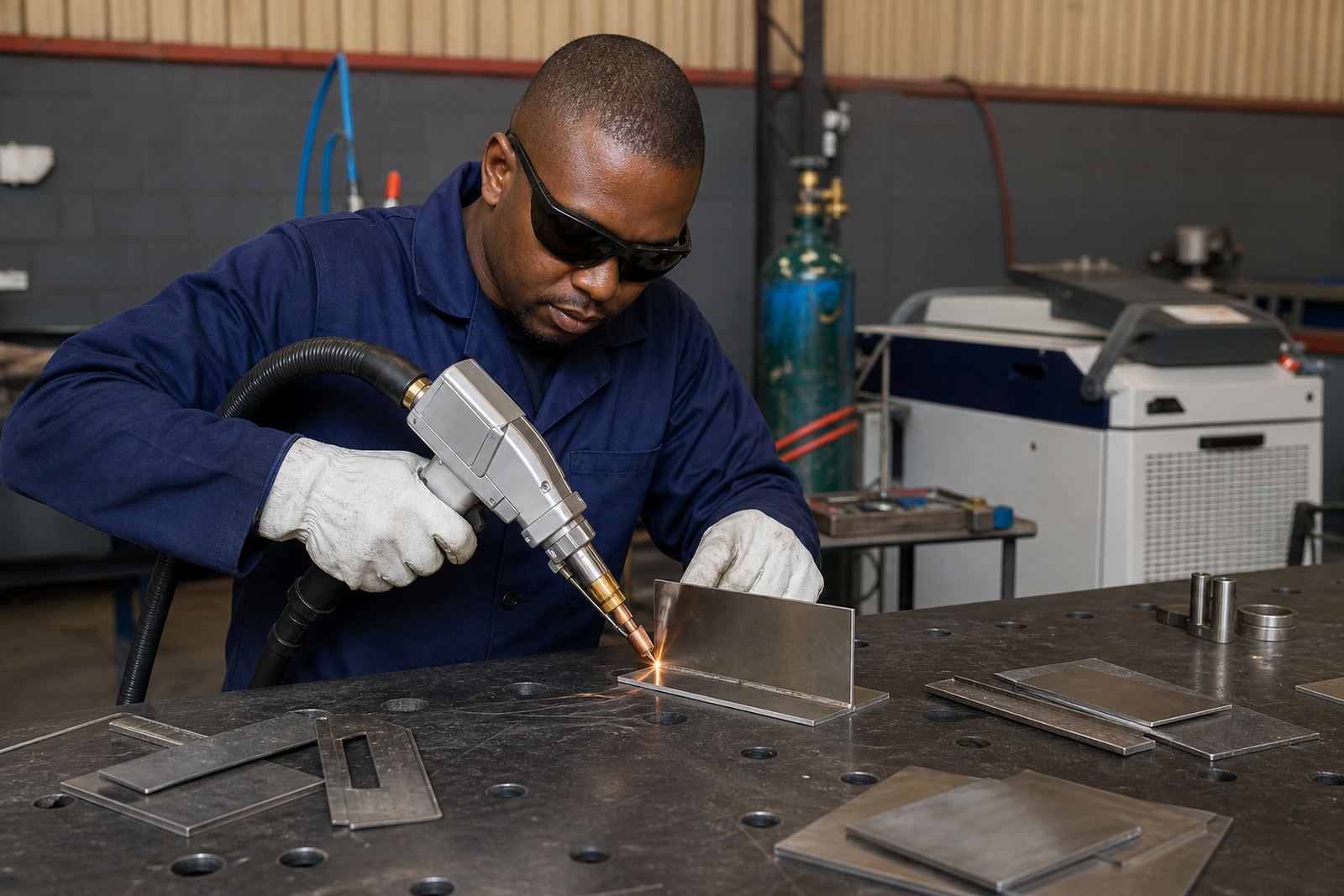
Typical training options include lap joints, butt joints, corner joints and short seam welds. For finish-sensitive work, learners are shown how to control the bead shape and reduce the amount of post-weld clean-up needed. That matters in kitchens, food handling spaces, medical prep areas and any site where stainless must look tidy as well as hold firmly.
When ordering, it helps to match the module to the type of stainless you use most often, whether that is thin wall tubing, sheet, brackets or small housings. Small changes in material thickness can change the setup a fair bit, so it is worth checking what the learner will actually practise on.
- Thin sheet practice for clean cosmetic joints
- Light tube and frame practice for workshop assembly
- Short seam practice for controlled heat input
- Corner and lap joints for everyday fabrication work
Where it suits in South African workshops
This module suits training rooms, fabrication shops, maintenance teams and small production spaces across Boksburg, Johannesburg, Pretoria, Durban, Cape Town and Polokwane. It is especially useful where stainless parts are made or repaired on a regular basis and the team needs a repeatable method rather than guesswork.
It is a good fit for businesses working on handrails, frames, panels, trolleys, fittings and light equipment covers. In coastal areas like Durban and Cape Town, stainless is often chosen because of humidity and corrosion concerns, while inland workshops may use it where hygiene, appearance or ease of cleaning matter. The module helps learners understand the material properly before they start rushing the job.
For supervisors, it can also support standard work methods across different operators. That makes it easier to keep a consistent finish from one shift to the next, and cuts down on rework after the first pass.
Power, shielding gas and setup needs
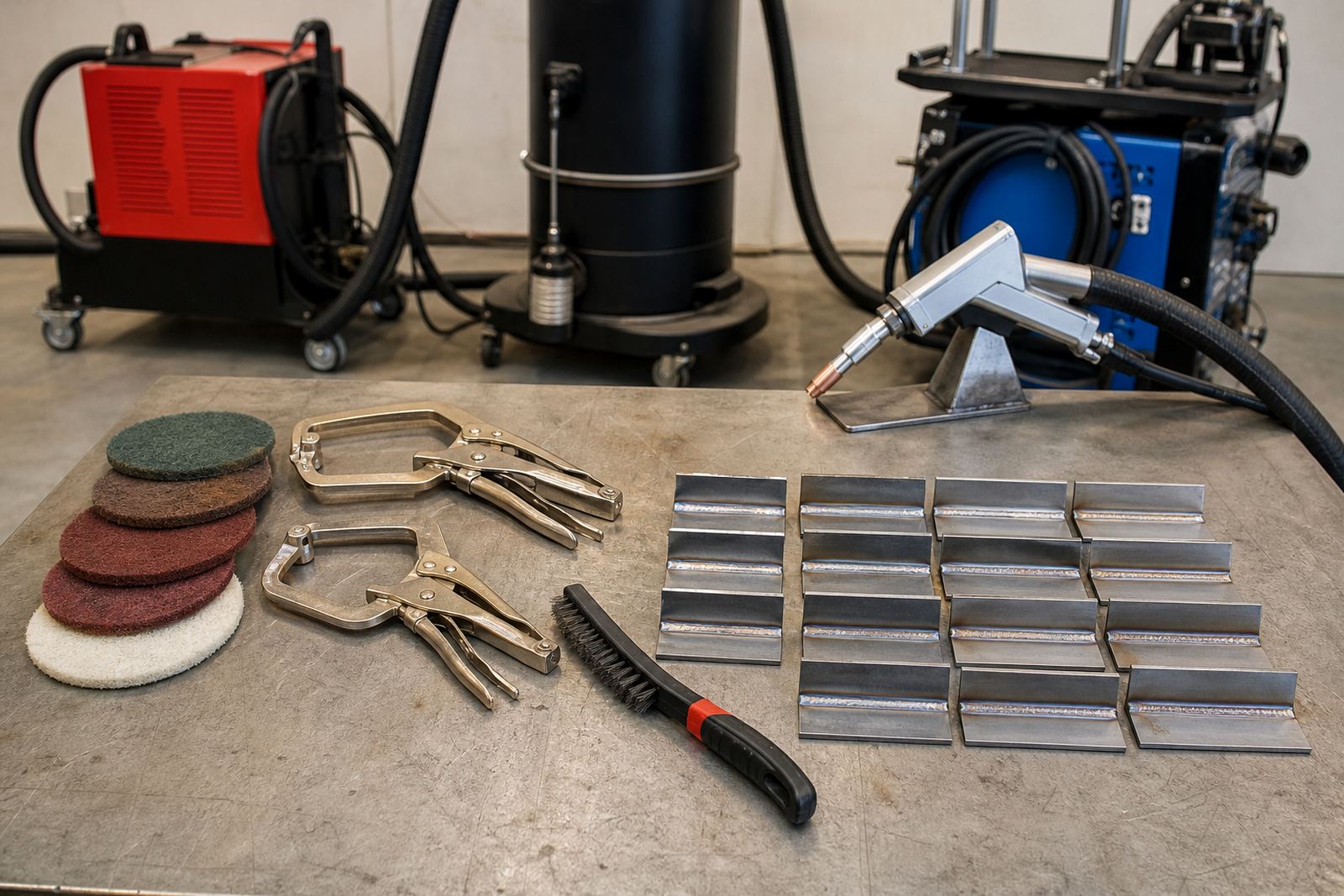
The module should be used with a suitable handheld laser welding unit, correct shielding gas and a stable work area. Stainless steel reacts badly to poor protection, so gas coverage and nozzle position need proper attention. The exact setup depends on the thickness, joint type and whether the work is flat, vertical or awkwardly positioned.
Most training setups need a clean power supply, enough space around the weld bay, and a surface that keeps the parts steady. If the workshop is affected by load-shedding, learners should also plan for power continuity and safe shutdowns so practice is not interrupted mid-job. A neat cable route, good lighting and a firm clamp setup make a clear difference to the result.
Because stainless work often runs in enclosed or busy areas, fume extraction is not optional. Even when the visible smoke looks light, extraction should be placed close enough to pull away vapour and fine particles before they spread around the room.
- Stable electrical supply and safe isolation point
- Appropriate shielding gas for stainless applications
- Fume extraction positioned close to the weld area
- Clean, dry work surface with proper clamping
Safety controls every learner must follow
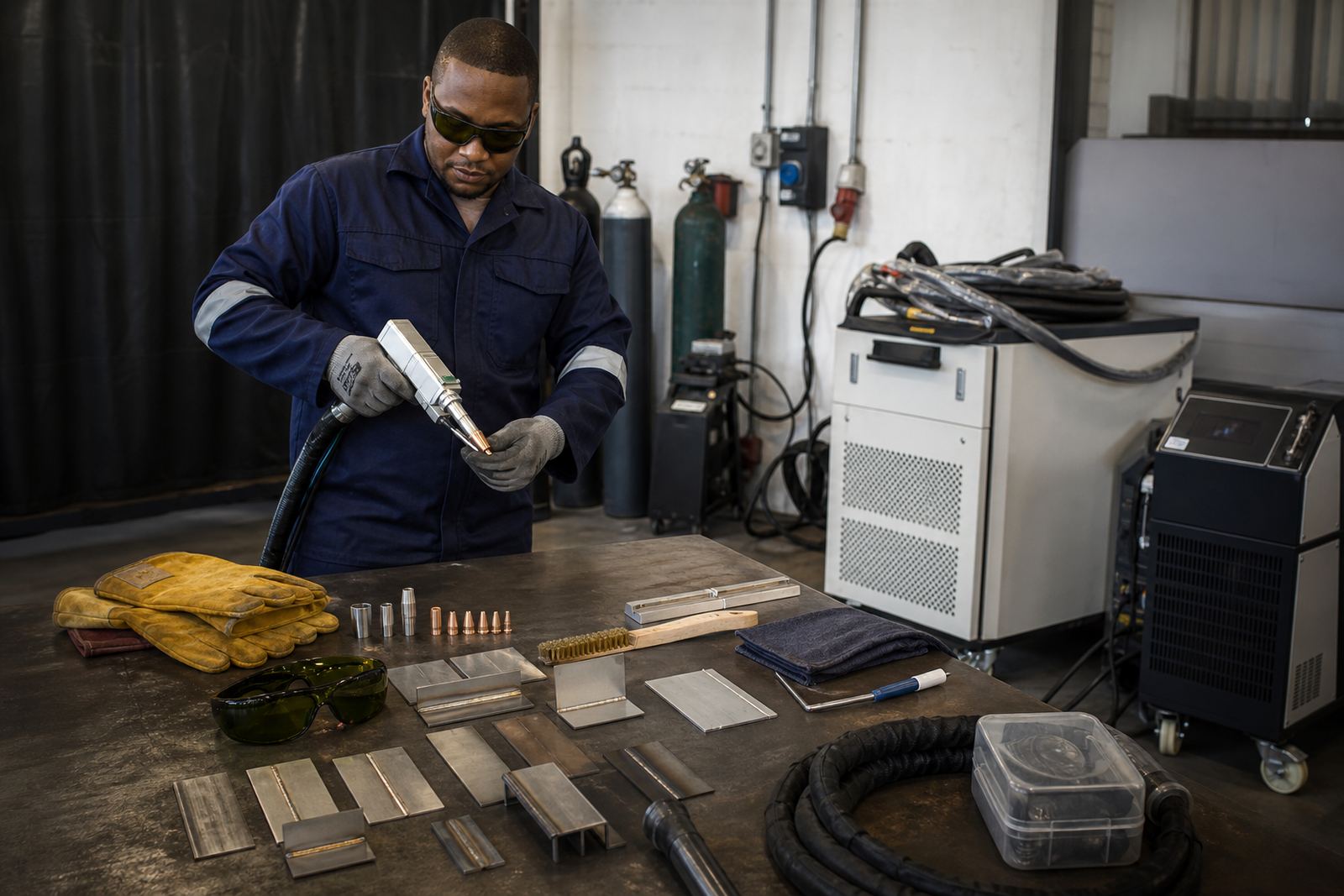
Laser welding safety starts with knowing the laser class, the required eye protection and the limits of the work area. The operator must wear the correct eye protection rated for the equipment in use, and no one should stand near the beam path without protection and instruction. Face protection and suitable gloves are also part of the normal workshop setup.
Training should include a safety briefing before any welding begins. That means checking reflective surfaces, keeping bystanders out of the zone, and making sure learners understand what to do if the equipment alarms or the work piece shifts. Stainless can reflect light strongly, so the room setup matters as much as the tool itself.
Fume extraction must stay active during welding, and learners need to know how to position it so the plume is captured properly. Good housekeeping also matters: keep offcuts, packaging and solvents away from the work zone, and do not leave hot parts where someone can pick them up by mistake.
- Confirm the laser class before operation
- Wear approved eye protection for the unit used
- Keep extraction running throughout welding
- Limit access to the welding zone during practice
Care, servicing and what to check when ordering
Stainless training modules need basic care to stay accurate and useful. After use, parts should be cleaned, stored dry and checked for heat marks, spatter build-up or any surface damage that may affect the next session. If the module includes clamps, guides or locating features, those should be inspected for wear so fit-up stays correct.
Regular servicing should include a look at the cable condition, torch condition, gas flow and extraction performance. If the workshop sees frequent use, it helps to build a simple maintenance routine into the training plan rather than waiting for faults to show up. That keeps the module ready for the next learner and reduces down time.
When ordering, check the stainless grade, the thickness range, the joint types needed and whether the module is for beginners or operators with experience. It also helps to confirm the available floor space, the power supply and whether the team needs extra practice pieces or a document pack for job memory. If the module is going into a busy workshop, ask about setup support and refresher visits too.
Key facts
| Module type | Hands-on stainless steel laser welding practice module |
|---|---|
| Material focus | Stainless steel sheet, tube and light fabricated parts |
| Typical thickness range | About 0.8 mm to 3.0 mm, depending on task and learner level |
| Joint practice | Butt, lap, corner and short seam joints |
| Power need | Stable workshop supply suitable for handheld laser welding equipment |
| Safety needs | Laser-rated eye protection, fume extraction and controlled access to the work area |