What private coaching covers on the workshop floor
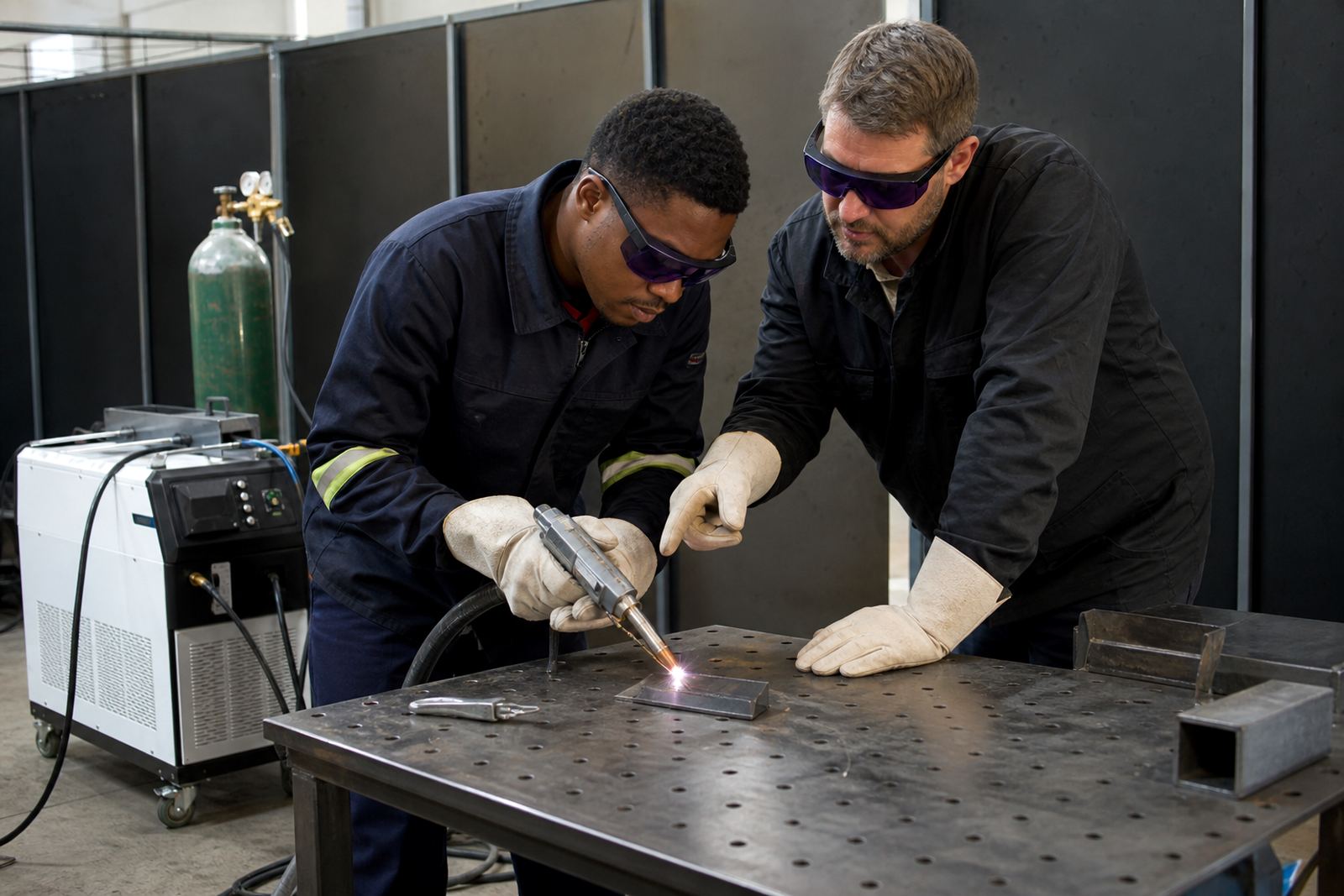
Private coaching is hands-on instruction built around your machine, your material and your job list. Instead of following a fixed class pace, the learner works through beam positioning, travel speed, torch angle, joint fit-up, cleaning, edge preparation and finish quality with direct correction from the instructor. It is well suited to sheet metal, light fabrication, repair work, brackets, guards, frames and stainless work where heat control matters.
The focus is on practical repetition, not theory alone. You get step by step guidance on handheld laser welding set-up, how to identify a sound bead, how to avoid excessive heat input and how to spot a weak joint before it becomes a problem. For businesses, private coaching can also be used to bring a new operator up to workshop standard with less downtime and fewer rejected pieces.
Each learner receives a certificate of completion from LaserWelder Training once the coaching block is finished.
Sizes, coaching formats and who it suits
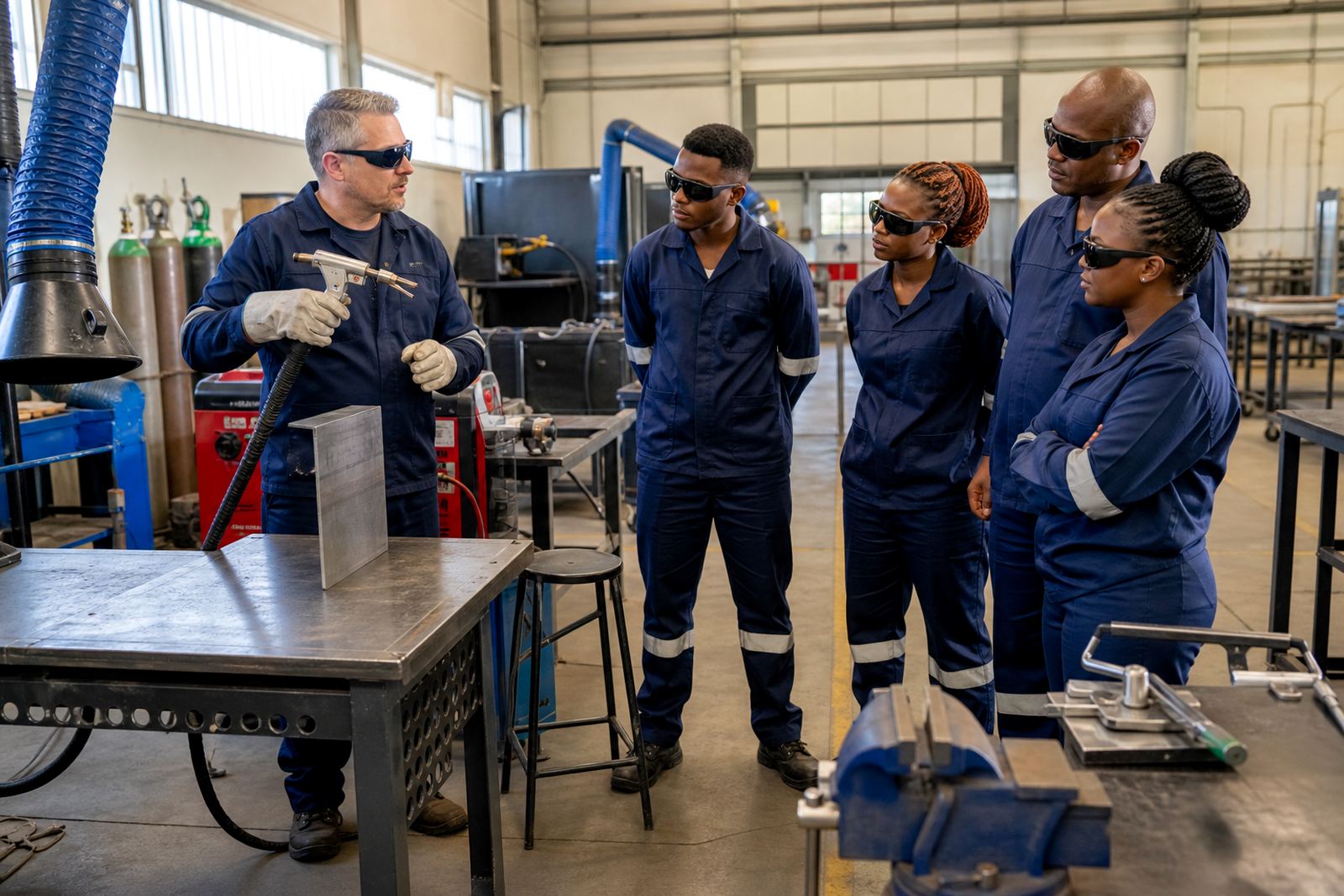
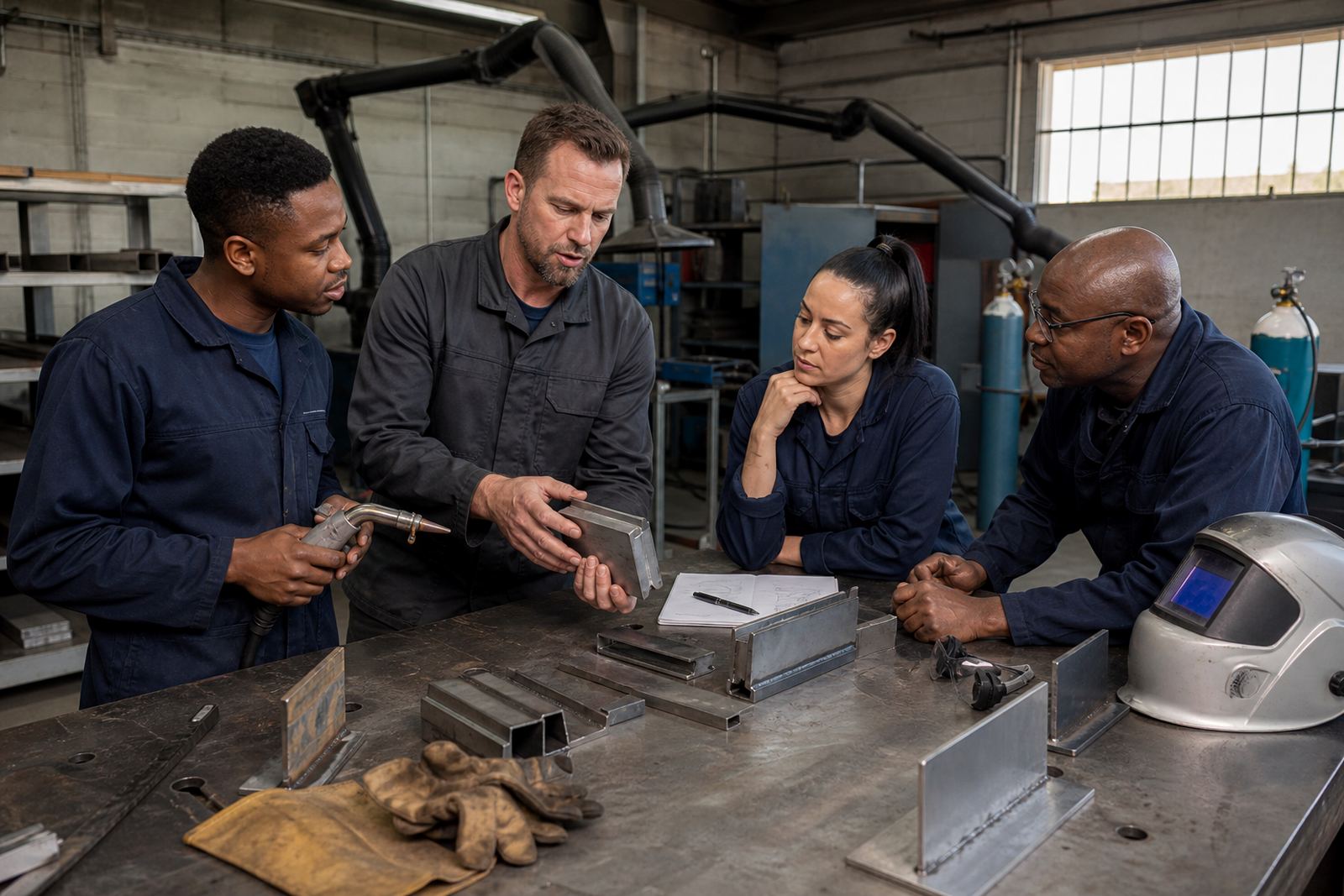
Private coaching can be arranged for a single learner, a pair, or a small team that needs the same method across shifts. For one person, the session is highly focused and moves at the learner’s pace. For two to four people, the coaching works well when one person welds while the others observe, take notes and rotate through drills. That keeps material use sensible and the learning consistent.
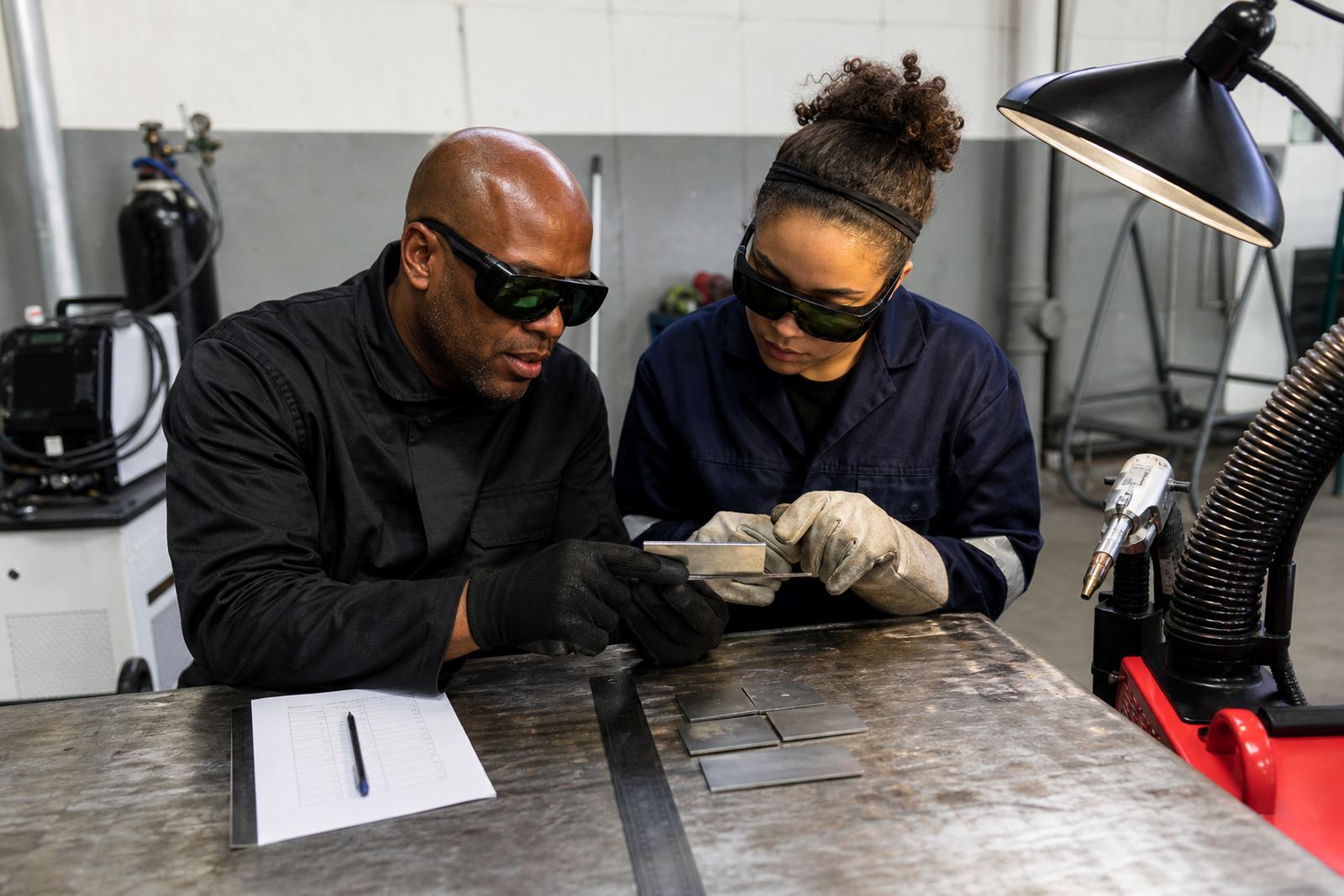
- One-on-one coaching: best for first-time users, technicians changing over from conventional welding, or learners who need confidence before working unsupervised.
- Small team coaching: useful for supervisors, workshop staff and maintenance teams that need the same standard of work.
- Refresher coaching: suitable for operators who already know the basics but need cleaner technique, safer habits or help with specific tasks.
The coaching can be shaped around entry-level learning, intermediate technique or job-specific practice. If your team handles different metals or joint types, the session can include more than one setup so the learner sees how settings and movement change from one job to the next.
Site setup, power needs and workshop readiness
Before coaching starts, the work area should be tidy, dry and clear enough for safe movement around the machine and the job. Handheld laser welding equipment normally needs a stable electrical supply, good ventilation and space for the operator to move without tripping over leads, cooling lines or gas hoses where applicable. In many South African workshops, it also helps to plan around load-shedding so the lesson is not cut short by an unexpected outage.
For most private coaching setups, we check the basics first: supply voltage, plug type, breaker capacity, floor condition, bench height, lighting and whether the room can take the fumes out properly. If the workshop is close to the coast, corrosion and moisture control matter too, because salty air can affect storage and cleaning routines. Where gas assist or shielding gas is used, cylinders must be secured upright and kept away from heat, traffic lanes and unauthorised handling.
When the site is not ready, the lesson can still happen, but it may need a shorter practical run and more time on planning, safety and machine familiarisation.
Safety requirements for handheld laser welding
Laser welding is not treated like a normal hand tool job. The operator must understand the laser class of the equipment, the correct eye protection for that class, and how to keep bystanders out of the working zone. During coaching, we also cover reflective surfaces, safe starting distance, post-run cooldown and what to do if the machine behaves oddly. A proper safety briefing before each session is part of the process, not an extra.
- Laser class and access control must be confirmed before use.
- Eye protection must match the wavelength and exposure risk of the machine.
- Fume extraction or local extraction should be in place for vapours and fine particles.
- Loose clothing, open gaps at cuffs and reflective jewellery should be avoided.
- Fire watch and housekeeping matter when working near paint, oil or dust.
Private coaching is a good time to correct unsafe habits early, especially when a learner has experience with another welding method and assumes the same rules apply. They do not always, and small mistakes can become serious very quickly.
Starter kit guidance and what can be included
Some learners book private coaching because they are also buying a starter kit and want to know what belongs in the box and how to use it properly. Starter kit contents vary, but a sensible set usually includes the handpiece accessories, nozzles, protective items, cleaning tools, consumables, basic marking tools and the small support parts needed to start practising without stopping for missing pieces. For a workshop, the kit can be matched to the type of work being done so wastage is kept down.
During coaching we explain what each item does, what wears out first, and what should be kept as spare stock. We also cover how to store consumables in a dry cabinet or sealed container, especially in humid areas where moisture can shorten working life. If the learner is not sure which extras to order, the coaching session is a good place to sort that out before a job starts.
Key facts
| Service type | One-on-one or small group private coaching for handheld laser welding |
|---|---|
| Location | Boksburg base, with coaching support for Johannesburg, Pretoria, Durban, Cape Town and Polokwane |
| Typical learner levels | Beginner, intermediate and refresher |
| Machine focus | Handheld laser welding equipment and related workshop setup |
| Certificate | Certificate of completion from LaserWelder Training |
| Support included | Safety briefing, practice plan, starter kit guidance and technical help |